


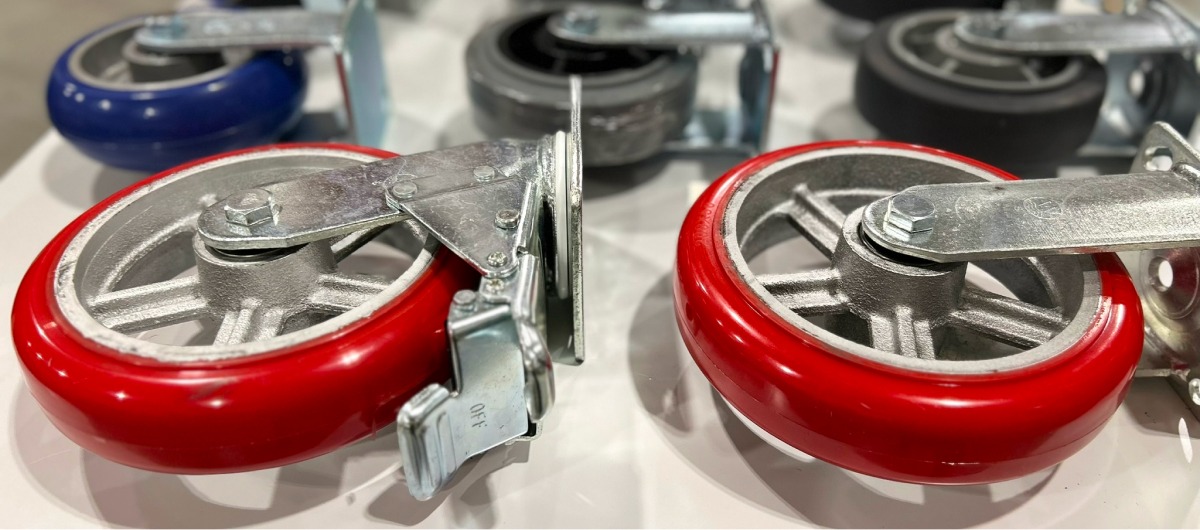
Industrial casters are wheel-mounted, solid, durable circular rings or discs that are positioned at the bottom of material handling carts. Casters ensure manufacturing, shipping, inventory, order fulfillment, and warehouse employees can easily move push carts, order fulfillment carts, kitting carts, finished product carts, and trolleys from one location to the next.
Without industrial casters, employees would risk severe injuries having to lift and carry large volumes of semi-finished or finished products. A mobile material-handling cart with heavy-duty casters ensures easy transportation and maneuverability of carts with materials, parts, tools, consumables, and finished products.
Casters work best when they encounter minimal resistance when rolling on different types of flooring and terrains. If the material of the wheel isn’t suited to the flooring, then the friction generated between the wheel and flooring will make moving various material-handling carts more difficult and strenuous.
Why is Choosing the Right Industrial Caster Crucial for Your Facility?
Choosing the right industrial casters ensures the safety of your employees, protecting the contents with material handling carts and mobile trolleys, and optimizing transit or transportation efficiencies and costs.
Opting for an expensive industrial caster with specialized material when it’s not needed is costly and wasteful. Not matching caster dimensions, wheel diameter, and wheel material types to the flooring in your facility means transit or transportation times will be longer than needed, casters may break, contents may fall and get damaged – or worse – employees may have an accident.
In the best of outcomes, using the wrong type of material handling casters leads to endless frustration for employees and longer workflow processing times. At worst, it means damaged materials and products, unusable carts, and injured employees.
Quick Selection Guide
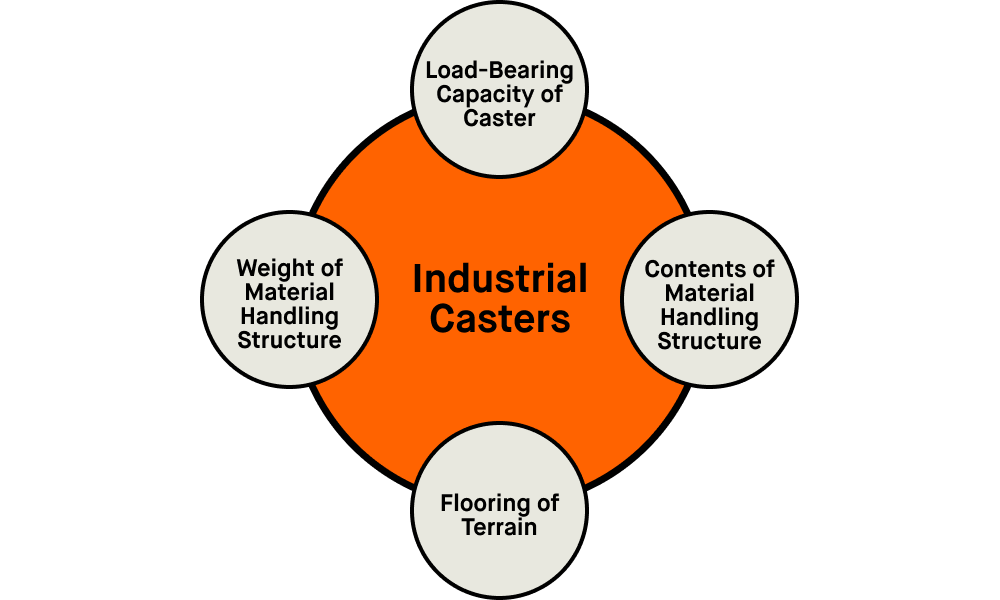
When choosing material handling casters in heavy industrial or commercial settings, it’s essential to account for the durability, strength, and load-bearing capacity of the caster. Understanding the type of materials, tools, consumables, work-in-process (WIP), semi-finished, and finished parts that will be transported on your carts is also important.
Finally, determining the type of flooring or terrain the caster will travel on as well as the total weight the material handling cart needs to support are other important considerations.
- Caster Load-Bearing Capacity: Each caster is designed to support a certain amount of weight. Understanding that weight is critical as all material handling structures are designed around a maximum supportable weight.
- Contents With Material Handling Structures: What is the custom material handling structure designed for? Knowing what types of contents will be placed on the material handling structure is essential to understanding the type of caster to choose. Some material handling structures transport large volumes of raw materials within manufacturing environments, while other mobile carts are merely for consumables and tools.
- Type of Flooring or Terrain: The wheel within the caster must encounter minimal resistance and friction when rolling across the floor of your warehouse or manufacturing location. That makes choosing the right type of wheel material extremely important. Whether it’s a polyurethane, nylon, rubber, or polyolefin wheel – all will have different rolling characteristics.
- Total Weight of Material Handling Cart with Contents: Every material handling structure design starts with determining the amount of weight the structure can withstand. That total weight must then be divided by the total number of casters used.

What Are the Most Common Types of Casters in Manufacturing and Warehousing?

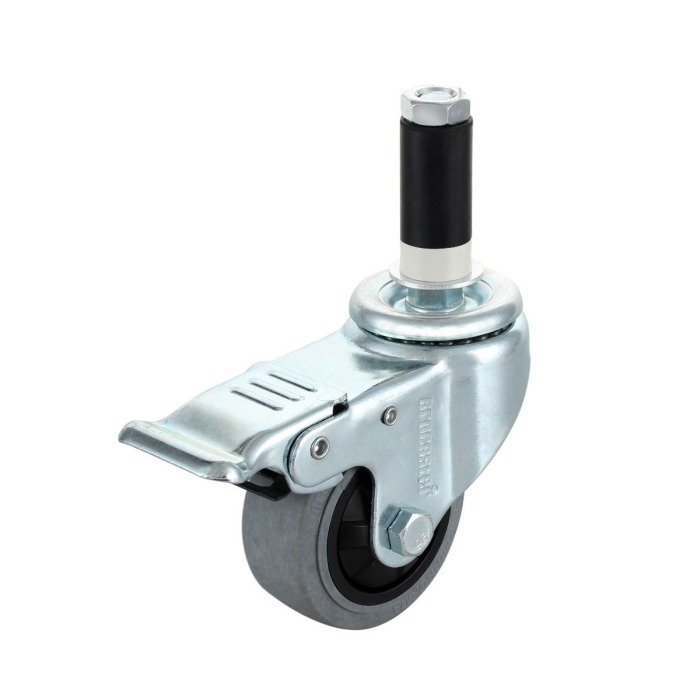
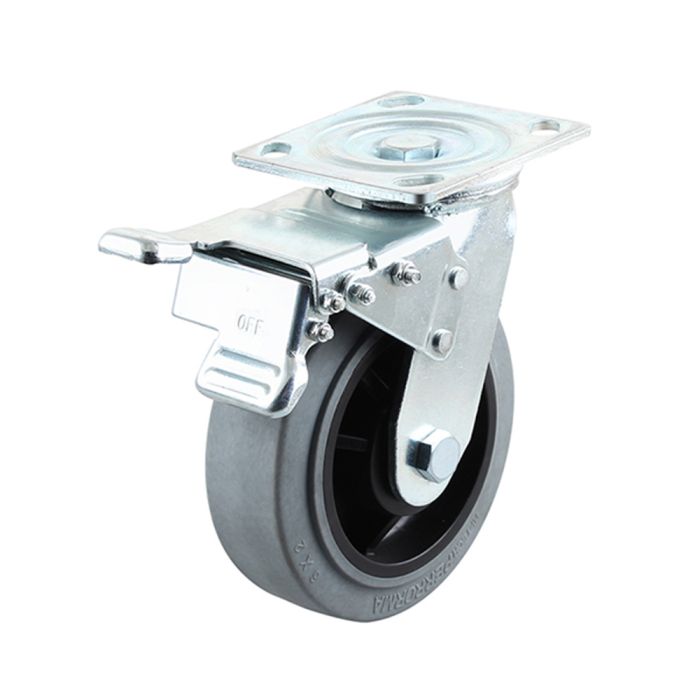
The most common types of industrial casters include swivel stem, rigid stem, swivel plant, and rigid plate casters. Foot brakes are a good accessory on casters as they allow the material handling structure to be held in place. Rigid stem and rigid plate casters can only move forward or backward in a straight line, while swivel stem and swivel plate casters allow for full 360-degree rotation.
Stem vs. Plate Casters Comparison
The primary difference between stem casters and plate casters is how they are connected to material-handling carts. Stem casters have a stem or straight vertical location pin that allows the caster to easily slide into the base of mobile carts.
Plate casters include a square plate with four or more pilot holes where fasteners – such as screws, bolts, nuts, and washers – are used to connect the caster to the material handling cart. With plate casters, the weight distribution across the caster is optimized given the surface area of the plate whereas, with a stem caster, the weight distribution is focalized on the stem itself.
As such, plate casters are designed to hold heavy weights – or have a higher load-bearing capacity than stem casters.

Stem vs. Plate Casters: Which is Right for You?
A plate-mounted swivel or plate rigid caster is the best caster when moving heavy loads on material-handling carts. Swivel stem and rigid stem casters should be relegated to mobile carts carrying lower weights, shadow boards, rotating cube boards, meeting space boards, and three or four-sided TAKT boards.
Load Capacity Guide
Every caster has a specific weight it can support. This weight – or load-bearing capacity – is always provided on each caster type. Understanding the weight that each caster can support is critical to designing and assembling any steel tube and joint material handling structure.
In the table below, the first number listed – 3, 4, 6, and 8 – refers to the diameter of the wheel in inches.


It is essential to match the type of caster used to the given application. Industrial and commercial-use casters specifically designed for material handling structures should always be used for manufacturing and warehousing environments.
How Do I Determine the Number of Casters for My Material Handling Structure?
The first step in determining the number of material handling casters to use is to calculate the weight your material handling structure is designed to support. Once the weight of your structure is determined, take that weight at divide it by a minimum of four casters for each corner of your material handling structure.
An example might include a material handling structure that is designed to support 1800 pounds. That means that a minimum of four 6-inch Rigid Stem or Rigid Plate casters would be needed as each supports a weight of 500 pounds. In some cases, adding a caster helps to further support the mobile cart or trolley.
Application-Based Recommendations
Choosing between rigid or swivel – either for plate or stem – ultimately comes down to functionality. If a given material handling structure or material cart is only meant to transport raw materials from one warehouse or manufacturing location to the next, then rigid casters can be used. However, if that material handling cart must be maneuverable to account for different obstructions or tight corners, then swivel casters are best.

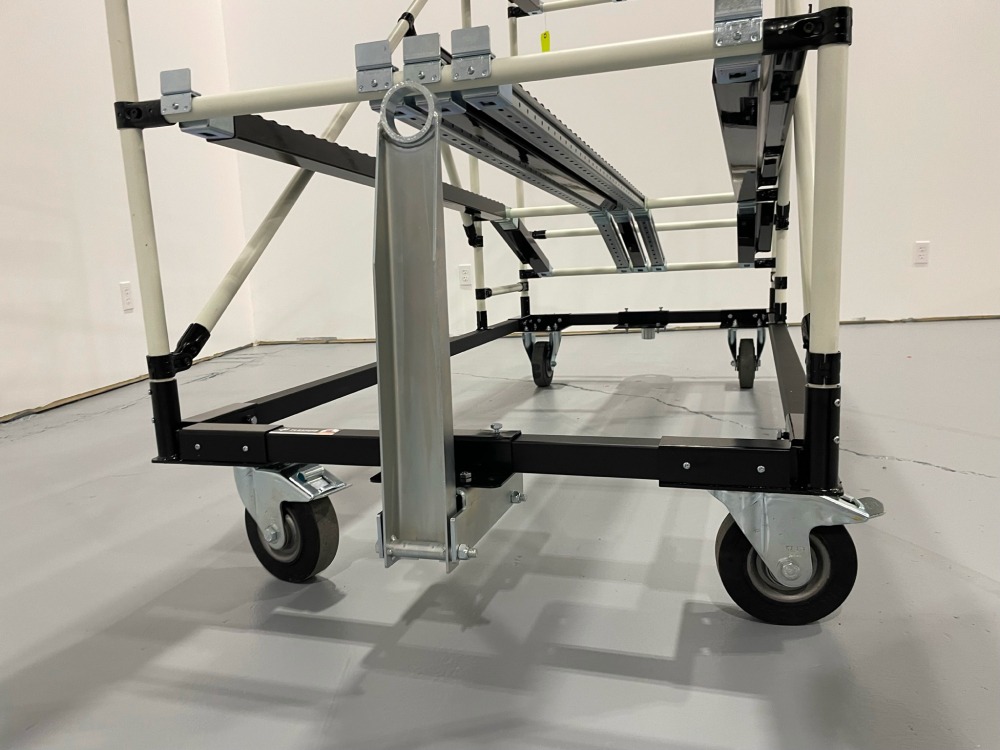
In the above application, four swivel plate industrial casters are used on a mobile trolley or trolley cart with a towbar in the up position. A single trolley cart – as part of a mobile trolley cart train – can easily be removed from the remaining carts and its swivel plate casters all that trolley cart to easily be positioned in front of a given manufacturing workstation.

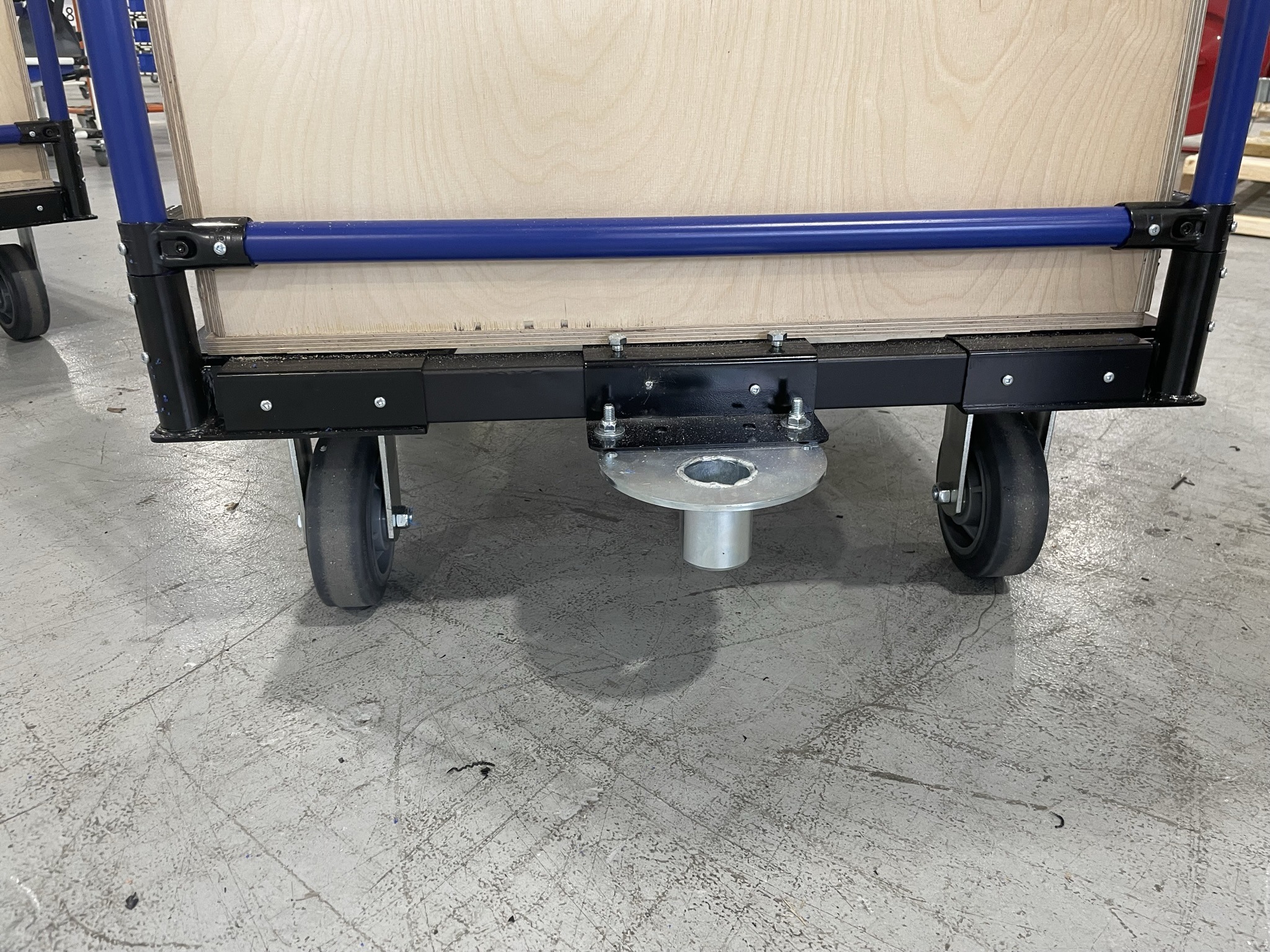
Rigid plate material handling casters are used on the trolley cart above. In this application, the trolley cart is used within a large, open-spaced warehouse with more than sufficient space.
In both applications, all four swivel plate casters and rigid plate casters are connected to 1.575″ x 1.575″ / 1 9/16′ square tube (~40mm) black steel pipes – specifically designed for the base of tugger carts and tugger trolleys transporting heavy raw materials or finished goods.

Exemples of caster applications

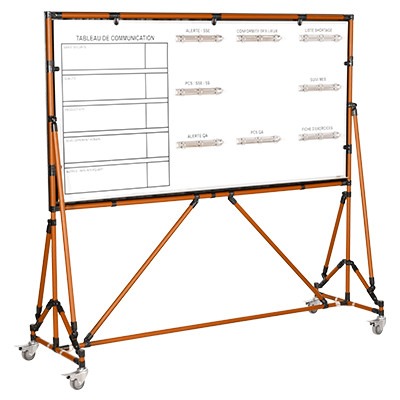
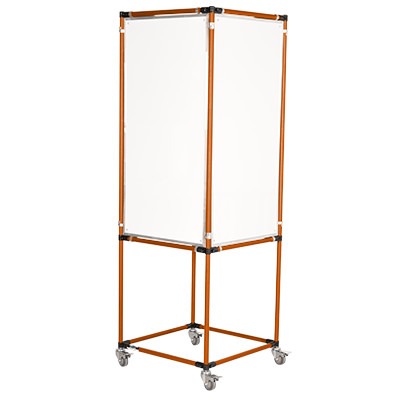
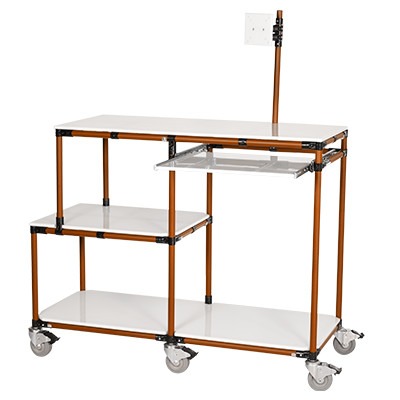
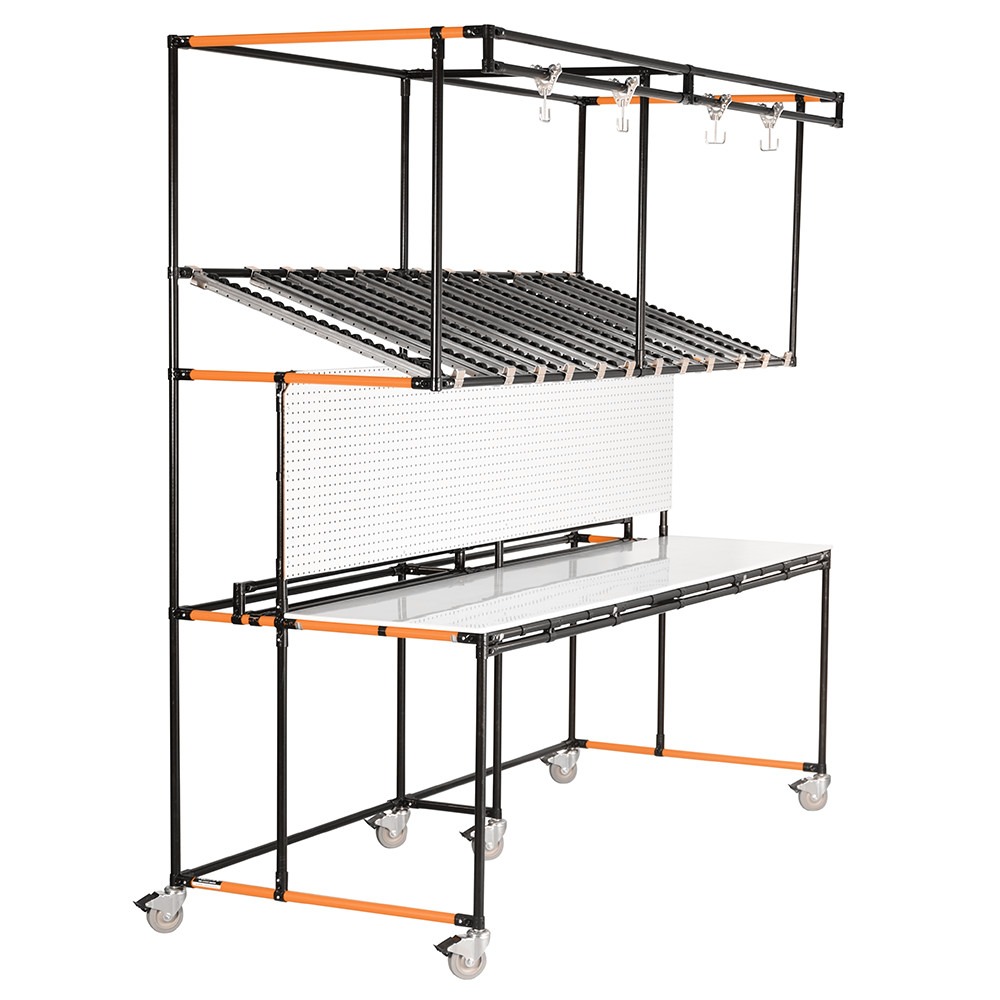
In both applications above, swivel stem industrial casters are used and allow both the 1 and 2-sided Board and 4-sided Board.

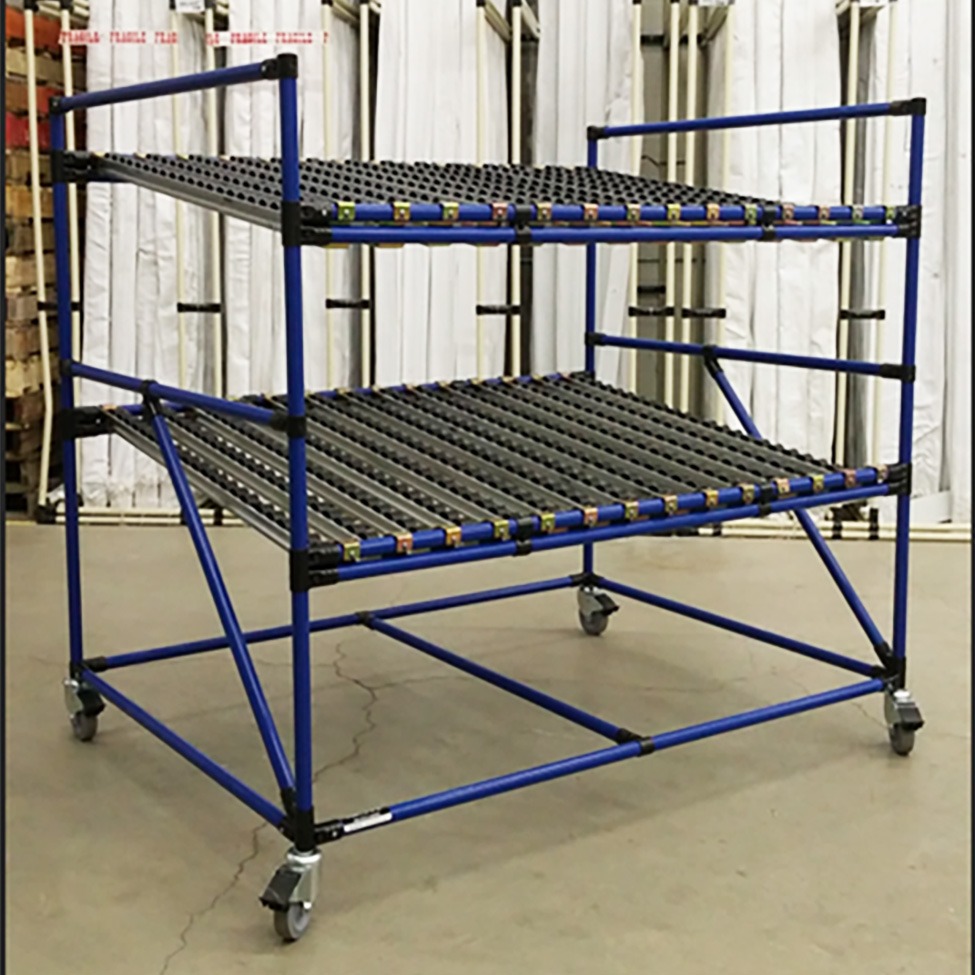
For the above mobile flow rack, swivel stem casters are used. The weight allows for swivel stem casters as the flow rack is used for lightweight parcels, bins, and raw materials within a manufacturing facility.


Which Caster Should I Use for Different Applications?
For heavy-duty applications where heavy materials or parcels are being transported throughout your facility, then swivel or rigid plate industrial casters must be used. For static structures such as mobile workstations, and flow racks that hold lightweight consumables, then swivel or rigid stem caster can be used. Finally, mobile picking cards, order fulfillment carts, and light material carts can also use swivel or rigid stem casters.


ESD Requirements
In the electronics industry, having Electrostatic discharge (ESD) compliant materials is an absolute must. Regardless of the type of material handling structure, workstation, or TAKT board you design, it must have ESD-compliant materials.
When Do I Need ESD (Anti-Static) Casters?
ESD-compliant material handling casters are especially important in any electronics or aerospace manufacturing, storage, or warehousing facility. Using ESD casters ensures microelectronic materials, components, and products are protected from accidental release of static electricity.
Even the smallest release of static electricity can have serious consequences, all but destroying small electronic subcomponents, materials, and devices. This means always using 3-inch, 4-inch, 6-inch, and 8-inch swivel stem, rigid stem, swivel plate, and rigid plate ESD casters at all times.
Not only are ESD casters essential to protecting electronic devices, but they’re often an absolute safety and regulatory requirement.
Technical Specifications & Considerations
Not all casters are the same. Not all caster manufacturers use the same materials or have the same designs and configurations. Choosing the right caster type – whether it is swivel stem, swivel plate, rigid stem, or rigid plate – is only the first step. There are several other variables to consider.
What Technical Factors Should I Consider When Choosing Casters?
In addition to the caster’s load-bearing capacity, the caster wheel frame and tread material type – along with the type of flooring or terrain in your manufacturing or warehouse facility should all be considered when choosing casters.
Caster Wheel Frame: The best industrial and commercial-use casters are typically made from high-strength steel with industrial-strength fasteners and durable ball bearings for easy sliding.
Tread Material (Wheel) Type: All treads should be made from non-marking materials like non-marking grey thermoplastic rubber with TPR soles, polyurethane, or nylon synthetic.
Flooring and Terrain: Given the wide variation of flooring materials, it’s best to always focus on tread materials that leave no marks, film, or sticky residue. The three tread materials above are among the most widely used in industrial and commercial settings and ensure minimal marks on flooring surfaces.
Installation & Maintenance
With swivel stem or rigid stem casters, the stem simply slides inside the steel tubes, ensuring a nice, snug fit. Installation requires locking the break first and tightening the nut so that the caster’s bushing can expand inside the steel tubes.
For swivel plate or rigid plate casters, use the holes on the plate of the caster to drill pilot holes into the square piping (for large trolleys and carts) or use brackets to connect them to the steel pipes.
Given their repeated use, it’s important to adopt a proactive caster maintenance program. Inspect the casters every three to four months and ensure the fasteners – nuts, bolts, bearings – aren’t loose or otherwise dislodged.
Do not allow structures to stand idle for too long. Ensure you move them a bit back and forth to ensure the casters don’t create flat spots. Finally, when inspecting the casters, ensure nothing is interfering with the tread movement and use grease if need be.
Flexpipe: Your Source For Industrial Casters
With upwards of 42 variations of industrial casters, accessories, and kits, Flexpipe ensures its industrial and commercial customers have an extensive selection of material handling casters to choose from.
As part of the Flexpipe material handling solution, our extensive lineup of material handling casters is uniquely tailored to the modular and scalable material handling structures that can be made with our steel tube and joint system.
A solution that has been used extensively worldwide, the Flexpipe steel tube and joint system has a history going back 80 years to the early days of the Toyota Production System (TPS).
To view our extensive selection of Swivel Stem, Rigid Stem, Swivel Plate, and Rigid Plate industrial casters, please visit our material handling casters section.
To get an idea of the many variations of Flexpipe steel tube and joint material handling structures that would use our industrial casters, please visit our structures page.
To have your questions answered about our material handling casters in a consultative call, contact us now.