


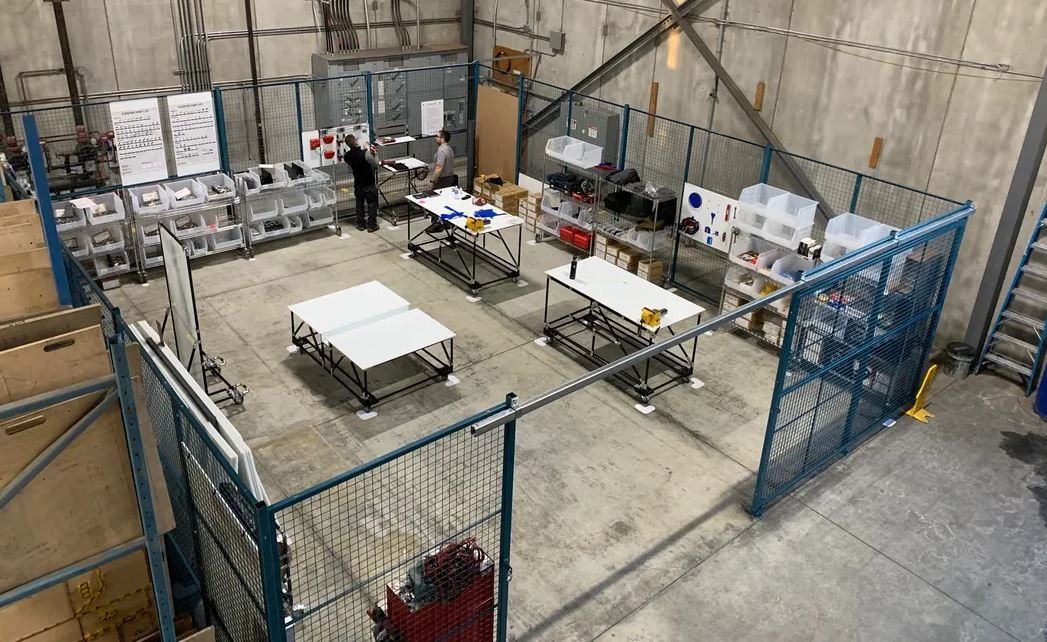
Every journey starts somewhere. In lean manufacturing, that journey begins with a continuous improvement (CI) workshop. A CI workshop provides the foundation by which your company can make significant lean improvements that reduce waste, increase throughput, and reduce costs. When Flexpipe customers want to learn the most efficient, proven ways to run a successful CI workshop, they combine the scalability of Flexpipe’s steel tube and joints with the insight, expertise, and lean teaching solutions provided by Flexpipe’s global partner – Quadrant 5.
So, how can the combination of Flexpipe’s ease-of-use material handling system and the lean subject-matter experts at Quadrant 5 help your manufacturing location adopt a continuous improvement, lean manufacturing mindset that provides endless returns?
A Global Partnership Focused on Lean Manufacturing
An experienced consultancy group based out of San Francisco California, USA, Quadrant 5 comprises Toyota Production System (TPS) experts with extensive international experience over three continents and 17 countries. Quadrant 5 has helped some of the most recognized global manufacturers adopt lean manufacturing solutions and best practices.
Needing a lean manufacturing workstation and material handling assembly system that allows for quick, immediate, low-cost, near-instant changes to workstation structures led Q5 to Flexpipe’s steel tube and joint system. Flexpipe’s system – whose origins can also be traced back to the Toyota Production System – was a natural fit for Q5’s CI workshops and continuous improvement initiatives.
This partnership provides customers with the tools, training, and expertise needed to make CI workshops that all-important first step to adopting lean manufacturing.
What is a CI Workshop?
Think of a CI workshop as a sequential, step-by-step process to prototyping the perfect manufacturing workstation. In the case of Q5 and Flexpipe, that includes using the steel tube and joints to create a new, lean, much improved, and far more efficient workstation. So, what’s the first step?
1. Embrace Kaizen
Long before any changes begin, management and employees must embrace the Kaizen, lean manufacturing doctrine. Kaizen is Japanese for “change for the better”. However, Kaizen is not a one-time event – as some North American manufacturers sometimes assume. It is an every-second-of-the-day, never-ending process where daily improvements are made to increase efficiencies and eliminate waste.
Within manufacturing, waste can take many forms. Think of waste not just in terms of physical parts and defects, but in the extra movements and steps production technicians often take unnecessarily. Waste can include excess inventory. It can include lost time from machine downtime, and missing parts, tools, and instructions.
Waste can include high transit times to move work-in-process (WIP) parts across the shop floor and between each workstation. It can include redundant and time-consuming work processes, incomplete and unclear work orders, confusing bills of materials (BOM), repetitive work tasks, and redundant approvals. Most importantly, waste can include production technicians lacking sufficient clean workstations.
Ultimately, waste becomes much easier to spot once you start the CI workshop. The essence of lean is to allow production technicians to eliminate this waste by empowering them to be proactive. This is the mindset that must be adopted for a CI workshop to be successful. Without this all-important mindset, any incremental improvements will be abandoned.
2. Identify a Production Area That Requires Improving
In our example, we’ll focus on a workstation that is poorly laid out, poorly structured, and needs to be properly redesigned. We’ll assume this workstation has been chosen because it has high manufacturing cycle times that create unnecessary backlogs for the adjacent workstation. Ultimately, cycle times to complete work tasks are high, backlogs build up, space is at a premium, workflow is constantly interrupted, and production volumes suffer as a result.


3. Focus on Small Incremental Improvements
This particular workstation’s frame includes a wooden structure that is dilapidated and warping, insufficient space for the operator or technician to perform their work tasks, and an obvious lack of structure and organization for tool placement and storage. In addition, there is an oversized welded worktable and steel cabinets.
Tools and consumables are often misplaced, and semi-finished parts are often strewn about. With no designated place for tools, accessories, and consumables – and with limited space to perform work tasks – it’s easy to see how this workstation has high cycle times and why backlogs are commonplace.
By focusing on small, incremental improvements, this waste can eventually be eliminated. A new workstation structure can be designed, assembled, changed, and quickly adjusted with Flexpipe’s steel tube and joints and the insightful guidance and lean teaching of the Q5 team.
The welded worktable can be replaced with a right-sized, tailor-made Flexpipe worktable with the proper decking material while all the tools, accessories, and consumables can be properly stored using 5S principles, Flexpipe’s Kaizen foam and either Flexpipe’s white HDPE Peg Board or Flexpipe Rigid Honeycomb Board.

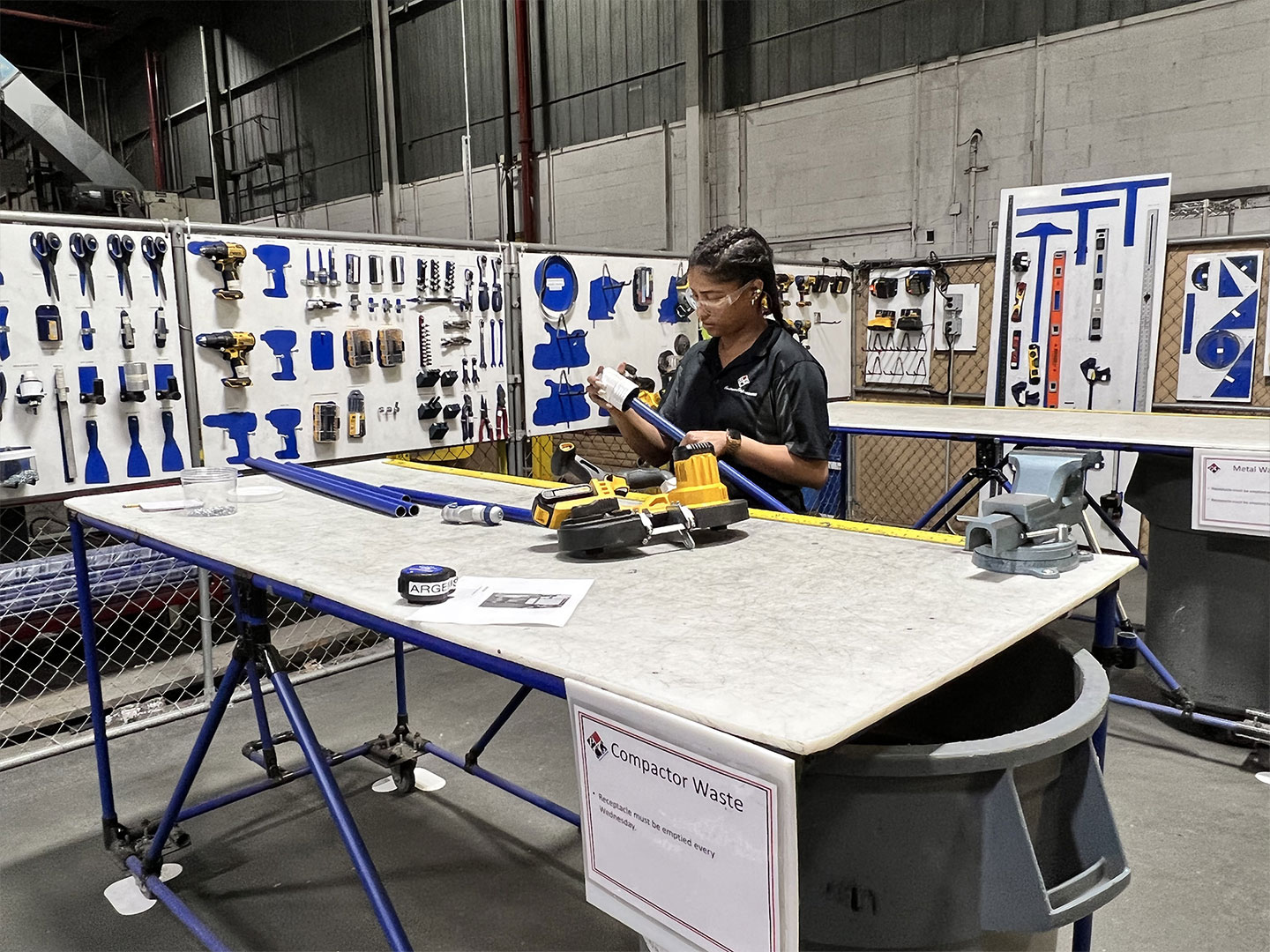
While this is just an example, the experience, guidance, and insight provided by the Q5 lean manufacturing team along with the scalability and flexibility of the Flexpipe steel tube and joints system allows these incremental changes to produce incredible results.
4. Measure the Performance of the New Workstation
Throughout this entire process, it’s essential to gather feedback and suggestions from the production technician. Their input is invaluable, and they must feel like an active participant in this process. Determining the success of these adjustments ultimately comes down to measuring the performance – or put differently – the production throughput of the newly designed Flexpipe Workstation.
The Q5 team can provide invaluable insight into how this improved performance can be measured and quantified. The result is a much-improved workstation layout where cycle times have decreased, production volumes have increased, the production technician has a cleaner work environment, tools are easily found, and future backlogs have been eliminated.
5. Duplicate Success
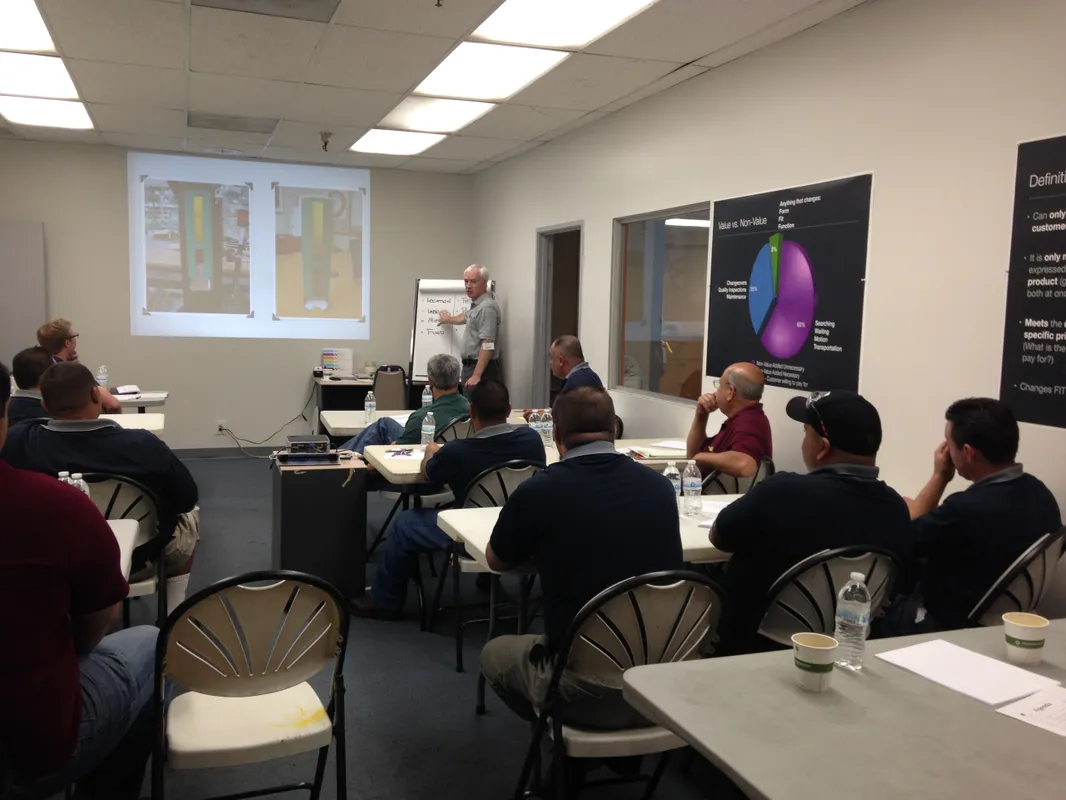
The goal is to duplicate this success throughout all the workstations on the shop floor with the overriding purpose of creating a true, lean manufacturing environment. This quickly becomes a necessity as improving one workstation – while not improving the next – would eventually lead to additional backlogs as the improved workstation would easily outproduce and outpace its counterparts.
Customers and Industries that Use Flexpipe and Q5
The strategic partnership between Q5 and Flexpipe has helped numerous manufacturers in the USA, Canada, and Mexico. From automotive manufacturers to aerospace Primes and contractors to corrugated packaging companies and furniture manufacturers, Q5 and Flexpipe’s partnership has had a direct, bottom-line impact on numerous manufacturers.
Some of Q5’s most recognized customers include Acme Corrugated, Bay Cities, President Container, Kento US, AICC, Cartro SAPI de CV with current projects including L&M container, Royal Container, Construction Innovations, Rexmoore, and M3 Components – just to name a few.


Q5 Workshop Consulting Services With Flexpipe Steel Tube and Joints
The global partnership between Quadrant 5 and Flexpipe provides the tools, training, and insight manufacturers need to create bespoke workshops and lean manufacturing best practices that increase speed, eliminate waste, improve product quality, and reduce costs.
This unique global partnership empowers manufacturers to create unique solutions for their operational teams allowing them to reduce costs and increase production throughput faster than any other solutions on the market today.
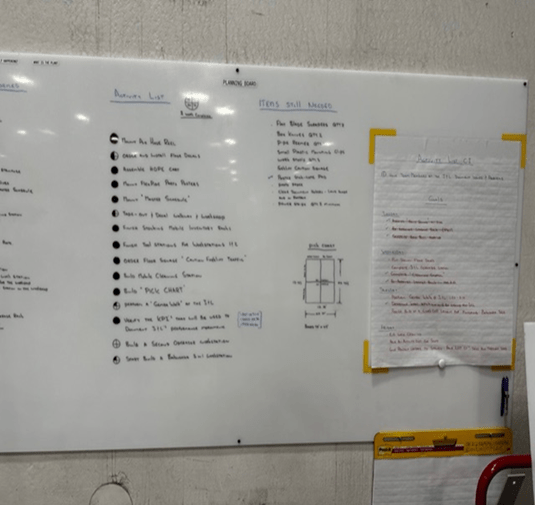
To make the best of your CI Workshop with Quadrant 5 and Flexpipe’s steel tube and joint material handling system, training for senior managers (10 Hours) is available to ramp up everyone in the latest lean techniques.
Technical training is also given to your CI personnel during the construction of the workshop. Additional visits can be created, depending on the level of support needed.

Quadrant 5 and Flexpipe: A Global Lean Manufacturing Consultancy Partnership
As a North American designer, assembler, and provider of modular, scalable material handling systems, Flexpipe combines its steel tube and joint system with multiple support products to help manufacturers improve efficiencies and reduce costs.
To learn more about Flexpipe’s modular and scalable material handling solutions, please visit Flexpipe.
By combining its services with the knowledge, experience, and in-depth TPS and lean manufacturing consulting offered by Quadrant 5, both companies provide global manufacturers with the best and most proven solutions for improving operational effectiveness.
To learn more about how Quadrant 5’s consulting services can help your business gain the upper hand, please visit Quadrant 5.