
When it comes to efficiently handling heavy load materials and finished parts within warehouses, success requires durable, customized Flexpipe steel tube and joint pallet carts. From improving warehouse employee ergonomics and safety, customizing pallet cart size and layout, to simplifying shipping and receiving, Flexpipe modular pallet carts are critical to increased productivity.
Unfortunately, warehouses often make the all-too-common mistake of purchasing welded pallet carts. These fixed-structure carts can never be adjusted or changed. They lack the functionality essential for efficient lean warehouse management because they’re manufactured for general “me-too” applications. From not being the right size, being too wide or too narrow, to becoming a constant warehouse cart safety concern due to their inability to secure parts and materials properly, welded carts offer little in return.
Fortunately, the Flexpipe steel tube and joint system eliminates these problems. It is the ideal solution for improving warehouse material handling efficiency.
Answer: A modular pallet cart is a customizable material handling solution made from Flexpipe steel tubes and joints, allowing warehouse teams to transport heavy or bulk materials with maximum flexibility.
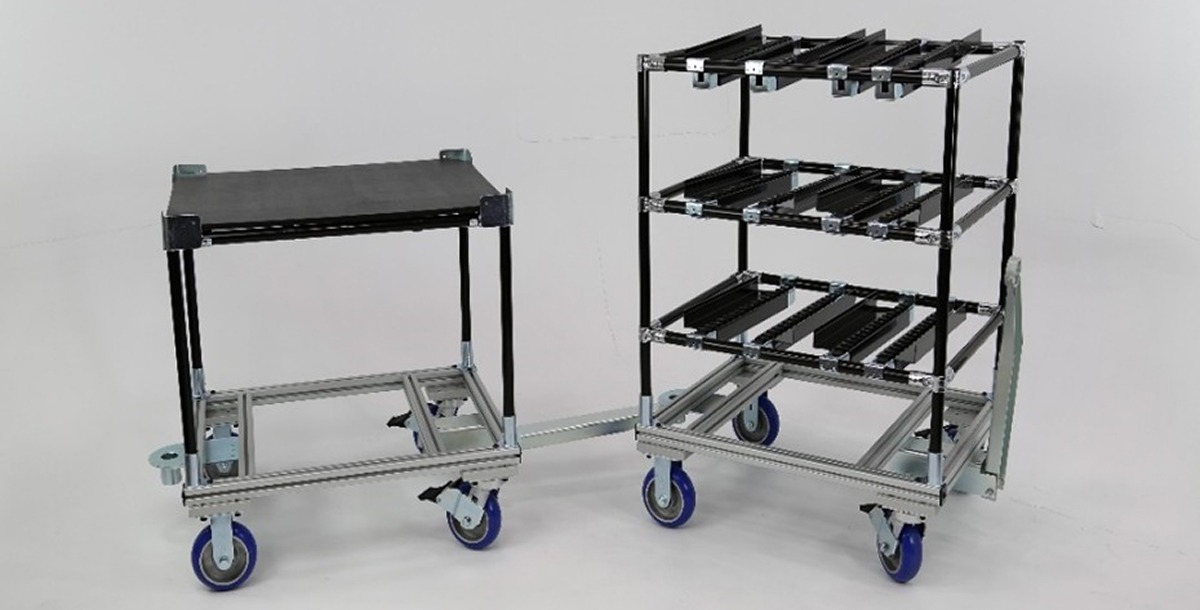
In the above example, warehouse employees designed and assembled a modular pallet cart using Flexpipe steel tubes and joints. These carts were customized to the specified weight, size of parts, and material bin sizes that needed transport through the warehouse.
From anti-slip industrial casters and Kaizen foam to protect parts, to angled flow racks, rollers, square steel pipe base, and tow bars, all are components that come from the Flexpipe material handling system. The result is pallet carts that are low-cost, ergonomic, safe, and reduce product and material damage.
The benefit of having customized modular pallet carts made from steel tubes and joints is that these carts can be modified, changed, or adjusted at any time. This makes modular carts a critical part of ergonomic warehouse equipment and a staple within lean warehouses. The ability to make comparatively quick and on-the-fly changes to modular pallet carts means continuous improvement is always a priority.
With the Flexpipe steel tube and joint system, costs are minimized compared to generic welded pallet carts. Not only are the total costs of a modular Flexpipe pallet cart substantially lower than a welded cart, but all adjustments can be done in-house. Modifying a welded cart is extremely expensive, involves third-party contractors, and can take weeks.
Answer: A modular Flexpipe tugger pallet cart is designed with tow bars to be pulled in trains by tuggers or Automated Guided Vehicles (AGVs), enabling efficient, forklift-free transportation loops.
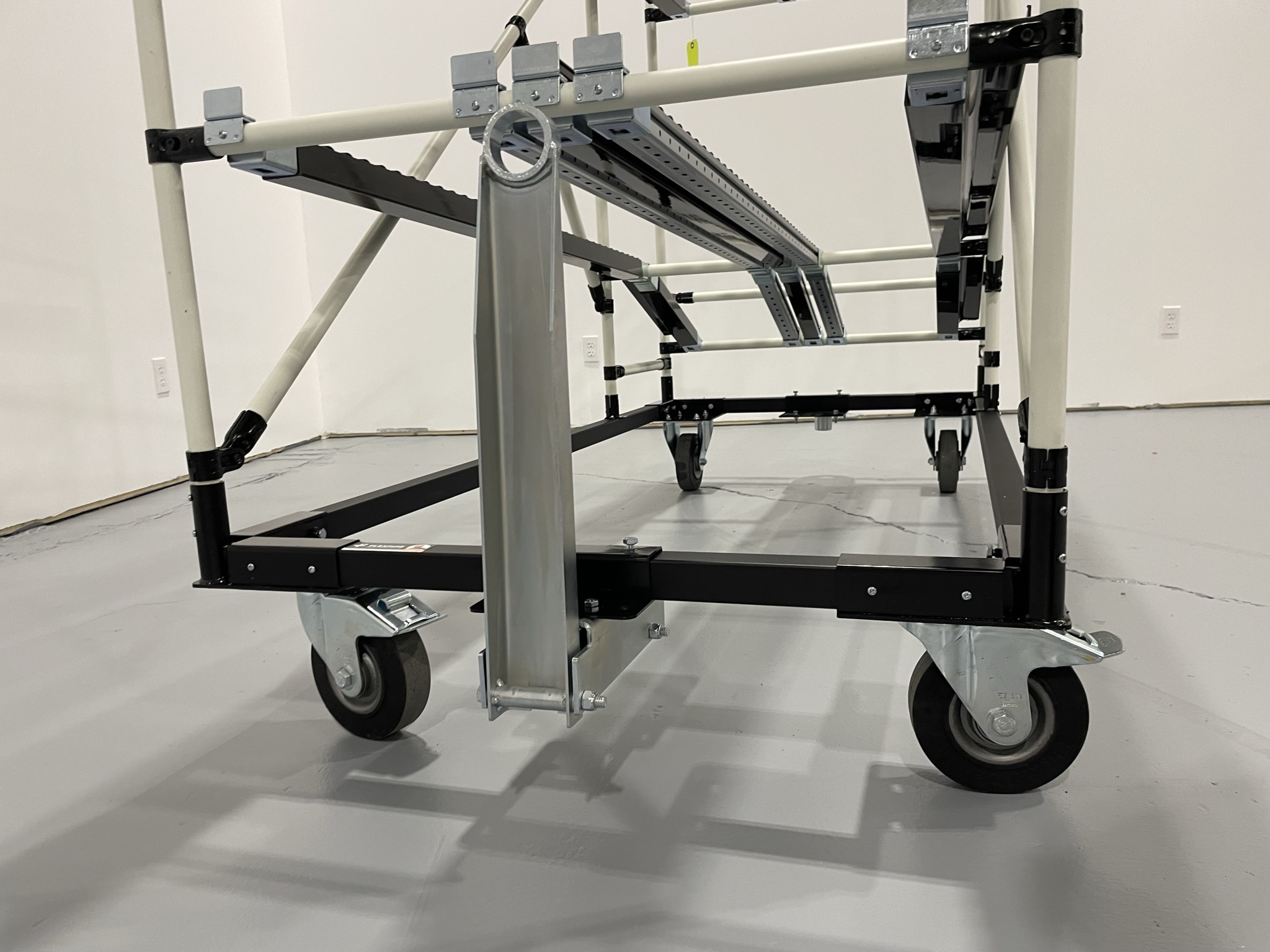
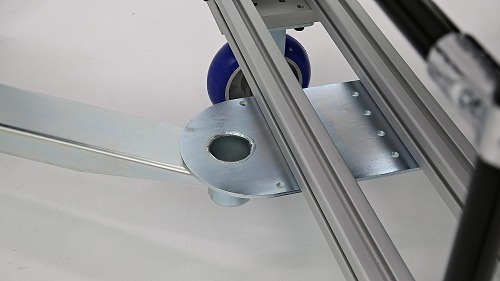
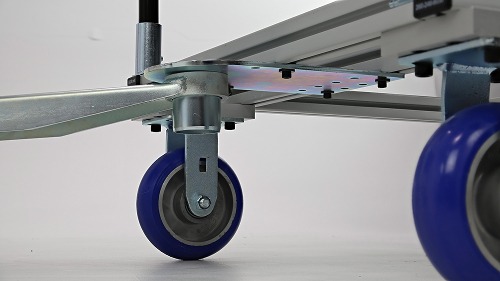
When pallet carts are combined with an easy-access tow bar, they allow warehouse employees to easily connect multiple pallet carts, which can then be attached to manual tuggers or AGVs. This immediately increases the volume of materials and finished parts that can be transported throughout the warehouse, while reducing the number of trips required.
The benefit for warehousing locations is that they can reduce forklift traffic and cumbersome and dangerous transportation methods. Instead, parts and materials are safely stored on multiple pallet carts connected in what is commonly referred to as a tugger train. When combined with AGVs, employee safety increases. Warehouse employees can operate the AGV from behind, ensuring a safe distance.
Even if warehouse employees don’t have the benefit of an AGV, manual transport can be achieved with tugger trains, provided employees are not asked to pull too high a load.
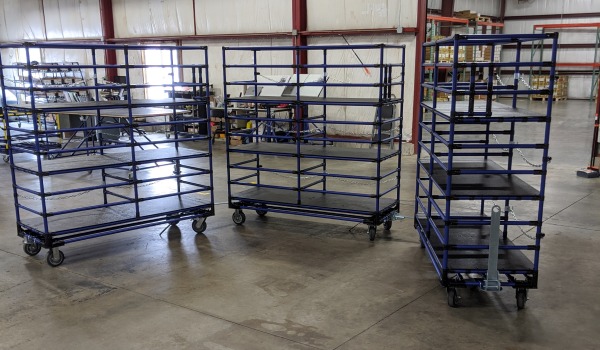
The image above depicts a simple, modular pallet tugger cart train with a tow bar waiting to be connected to an AGV.
Answer: Welded pallet carts are rigid, hard to modify, and often require costly rework when your warehouse layout or processes evolve.
The welded pallet cart above is a perfect example of limited flexibility. They are purchased for a single application in time and do not lend themselves well to changing requirements. With just a single-level platform and no guard rails, there is no way to safely secure materials and parts on the pallet cart.
Welded pallet carts can quickly become a safety hazard as materials, boxes, bins, and parts are haphazardly placed. Often, parts and materials hang over the sides of the welded cart, becoming a potential safety hazard and increasing the likelihood of damage to materials.
From potential damage to inventory due to materials and parts overhanging on the sides to possible injuries to warehouse employees from falling parcels and boxes, high-cost welded pallet carts are anything but ergonomic or safe.
Answer: Flexpipe pallet carts are easy to build, easy to modify, and cost-effective compared to welded carts, making them ideal for lean, continuous improvement, and constantly evolving warehouses.
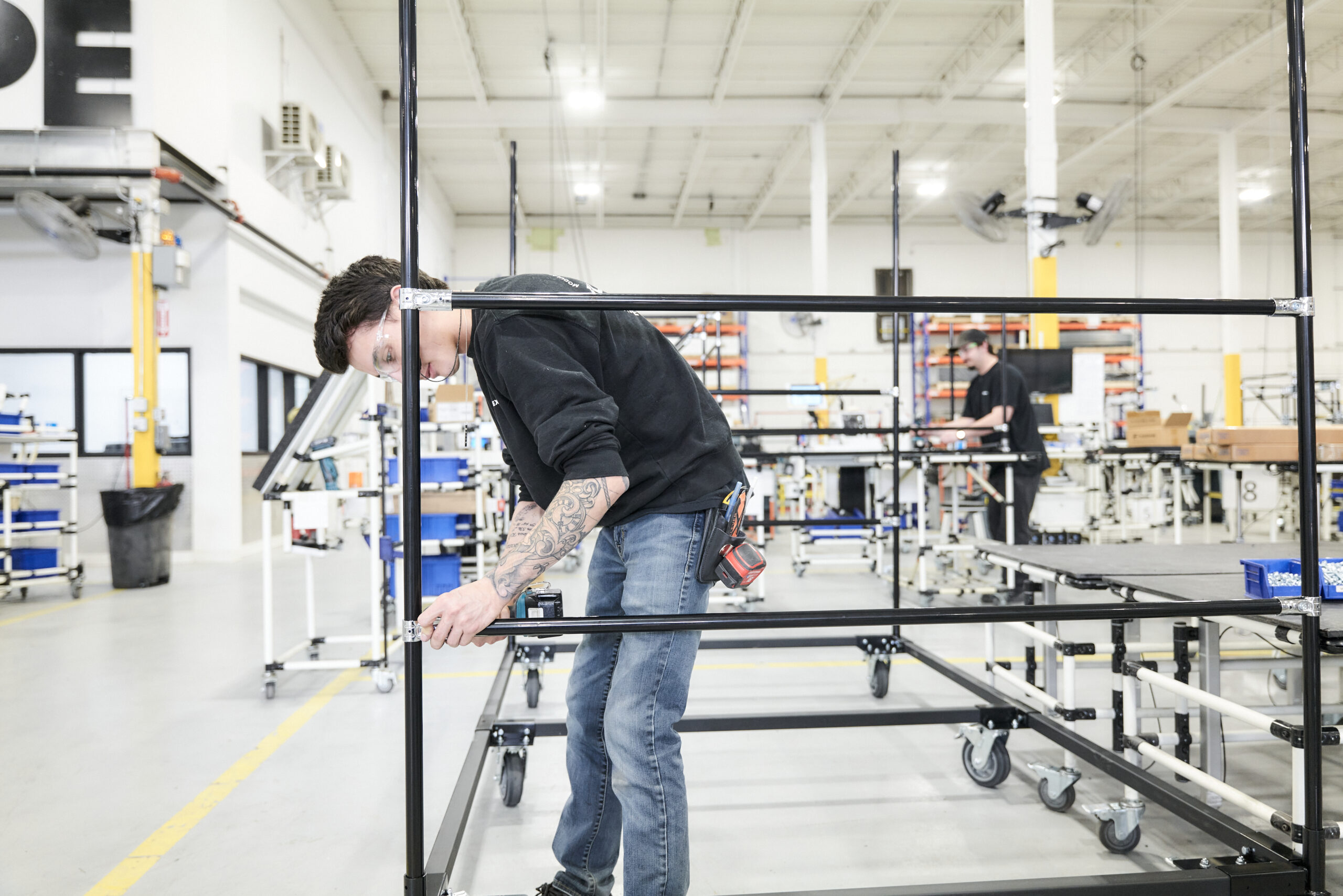
The Flexpipe material handling system allows warehouse employees to design and create whatever-sized pallet cart is needed. The ability to assemble pallet costs in-house and change their dimensions and layouts makes the Flexpipe system the ideal solution when future-proofing your warehouse.
In every measurable way, a Flexpipe pallet cart is vastly superior to a welded pallet cart. Far less expensive, much safer, more ergonomic, and with the ability to change requirements as needed, Flexpipe empowers warehouse employees to make effective changes.
Answer: Start with the load the pallet cart must support, its size, and material flow route before configuring your cart with the right base, reinforcements, tow bars, casters, and safety accessories.
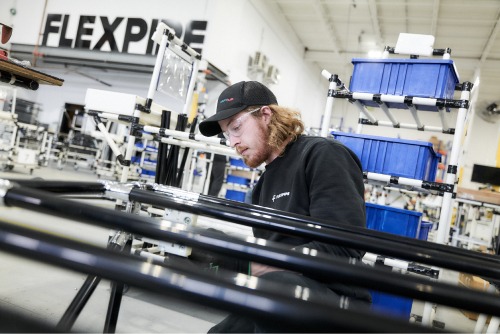
Every Flexpipe design begins and ends with determining the amount of weight the cart must support. Regardless of whether it’s a small kitting cart, mobile cart, mobile workstation, FIFO flow rack, or pallet cart, ensuring the overall weight is properly distributed across all the steel pipes and joints ensures a safe and efficient structure.
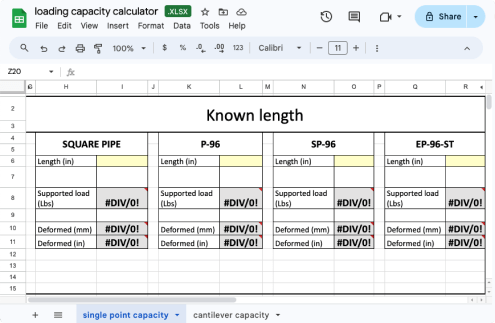
The Flexpipe loading capacity calculator is a simple and extremely effective tool for determining the weight that each section of pipe should support. Input the type of pipe being used, overall length, and the capacity calculator will do the rest.
This tool provides the following benefits.

The Flexpipe Creator Extension is a 3D design plug-in for SketchUp. This software allows you to design whatever structure is needed while providing a ready-made parts list. When you’re done, you simply order all the parts needed directly from the user screen.
Answer: Modular pallet carts can range from simple flat platforms to reinforced, multi-pallet structures with brakes and tow-bar compatibility.
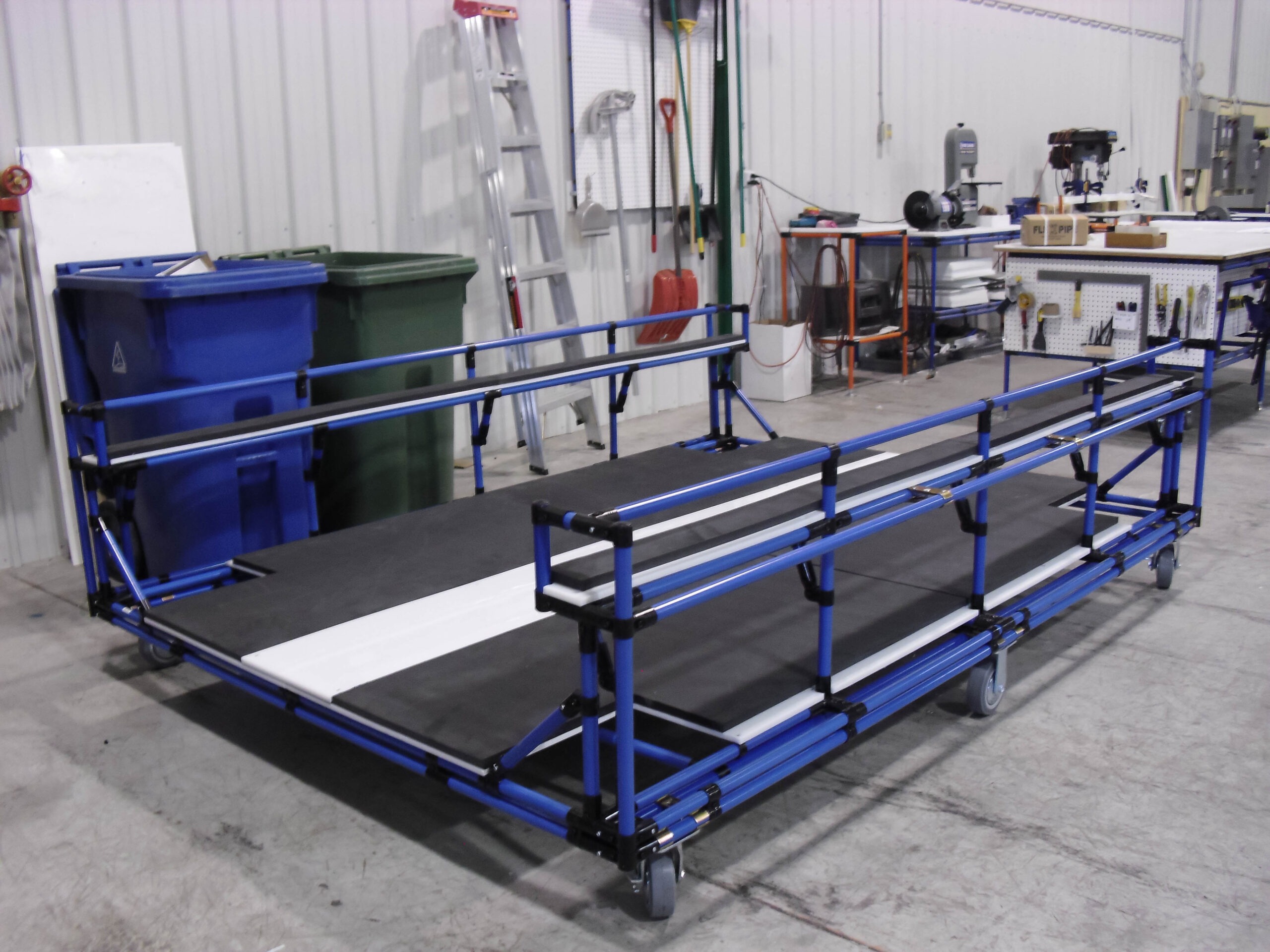
Ultimately, a modular pallet cart is any cart made with the Flexpipe material handling system. A modular pallet cart can be any size, any configuration, and have any layout, provided it’s made using Flexpipe steel tube and joints.
The beauty of the Flexpipe system is that your pallet carts can be configured to your material bin sizes, finished product dimensions, and incoming material inspection requirements.