Flexpipe Blog

Learn more about the Flexpipe system and its applications with our inspirational articles on continuous improvement, Kaizen Blitz, Lean Six Sigma, 5S and corporate social involvement.


A Mobile Work Bench for an Engineering Student Competition

A Mobile Work Bench for an Engineering Student Competition

Teams from Michigan Tech University (MTU) and Université Laval took part in the Shell Eco Marathon in Indianapolis, a competition highlighting innovation and energy efficiency. Flexpipe was honored to support both teams by supplying essential components for their mobile workbenches.

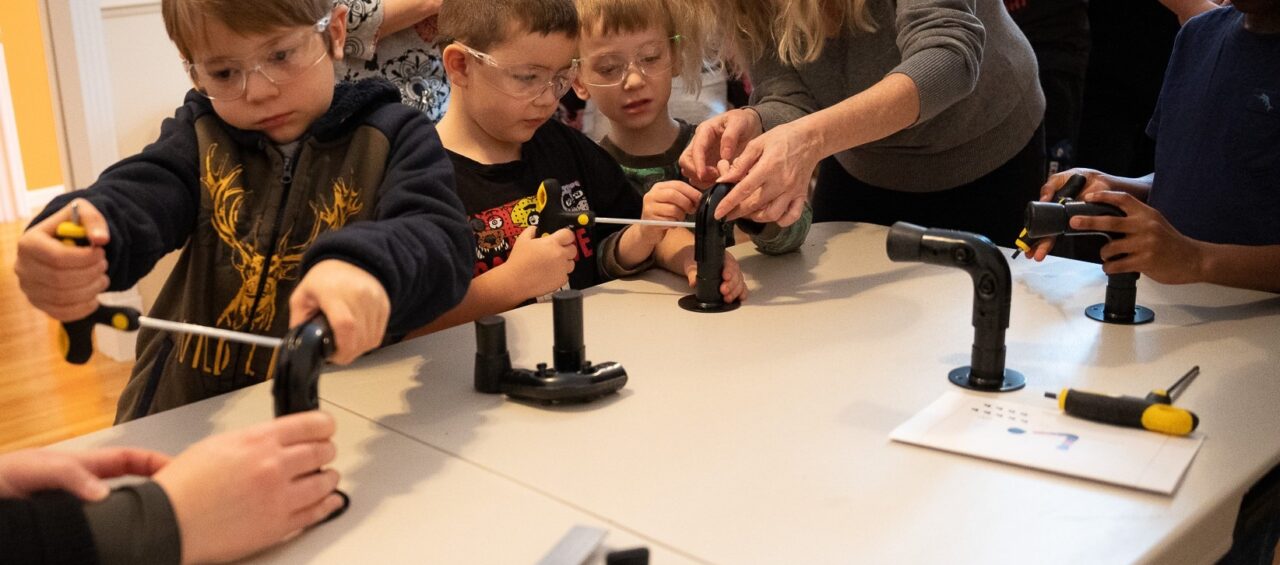
Assembling the mobile work bench

Both teams found assembly of the Flexpipe mobile workbenches relatively straightforward, thanks to the careful planning and modularity of the components. However, each encountered unique challenges. The MTU team had to adjust tube lengths after forgetting to include connector joints in their calculations.

The Université Laval team had to adapt the structure perfectly to the needs of their vehicle. As the slides used came from another partner, the greatest difficulty encountered was installing them to the tube structure. These slides had to be attached using a fastening system that was not possible to use with the tubes. The students had to cut and bend certain pieces of metal and make new holes to secure them. The 3D design of the cart was created with SolidWorks software, using the parts library provided by the Flexpipe Creator.

Workbench assembly by MTU students

Assembly by the Université Laval students

Educational Experiences

Taking part in the Shell Eco Marathon was an enriching experience for both teams, enabling them to push back the boundaries of their engineering and prepare new innovations for future competitions. Flexpipe is proud to support these young talents and contribute to their success in the field of energy efficiency.

The teams faced a few technical challenges. The MTU team had to repair their engine after the starter gear broke loose, causing significant damage. Despite these obstacles, they showed impressive resilience and managed to record a fuel consumption of 670.2 MPG, ranking sixth (2024). While Université Laval took first place in the gasoline prototype rankings (2023). Congratulations to all!

In conclusion, thanks to Flexpipe's support, the MTU and Université de Laval teams were able to overcome complex technical challenges and demonstrate remarkable ingenuity, thus preparing themselves for a promising future in the field of automotive engineering.

How Ekanbans Optimize Your Material Replenishment Process

How Ekanbans Optimize Your Material Replenishment Process

When companies think about Kanban, the image of a Kanban board and Kanban cue cards often come to mind. This simple lean manufacturing scheduling system summarizes workflow on a board, showing individual steps required to complete a given project, work, or operation.

The Kanban board is the repository for the Kanban cards. The board outlines a given manufacturing process or defines each stage of a product or project’s step-by-step process. The cards are then placed on the board outlining what tasks need completion.

Aerospace producibility board – Source: planview.com

Cards define what work has been requested, what is currently being worked on, and what work is completed. They represent what remains to be done before moving to the next process step. These cards are also used to outline different ideas and approaches to help move the process along.

The Origins of Kanban

In its simplest form, Kanban is a method of tracking manufacturing workflow or a project’s history. It is a highly effective scheduling method for lean manufacturing, helping to define how much inventory is needed to support current workloads.

Its origins can be traced back to Taiichi Ohno, who – along with Sakichi Toyoda and his son Kiichiro Toyoda – are responsible for developing the Toyota Production System (TPS) and its many lean and continuous improvement methodologies.

Toyota Production System Kanban board. Source: toyota-global.com

Like many lean methodologies emerging from Toyota, Kanban relies upon simple visual cues. The word Kanban is Japanese and literally translates to “card you can see.” It is considered the core tool for managing Just-in-Time (JIT) manufacturing, another lean pillar of TPS. Toyota introduced JIT and Kanban during the 1940s.

JIT is considered a pull system where customer demand is the driving force behind manufacturing. This customer demand essentially “pulls” products to be made, unlike the North American manufacturing processes at that time that relied on pushing products to the market to spur customers to buy those products.  

Kanban is seen as an innovation in that it follows similar TPS guidelines; minimizing costs, eliminating waste, and shortening lead times is the best way to add value for customers.

Kanban in Today’s Business Environment

Companies still use Kanban boards and even post-it notes as a convenient replacement for the Kanban cards. Other companies have moved away from this manual process. They have instead adopted digital, SaaS, cloud-based, and mobile-optimized software solutions that provide granular data and up-to-the-instant feedback on workflow and production volumes.

This adoption of real-time platforms has given rise to multiple Ekanban (electronic Kanban) systems that are quickly replacing the visual cue systems of the past. These systems provide invaluable details to line-side operators, managers, project managers, employees, and technicians in manufacturing environments.

Having a system that tracks production data and a project’s progress in real-time is invaluable. It shortens the time it takes to make critical decisions and course corrections. It identifies areas of concern and provides pinpoint accuracy on issues that impact workflow. It allows companies to determine when inventory needs replenishment to keep up with demand.

Ekanban systems can be accessed from any laptop, mobile phone, or desktop with an internet or Wifi connection. This means designated employees can easily track production throughput no matter where or when they work. Employees no longer have to view the Kanban board to get a breakdown of production throughput, and nobody has to spend any time updating that board. Instead, everyone merely accesses the information on their own.

Simple, Scalable, and Modular EKanban Systems

One of the drawbacks for manufacturers is the cost of fully implementing an Ekanban system alongside its existing software, like Enterprise Resource Planning (ERP), Material Requirements Planning (MPR), and other production or inventory management systems. However, like Flexpipe’s tube and joint system, there are modular and scalable solutions that allow you to gradually introduce EKanban without breaking the bank.

Steute Technology’s NEXY Digital Shop Floor Solution is one of these modular and scalable systems. Rob Hargis of Steute USA outlines some simple ways the company’s Ekanban system works.

Watch Ian Johnson from Flexpipe and Rob Hargis of Steute USA outlining some simple ways the NEXY Digital Shop Floor Ekanban’s system is working.

https://youtu.be/9HfLjpqFenE

1. What is the NEXY Digital Shop Floor Solution?

Simply put, NEXY is an industrial wireless solution that streamlines the inventory replenishment process by leveraging Steute Technology’s wireless sensor technology.

NEXY’s flow rack sensor is a robust, sturdy, and easy-to-install device that fits easily on any Flexpipe Flow Rack. It operates at 915 MHz, so it doesn’t interfere with other WiFi signals. This is especially important given the number of Wifi sources on today’s production floors.

The flow rack sensor easily snaps in pace on any roller and does away with operators using barcode/RFI scanners to register inventory at a given work cell.

2. What are the Main Benefits?

One common source of waste in manufacturing includes inventory replenishment. In a lean manufacturing work cell, this often involves an operator leaving the cell, walking to inventory, waiting to get the parts, consumables, or materials they need, and then walking back to their work cell. This is all wasted time.

The further the inventory is away from the lean cell, the longer the transit times and the more time is wasted. Some companies ignore this wasted time. However, calculating how often a given work cell needs replenishment each day, week, or month and how many cells are on the shop floor quickly amounts to a considerable amount of motion waste and non-value tasks.

Water Spider is the go-to person who can make the bridge between the lean cell and the supermarket.

In other instances, operators must go outside the cell to register the inventory with an RFID/barcode scanner. Again, depending on how often the replenishment occurs, this time quickly adds up. For cells with high inventory replenishment throughout the day, this wastes time and ultimately affects production throughput for a single cell.

Even companies that still use the manual Kanban processes on a Kanban board with Kanban cards can save considerable time and achieve significant cost reductions with NEXY. Operators can stay in the cell and focus on completing work tasks while NEXY operates behind the scenes.

No more time filling out Kanban cards or updating Kanban boards. No need for RFID/barcode scanners. No need to leave the work cell to replenish inventory. No more long transit times walking to and from inventory/stores.

No RFID/barcode scanners

No time wasted on inventory replenishment

No Wifi interference

No Noise (low sound always)

No more manual Kanban cards and Kanban Boards

“Everything is done behind the scenes. All the operator or employee has to do is focus on their work. They will never notice when inventory is replaced.”

3. Where is the Data Stored?

Once actuated, the flow rack sensor immediately sends wireless signals to Steute Technology’s access point. From there, the access point sends the data to the sensor bridge – a Programmable Logic Controller (PLC) housed in a cabinet on the shop floor.

The PLC then takes all the data and creates an Application Programming Interface (API), which can either be sent to a shop floor server or a cloud-based server. The wireless solution is 128-bit encrypted and works with multiple IT cyber-security protocols.

Wireless tilting sensor RF RW-NET

sWave.NET® wireless technology

eKanban software module

Sensor Bridge

4. How Easy is it to get Started?

The simplicity of NEXY is that companies alone decide how much to buy and when. The system isn’t dependent upon immediate adoption across a company’s shop floor. Companies can start small, learn, improve, and then progress at their own pace adding new flow rack sensors and increasing scalability when they see fit.

“Getting up and running is easy. Customers who buy Flexpipe Flow Racks simply reach out to Flexpipe, and we’ll get involved… We start with a simple consultation to determine their needs and current process and then discuss their goals. After that, it’s simply a matter of doing what the customer asks.”

A Simple Solution to Ease Into Manufacturing 4.0

Nowadays, every manufacturer has heard of “manufacturing 4.0” or “industry 4.0.” Both are the same thing. They simply refer to The Fourth Industrial Revolution, the adoption of automated technologies, and their synchronization with digital data solutions and networks.

The first industrial revolution used water and steam to power machines and equipment. The second included improved communication with the telegraph and the installation of railway lines to transport materials and products. The third occurred during the 1950s with the early adoption of digital solutions that improved communication.

The fourth is simply a natural progression from the third; improved digital solutions linked to automated and robotic equipment ensure a steady stream of real-time data.

NEXY is the simplest way for a manufacturer to be introduced to this all-important fourth industrial revolution. This is especially the case for labor-intensive manufacturers who want to manage their transition at their own pace.

Get the best free plan to build your next Kanban rack

Kanban station

Download this free plan

Flat pipe Kanban rack

Download this free plan

Storage out Kanban rack

Download this free plan

Kanban gravity flow rack

Download this free plan

Rob Hargis

Rob Hargis is a seasoned Brand Manager with the NEXY division of Steute Technologies, providing wireless eKanban, Andon, and AGV integrated sensor networks for manufacturing, assembly and industrial workflow processes in automotive, white goods, and other complex-assembly environments.

Modular, Scalable, and Affordable Material Handling with Flexpipe

Flexpipe is an innovator, supplier, and designer of modular and scalable steel tubes and joints that help companies reduce material handling costs. Based out of Montreal, the company provides multiple products, training, and insight to companies wanting to adopt lean manufacturing.

The company offers a full-service solution that includes its free software add-on SketchUp, multiple outlines and assembly designs, and design and cutting services to help companies build their own material handling structures and reduce costs. 

If you would like to see how Flexpipe can help, contact us now. 

Kaizen Event: Everything You Need to Know to Get Started

Kaizen Event: Everything You Need to Know to Get Started

When manufacturers need to improve efficiencies, reduce costs, shorten lead times, and eliminate waste, they turn to the well-established continuous improvement methodology known as Kaizen. The word is Japanese for improvement, yet this one word means so much to those who adopt its principles. So, how does Kaizen work, its methodologies, and how does this relatively simple process eliminate waste and turn losses into profits? Read on to find out.

The Culture of Kaizen 

Source: Wikipedia: The Japanese word kaizen means 'change for better' (from 改 kai - change, revision; and 善 zen - virtue, goodness) with the inherent meaning of either 'continuous' or 'philosophy' in Japanese dictionaries and in everyday use.

Kaizen is a mindset as much as it is a methodology. For Kaizen to truly succeed, a company’s entire workforce must be indoctrinated into its guiding principles. It is not part of a company’s culture; it is the culture. Managers, supervisors, office workers, and production employees must fully adopt Kaizen. The goal of kaizen is to eliminate every single form of waste. That waste can include overproduction, product defects, wasted movements, repetitive tasks, unnecessary approvals, redundant processes, machine downtime, excessive inventory, and idle time – to name a few. 

When employees or operators are in “waiting” mode, it represents a significant waste of time and does not bring any added value to the customer.

Anything that inhibits, interrupts, delays, or stalls the natural flow of work is waste, and everyone’s responsibility – from managers to supervisors to shop floor employees – is to identify and eliminate that waste. Proper training is critical. A Kaizen workforce is one where all employees are involved in the continuous improvement process. Everyone is making suggestions and offering solutions. Everyone is doing what they can to eliminate waste, and everyone has a role in improving how work is performed.  

The Kaizen Concept, Its Origin, and Foundations 

Kaizen is an amalgamation of several different business concepts. No one person can lay claim to coming up with Kaizen. Kaizen is a mixture of statistical process control (SPC), statistical quality control (SQC), procedure optimization, and repeatability.  

The Shewhart Cycle 

Source: Wikipedia - Walter Andrew Shewhart was an American physicist, engineer and statistician, sometimes known as the father of statistical quality control and also related to the Shewhart cycle. 

While most immediately associate Kaizen with the Toyota Production System (TPS), its origins start with Walter Shewhart, an American engineer, physicist, statistician, and businessman who worked for Bell Labs during the 1930s. Shewhart ushered in the age of statistical process control. He believed that waste could only be eliminated after a process was controlled.

The Shewhart Cycle – commonly referred to as the PDCA Cycle – is a straightforward process widely viewed as Kaizen’s ancestor. PDCA stands for Plan, Do, Check and Act. Relatively simple, right? You plan something. You then enact the plan. You check the plan’s results and then act to make the plan better. This simple cause-effect methodology earned Shewhart the moniker of the “father of statistical quality control.” 

Japan After the Second World War 

Edward Deming was an American management consultant, engineer, professor, and statistician. Deming borrowed concepts from Shewhart and expanded upon them. For a while, the two worked together. Deming saw the PDCA Cycle/Shewhart Cycle as critical to creating better quality systems. He was instrumental in these concepts being adopted by the Japanese after the second world war. Deming’s teachings were better received by Japanese companies than by American companies. The United States had built a substantial industrial complex to support the war effort. Once the war ended, the US economy took off. With their large production floor layouts and installed equipment base, American businesses emphasized high production runs and high inventory counts.  

Source: Wikipedia - William Edwards Deming (October 14, 1900 – December 20, 1993) was an American engineer, statistician, professor, author, lecturer, and management consultant.

Educated initially as an electrical engineer and later specializing in mathematical physics, William Edwards Deming helped develop the sampling techniques still used by the U.S. Department of the Census and the Bureau of Labor Statistics. He is also known as the father of the quality movement and was hugely influential in post-WWII Japan. He is most well-known for his theories of management.

American businesses had little need for Deming’s lean philosophy. The Japanese, on the other hand, were rebuilding both their country and their industries. Japanese companies needed to focus on eliminating waste, minimal inventory counts, lean processes, simple concepts, and cost reduction. 

The Introduction of Kaizen to Western Industries 

One Japanese engineer who took Deming’s principles to the next level was Taiichi Ohno, who eventually developed the Toyota Production System (TPS) alongside Sakichi Toyoda and his son Kiichiro Toyoda. The TPS system was improved throughout the 1950s, 1960s, and 1970s.  

Source :  Market Business News  - Toyota's origins bring us back to these two men: Sakichi Toyoda (left) and his son Kiichiro Toyoda.

Source: Wikipedia - Masaaki Imai

Eventually, Masaaki Imai – a Japanese management consultant who studied TPS – introduced Kaizen to western businesses in 1985 when he wrote “Kaizen: The key to Japan's Competitive Success.” He would eventually establish the Kaizen Institute and use it to propagate the Kaizen message and teachings worldwide.

In the end, Kaizen became prominent because of Shewhart’s PDCA Cycle, Deming’s push for hands-on production employees, and Ohno’s TPS system. So, how does Kaizen work?  

Kaizen Methodologies

There are four types of Kaizen methodologies. These include Kaizen Teian, Kaizen Events, Kaikaku, and Kakushin. Each one is explained in detail below. 

1. Kaizen Teian 

Kaizen Teian refers to the daily improvements that every employee is responsible for. Every employee must always be trying to improve their work processes and workflow. More importantly, every day, all employees – including supervisors and managers – should be focused on eliminating the following eight forms of waste as defined by Kaizen.  

Waiting: This includes any workers waiting to complete their work. It can be caused by a lack of material or semi-finished parts to work on, idle machines, or anything that causes a worker not to work.

Defects: This includes any defects in raw materials, work-in-process (WIP) parts, or finished goods. The entire process improves when each employee is constantly looking to catch defects.

Overproduction: This includes any lean work cell or machine that produces more than required.

Inventory: Holding excessive inventory counts leads to high financing costs, inventory damage, pilferage, and obsolescence.

Transport: A poorly designed production layout leads to long transport times of materials, WIP, and finished goods.

Excessive Motion: This includes employees who must perform redundant and unnecessary movements during work. Excessive movements make cycles times longer and affect throughput.

Misused Talent: This includes any employee who is not being used to their fullest. It can be an employee with a needed skillset that cannot use that skillset and expertise.  

Overprocessing: Redundant and repetitive work processes and approvals lead to wasted time and bottlenecks.

2. Kaizen Events 

While Kaizen Teian refers to the daily responsibilities of all employees, a Kaizen Event is a scheduled period where a specific work process or task is identified as needing improvement. Kaizen events are focused events where management, supervisors, and front-line employees work to improve a predetermined problem. Ultimately, Kaizen events involve more pre-planning, whereas Kaizen Teian is more about all employees’ daily responsibilities for improving workflow.

3. Kaikaku 

Kaikaku is complementary to Kaizen.  When thinking of Kaikaku, think of those instances where a company initiates a complete redesign of processes or procedures. This is an event where a company adopts an entirely different way of doing things. An example is replacing labor-intensive and time-consuming work processes with automated processes like automated equipment and machinery. This move involves in-depth analysis and a willingness to ensure that all work cells can keep up with the increased throughput.

4. Kakushin: 

When thinking of Kakushin, think about a technology breakthrough that completely changes how work is performed. A Kakushin event is an about-face and complete change. It can best be described as the ultimate brainstorming session where a company charts a path toward a new culture and way of doing work. An example includes a plastic injection molding company modifying equipment to perform thixomolding magnesium alloys. It can consist of a company adopting additive printing or metal-injection molding (MIM) technology.

Master Agile Builds for Aerospace

Learn how to rapidly adapt to aerospace contracts using modular lean solutions.

Explore the Guide

What You Need to be Ready and Best Practices  

You can’t adopt a half-hearted attempt at Kaizen. It can’t be a flavor-of-the-month strategy. Adopting Kaizen requires a top-down and bottom-up mindset where the entire organization is committed to enacting Kaizen principles. So, what type of mindset and approach does your company need to make Kaizen a success?

Willingness to Adopt Continuous Improvement:  

The entire purpose of Kaizen is continuous improvement. It’s not a one-time event. It’s not just something a company does monthly or quarterly. This is a 24/7 mindset that must be indoctrinated from the highest manager down to the front-line employee. The most significant difference between how North American companies view Kaizen compared to Japanese companies is the idea that Kaizen is a single event for American companies. This is entirely wrong. These companies plan a “Kaizen” event every quarter instead of fully adopting Kaizen every second, minute, and hour of the day.   

Satisfied and Engaged Workforce: 

Your employees must be motivated to change. This means they must be satisfied and buy into the Kaizen mindset. If your workforce isn’t motivated to improve things, then Kaizen is far less likely to improve.  

Total Commitment to Kaizen Principles:

Again, Kaizen requires a company-wide, top-down, and bottom-up commitment to its principles. However, to succeed and become part of a company’s culture, the very top of an organization must push its principles downwards. Once that happens, the entire organization will fully adopt the Kaizen continuous improvement methodology.     

Company-Wide Teamwork is Critical:

Companies must eliminate tribalism and silos. This continuous methodology can only work when teamwork is part of every employee’s mindset. An environment where departments or employees blame each other for lack of progress will never work. The mindset must always be focused on problem-solving. Fostering an environment where teamwork thrives is essential to making Kaizen work.

How to Sell Kaizen to Upper Management 

C-level executives and management rarely make decisions based solely on assumptions. Guesswork is not something they adopt or embrace. They make decisions based on irrefutable facts, numbers, and scrutinized data. Selling Kaizen/lean principles to senior management is ultimately about providing them with that all-important data. It’s about giving them the numbers and evidence they need to pursue Kaizen. For this to succeed involves adopting the three-step process outlined below.

This three-step process involves defining the current waste as it exists right now. You can do this on a small scale with a single manufacturing work cell or workstation. The best way to do that is to demonstrate to senior management how the current causes of waste lower cycle times and production throughput. After this, you should clearly define the causes of waste and how it impacts cycle times.  

The second step involves eliminating that waste. Once that’s done, your cycle times and production throughput should improve. This is the evidence you’ll need to provide to senior management. It’s the data that shows how eliminating waste increases throughput.

The third and final step is showing management the benefit of adopting these principles across the shop floor at every work cell. To learn more about gathering the data, you need to convince senior management to pursue Kaizen/Lean principles; read: How to Sell Continuous Improvement to Senior Management. 

The goal of this approach is to set yourself up for success. Management makes decisions based on data. As a manufacturer, this means how much the company would improve – or produce more – if they adopted Kaizen. For other companies like distributors, it’s about showing how excess inventory erodes profit. 

If you must sell a concept to upper management, focus your argument around solving a problem that matters most to them. Then, position yourself to succeed by showing how adopting Kaizen can eliminate or reduce the impact of that problem.


Tips and Tricks 

There are a couple of tips and tricks you can adopt as you start your journey toward a fully-adopted Kaizen culture. These are outlined below. 

Identify Motivated Employees: If you find yourself in a situation where not all employees are sold on the concept of Kaizen, then focus on those who are. Remember, adopting Kaizen can sometimes be a long and arduous process. Not everyone may be willing or ready to accept change. In most instances, a company’s workforce is resistant to change.

Start with Incremental Improvements: As the saying goes, Rome was not built in a day. Don’t assume that you’ll instantly change everyone’s mind. It does take a while for this continuous improvement methodology to take hold. When you first start to implement Kaizen, start by propagating simple and small successes. This will help get the ball rolling and show how simple improvements can have a significant impact.

Reward Employees: A continuous improvement mindset requires constant reinforcement. Acknowledge and reward employees who go the extra mile. Celebrate minor improvements and make sure all employees are recognized for their efforts. This will help empower those employees to make more improvements. It’s ultimately about building momentum and making change less confrontational and threatening. Once employees see how important it is to improve things and how it benefits them, they’ll be more inclined to pursue new improvements.

Document Everything: How companies capture their improvements is what makes Kaizen work. This means properly documenting and tracking each improvement. Remember, the goal is to improve processes and eliminate waste. You’ll be redefining how work is done and the processes that must be followed. This means documenting those changes and using simple step-by-step descriptions alongside images to convey how the new work process should be followed.

Discover our Kaizen foam & tools

Shop online now

Get a quote

Examples of Successful Kaizen Events 

You’ll never be wanting in terms of things to improve through Kaizen. Here are some examples of simple Kaizen improvements that provide stable returns.

Lower Inventory Costs: You can reduce your inventory financing costs while eliminating the high costs of inventory obsolescence and damage. Isolating excess inventory on raw materials and spare parts will also help you maximize the square footage of your warehouse.

Reduce Transit Times: Moving parts, materials, and WIP from one location or cell to the next takes time. Poor spacing and long distances increase that time and are, therefore, a waste. Minimizing the transit times to move WIP and materials is a simple way to reduce waste and increase throughput. This simple process creates continuous flow with minimal waste.

Detailed Processes with Images: Employees need well-defined processes. In manufacturing environments, that means using high-quality images demonstrating the correct way to follow a given work process. Use images for each step of the process and always ask for feedback from employees on how it can be improved. Again, Kaizen is a 24/7 improvement process. Employees should constantly be looking to improve everything – as best defined by Kaizen Teian.

The strength of the cart was increased by adding a second tube near the wheels.

Improved Work Cell Layout: Simple changes like making it easier for operators to reach material without overexerting themselves lead to considerable savings in time while reducing absenteeism due to injury. Most motion improvements are made within the work cell, where employees must immediately access tools, materials, and WIP.

Ergonomics: Making the workplace safer helps to reduce the incidence of worker injury. It also demonstrates an investment on the company’s part toward protecting its employees. This is the best way to show employees that you consider them your most important asset. This can include simplifying movements in work cells, using ergonomic and anti-fatigue matting, and establishing proper lifting procedures for employees.

Building an ergonomic workstation reduces absenteeism and unnecessary movements.

Flexpipe Inc: Making Kaizen Adoption a Much Simpler Process 

Flexpipe Inc. is a Montreal-based designer, manufacturer, and integrator of a tube and joint system whose history goes back to the Toyota Production System. The company’s cut-to-length-and-assemble system makes building any material handling or standing structure easy. The company fully embraces Kaizen as a guiding principle, which is demonstrated by every customer the company works with. The tube and joint system empowers companies to build whatever structure – and change that structure – at a fraction of the costs and time of more permanent welded structures. To learn more about how this simple solution works, contact us now. To see how customers have used this scalable and modular system to reduce costs and eliminate waste, please go to Flexpipe Case Studies.
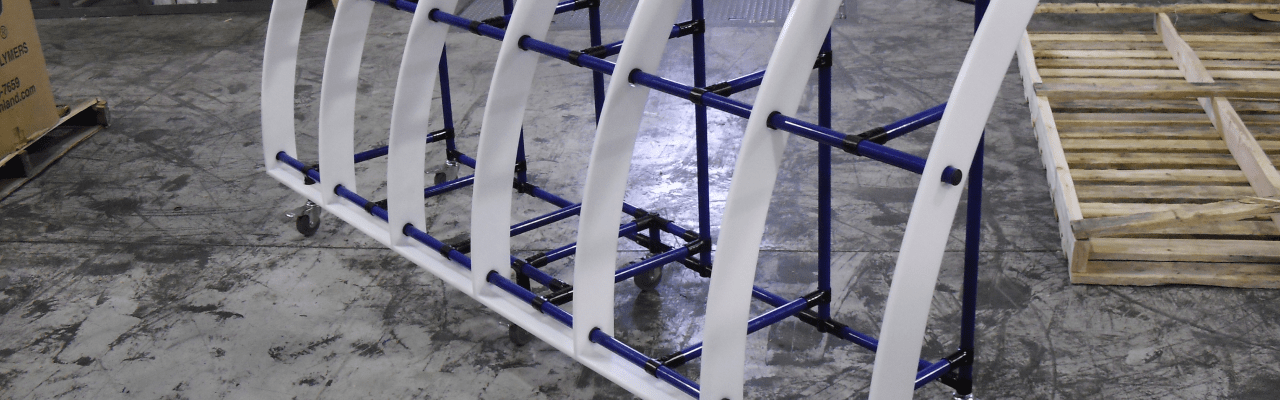

A COAT RACK DESIGNED FOR AND BY THE CHILDREN OF THE LA-LE-LI CENTER

A COAT RACK DESIGNED FOR AND BY THE CHILDREN OF THE LA-LE-LI CENTER

Flexpipe is proud to have partnered with the Educational Help La-Le-Li Center in Farnham to host a coat rack building workshop. The center had expressed a need for storage for the coats, boots and lunch boxes of the young people who frequent the premises. We therefore imagined together the ideal coat rack for their needs and planned the workshop day.


In this picture, France Gagné, Mireille Belleau, the children of the La-Le-Li center, and the Flexpipe team members


The workshop took place on a pedagogical day that coincided perfectly with International Day of Education. 10 young people between 6 and 11 years old were able to participate in the construction of their coat rack. They were also able to proudly sign the top of the piece of furniture in turn to reinforce the feeling of accomplishment that inhabited them.


The activity was intended to be fun, imaginative and inclusive for all ages. Young people will have put their creativity, their dexterity... and their strength to the test!


The La-Le-Li Center is an educational support center for elementary-aged children in the Municipality of Farnham. Thanks to dedicated volunteers, children can benefit from personalized assistance adapted to their needs. Whether it's homework help, tutoring, or activities during pedagogical days. All interventions are dedicated to supporting the parent in his role as educator. It's a great local initiative that we want to support, because we believe we can help make learning possible in a fun and concrete way!


Using Flexpipe for Lean Manufacturing CabinetMakers

Using Flexpipe for Lean Manufacturing CabinetMakers

Implementing lean is a journey in itself. No company goes from 0 to 60 in record time when implementing lean principles. They learn, get better, learn some more and then improve some more. Each step of that journey is made easier when senior management is entirely on board and, in some cases, driving the lean journey.


ADOPTING LEAN MANUFACTURING
Regardless of your industry, some employees may be reluctant to change, while others may embrace it. For those who resist change, it’s often a question of personal comfort; we’ve always done it this way, so why change? However, with consistent training, constant feedback, daily upgrades, and commitment, you will achieve significant lean improvements using Flexpipe.

Flexpipe is a tool, but the employees drive the improvements

Here are just a few examples of lean improvements using Flexpipe products.

Source: MetCabinet About Us

[caption id="attachment_40677" align="alignnone" width="1280"] Look and feel Lean with clear floor lines.[/caption]
INCREASE PRODUCTION FLOOR SPACE BY REDUCING OVER-PRODUCTION
Several cabinet makers using Flexpipe can decrease over-production while dramatically reducing the square footage of their shop floor. This reduction in floor space saves the company money while making it easier to manage materials, quarantine defective products, collect scrap or refuse, and move semi-finished and finished goods between lean work cells.

We often come across Cabinet makers who have fully adopted batch production. Trying to make different types of products simultaneously, along with redundant work processes and poor material flow, often leads to WIP cabinets, drawers, trims, and sides strewn about the shop floor. We see this quite often. The solution to this issue is provided below

Learn about one-piece flow and how it could be put in place.
Make sure management and owners are on board with the new one-piece flow philosophy.
Be ready and open-minded to adjusting work tasks, departments, and different production and assembly activities.

[caption id="attachment_40681" align="alignnone" width="1280"] The Flexpipe cart holds a day’s worth of nailer boards for final cabinet assembly. Vertical bins for longer parts where different parts are clearly separated and labeled to save time as opposed to searching around aimlessly (nonvalue added). A measurement label is placed alongside the Flexpipe structure to quickly identify and measure parts (visual management).[/caption]


[caption id="attachment_40685" align="alignnone" width="1280"] Color-coded structures help operators and technicians immediately determine the urgency of customer orders. The blue drawer carts are for orders with standard lead times, while the red carts are for urgent or rush orders (visual management). All parts are labeled on the pipes with AL-TAG2 and a non-marking marker is put on the cart for identification.[/caption]

[caption id="attachment_40824" align="alignnone" width="1280"] Flexpipe modified 5S Takt board complete with work order instructions, layouts, and plans.[/caption]

This Flexpipe cart in the finishing department is used for cabinet frames, end panels, backs, shelves, etc. Each subcomponent and material is neatly placed in its appropriate slot, making it easy for operators to access a given piece when needed.
OPTIMIZE MACHINE UTILIZATION WITH EFFICIENT CHANGEOVERS
Companies invest a lot of money in automating their machinery and equipment. Unfortunately,   these same companies often ignore the lean structures and material handling solutions critical to maintaining running equipment. They simply don’t invest enough time, energy, or money to ensure that their material handling structures are optimized.

Even the newest automation falls short if the structures around them aren’t properly organized. Not convinced? Take some time to investigate and measure your cutting machine’s productivity and efficiency. You’re likely to find there is far more downtime than you expected. Very often this is due to inefficient changeovers.

Review your loading and unloading procedures. Focus on ergonomics so that operators have easy access to tools and work instructions and never have to wait for one-at-a-time forklift deliveries of raw materials.
Have the next job (complete with material and work orders) ready well in advance to reduce waiting time.
Try to put as much as possible every day on casters to give you flexibility and reduce waiting time.

[caption id="attachment_40739" align="alignnone" width="1280"] Tape storage placed within the work cell allows for immediate replacement of consumables.[/caption]

A Flexpipe cart on the Homag Edgebander machine at Superior Cabinet. It applies matching edge tape of various colors to the sides of the melamine to match the finish on the top and bottom.Source: Superior Cabinet.

[caption id="attachment_40751" align="alignnone" width="1280"] Load or unload materials with a pallet stand on wheels to avoid waiting for a jigger or forklift (non-value added).[/caption]

[caption id="attachment_40755" align="alignnone" width="1280"] Flexpipe Manual cutting table with a 5S shadow board.[/caption]
USING WORKER CREATIVITY TO BUILD A LEAN CULTURE
You will never sustain a lean culture if you don’t engage, train, and spend on your employees. The woodworking industry has so many talented, hard-working, resourceful, and creative people. Unfortunately, there are often underutilized. This unused worker creativity is by far the biggest waste in the industry.

Several companies have highly-skilled and experienced employees who have decades of experience. While experience is important, it can sometimes lead to an unwillingness to adopt change. Again, the mindset becomes, “Why change anything when it has been working for  25 years?’’. Here are some guidelines to make sure all employees are speaking the same language.

Train workers, so they can name and spot the 8 most common causes of waste.
Get employees into a routine by holding a daily meeting where the agenda covers the previous day’s improvements and any KPI.
Engage workers and make them take part in small Kaizen events. This is a great opportunity to test out ideas, modify structures and learn from mistakes.

[caption id="attachment_40764" align="alignnone" width="1280"] Customized Flexpipe cart with multiple slots for easy access to materials.[/caption]

Rack design by Michael Kachur – Continuous Improvement Manager and certified Lean Champion at Superior Cabinets in Saskatoon, Canada.

[caption id="attachment_40829" align="alignnone" width="1280"] Customized Flexpipe structure holding bins and securing semi-finished cabinet glass frames.[/caption]

ELIMINATE WASTED TIME BY INCREASING ASSEMBLY PRODUCTIVITY
Within the woodworking industry, it’s common to devote money and resources to storage, trimming or cutting departments while the packaging department is left with too few resources or focus.

Assembly is a labor-intensive activity where small incremental changes can have a large impact. Most importantly, these changes don’t involve changing the layout of the shop floor.

Creating a custom-made lean work cell or workstation reduces unnecessary movement and excessive walking. When lean work cells are positioned near one another, it reduces transit time for work-in-process parts. 5S and ergonomics are critical requirements for these new lean work cells.

Get employee feedback on what they waste time on. It can be missing tools, instructions or having to walk long distances to move parts or get material.
Celebrate your accomplishments and improvements. Congratulate your employees and be proud of what you’ve accomplished.
Make these small Kaizen events a frequent occurrence.

Wood vs Flexpipe Tube and Joint System
Wood can still be used for cart surfaces or siding. However, your stations and carts should be made from Flexpipe – which is easy to adjust or modify. Flexpipe and wood are similar in price but Flexpipe is far more durable, versatile, and much stronger compared to wood. More importantly, it won’t rot or warp due to humidity and moisture.

[caption id="attachment_40768" align="alignnone" width="1280"] Wood carts can still be used for cart surfaces or siding but other structures should be designed with Flexpipe.[/caption]

Wood cart Feist Cabinets & Woodworks
ALUMINUM EXTRUSION VS FLEXPIPE TUBE AND JOINTS
You can save up to 50% with Flexpipe tubes and joints compared to aluminum material handling systems. Aluminum has the required precision for machines, equipment, and robotic integrations, but it’s far too costly for carts, racks, or workbenches. Another issue with aluminum is the tendency to have water stains over time. Flexpipe is easier for workers to use, far less expensive ($8 per 8 feet of pipe), is available in multiple colors, and will never stain.

STEEL VS FLEXPIPE TUBE AND JOINTS
Steel is a universal material with multiple applications. However, creating material handling equipment with steel requires welders and painters. Changing existing welded structures is even more costly and time-consuming.

With Flexpipe, there’s no need for welders or painters. There’s no need to spend an inordinate amount of time trying to modify an already welded structure. Anyone with a little creativity can cut or assemble pipe and joints in a fraction of the time and costs compared to welded structures.

You can quickly put in place improvements and change your Flexpipe structures every day as ideas and suggestions come forth. No need to scrap old, welded structures. No need to re-weld existing structures. The changes you make to a Flexpipe structure in the afternoon can have you up and running in the morning.

[caption id="attachment_40805" align="alignnone" width="1280"] Bare steel - exposed to the environment - will eventually corrode and rust. Flexpipe's products never corrode or rust and there is never any painting of a Flexpipe structure as the piping is available with multiple colors of plastic coating.[/caption]

SIMPLIFYING LEAN MANUFACTURING ADOPTION WITH FLEXPIPE'S MODULAR SYSTEM
Flexpipe is widely-recognized among North American manufacturers as a modular, scalable, easy-to-use, and inexpensive material handling solution. The company's free design extension for SketchUp allows manufacturers to custom-design and build their own tube and joint material handling structures. Customers rely upon Flexpipe's team for its design acumen, speed of response, and the company's cost-effective solutions.

If you would like to see how Flexpipe can help you adopt lean concepts while reducing your costs of material handling, then contact us now.

Poka-Yoke: A Time-Tested and Simple Way to Mistake-Proof Manufacturing

Poka-Yoke: A Time-Tested and Simple Way to Mistake-Proof Manufacturing

Often seen as the ideal way to ensure the error-free assembly and production of finished goods, Poka-Yoke has been a mainstay of lean manufacturing since 1960. Shigeo Shingo – a Japanese industrial engineer and expert in lean manufacturing principles and the Toyota Production System – developed a simple failsafe approach with a clear set of lean principles designed to eliminate human error while improving product quality..

So, how does Poka-Yoke work, and what role does Flexpipe’s modular and scalable tubing system play in error-proofing your manufacturing process?
The High Costs of Defects in Lean Manufacturing Environments
One of the biggest causes of waste in lean manufacturing includes defects. Sometimes they’re caused by voids, inclusions, or porosity in materials like steel, aluminum, brass, etc. These defects often appear during machining as the material is removed and the void or inclusion is exposed, which makes the part completely unworkable.

Other defects occur later down the production line during the assembly of sub-components, work-in-process parts, and other labor-related manual processes. Regardless of how or why these defects occur, the costs for manufacturers can be measured in lost production, lost wages, machine and assembly downtime, delayed product shipments, upset customers, and any costs associated with having to stop the production line.
Understanding Poka-Yoke
Some defects are entirely unavoidable. They happen regardless of how many stopgap or failsafe mechanisms are in place. These defects are often seen as “Acts of God,” which are situations where defects occur that cannot be accounted for. In this case, think of these Acts of God defects as situations nobody could have possibly anticipated.

Poka-Yoke isn’t a tool to eliminate these Act of God defects. It’s a tool to ensure that operators and technicians follow the correct process steps and that the work task is done correctly. More importantly, it’s a fail-safe mechanism that either stops human error at the source or instantly notifies the operator and technician that an error has occurred. In both cases, the emphasis is on immediately addressing the error or defect and taking corrective actions.

One type of Poka-Yoke prevents the error from occurring, while the other detects the error once it’s happened. This leads us to the two main categories of Poka-Yoke: Prevention-Type and Detection-Type.

[caption id="attachment_40868" align="alignnone" width="1280"] Customized Flexpipe Part Rack: Each portion of the rack only accepts a certain size, length, and dimensions of a semi-finished part. Images and writing on the rack define what part should be placed and the go/no-go decision - or Poka Yoke - is made by the protruding bars.[/caption]
1 - Prevention-Type Poka-Yoke
This type of Poka-Yoke is often enacted by manufacturers who have experienced previous errors. In this case, they’ve experienced human errors and know they will happen again if they don’t enact a failsafe.

In other instances, a prevention-type Poka-Yoke is initiated during the product’s design stage when engineering and production identify critical assembly or work tasks where human error is likely to occur. Either way, the idea is to prevent the error from occurring by manufacturing or buying a jig or fixture. If an error does occur, the next step is to stop the work task and quarantine the defect.

Should the operator or technician encounter another defect or error on the following product, manufacturers will often stop the process and inspect the batch or production quantity. They may then use a corrective action report outlining the cause of the defects and possible solutions.

Identify the potential for error to occur.
Create a jig, fixture, warning device, or process to capture errors.
Stop the work task once the error occurs.

2 - Flexpipe Modular and Scalable Jigs and Fixtures
One of the more common issues manufacturers encounter is making multiple jigs and fixtures to accommodate all the manual steps involved in their manufacturing process. This problem is only exacerbated when companies have an expansive product line. Unfortunately, most of these jigs and fixtures are machined or welded, making changing them labor-intensive and costly.

To avoid the high costs, time, and labor involved in changing existing welded fixtures and jigs, several companies choose to make new ones. They then retain their older jigs or have them stored or shelved. Not only does this take up valuable shelving and warehouse space, but it often leads to mislabeled or misidentified jigs and fixtures. However, there is a solution.

Flexpipe’s modular and scalable tube and joint system mean manufacturers can design, assemble, change, or modify their jigs and fixtures in a fraction of the time and at much lower costs compared to welding or machining new fixtures.

(1 & 2): Flexpipe Cart with Jet Skins Slots: Each slot can only accept a certain size, width, and dimension of skin. Operators immediately know which skin fits in its appropriate slot.

Flexpipe has multiple pipe colors, allowing manufacturers to make color-coded racks where semi-finished and work-in-process parts that have gone through the Poka Yoke process can be stored and quarantined. These 1 1/16 in (28 mm) diameter galvanized steel pipes have a polyethylene scratch-proof coating and come in white, black, blue, yellow, and red.

This “cut-to-length-and-assemble” system is easy to use and just as easy to modify or change. With a scalable Flexpipe Poka-Yoke structure, companies no longer have to retain older welded fixtures or machine new ones. No more issues with misidentified jigs. No more having to store older outdated fixtures. Instead, companies retain their Flexpipe jig and fixture designs and remake their structures when needed. It’s a saving in time, money, and space.

3: Flexpipe Numbered Flow Rack: Numbered slots and specific with specific heights ensure proper part placement. 4: Flexpipe Cart with Vertical Holders: Custom-made tug cart has vertical holders that only accept a specific width of tubes.

5: Flexpipe Cart with Molded Styrofoam: Operators can only put in subcomponent parts that fit the Styrofoam mold dimensions. If they don’t fit, they shouldn’t be on the cart. 6: Flexpipe Cart with Custom Holders: Semi-finished parts must be a certain length to fit horizontally on the cart. If the length isn’t right, it simply won’t fit.
Detection-Type Poka-Yoke
The second approach focuses on warning or notifying the operator once an error has occurred. While the first is preventative, this is a more reactive fail-safe mechanism that stops production immediately. This type of Poka-Yoke often involves equipment or electronics and is predicated on the operator receiving a warning or visual queue once the error occurs. Equipment manufacturers will often incorporate sounds, alarms, and bright red lights to notify operators of an error.

The goal is to provide warning signs in case an operator is present so that they can shut down the equipment or machinery. However, if no operator is available, the system uses a failsafe mechanism that immediately shuts down the operation.

The operator receives a warning.
Error detected immediately.
The failsafe mechanism stops the work task.

Mistake-Proofing Your Manufacturing

Adopting Poka-Yoke as an error-proofing technique will help reduce your manufacturing costs and improve product quality. Success requires your team to define every critical work task and implement a fail-safe mechanism for each of those tasks.

Identify the Work Task or Process for Poka-Yoke

Think about the critical work tasks involved in manufacturing your finished good. You probably already have steps in your production process where periodic quality inspections or reviews occur. A Poka-Yoke can remove those inspections altogether. At the very least, you’ll be able to reduce some of these inspections and rely solely upon the operator or technician.

Clear Assembly Drawings and Work Instructions

Clear top-level and sub-assembly drawings and work instructions are an absolute must. Make sure you have a quality management system that validates assembly drawings, instructions, and work tasks long before you issue work orders to production. The Poka-Yoke system will stop human errors by ensuring the work task is performed correctly and that parts and sub-components are properly aligned. However, bad assembly instructions defeat the purpose of having a Poka-Yoke.

QC-Inspected Flexpipe Structures and Calibrated Equipment

With the proper failsafe mechanism, your QC department may not have to do as many periodic inspections on work-in-process and sub-assembly parts. However, that only happens if your Flexpipe jig or fixture is periodically inspected for fit, form, and function. Over time, even the best-constructed jig or fixture will lose its dimensional tolerances. Regularly checking your Flexpipe structures means ensuring all joints, screws, nuts, connectors, and assembly components are adequately secured.

Trial Runs or Pre-Testing Flexpipe Jigs and Fixtures

Make sure you try some trial runs with your Flexpipe structure. You may need to make some slight adjustments to be sure your jig or fixture works appropriately. Bring your operators and technicians into the process and get their feedback on your Flexpipe jig or fixture's usefulness. They’ll be using it and therefore have great insight, so ensure they’re included in the process.

Clearly Defined Poka-Yoke Process Steps

While the failsafe mechanism will stop human errors from occurring, you will still need to outline the process steps technicians and operators take when an error occurs. Will you have your operators quarantine the product immediately? Will they have to call a supervisor to review the issue? How often should the operator validate future components before shutting down the assembly process? Each of these questions needs to be determined well in advance.

Flexpipe Jig or Fixture Management Program

It’s good practice to have a Flexpipe jig or fixture management program in place. It should define when, where, and how jigs and fixtures are stored and shelved, when they are replaced or refurbished, when they are inspected, and which jigs or fixtures go with their appropriate work tasks or work cells. The color-coded piping may help here. Ensuring proper nomenclature means all your Flexpipe structures are easily identified.
The Three Methods of Poka Yoke

When companies look to reduce the risk of human error and mistake-proof their manufacturing, they end up choosing between three methods of Poka Yoke. When implemented, these three methods will help eliminate the high costs of errors and defects. They are simple methods that help operators and technicians eliminate errors.
Contact Method

The contact method eliminates errors by immediately detecting defects between mating parts or individual parts based on their physical attributes. These attributes can include the part’s width, size, length, thickness, color, or design.

Examples of contact methods include USB ports, power outlets, locks only accepting one type of key, or even simple children’s toys like sorting cubes where balls and blocks must fit in specific slots.

In manufacturing environments, a contact method Poka Yoke might include switches or measurement devices that won’t allow work to begin unless the part fits or matches correctly. Companies that use shadow boards with protrusions or bars that only accept a certain sized part are examples of contact method Poka Yokes. Foam packaging in boxes is another example of where only the right dimensional parts will fit into the foam’s design.

The contact method Poka Yoke is best used for repetitive work operations. It eliminates errors and immediately notifies operators and technicians of any defective parts or misaligned parts.
Constant Number Method

The constant number method – sometimes referred to as the fixed-value method – is a type of Poka Yoke where a specific number of parts or consumables must be used in each work operation. If there are any parts left over at the end of a work operation, then an error has been made.

In manufacturing environments, kitting boxes would include several parts that must be used. If any parts remain, the integrated assembly cannot move to the next chain in the process. This type of Poka Yoke is good for work tasks that are repetitive. This means a certain number of movements and actions must be done sequentially.

An example in our everyday lives would include assembling Ikea furniture and having screws, nuts, or bolts left over or a parent assembling a hockey net or bicycle and having parts remaining.
Sequence Method

With the sequence method Poka Yoke, a predetermined number of work tasks or steps must be done sequentially before the part can move to the next operation. In several manufacturing environments, there are systems in place with switches that won’t allow an operator to proceed unless they’ve done the operation or used the parts in the proper sequence. Either the system shuts off completely or the operator is given a visual queue like a red flashing light and warning sound.

An example of the sequence method Poka Yoke might include a car providing a warning light or sound when the driver doesn’t put on their seat belt or a manual car not allowing the engine to start until the driver pushes down on the clutch. Other examples include appliances like microwaves and washing machines not operating until the door is closed.

Flexpipe’s Multiple-Use Tube and Joint System
Flexpipe Inc is a Montreal-based designer, manufacturer, and integrator of modular and scalable tube and joint systems. The company’s Flexpipe Creator Extension is an easy-to-use free design extension for SketchUp software that empowers manufacturers to design their structures. The savings in time and money means manufacturers can assemble, change, or modify structures as needed. If you would like to learn more, contact us now.