Flexpipe Kaizen Tool


Pipes and joints systems vs. T-slot aluminium profiles: Comparing modular systems

Pipes and joints systems vs. T-slot aluminium profiles: Comparing modular systems

Many engineers are making the mistake of using T-slot aluminum extrusions everywhere on their production line. Here's how to avoid creating overkill, overbuilt, and overpaid structures.

This guide will cover the following:

What Are the Advantages of Each System?
How to Choose a Modular Systems?
What Type of Structure do You Want to Build?
What Loading Capacity Do You Need?
Does Your Structure Will Evolve Over Time?
What's Your Budget?
Is the Aesthetics a Priority?
Takeaway

Determine the loading capacity of a structure using our CAPACITY CHARGE CALCULATOR.

DOWNLOAD

What Are the Advantages of Each System?
These modular systems should not be considered competitors because they have their unique advantages and should be used in deferent situations. Because T-slot aluminum constructions are sturdier and more precise, they are an obvious choice for production systems involving robotics and automation. On the other hand, the pipe and joints system, perfectly embody the Lean Manufacturing concept. It's simple to assemble and customize while also been more affordable.

Pipes and Joints

Much lower pricing
Structures can be assembled faster
Easy to design and assemble
Order online
Structures can be easily tested, improved and adapted for lean purposes

T-slot Aluminum Extrusions

Heavier load/charging capacity
Make sturdier structures that can take rapid and repetitive movements
Modern and sleek style 
More precision
Ideal for jigs and robotics
More components and parts to integrate robotics and automation systems

How to Choose a Modular Systems?
When analyzing different modular system options to implement or adapt a production line, a lot must be considered. Maximizing a production floor's efficiency, ensuring employees are working in a safe, ergonomic manner, and ensuring the production blueprint can be adapted over time are key points to keep in mind throughout the conceptualization process.

While both T-slot aluminum profiles such as 80/20's or Vention's and tubular systems like Flexpipe's offer great solutions to manufacturers and design engineers. The products have unique characteristics that will influence how they will be of better use in a production context.

What Type of Structure do You Want to Build?
Because T-slot aluminum constructions are sturdier, they are an obvious choice for production systems involving robotics and automation. 

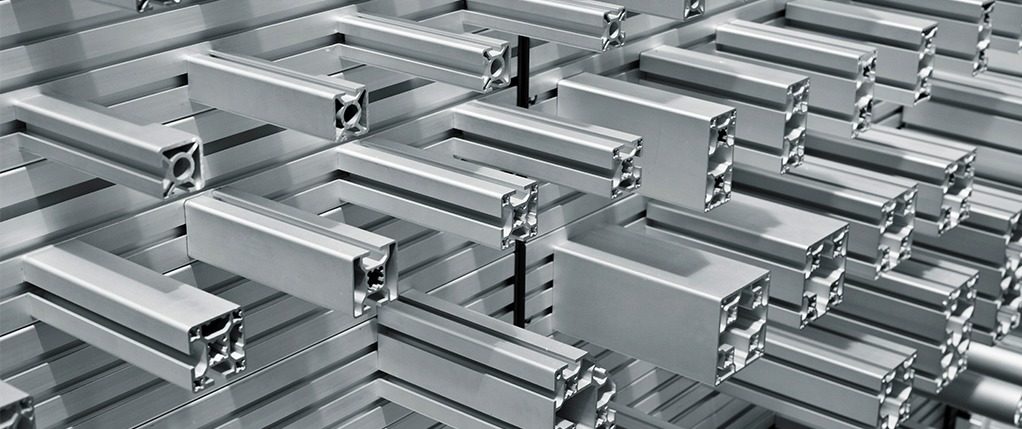
They are made with refined equipment that can offer very tight tolerances. Their durable and resistant nature can also support a variety of robotic applications facing rapid and repetitive movement, such as:

Framing for robotic mounting structures
Jigs and fixtures
Automation systems
High precision conveyor systems or assembly station

It's A Matter of High Precision
There is an intubation space of 1 inch in the tubular system when you insert the pipes into the fittings -even if the tubes should be fully inserted. This remaining space makes the assembly process easier by giving a margin of error for small cutting or design mistakes. 

While this detail might come in handy in some contexts, the facts remain: tubular structures are not as precise as aluminum framing systems. 
The tubes and fittings structures are more adapted to other types of use. 
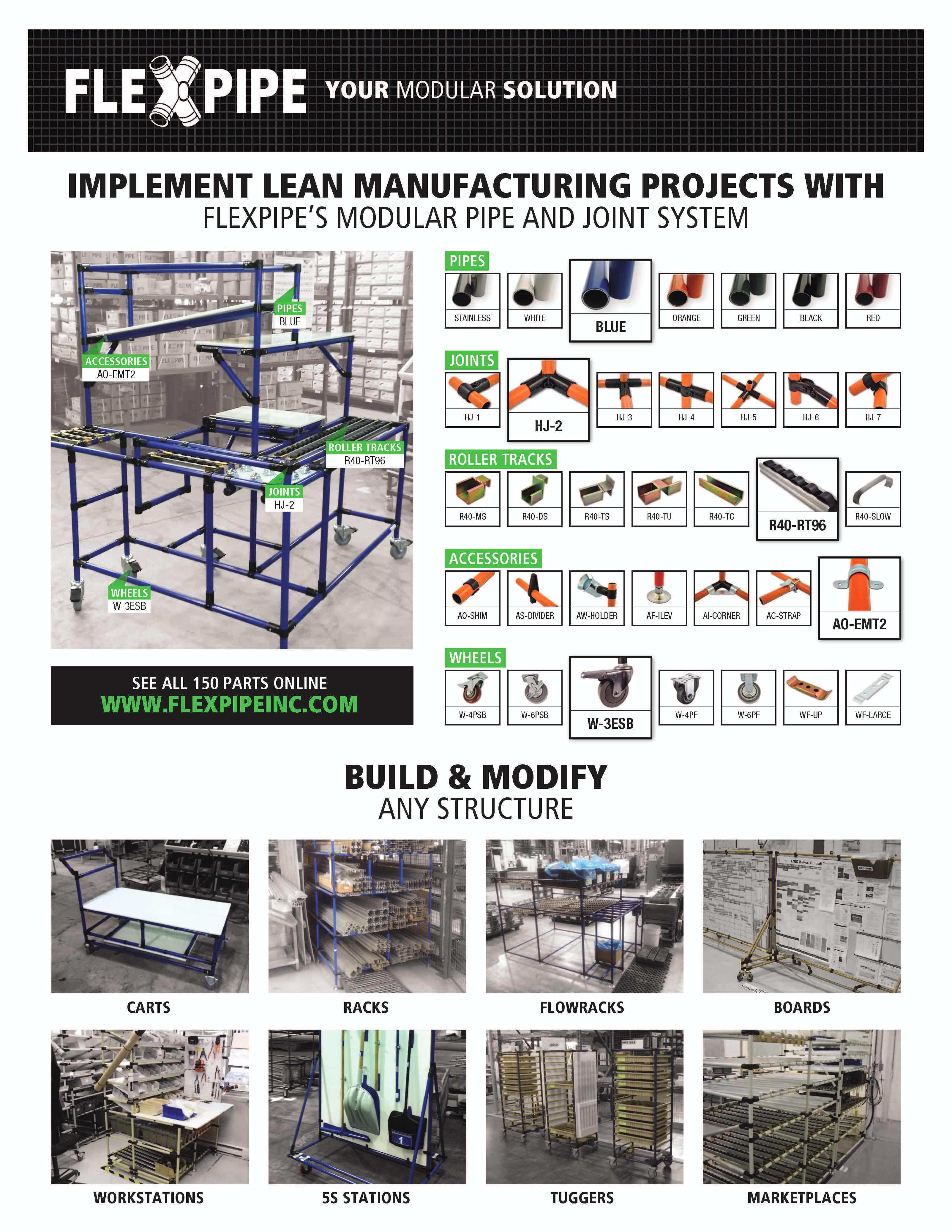
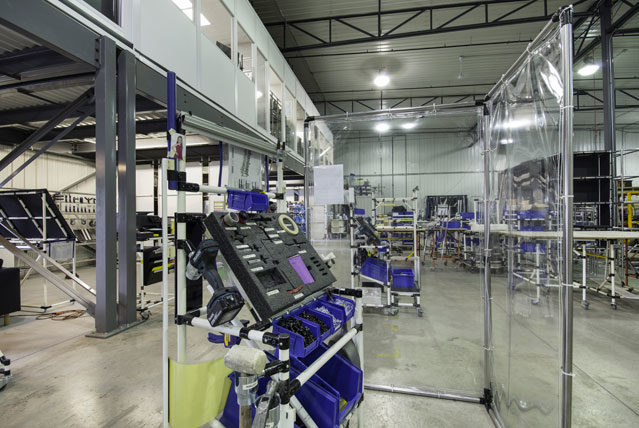
Here are a few examples of various material handling systems that would be more efficiently built with pipes and joints than aluminum extrusions.  

It would be considered "overkill, overbuilt and overpaid" if you consider building the following structure with aluminum extrusions:

Flow racks 

Return lines for empty containers to ensure continuous production. 
Supermarket racks to have stock nearby.
L-shaped flow racks for the proximity of parts.
One-piece flow conveyor stations for lean manufacturing.
Gravity-fed workstations to free up floor space.

For more information on flow racks, check out this article on the most common types of modular gravity flow racks and how they can increase production line efficiency.

Racks

Adaptable racks.
Shelving with added value. 
WIP racks to reduce defects.
Storage racks are intended as a poka-yoke.

For more information on racks, check out this guide on the most popular modular industrial racks and shelving systems.

Workstations and workbenches 

U-Cell stations will improve your lead time. 
Ergonomic stand-up stations and work centers are great to have task-relevant information nearby. 
Personalized adjustable working tables are perfect to meet your worker's needs. 
ESD workstations to reduce defects.

For more information on workstations and workbenches, check out this guide on the different types of custom-made industrial workstations & workbenches.

Modular boards

Point-of-use or shadow boards.
Rotating cube and 8-faced boards.
Meeting space.
1, 2, 3, or 4 sided boards.

For more information on boards, check out these types of modular boards.

Carts

Kitting carts.
Tuggable carts.
WIP carts
Warehouse picking carts.
Truck carts.

For more information on carts, check out this guide on the popular types of carts for industrial material handling.

What Loading Capacity Do You Need?
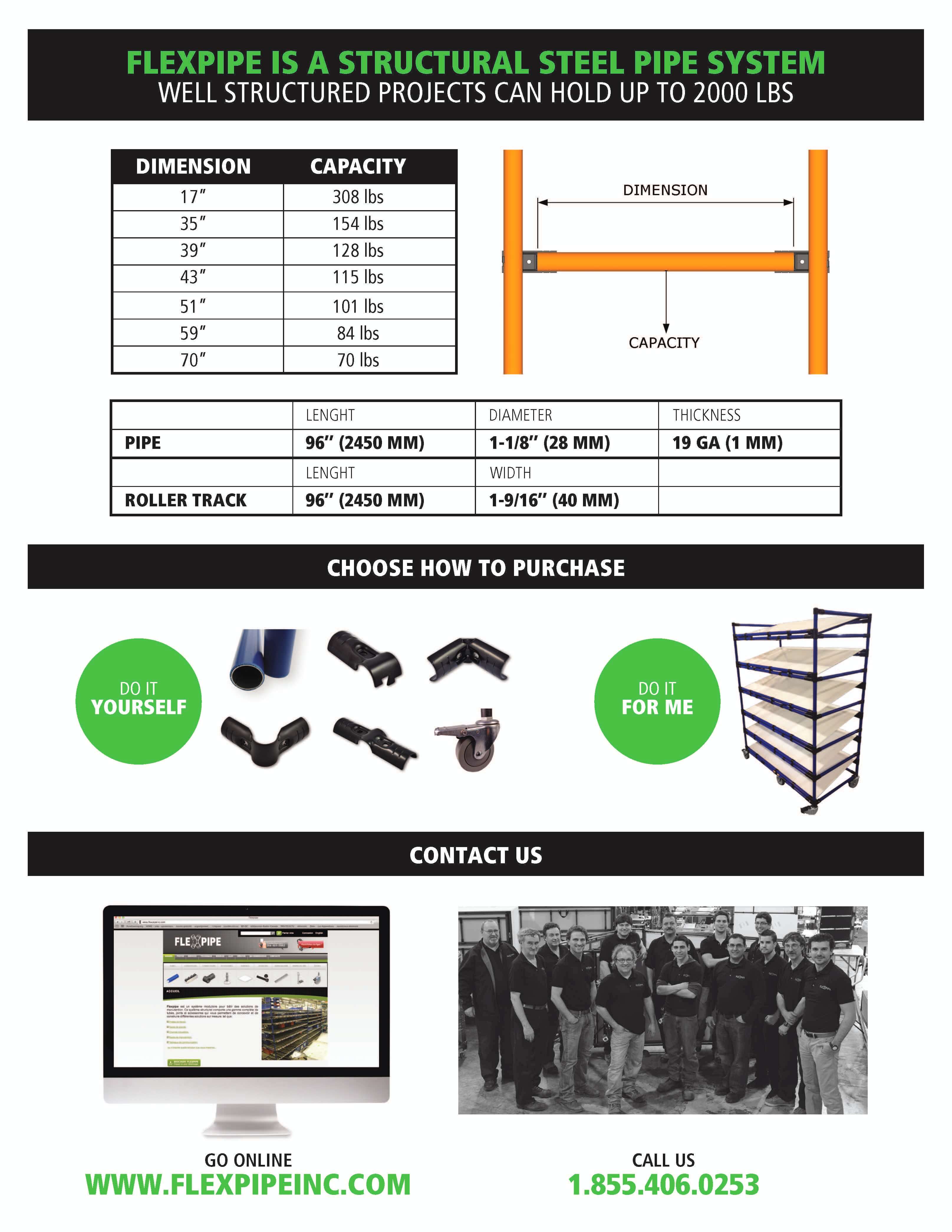
The most robust structures made with the pipe and joint systems can support a maximum charge of 2000 pounds!

Pipe and joint systems like Flexpipe mostly use 28 mm OD pipes, with or without plastic coatings. The thickness of the pipes generally varies between 1 and 2 mm, providing various solidity levels which can be adapted to the project's specifications. But since the tube's diameter stays the same, Flexpipe structures will never be as strong as aluminum extrusions structures. The metal joints and various fasteners also contribute to the strength of the frame.
For more information on loading capacities, check out this guide created to help you calculate the modular structures' loading capacity.

Determine the loading capacity of a structure using our CAPACITY CHARGE CALCULATOR.

DOWNLOAD

Being able to choose between different sizes of profiles ranging from 20 millimeters square to as large as 180 by 360 millimeters makes t-slot profiles a perfect option for projects involving very heavy loads.

T-slotted aluminum profiles are offered in different types and sizes, the most popular being the 6063-T5, often ranging from 1 X 1" to 1,5 X 1,5" inches. The choices in inch or millimeter square make it an excellent choice for light to heavy-duty framing projects.

According to this article on Formaspace, the biggest aluminum profiles used to make 80/20 extruded frames carry very heavy charges: 6105-T5 aluminum alloy has a tensile strength of 35,000 lbs. per square inch! 

Does Your Structure Will Evolve Over Time?
Because of the lower costs of pipes and fittings "modular systems" and the simplicity of the tubular approach, tests can be carried out more easily before implementing new structures. Manufacturers can, therefore, quickly reconfigure a wide range of assembly line components based on feedback, with minimal capital outlay. 

Engineers can spend more time brainstorming and continually optimizing assembly processes. Rather than designing each structure from scratch, resulting in higher employee satisfaction and optimization of the production process!

Because pipes and fittings systems are more straightforward and involve fewer components, it's easier for engineers to shop online, figure out how they can use the product for their specific needs, and become creative more quickly! 

It's also easier for employees working on the assembly lines to get involved in the optimization process, stay proactive, and improve their work tools. Which is excellent for professional satisfaction and motivation!

Since the cost is higher, the testing part becomes more expensive and financially risky with the aluminum extrusion profiles. Making the whole testing and trying process more complicated than it is with the tubular system. This constraint tends to result in a longer, more complex planning process when creating new modular structures. 

Adapting and Evolving: a Constant Concept
Perfectly embodying the Lean Manufacturing concept, the Flexpipe production systems can easily be adapted to follow the production's new needs and reality. The simplicity of the structures ensures that any changes can be applied quickly and tested right away, thus leaving room for errors and constant improvement along the way.

Modifying already existing T-slot frames is a little more complex since they're also more complicated to assemble in the first place. Because of the various components involved in the system, the modular aspect of the structures is not as easily adaptable to feedback and testing. On the other hand, the multiple parts open up more options and possibilities for robotic integration and automation of specialized types of systems.

What's Your Budget?
Although the products' cost varies depending on the specifications of the project, aluminum tends to be about 30% more expensive than Flexpipe. 

For some manufacturing companies designing and working with an important number of workstations and production systems, the choice of material becomes very important. General application has a significant importance when it comes to choosing the best option. 

However, when it comes to intra-logistic applications where push-carts and flow racks are required, the cost and flexibility of pipe and joints systems trump T-slot aluminum extrusion profiles.

Is the Aesthetics a Priority?
Some professionals like the sober, straight lines, and modern looks of the T-slot aluminum profiles. Therefore, it could be considered a better choice for the aesthetics of their framing system. 

While it is possible to buy colored aluminum extrusions, it is more common to see clear aluminum finish or the typical blueish color of anodized aluminum often seen on Vention's extrusions for example, because of the considerable costs involving the powder coating process for coloration. 

On top of the traditional black and stainless colors, tubular systems like Flexpipe offer blue, yellow, green, white, red, orange, gray, and ivory colored tubes. The choices in colors mostly aim to make it easier to use color-coding systems on a production floor. Still, they can also bring a lighter atmosphere to a work environment! 

If you're looking for a sleeker, sober look, Flexpipe's stainless tubes matched with chrome-plated joints could very well match your taste. 
To better visualize what a pipe and joint structure look like, check out our photo gallery featuring structures assembled internally by the Flexpipe team.

Takeaway
While both products offer customized, creative and efficient solutions in various production structures, their technical particularities make their use complementary. 

Each of them is more appropriate in different contexts of the production system. On your typical assembly line, any robotics or automation-related construction system will likely be more productive and precise if built with t-slotted aluminum profiles. On the other hand, pipes and fittings systems will be the obvious choice when building flow racks, workstations, modular boards, or carts!

Temie Fessa, a project manager for Flexpipe who has been working in the field for over ten years, says many of his clients will use both systems in different contexts. He points out that when engineers or consultants have been using aluminum extrusions on their production line for a long time, they'll tend to keep the same habits when designing new structures, as a professional legacy. Because they are so used to the t-slot aluminum framings, they won't question their choices or look for other options unless they are given a specific assignment related to budget cuts, for example.

And since the price of steel tubes and fittings is much lower than aluminum extrusions, once they've discovered the tubular systems and how easy it is to use, many companies will start integrating the tubular products as much as they can in the production environment. Especially when they don't need the heavy-duty aspect or the precision provided by the strut profiles. Using steel pipes tubular systems, therefore, allows them to cut the costs without any downside.

Post-Covid 19 protective structures

Post-Covid 19 protective structures

In the current crisis, companies must quickly adapt their production. Certain security measures will be necessary to ensure the protection of all employees. You will find in this page a panoply of protectives structures that want to be inspiring, simple to realize, and at a low price.

Why buying Flexpipe in the pandemic situation?
The needs linked to Covid-19 being temporary, when the pandemic is over, it is very easy to dismantle the tubes and joints in order to transform them into other workstation designs and find them a second life! You'll find two types of structures below: the ready to assemble kits and inspirations for customized protective structures.
5 READY TO ASSEMBLE KITS
Typically, contagions are passed when individuals are within 6 feet of each other. Coughing and sneezing, which can introduce potentially contaminated droplets into the air, is one of the main ways COVID-19 is being spread. Here are 5 sneeze guards kits to protect your clients and employees.

- 36x72 Sneeze guard assembly kit - 175$
- 48x71 Sneeze wall assembly kit - 205$
- 32x32 Sneeze Screen assembly kit - 99$
- 20x30 1/2 Sneeze side assembly kit - 99$

Take a look at all the kits

Watch the assembly video


How to recycle your Sneeze guard pipes and joints after the crisis (an example)

______________________________________________________________________
CUSTOMIZED PROTECTION STRUCTURES
Protectives separators between production employees
Here are some customized inspirations. All of these ideas are adaptable. Our strength is tailor-made! Send us the required dimensions and we will assist you in the preparation of your project.

We can design plans quickly.
We can pre-cut and send you kits.
We can pre-assembled structures and deliver turn-key projects.
Mass production can be put into rapid action.

DOWNLOAD ALL COVID-19 PROTECTION STRUCTURE HERE
Line guard: download this plan

Assembly line dividers and protectors
Sneeze guard: download this plan

Sneeze guard: download this plan

Portable sneezeguards on casters with brakes.
Sneeze guard: download this plan

The next picture was sent by one of our favorite people in the Flexpipe Community! Jason Blain from Winpak who shared with us his brand new installation: sneeze guards that allow the workers to keep going in security.

And as he said, it was ''built while they were working and installed while they were on lunch. A fast but an effective build.'' Quick and simple!

Sneeze screen 32x32: download this plan

Sneeze wall: download this plan

Sneeze wall: download this plan


Employee / customer protection or for office workers
Sneeze screen 32x32: download this plan

Sneeze screen 32x32: download this plan

 
Cleaning and disinfection station

Handwashing station: download this plan

Hand sanitizer rack: download this plan

____________________________________________________________________________

WHAT CAN FLEXPIPE DO TO OPTIMIZE YOUR PLANT EFFICIENCY?

Flexpipe Modular materials handling systems can help you with implementing continuous improvement principles. Your team’s creativity can result in a 10% increase in productivity per year. It has been a proven system for more than 50 years now.

10 things to know about moonshine shops

10 things to know about moonshine shops

Contrary to popular belief, innovation isn’t always the result of a costly and challenging process. Sometimes, a little imagination and resourcefulness are all it takes to solve recurring problems. The moonshine shop, a corporate continuous improvement concept, is part of a new trend built around that notion. Here are ten things you may not know about this increasingly popular practice.

Listen to Cesar Flores owner of consulting firm Lean Moonshine shop going deeper in every aspects of a moonshine shop, from getting started to budget aspects.

Issue and ideas submitting process
Approval process
Space needed
Budget
How to calculate ROI

Download your printable PDF Moonshine shop checklist


1 - Moonshine shops were inspired by Prohibition
During the Prohibition era, from 1919 to 1933, Americans got creative and started making their alcohol, often at night by the light of the moon, from whatever materials and food (fruit, vegetables, etc.) they had on hand. This illegal liquor was dubbed “moonshine.”
2 - Toyota, a continuous improvement pioneer
[caption id="attachment_26468" align="alignnone" width="814"] Photo: The moonshine is directly connected with the human factor of the lean concept since the operators and assemblers who take part in the production chain are always invited to suggest improvements. They are the main players in a moonshine. Source: thedrive.com[/caption]

Without Toyota, the moonshine shop would probably have never come about. From 1948 to 1975, the automotive giant developed the famous Toyota Production System (TPS), a corporate philosophy that sought to find the most efficient production methods while eliminating waste.

Associated with what’s known in North America as “lean manufacturing,” TPS has inspired a variety of related concepts. Chihiro Nakao, founder of the Shingijutsu Company and a former Toyota employee, used TPS as a springboard to develop the moonshine shop.

 
3 - Failure is part of the process
In a moonshine shop, employees use simple and inexpensive materials to find solutions to problems they encounter in their day-to-day work. Using affordable materials means fewer budget constraints and lets employees give free rein to their creativity.

What’s more, that a fear of failure doesn’t hinder creativity. Quite the opposite—failure is a normal part of the creative process. For instance, if employees in a moonshine shop design an inefficient forklift, they don’t need to be afraid of being reprimanded by their superiors for wasting valuable company resources. They just roll up their sleeves and find a way to make it better. They might use protostorming and trystorming, which make it easy to create simple physical prototypes quickly.

Here's a good example of how to sketch processes and ideas while doing a brainstorm with the team.


At GE the mocking-up process is very important. And here again, the emphasis is put on the energy deployed around an improvement. It does not need to be big and beyond expectations to be put in place. After having evaluated all aspects, the actions taken have to be accordingly to the real needs and not bigger.


4 - Working together to find solutions is the most significant advantage

One of the main advantages of the moonshine shop is how fast you can implement improvements. For example, if an employee regularly performs a non-ergonomic movement, they can report the problem to the moonshine shop manager.

Instead of calling a subcontractor and waiting months for them to come and adjust the employee’s workstation, the manager (often called the “lean sensei”) can quickly come up with and implement a solution. The employee will be happy and feel like the company cares about them. This will encourage them to contribute other ideas, helping foster a culture of innovation within the company.

[caption id="attachment_26473" align="alignnone" width="814"] At Avio Aero plant in Bielsko-Biała the notion of working together is key to success. Source: magazineabout.com[/caption]

At Avio Aero plan in Bielsko-Biala Employees on the production line are here again submitting their ideas to the Moonshine shop manager via email or submission forms that are available everywhere on the plant. The moonshine shop manager will prioritize requests and organize a shop where different types of employees will be invited. It is good to also include workers outside the process to get some fresh ideas and perspectives.
5 - Moonshine shops foster innovation

If you’re already using other concepts to improve and optimize corporate processes and productivity, such as protostorming, trystorming, kaizen, Karakuri, or the 5S method, you’ll be happy to know that a moonshine shop is fully compatible with and complementary to these concepts.
6 - Suitable for any company

Simple to set up, moonshine shops aren’t just for multinationals like Toyota. Small- and medium-sized companies can also reap the benefits.

At Flexpipe, for instance, employees who want to cut down on physical waste can use a board. Using sketches, they first describe the current situation and then propose a solution. Once they are finished, the Continuous Improvement Committee, composed of four or five people, evaluates their proposal.

If the solution is approved, several employees are released from their regular duties to work in the moonshine shop. Using basic tools (saw, measuring tape, Allen wrenches, worktable, storage unit, etc.) and other materials, such as Flexpipe pipes and joints, wheels, and magnets, they make the solution proposed by their coworkers.

 
7 – Maintenance is not moonshine
Your company probably has a department that deals with everyday issues at the plant. These experts monitor, control, and maintain the equipment regularly to avoid breakdowns that could affect productivity. Although the moonshine shop shares this same principle, it has a different goal.

Instead of performing corrective and preventive maintenance, moonshine shop employees focus on continuously improving corporate processes. Rather than simply repairing a damaged workstation, they find ways to improve it so that it is out of service less often.

At Boeing, moonshining is everyone's business, but there are also people dedicated to it full-time. Efforts have been made to ensure that lean and continuous improvement workshops are applied outside of the production environment. Boeing in Seattle has therefore created a model of continuous improvement modeled on the philosophy of the moonshine with employees who, naturally, have a maintenance profile. The maintenance people are very creative and resourceful. It is also characteristic of the moonshine shop. This combination is undoubtedly a winner! But even though, don't forget that maintenance and Moonshine shops are two separate and totally different activities.

[caption id="attachment_26446" align="alignnone" width="429"] Moonshine shop at Boeing. Source: reliableplant.com[/caption]

Even though production at Boeing is on a large scale, the goal of the moonshine shop is on a small scale. We must ask ourselves the following question: should we deploy costly, extravagant, and time-consuming solutions to solve problems that require targeted and rapid actions at workstations that have a more or less limited lifespan.

Consult this entire slide presentation to know more about Moonshine process at Boeing

And, just because we like to see this video again and again, here's the famous time-lapse video of a Boeing 737 construction!


8 – Support from management is essential
[caption id="attachment_42420" align="alignnone" width="714"] Overview of a training space and continuous improvement workshop of a company in the packaging industry.[/caption]

Even with the best intentions in the world, a moonshine shop cannot be useful without constant and unwavering support from management. Senior management should keep in mind that employees assigned to this department will inevitably make mistakes and possibly “waste” company time and resources.

What’s more, although a moonshine shop is inexpensive to set up, it needs an operating budget and a certain degree of structure. It also requires a manager to serve as the go-between for employees and management, to ensure, among other things, that projects are running smoothly.

 
9 – Ideally, employees should receive value-added management training

Since the moonshine shop is a tool for implementing value-added production initiatives, there must already be a value-added management culture within the company. It’s better if your employees, especially the moonshine shop manager, have received prior training in value-added management and its related concepts, such as protostorming and trystorming. They should also be familiar with the eight wastes and the 5S method. Once trained, employees can take full advantage of a moonshine shop.

 
10 – A moonshine shop doesn’t have to take up a lot of space

To set up an efficient and productive moonshine shop, you need a dedicated space at the plant, equipped with basic tools and materials. For example, some companies have a moonshine shop right in the middle of their facility so that employees can see innovative work taking place in real-time.

But some small businesses feel they don’t have the space to set up this kind of initiative. If this is the case for you, you should know that there are lots of different solutions, such as folding units, that let you set up a moonshine shop in a relatively small space.

In short, there’s no excuse for not setting up a moonshine shop at your company. After all, continuous improvement is a collective responsibility!
WEBINAR about Moonshine shops  - extra tips


What do you need to build your own Crib or Moonshine shop?


______________________________________________________________________________


Visit Lean Moonshine shop 

Lean Moonshine Shop Specializes in real Kaizen/ Kaikaku implementation, Lean Manufacturing, Lean Process Improvement and problem-solving.

160-kilometre Relay Race for the Brome-Missisquoi Child Community

160-kilometre Relay Race for the Brome-Missisquoi Child Community

Always looking for new challenges, it is with great motivation that some employees mobilized to support the children of Brome-Missisquoi at the Bromont Ultra 2019. See this 160-kilometre relay race recap.


The participants of the Flexpipe team had the common goal of making their loved ones aware of physical activity while giving back to a cause close to their hearts. It was both a personal and a group challenge, where surpassing oneself was in the spotlight. It was by running the distance of 160 kilometres in relay that these 10 participants surpassed themselves during the weekend of October 12-13th, 2019.


THE SUPPORTED CAUSE: MAIN DANS LA MAIN
The chosen cause affects each member of the team directly or indirectly, in addition to being a local organization. All team members unanimously chose to donate the funds raised to the Community social pediatrics Main dans la main of Brome-Missisquoi.

The role of this organization is to accompany and support children from 0 to 14 years old in situations of great vulnerability. Acting on toxic stresses and the causes of difficulties for children in the region through proximity and intensive and personalized support for children in their development.


In this photo, Dr. Sophie Giugovaz, family doctor (left) and Marie-Claude Lizotte, general manager of the pediatric center (right)
The Objectives
Each team registered for Bromont Ultra had to pay a minimum amount to the cause of their choice based on the number of participants and the distance to be covered. The sum of $750 was the minimum to be paid to the Main dans la main social pediatrics centre.

Nevertheless, the participants of the Flexpipe team set themselves the challenge of raising twice the amount requested, and they almost succeeded. A total of $1,435 was donated to the selected cause.


An additional challenge animated the SME during the month preceding the race. Employees had to bet on which runner they wanted to run the last 2 miles wearing a dinosaur costume. The runner with the largest amount of money in his pot would have to finish the race dressed as a tyrannosaurus.


This small activity served as an additional fundraiser and raised an additional $300 for the selected cause. Benjamin found himself at the top of this little friendly challenge, for a difference of barely $20!


The runners' children were even able to participate in the last 2 kilometers of the race and accompany the mascot.


Overview & testimonial
The start was given on October 12th at noon and the 160 kilometers were completed around 4:15 p.m. the next day. The race conditions were perfect; the temperature, the sun and the colours of autumn were there.

It is a memorable race year after year. An experience that allows you to live a great team trip, I loved it!

Yves Provost - Participant and father


In addition to being a unifying event and approaching team building, the runners came together to do some team training. This is the second consecutive year for the Flexpipe team to participate in the Bromont Ultra.

Runners each have a personal goal that they have set themselves, and are all very inspired by this exceptional event.

Benjamin Ricard - Leader participant and father

 
ABOUT BROMONT ULTRA EVENT
Bromont Ultra is a single track race – 160 km, 80 km, 55 km, 25 km, 12 km, 6 km, and 2 km of dirt, roots, slopes, turns, hills, lakes and tracks. Cycling, running, team relay or solo: this two-day event encourages people to surpass themselves in the project of the cause chosen by the participants.

An ultramarathon on the mountain trails of Bromont is the ideal place for each participant to surpass themselves. There is no time limit, everyone progresses at their own pace – together, as a team. Success through perseverance to the finish line.


Thank you to our silver sponsors:


Thank you to our bronze sponsors:

RELL
INDUSTRIE FM
MÉTAL SIGMA
AZUR DIVERTISSEMENT
DOMINIC BOUCHER FABRICATION
AMOIRES LUDEM


How to do a 5S audit with your Smartphone

How to do a 5S audit with your Smartphone

You're almost there: 5S principles have been implemented in all workstations and offices throughout the plant, and all employees have all the necessary tools to work efficiently and safely. The last step? Applying the 5th S, Sustain (Shitsuke in Japanese), recurrently. We have tested five applications for you that will help you accomplish this task.

Not sure what is flexpipe?

ask for a free sample

5S, organization method of workstations
To put yourself in the situation, let's take a look at this table to get a better idea of ​​what are the 5S and where the follow-up is compared to 4 others. Click on the image to enlarge it and print it as needed.

Download the PDF version of this table


The 5th S: sustain
The last S is often perceived as the hardest to apply, as it involves remaining steadfast in keeping up good practices. As such, it's often the most neglected.

The process is akin to someone who decides to start training to get in shape. The person chooses the best way to reach their objectives, develops a plan, and acts on it. If the initial plan is not followed and the person derails from their goals, the result (getting into shape) is compromised. As such, the "Sustain" step of the 5S calls upon self-discipline to continue good habits. Without this 5th pillar, the efficiency of the other S's is reduced.
We tested five apps for you
To make the job more comfortable for the manager who will guide each employee in evaluating their workstation, here are a few applications to help carry out the audit and the follow-up after the audit. They can be installed on a smartphone or tablet.

The mobile app is essential for a 5S audit. There are several available for iPhone or Android, and we have reviewed a few of them for you.
1- 5S Workspace Audit by Tulip
Tulip offers a variety of tools that can scan data from your business' production line. This development platform allows businesses to create specific versions of applications, including quality evaluation, 5S audits, primary cause analysis, and visual management.
(Visit their web site)

[caption id="attachment_14866" align="alignnone" width="1920"] (Source: Tulip https://tulip.co/app/5s-workspace-audit/)[/caption]

Tulip offers a variety of tools that can scan data from your business' production line. This development platform allows businesses to create specific versions of applications, including quality evaluation, 5S audits, primary cause analysis, and visual management.

Here are the Tulip app's features:

Create step-by-step instructions for your 5S audit that can be quickly followed by operators.
Incorporate pictures, videos, CAD, and other multimedia to guide workers through the audit process.
Easily define interactive forms to standardize workstation organization.
Provide automatic scores for the audit and track progress over time.
Let operators and supervisors provide feedback within the apps.
Connect your audit apps with IoT sensors, such as temperature and humidity, to ensure the right working conditions are being met.
Monitor audit compliance by worker, team, or area and visually track progress over time.
Through the "Connectors" feature, make action items visible to the entire team, and track progress against the action items.

Source: Tulip (https://tulip.co/app/5s-workspace-audit/
2- Lean 5S App
(Visit their web site)

Source Appli Lean 5S: http://www.apilean.com/appli-lean-5s

The Lean 5S app is a question-and-answer based model where the answers are selected from world-renown best practices by lean manufacturing experts. The questions cannot be personalized with the app, contrary to the other apps we reviewed. The only way to do so is by mandating Lean 5S App to do it for you. The app is available in 4 languages: English, French, Spanish, and Portuguese.

Here are the available options:

Carry out a 5S audit broken down in 5 groups of 5 questions, thus giving you 25 questions that will guide you in searching for improvement opportunities.
Follow the evolution in time of the audit's result for a given perimeter
Get tips on how to do a 5S construction site
Configure auditors and perimeters
Filter past audits by perimeter, observer or date
Create a photo gallery relevant to the perimeter to see the evolution from a visual standpoint
Plan countermeasures with pilots and deadlines
Report gaps that have been immediately corrected
Set the time period you have available for the audit and be informed of the remaining time
Get an overall score of your 5S audit and a detailed score by group
Export your reports in PDF and fives formats
Import other 5S audits done on other devices fives format
Send the audit in one click to pre-registered recipients
Read the audit in the language of choice

(Source Appli Lean 5S: http://www.apilean.com/appli-lean-5s/)
3- GoCanvas

(Visit their web site)

The GoCanvas app provides continuity of audits, thereby ensuring consistency with regards to cleanliness, organization, and efficiency in your work environment. GoCanvas audits adapt to all work sectors. This tool can help oversee the quality of your work environment on a sustained and ongoing basis and a way for work teams to adhere to established standards.

The apps for each audit type can be built very intuitively and do not require in-depth programming know-how. All you need to do is drag-and-drop the features you want in the app, and give them the desired shape (calculator, drop-down menu, checkboxes, barcode, calendar, photos, etc.). These features distinguish GoCanvas from the rest of the apps. Its customer service is also noteworthy.


Here are the app's main features:

App builder
Image capture
Signature capture
Calculations
GPS
Barcode scanning
Mobile payments
Upload a database

(Source: https://www.gocanvas.com/mobile-forms-apps/2983-5S-Audit-Form)
Pricing: https://www.gocanvas.com/show_pricing_plans
4-  iAuditor - by SafetyCulture
At Flexpipe, we use iAuditor, which we consider to be among the best apps on the market. Its intuitive and adaptive interface can manage audits in other sectors, not only 5S audits. iAuditor also focuses on safety and inspections. You can prepare your audit model on the iPad and subsequently use it on your smartphone. Several audit models are suggested in the app's library.

Bye-bye paper! You can write your notes directly in the app for each item evaluated.

[caption id="attachment_14845" align="alignnone" width="814"] Gabriel's workstation, an assembler at Flexpipe, is evaluated by Remi, responsible for the continuous improvement.[/caption]


Rémi uses the app to document Gabriel's workstation and add photos to it.

Pictures of the workstation being evaluated can be taken in the app and linked to the element being evaluated. These pictures act as proof and as a reference to instill discipline. They can also be used as illustrative purposes for the team when posted on information boards.


[caption id="attachment_14848" align="alignnone" width="814"] The workstation used by Gabriel, an assembler at Flexpipe[/caption]


[caption id="attachment_14851" align="alignnone" width="814"] The workstation used by Gabriel, an assembler at Flexpipe[/caption]


[caption id="attachment_14882" align="alignnone" width="814"] At Flexpipe, audits are also carried out on the first-aid station.[/caption]

Here are iAuditor's features:

SMART FORMS: The drag and drop template builder makes it easy to create customized forms
INSPECTIONS: Complete inspections from anywhere on any mobile or tablet device
WORKFLOWS: Build workflows to manage your inspection and reporting procedures
REPORTING & ANALYTICS: Detailed inspection reports to get insights and fix problems faster
INTEGRATIONS: Connect iAuditor to your business software systems
SITESNEW: Know how your sites are performing in real-time.

Once the audit is finished, the app produces a report which can be quickly sent by email or printed for use at a later date.

Download a 5S audit report done at Flexpipe
The perception of a 5S audit
Managers have much to gain by promoting a positive image of a 5S audit. It's not a question of a verification; instead, it's more about ensuring that existing standards are respected. It must be perceived as a way to make the employee's work easier.

We sat down with Éric, who is a team leader and assembler at Flexpipe. After receiving training on 5S principles, audits now make perfect sense to him. He actively participated in standardizing workstations. The efficiency he gained following the standardization process translated into a significant reduction of production time. Where he once walked between 5 and 6 km per day on the production floor, that number is now between 3 and 3.5 km. Also, given that there is less handling to do, the risk of injury has decreased. He is convinced that audits are necessary so that the benefits keep paying off following the changes.

[caption id="attachment_14860" align="alignnone" width="814"] Éric, team leader and assembler at his Flexpipe workstation[/caption]

Éric concludes by saying: "In the spur of the moment, we tend to choose the easy way out. It's easy to stray from the standardization that was implemented and revert to old habits. In the end, it's a losing proposition. Audits are a way of reminding us of this."

The lack of discipline and rigor comes at a high price for manufacturing companies. Material that is only used occasionally is, ultimately, an unnecessary expense. Furthermore, work-related accidents are insurance costly. One can conclude that the benefits of upholding standards are measured in dollars, energy spent, space occupied, and are, as a result, not negligible.

____________________________________________________________________________

WHAT CAN FLEXPIPE DO TO OPTIMIZE YOUR PLANT EFFICIENCY?

Flexpipe Modular industrial pipe racking system can help you with implementing continuous improvement principles. Your team’s creativity can result in a 10% increase in productivity per year. It has been a proven system for more than 50 years now.

When should I draw with CAD or do a freehand sketch?

When should I draw with CAD or do a freehand sketch?

https://www.flexpipeinc.com/ca_en/structure/cart/Estimated reading time: 5 minutes
Is training your staff to use 3D CAD software to design a structure necessary for all your projects? In our opinion, absolutely not! Depending on the complexity of the required structure, a freehand sketch may be faster than a computer drawing with CAD software. Read on to know when to design a structure using CAD software versus only doing a freehand drawing.

At Flexpipe, when we need a structure for internal use, we draw by hand instead of using CAD. When we say this to clients that are using 3D CAD software, they are quite surprised!

First, we carry out some "try-storming" with sketches, and, once tested and approved, we do reverse engineering and create a 3D design. This way, we speed up the process considerably rather than waiting for the design department to model a structure that we're not 100% quite sure will work.

In 90% of cases, you'll want to change and improve the initial concept after just one day of use. A pipe and joint system will allow you to tweak and fine-tune the structure easily. If you make the design process longer, you'll end up wiping out the quick improvement advantage of the product.

In some cases, a CAD design is not what the situation calls for.

With these wise words in mind, "Problem in the morning, solution in the afternoon," we'd rather waste a few pipes and joints on a quick structural test rather than spend a long time thinking of the ideal design in front of a computer. Our motto is "Fail fast – Learn fast – Improve fast!"

 
Benefits of freehand sketching
One of the significant benefits is that freehand sketching is a simple solution that requires only a few types of equipment. There's no need for software or computer or special skills that require you to be in an office setting. You can draw the sketch where the action is taking place and with the people who are most impacted by the structure.

Here are other benefits of doing your project design on paper instead of using computer software:

Lower development costs: a CAD drawing can get expensive as each picture requires an average of 5 hours of staff time.
Reduces wastes, improves efficiency and saves on costs when improvements are implemented within a shorter timeframe.
Stronger employee involvement: a key for better engagement is to act fast, especially when operating with a suggestion system!
Increased employee reach because freehand sketching is easily accessible to everyone. The employee suggesting a new structure or improvements on an existing structure is, logically, the best person to do the sketch.
It's easier to think outside the box because you are making multiple drawing iterations; ideally 7 - see our 7-Ways Idea Template to Avoid Tunnel Vision article. Getting various departments and workers participating in this brainstorming process is invaluable and can reap numerous rewards, such as different perspectives and diversified work techniques.


Benefits of making a CAD drawing after a first structure is built
Most of the time, we suggest making a 3D CAD drawing once the prototype phase is over because the final result will be accurate measurements, a bill of material, and a precise cut list.

Here are some other benefits that it's essential to document, using CAD software, a project that will be reproduced:

Avoid the occurrence of mistakes or leaving details up to an assembler's preferences. It's best to stick to a final design, so each structure is identical.
Reduces the time spent cutting pipes and assembling the structure. This is especially true when making multiple copies of an existing and tested structure.
Keeps a detailed record of your structure's components if you need to build additional units in the future. Regardless of who makes the structure, the "recipe" will be the same.
Enables you to share improvements made to structures with other departments or factories to share best practices and standardize work methods.
Helps you order the exact quantity of material needed or calculate the cost of a large project.
Makes requesting quotes from pipe and joint suppliers easier. Though we hope you'll choose Flexpipe!


Better to develop a concept with CAD software for these types of structures
For complex structures with over 20 pipes and 50 joints - for example, a flow rack 60" long with five levels and a 40" depth with multiple roller tracks. A CAD design will make it easier to draw up a bill of material, reduce the risk of errors and reduce waste, and save money.

For critical structures with a heavy loading capacity exceeding 1000 lb - for example, a WIP (work-in-progress) cart that will hold parts weighing 1200 lb and is to be moved around the production floor. Calling upon the CAD design team members is a wise move as they are specialized in calculating loading capacities and optimizing work methods.

For projects bringing about resistance to change - for example, replacing workbenches that have been used for the last 15 years by new workstations. Some projects generate more passionate debate than others. In such cases, presenting a 3D CAD drawing with multiple perspectives to the team can provide reassurance, bring about product improvement suggestions, and motivate employee engagement.

Projects that require a significant financial investment - for example, new kitting carts to reduce the use of wood pallets and forklift traffic. These types of projects generally require formal approval as it takes a certain amount of time to recoup the investment. Therefore, a 3D software design will help justify the expense of key decision-makers. They will be able to visualize the project and understand its benefits.

It's essential to evaluate the scope of the structure that you want to create; that is, don't overthink the process. Large projects should be done on CAD once the prototype phase is done. Major projects should be drawn on CAD once the prototype is done. Other than that, we suggest that you encourage people to keep it simple: do a freehand sketch, start assembling the structure, and test it quickly!

A coated pipe is less than a $1 per foot, and you will be able to reuse the casters and joints if the structure does not work or has to be improved upon—but at least you'll be getting closer to a structure offering top-notch efficiency.

Why buy 8-foot pipes instead of 4-meter pipes?

Why buy 8-foot pipes instead of 4-meter pipes?

Estimated reading time: 4 minutes
Are you wondering about which pipe length you should buy to reduce costs? Read on for details about transportation and scrap costs in the comparative study we did on eight different projects built with 4-meter and 8-foot pipes.

True or false #1: buying 8-foot pipes reduces freight costs?
True or false #2: 4-meter pipes generate fewer scrap pieces?

In 2017, we began offering 4-meter pipes to accommodate some of our customers' needs. Recently, we decided to look into the benefits of these 4-meter pipes and did some investigating of our own. Keep reading to learn the reasons why - following our tests - we recommend purchasing 8-foot pipes instead of 4-meter pipes.

We know that the industry norm in pipe and joint systems are most likely 4 m pipes because Japan's Yazaki introduced the product in 4-meter lengths many decades ago. However, when it comes to standard building materials such as plywood or timber, 8-foot lengths are most often used. This is mainly due to housing construction standards, and for reasons regarding health, safety, and freight costs.

The table below compares the cost of purchasing 8-foot versus 4-meter pipes for use in 8 different pipe and joint projects. Since most of our customers obtain 4-meter tubes from our competitors, we've since introduced Creform 4-meter pipe pricing. To round out the table, we also calculated the monetary value of scrap pieces shorter than 12 inches, since they are generally not reusable.

*Prices based on 2022 regular catalogs from Flexpipe and Creform.
 

According to the numbers in the table, it's safe to say that the average piping cost per project is just about the same. While the value of the scraps under 12 inches long is a little less expensive in the "8 feet" column, we can affirm that you'll get better reusable scrap pieces with 4-meter pipes.

Regarding work-related illness and injury, 4-meter pipes need to be handled with greater care than 8-foot pipes. There is an increased risk of self-injury or harm to others, regardless of whether you are handling the pipes manually or using a forklift. For these reasons, and to adhere to ergonomic guidelines, we decided to keep 8-foot pipes as our main product offering.
Drawbacks of 4-meter pipes:

Require extra-long forks to handle 4-meter pallets. This can be a waste of time for the forklift driver.
Require a more considerable amount of floor space to get the pipes out of the truck and to move non-standard pallets throughout the plant.
Require a more significant footprint or specialized racking to store the pipes vertically or horizontally.
Require a larger cutting table, thus take up more space.
Require a wood crate for handling and shipping, which is an additional cost.
May require time or money to get rid of the wood crate.
It cannot be shipped by UPS or FedEx, as the authorized maximum length is 10 feet.
Increase freight costs by 42% (see below).


As a side note to the freight costs mentioned above, 8-foot pipes can be shipped with regular carriers, while the 4-meter ones must be sent with LTL carriers.

In the chart below, you will find prices listed on freightcenter.com, which were calculated on October 25, 2018, with an $80 overlength fee. Since summer 2018, most LTL carriers charge an overlength fee on material exceeding 8 feet. We prioritize carriers offering delivery over two business days.

8-foot shipment values ; 24x96x30 500 lb
4-meter shipment values ; 24x157x25 500 lb
 
Drawbacks of 8-foot pipes:

Generate more reusable lengths to manage (exceeding 12 inches long).
Higher in cost if you are a one-time user and do not intend on re-using the scraps.
Require the use of AP-CNNCT or AP-CNNCT2 pipe connectors to build structured over 8 feet long - which is not always recommended!


So, to answer the first true-or-false question, which was, "Buying 8-foot pipes reduces freight costs?" The answer is TRUE: you will save on freight costs with 8-foot pipes and avoid the hassle of handling 4-meter units in the plant.

For the second question, "4-meter pipes generate less scrap?" the answer is also TRUE: 4-meter pipes reduce leftovers mostly for long structures. However, if you regularly build structures, you will be able to re-use leftovers quickly since most of them exceed 12 inches.

If you frequently work on continuous improvement projects for the plant, you are better off with 8-foot pipes.

If you use industrial pipe racking systems only occasionally for specific quantity projects, e.g., a contractor who builds new carts or FIFO rack for a client, you are better off with Flexpipe 4-meter pipes. If you use pipe and joint systems for small or in-house projects, opt for 8-foot pipes as they can quickly be shipped via courier.

We hope this comparison test was helpful to you. If you have any questions, please contact your project manager. He will be happy to provide any assistance you might need.

Why should I use Sketchup instead of my usual design software?

Why should I use Sketchup instead of my usual design software?

Estimated reading time: 3 minutes
After a particular time, we sometimes get set in our ways of doing things. To a certain extent, familiarity can breed a certain level of efficiency. However, if you're in a continuous improvement environment, have you considered new ways to speed up the freehand drawing process?

Whether you're using AutoCAD, Inventor, Catia, SolidWorks, or any other 3D computer design software, read on to learn how our team at Flexpipe cut design time in half.

Up until 2011, the Flexpipe design team used Solidedge software. We were drawing sketches rather quickly; maybe not the fastest out there, but we thought we were pretty good nonetheless! All our joints had already been drawn previously, and we were producing complete computer designs in about 4 hours. Some took just an hour, such as for boards, while others took an entire day, an elaborate kitting cart, for instance.

The problem was that sometimes we would spend 5 to 8 hours drawing a single sketch, and, in some cases, the project would not get the go-ahead. To reduce this time waste, we developed an extension for Sketchup, which eventually allowed us to cut our drawing time by half! This was a huge gain for our designers who were sketching all day long! In 2016, we decided to offer this time-saving feature to our customers. As of 2019, the extension is available to all pipe and joint users, even if they are not Flexpipe customers.

 
Benefits of the Flexpipe Creator Extension for SketchUp
The developed extension has several benefits that will reduce your drawing time in half for you too!

1 - Converts lines into pipes with the desired Flexpipe color in 1 click, which makes the design more straightforward and faster to create. You can quickly change your structure with one click to go back to the sketch with lines.

2- Finds and places the right metal joints – and suggests alternatives – in one click for all the pipe intersections. That way, you don't have to know all the joint options and speed up design time considerably. The Flexpipe Creator extension can spots metal joints that conflict with others to avoid any incorrect design features. It also accelerates the assembly process.

3- Suggests other accessories and puts them in the most appropriate locations. He also offers visibility options to hide pipes, joints, and accessories, allowing you to modify a drawing faster.

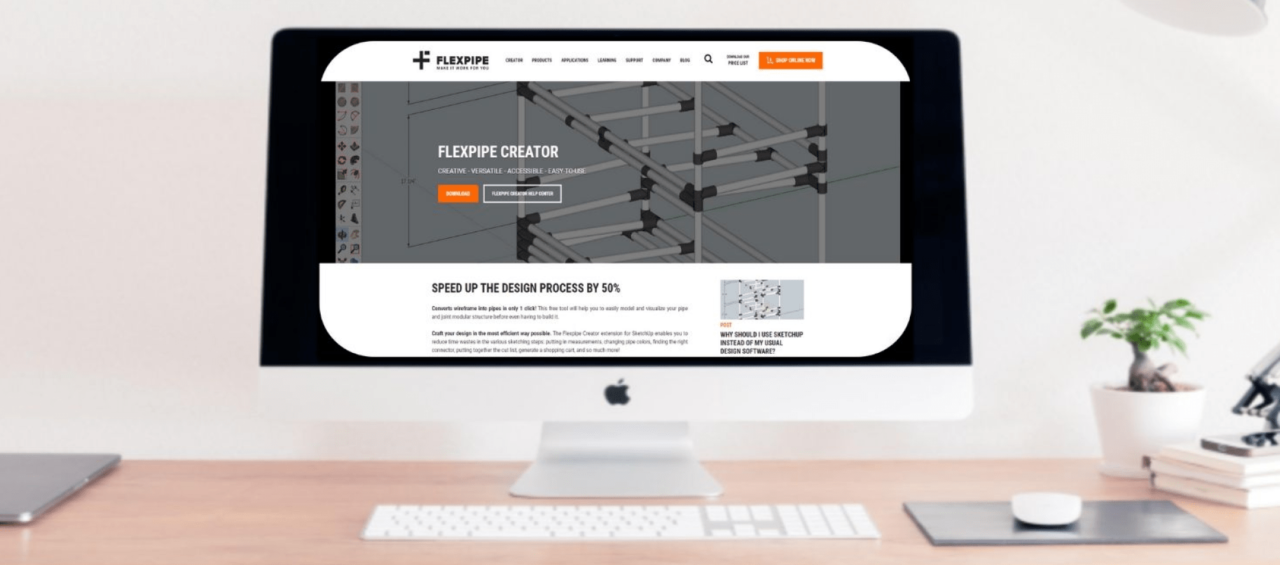
Once your structure design is complete, you will be able to generate a bill of material in an Excel format, including a cutting list for pipes, roller tracks, and decking. This will speed up the purchase request and avoid any retyping waste.

You'll also get an optimized cutting list and a visual diagram to reduce pipe, roller track, and decking wastes. The Flexpipe Creator extension has links to Flexpipe's online store so you can evaluate pricing, create a shopping list that you can share, or place the order right away!

Want to see the Flexpipe Creator extension in action?
Watch our quick demo

 
Key benefits of the Sketchup program include:

Low cost for the commercial license;
Minimal hardware requirements;
Access to the Sketchup 3D Warehouse - a comprehensive list of extensions and API;
Access to the Sketchup Library: other CAD models created by other users;
Easy to use;
Flexpipe Creator Extension is available!

The best way to design an optimal structure is to focus on the concept and the structure's purpose. Try to spend more time with people on the floor to ask them about their needs and what type of structure they have in mind. They usually have already thought about a concept, but sometimes merely need to explain it in their own words.

As you can well guess, we're all about efficiency. Therefore, with LEAN principles mind, we strive to reduce time wastes in the various sketching steps, i.e., putting in measurements, changing pipe colors, finding the right connector, putting together the cut list. So you can craft your design in the most efficient way possible.

If you need more information on Flexpipe's Creator extension, please contact your project manager. He will be happy to provide any information you might need.

The Best Tools for Cutting Flexpipe Tubes (and Which One to Buy)

The Best Tools for Cutting Flexpipe Tubes (and Which One to Buy)

Cutting Flexpipe tubes cleanly and safely is the first step to building reliable modular structures. Whether you’re assembling a cart, rack, or workstation, the right tool makes all the difference in precision, safety, and efficiency. 

Over the years, our team and customers have tested dozens of cutting tools — from manual to high-end electric models. Here’s our updated list of the best options available today, with real-world pros, cons, and buying recommendations.

Don’t have cutting tools yet? Try our Flexpipe Cutting Service for precise pre-cut parts shipped to your door.

Quick Overview: Which Cutting Tool Do You Need?

ToolIdeal ForSpeedSafetyPrice TierBuy LinkPipe CutterSmall projects, occasional cutsModerateHigh$Shop →Portable Band SawFrequent use and medium projectsFastHigh$$Shop →Metal Cutting BandsawDaily industrial use, high volume Very FastHigh$$$Learn more →Power Tubing CutterLarge orders and precision jobsVery FastHigh$$$Shop →💡 Not sure which one fits your setup? Scroll to the bottom for our quick picker guide.

1. Pipe Cutter (T-CUTTER) – Simple, Clean, and Safe

Provides clean, straight cuts on Flexpipe tubes. 

Compact and easy to use — ideal for small jobs or prototypes. 

Manual tool = no sparks or noise, perfect for quiet workshops.

Tips for Best Results

Use steady circular movements.

Don’t overtighten the screw knob at the start — it makes cutting smoother and extends blade life.

Slower than powered tools. 

Not suited for cutting dozens of tubes daily.

Recommended combo: Use the Pipe Cutter with a Reamer to ensure smooth tube ends that fit perfectly into joints.

https://youtu.be/RLbR1m87_5g?si=vKftaWZJb8hRY35a

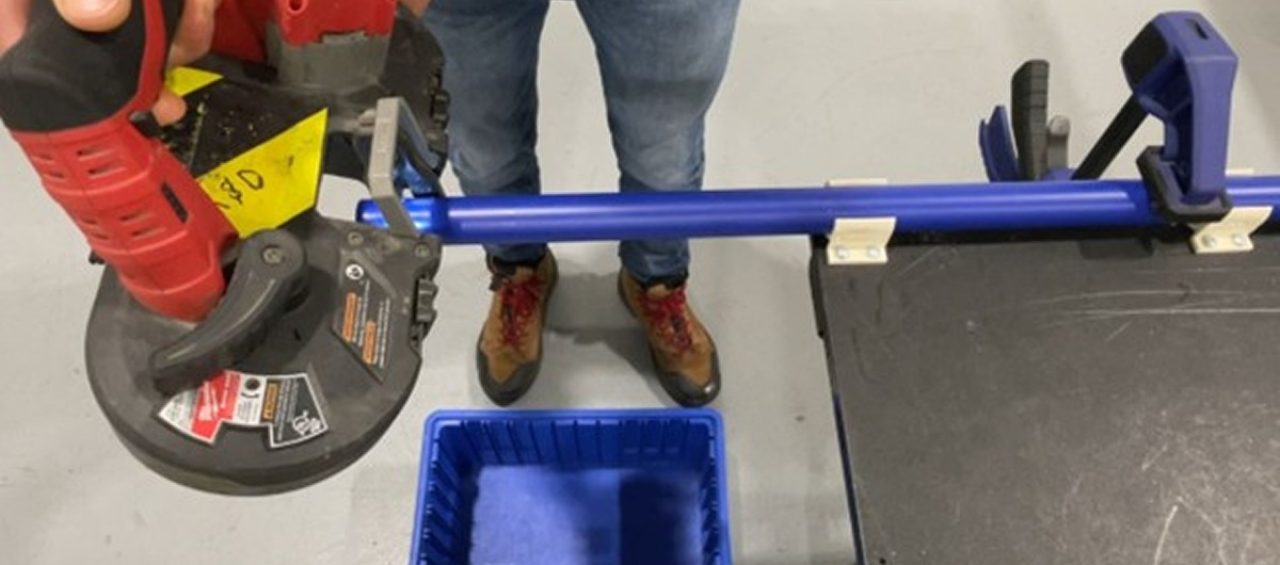
2. Portable Band Saw kit (T-SAW) – Efficient and Reliable

A favorite among frequent builders, the Portable Band Saw is a perfect balance between speed and safety.

Ideal for repetitive cuts or small-scale production.

Ergonomic and portable — works on pre-built structures.

Quieter and cleaner than most saws.

Cuts one tube at a time.

Requires a stable setup for precise cuts.

Pro tip: Keep extra Saw Blades (T-BSAW) on hand — sharp blades ensure cleaner cuts and reduce vibration.

https://www.youtube.com/watch?v=S8BC0Bpj6z4

3. Metal Cutting Bandsaw – Stationary Power for Industrial Big Jobs or daily use

When precision and throughput matter, the metal cutting bandsaw is the top performer.This is the machine Flexpipe uses daily for high-volume, precision cuts — a key part of our own production setup.

Cuts up to six tubes simultaneously, saving time and labor.

Quiet operation and no lubricant required.

Safer than traditional circular saws and delivers perfectly straight cuts.

Requires a dedicated, safe cutting station.

Not suitable for cutting assembled structures or field adjustments.

Best for: Large manufacturing facilities cutting Flexpipe tubes daily.

Learn more about this tool

4. Portable Power Tubing Cutter (T-PCM) – Fastest and Most Precise

The portable power tubing cutter is the ultimate cutting tool for professionals handling high volumes.

Precision motor ensures clean, accurate cuts every time.

Ergonomic and portable — compact enough for mobile workstations.

Designed for long-term durability with minimal wear.

Tips for Use

Always secure the tube before cutting.

Check the blade regularly and replace when worn.

Requires power access.

Higher initial investment — best for heavy use.

Best for : Production teams looking for high-speed, consistent, and burr-free cuts.

https://youtu.be/mGhDE6l5n4s

Should You Buy Cutting Tools or Use Flexpipe’s Cutting Service?

If you don’t have the tools in-house — or your order volume doesn’t justify buying a band saw — Flexpipe’s cutting service is the simplest and most cost-effective way to get precision-cut parts delivered ready to assemble.

Why choose Flexpipe’s Cutting Service:

Save time: Receive pre-cut tubes and surfaces directly from your bill of materials.

Reduce waste: Our online Cut Optimizer tool ensures maximum material efficiency.

Stay accurate: Each piece is labeled, measured, and ready to build upon delivery.

No setup required: Perfect for prototypes, small batches, or teams without cutting stations.

Ideal ForSpeedCostTools RequiredOccasional or prototype projects5–10 day turnaroundPer cutNone

How it works:

Use the Flexpipe cut optimizer to create your cutting list.

Add your list to your cart or email it with your order number.

Get your cuts shipped within 5–10 business days.

Pro tip: You can also request cuts on HDPE panels, Plexiglas®, or aluminum composite surfaces for your workstations and flow racks.

5. Finishing Tools – Don’t Skip This Step

Finishing Tool: The Inner-Outer Pipe Reamer (T-REAMER)

Once your tubes are cut, proper finishing ensures a clean fit and longer-lasting structures. Even precise cuts can leave small burrs or metal fragments that affect joint connections, reduce safety, or impact the overall appearance of your build.

The T-REAMER is a must-have finishing tool designed specifically for 28 mm Flexpipe tubes. It quickly removes burrs from both the inside and outside of the pipe, leaving smooth, bevelled edges that ensure perfect insertion into joints. This tool also works efficiently on stainless steel pipes.

Key Advantages:

Cleans and deburrs both the inner and outer edges of Flexpipe tubes

Helps improve assembly precision and extend the life of joints

Enhances safety by removing sharp fragments left from cutting

Durable and easy to use once you get the hang of it

Works on steel and stainless steel pipes alike

When to Use It:

The T-REAMER isn’t necessary for every single cut, but it’s highly recommended when your cutting process leaves visible metal chips or rough edges — especially if aesthetics and safety are priorities.

If you’re new to the tool, we recommend watching our short video demonstration to see exactly how our team uses the T-REAMER at Flexpipe.

Best for: Anyone looking to achieve professional, safe, and clean results after cutting Flexpipe tubes.

Shop the T-REAMER →

Quick Picker: Which Cutting Tool Should You Choose?

Builder TypeRecommended ToolsOccasional builderPipe Cutter + ReamerFrequent projectsPortable Band SawProduction teamsPower Tubing Cutter

Each setup balances speed, cost, and precision — choose based on how often you cut and the scale of your projects.

https://www.youtube.com/watch?v=5FsTvddrQ7c

Safety Reminder: Tools to Avoid

Avoid the following tools due to safety risks or poor cut quality:

Sawzall

Table Saw

Miter Saw

Handle Lopper

Hand Saw

Cut-Off Saw

Always wear safety glasses and gloves while cutting.

Next Step: Get the Right Tools for the Job

Now that you know which cutting tools fit your needs:

Shop All Cutting Tools →

Get Pre-Cut Tubes with Our Service →

Download Free Assembly Plans →

Build faster, cut cleaner, and work safer with Flexpipe tools designed for modular precision.

Key Takeaways

The Pipe Cutter (T-CUTTER) is the safest and most affordable choice for small or occasional projects.

The Portable Band Saw (T-SAW) offers the best speed and reliability for regular users.

The Metal Cutting Bandsaw is ideal for industrial, high-volume cutting operations.

The Power Tubing Cutter (T-PCM) provides the cleanest, most precise cuts for production environments.

Always use the Inner-Outer Pipe Reamer (T-REAMER) to remove burrs and ensure a perfect, safe fit after every cut.

For low-volume or prototype projects, Flexpipe’s Cutting Service delivers pre-cut, labeled parts — ready to assemble on arrival.

Frequently Asked Questions

What’s the best tool for cutting Flexpipe tubes?

For small or occasional projects, the Pipe Cutter (T-CUTTER) is the most practical and affordable choice.For frequent or high-volume work, the Portable Band Saw (T-SAW) or the Portable Power Tubing Cutter (T-PCM) delivers faster, cleaner cuts with less physical effort.Industrial users cutting daily can rely on a Metal Cutting Bandsaw for continuous precision and speed.

Should I buy my own cutting tools or use Flexpipe’s Cutting Service?

If you build occasionally or don’t have cutting equipment in-house, Flexpipe’s Cutting Service is your best option.You’ll receive pre-cut, labeled parts based on your bill of materials — ready to assemble upon delivery.For regular or high-volume projects, investing in your own saw or power cutter becomes more cost-effective over time.

How accurate is Flexpipe’s Cutting Service?

Every piece is machine-cut to the exact length specified in your cutting list, then carefully identified, packaged, and verified before shipping through our Cutting services.By using the Cut Optimizer tool, you can also minimize waste and ensure perfect results across your order.

What tool cuts the cleanest edge on Flexpipe pipes?

The Portable Power Tubing Cutter (T-PCM) provides the cleanest and most accurate cuts thanks to its motorized precision.

For manual cuts, the Pipe Cutter (T-CUTTER) followed by the Inner-Outer Pipe Reamer (T-REAMER) ensures smooth, burr-free edges ready for assembly.

Do I need to ream or deburr after cutting Flexpipe tubes?

Yes. Even precise cuts can leave small metal burrs that affect assembly or safety.Using the T-REAMER removes those inner and outer edges, ensuring a perfect joint fit, cleaner aesthetics, and safer handling.

What’s the safest cutting tool for beginners?

The Pipe Cutter (T-CUTTER) is the safest option for anyone new to modular assembly. It requires no power source, produces no sparks, and provides straight, controlled cuts when used properly.

How can I order replacement blades or accessories?

You can easily reorder accessories and consumables from our online store:

Pipe Cutter Blades – Pack of 2

Deburring Blades – Pack of 5

Saw Blades – Pack of 3

These ensure consistent precision and extend the lifespan of your tools.

Can I use Flexpipe’s Cutting Service for panels and surfaces?

Yes. The service isn’t limited to tubes — you can request cuts for HDPE panels, aluminum composite sheets, Plexiglas®, and pegboard surfaces.

Each surface is precision-cut and labeled for fast workstation or rack assembly.