

EMT Conduit Fittings: The DIYers Ultimate Guide
Are you planning a DIY project that needs EMT conduit fittings? Look no further! Whether you’re a beginner or an experienced DIYer, understanding the ins and outs of EMT conduit fittings is crucial for a successful project.
Table of Contents
- What are EMT conduit fittings?
- What are the four main EMT conduit fittings types?
- What is the difference between the classic EMT conduit fittings and Flexpipe’s ones?
- Structural Pipe Fittings is the Way
- Get inspired by our community projects with our EMT Structural Pipe Fittings
- Why use Flexpipe connectors?
- Still deciding which fittings you need?
What are EMT conduit fittings?
An EMTconduit connector or fitting is required to joint two or several pipes together. For a DIY project, it can be useful to create structures. EMT conduits fittings are widely used by DIYers for its versatility, but also its durability. In this guide, we are using these connectors only in the purpose of making a structure or a project. It is not intended for electrical applications or projects.
If you are unfamiliar with this type of conduit, it’s an Electrical Metallic Tubing (EMT) tube. A popular choice for residential and commercial electrical conduit installations. It provides a safe and secure pathway for electrical wires, protecting them from damage and ensuring a reliable electrical system.
What are the four main EMT conduit fittings types?
Keeping the DIY aspect in mind, we can think of four major types of conduit fittings that can be use for a project. Let’s see the similarities between the electrical terminology and for our structure purposes.

EMT connectors
First, we have the EMT connectors. For an electrical purpose, the main function is to attach or connect to the electrical box. However, for us DIYers, it serves to joint a pipe to another. Take by exemple the most popular EMT Conduit fitting, the T-Connector.
EMT Couplings
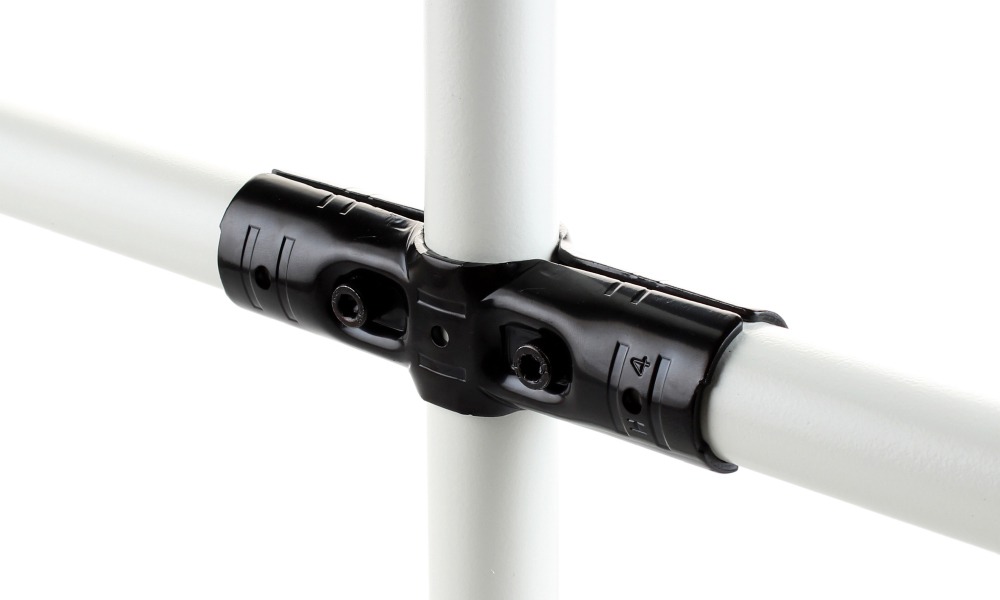
Their main function is to join two lengths of EMT conduit together, allowing for a continuous conduit run when a single length is not sufficient. With Flexpipe, the equivalent would be the 3 way cross connector set which do can do the same thing as a coupling connector.
EMT Elbows
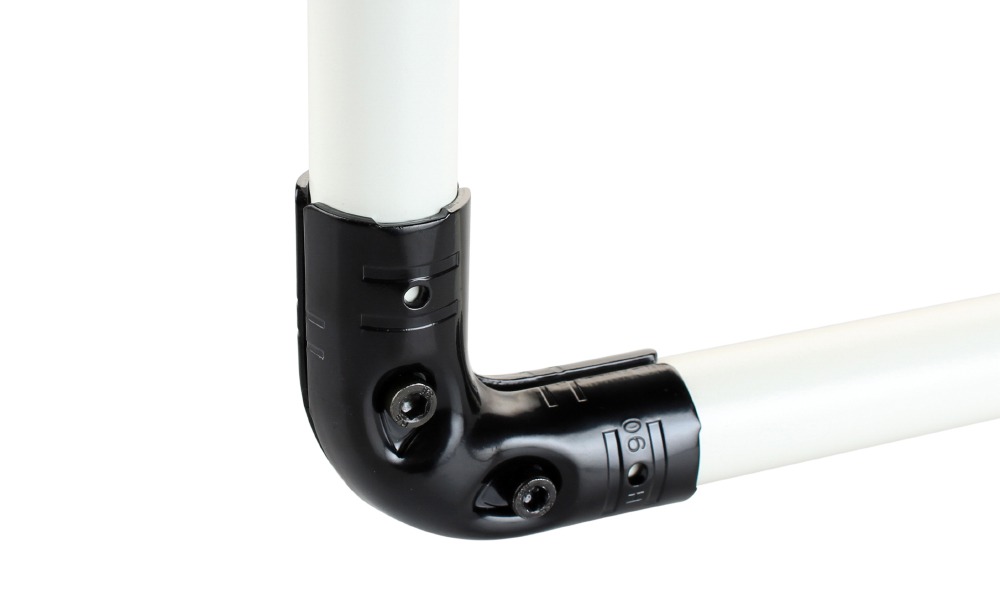
These are curved or bent sections of conduit used to change the direction of the conduit run. They are especially useful in scenarios where the conduit path needs to navigate around obstacles or structural elements. As for you DIY project, you might need to do 90° or 45° angle. Additionnaly, you could use a pivot connector to create adjustable angles from 15 degrees up to 260 degrees.
EMT Straps and Hangers
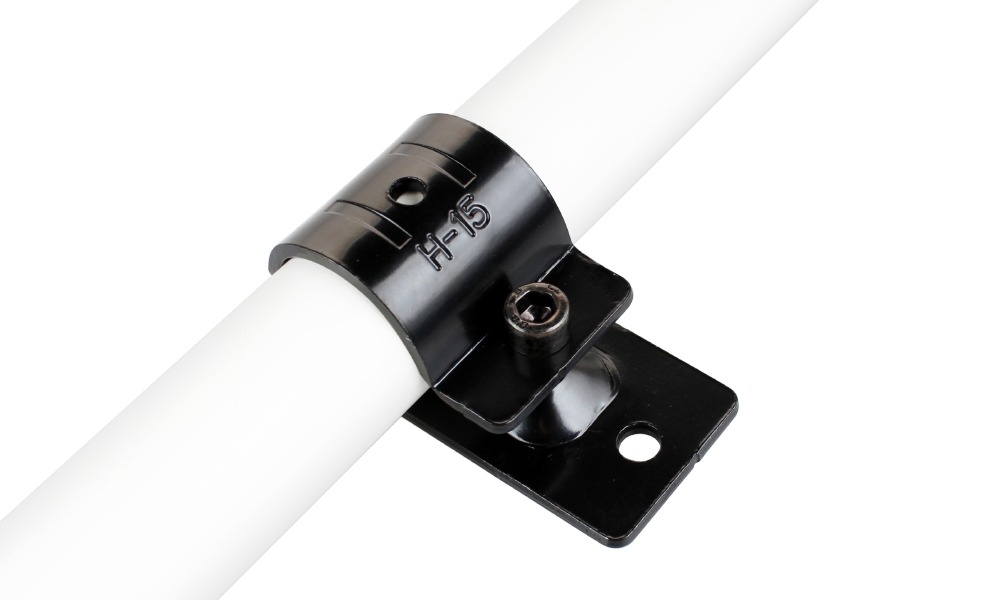
These fittings are used to secure the EMT conduit to walls, ceilings, beams, or other structural elements. They ensure the conduit stays in place, is supported at regular intervals, and doesn’t sag or move. With Flexpipe, we call the types for fittings anchors. You can fix them to a table, a wall or any material you see fit your your project.
What is the difference between the classic EMT conduit fittings and Flexpipe’s ones?
The classic EMT conduit fittings and Flexpipe’s fittings serve similar purposes but have some distinct differences in design, materials, and intended use.
| Classic EMT Conduit Fittings | Flexpipe’s Fittings | |
|---|---|---|
| Uses | EMT Fittings are made mainly for electrical applications. | These types of connectors are what we call Structural Pipe Fittings. |
| Material | Traditional EMT fittings are usually made of steel or die-cast zinc | Flexpipe‘s fittings are made of Hot rolled steel (SPHC) with an Ecoating treatment. |
| Design | They are designed primarily for electrical applications, to join and secure EMT conduits in place, protecting electrical wires. | These fittings are designed with versatility in mind, suitable for a wide range of DIY projects beyond electrical work, including furniture, racks, and custom builds. |
| Installation | Classic emt compression fittings or regular, set screws, or are of the push-fit variety to secure them to the conduits. | Flexpipe‘s system is more akin to a construction set, often requiring only an Allen wrench or T-HANDLE for assembly and adjustment. The structural pipe fitting consist of two mirrored pieces that interlock like a clamp giving a tight compression on the pipe. |
| Adjustability | They are not typically designed for frequent disassembly or reconfiguration. | They are designed for easy assembly and disassembly, offering great flexibility for modification and reuse in different configurations. |
| Range | The variety of fittings is usually limited to what is necessary for electrical installations, such as straight connectors, 90-degree elbows, and couplings. | Flexpipe offers a broad range of connector types, including various multi-way joints and adjustable angle connectors, which are not typically found in classic EMT conduit fitting selections |
| Sizing | In the U.S & Canada, the most common trade size for an EMT conduit is the 1/2″, 3/4″, 1″ and 4″. EMT fittings will fits perfectly those sizes. | As for Flexpipe‘s you have the choice between building with the 1-1/16″ (28mm) steel tube or with a 3/4″ EMT conduit by adding an EMT adapter. |
The main difference lies in their intended use and flexibility. Classic EMT conduit fittings are more for permanent and semi-permanent electrical installations, providing a secure pathway for wiring with limited structural variety.
In contrast, Flexpipe’s structural pipe fittings are for a broader range of structural applications, allowing for creative DIY projects that can be easily assembled, adjusted, and reassembled as needed. Like EMT compression connectors, these fittings are study and grip well on the tube.
Side-by-side comparison
There are multiple ways to connect EMT conduits and pipes. For your personnal projects, EMT fittings or even plumbing connectors can do the job. However, they are often bulky and less visually appealing than structural pipe fittings whether it’s a clamp-style or a slide on.
You can find slide-on framing system fittings in industrial supply sections or specialized online stores. It’s worth noting that these connectors can be priced at a premium, sometimes costing more than five times the amount of Flexpipe’s offerings.
Are Flexpipe structural fittings compatible with EMT Conduits?
Discover the compatibility of Flexpipe structural fittings with EMT conduits. We delve into the specifics of how these innovative fittings can be integrated with standard EMT conduits, a common question for DIY enthusiasts and professionals alike.
Structural Pipe Fittings is the Way
Like the code and ideals of a Mandalorian, Structural pipe fittings is the way for us DIYers. They are designed to make the building process straightforward and accessible to individuals regardless of their skill level in construction or DIY projects. Here’s why they represent the easiest way to build:
1. No Specialized Skills Required :
Unlike traditional construction that may require welding, cutting, or threading, structural pipe fittings are designed for simple, bolt-together construction. This means anyone can use them effectively with minimal training or experience.
2. Versatile and Reconfigurable :
These fittings are highly adaptable. They can be used to build a wide variety of structures, from furniture to storage solutions to garden setups. Plus, if you make a mistake or want to change your design, you can easily disassemble and reconfigure the parts.
3. Strong and Durable Connections :
The fittings create strong joints that can handle significant weight and stress, making them suitable for both light- and heavy-duty applications. The reliability of the connection is as robust as traditional methods.
4. No Need for Complex Tools :
Most structural pipe fittings can be tightened and secured with simple hand tools like an Allen wrench or a T-HANDLE wrench. There’s no need for power tools or expensive equipment.
5. Time-Saving :
Because they are so easy to work with, structural pipe fittings greatly reduce the time it takes to assemble a project. You can go from concept to completion much faster than with traditional construction methods.
6. Accessible and Easy to Source :
Structural pipe fittings are widely available in hardware stores or through online shop like Flexpipe. This availability makes it easy to start a project quickly without long lead times for materials.
7. Aesthetically Pleasing :
With a range of styles and finishes, structural pipe fittings not only provide strength and functionality but can also add an industrial or modern aesthetic to your project.
8. Expandable and Modular :
As your needs grow or change, structures built with pipe fittings can be easily expanded or modified. This modularity ensures that your project can evolve over time without the need for complete reconstruction.
Using structural pipe fittings, virtually anyone can undertake a DIY project with confidence, knowing that they can achieve professional results with ease. Whether it’s for a custom desk, a shelving unit, or an art installation, structural pipe fittings provide an accessible pathway to turning your ideas into reality.
Get inspired by our community projects with our EMT Structural Pipe Fittings
Here is a list of applications and projects using EMT or Flexpipe structural pipe fittings which can be used to build a variety of DIY structures.
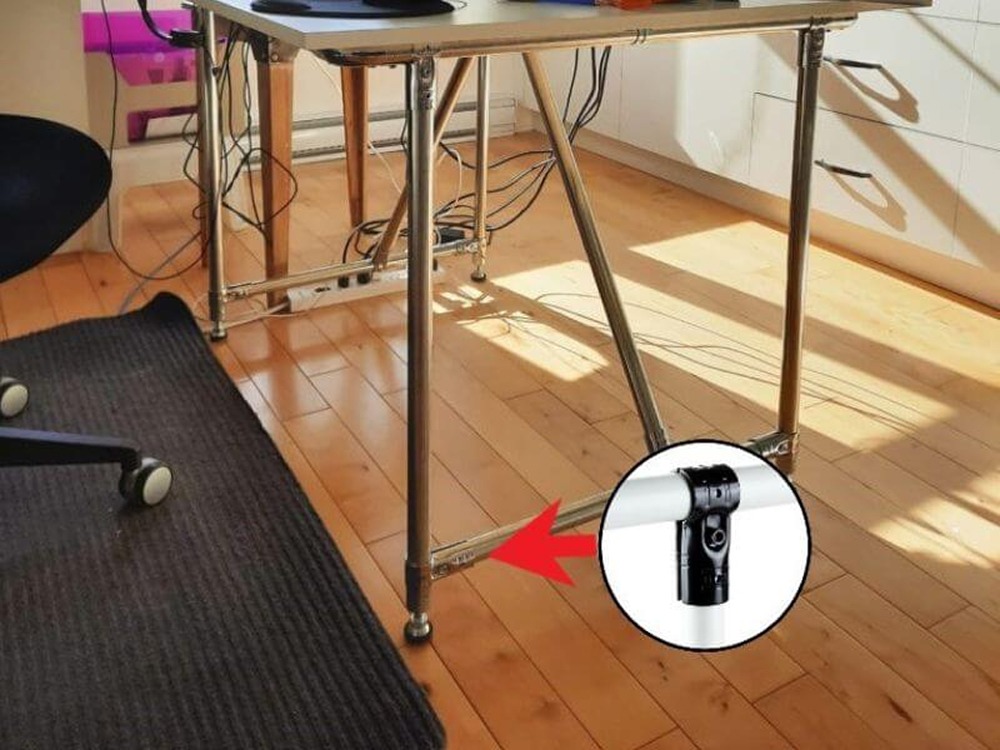
Structural Pipe T-Connector
The T-Connector is one of the most used connector. Ideal for joining two tubes to make a perpendicular connection. A must-have for all your structures.
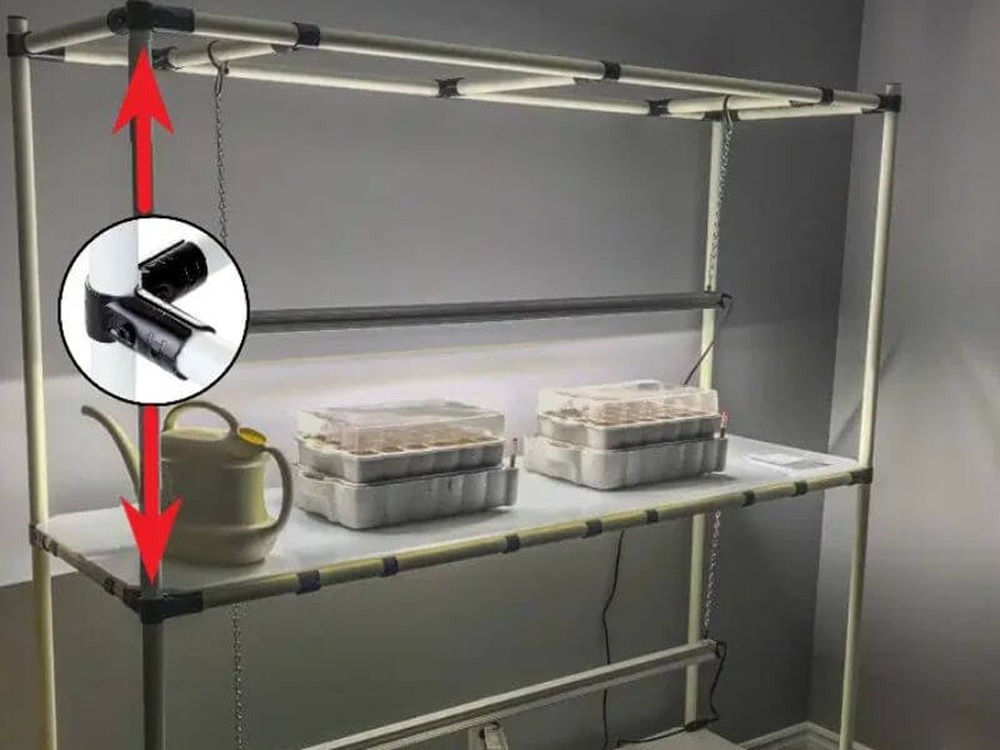
3-Way Cross Joint
This fitting is used where three tubes meet at the same point, but not necessarily at the same angle, allowing for a T-structure with an additional connecting point on the same plane or at a right angle.
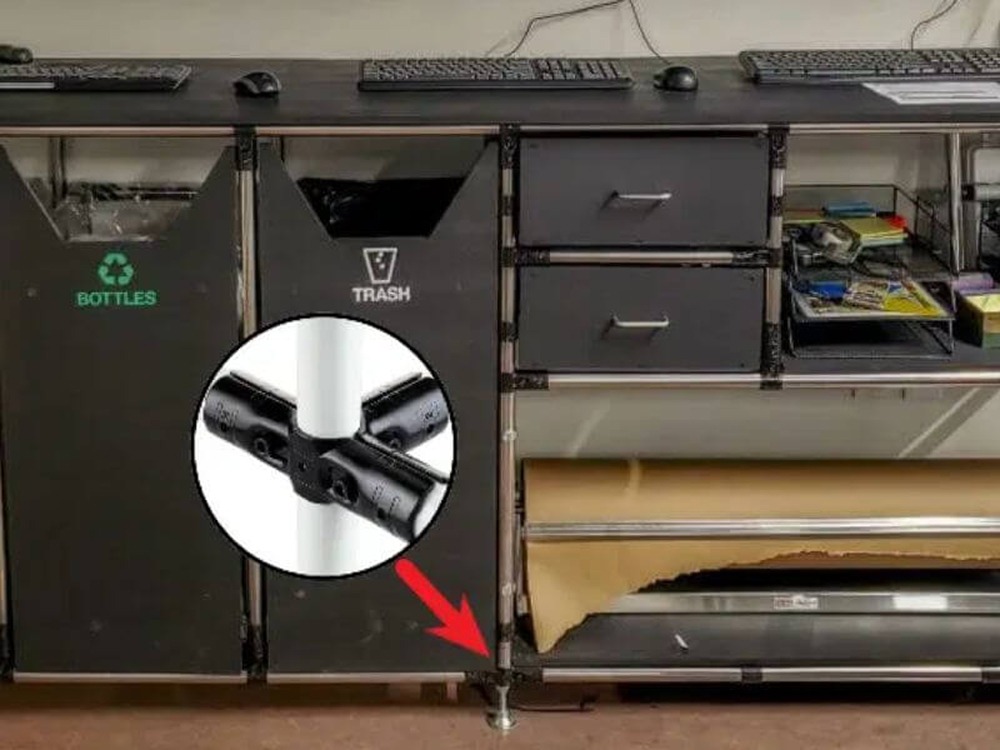
4-Way Cross Joint
Useful when you need to connect four tubes at a single point, providing stability and options for multi-level or multi-axis structures, such as shelving units or complex framework.
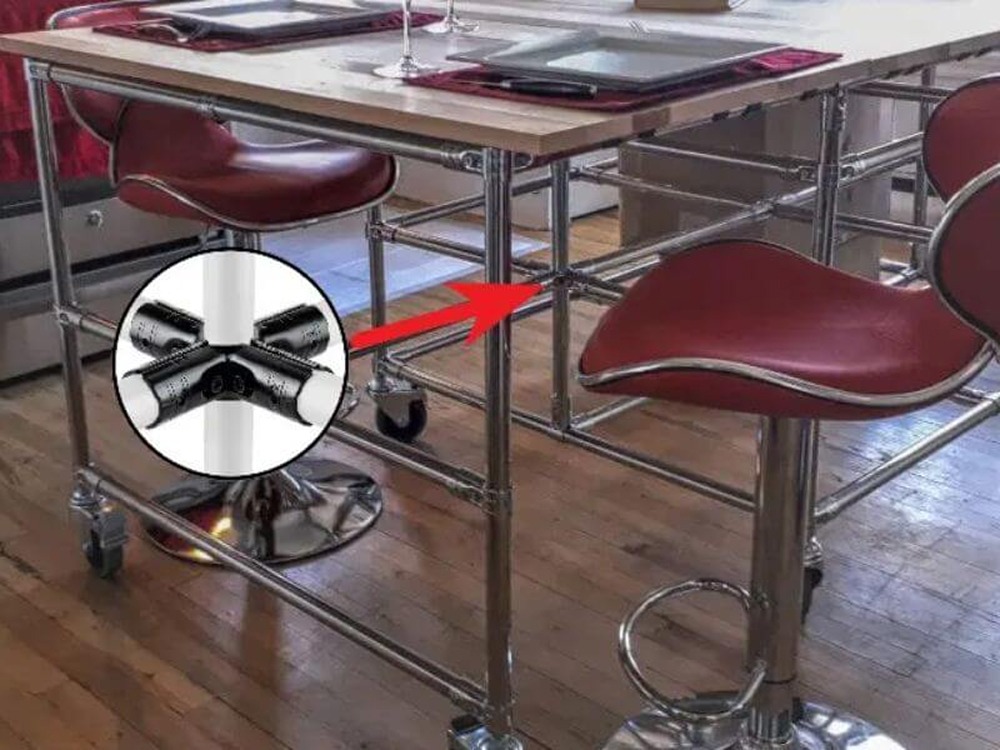
5-Way Cross Joint
When you have a need to connect five tubes at one point, which can be central to creating complex multi-plane structures or bases for objects like lamps or stands.
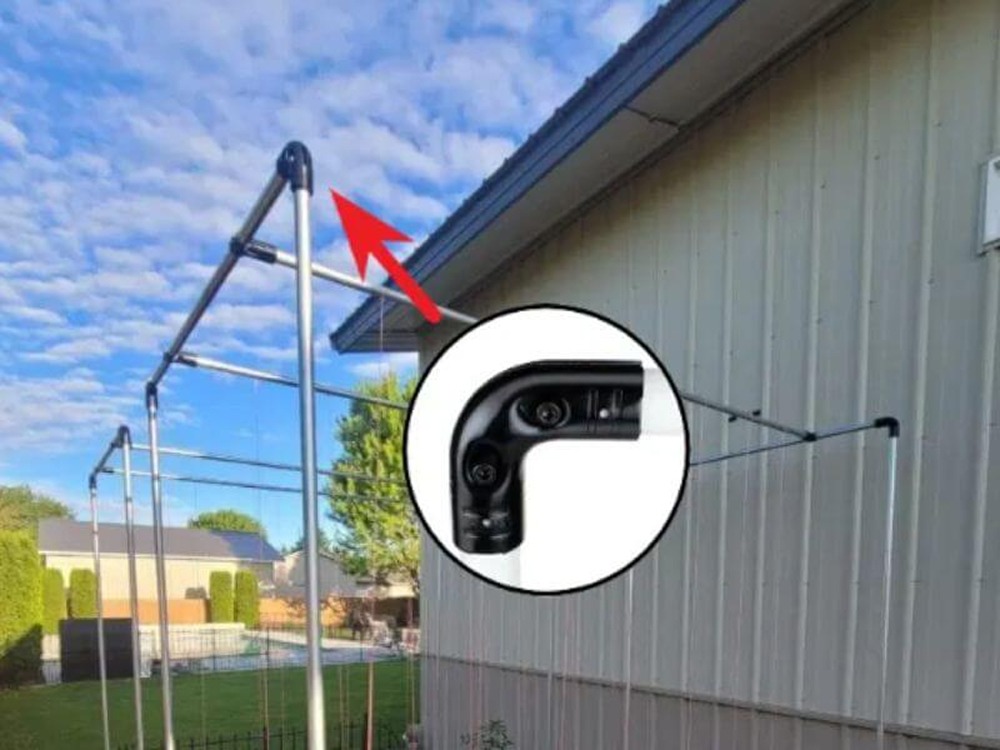
90 degree Structural Elbow Pipe Connector
These are used to connect two tubes at a right angle and are essential for frames, legs, or any structure that requires a sharp bend.
45 degree Fix Angle Joint
Suitable for creating angled connections between tubes, which can be useful for bracing or for structures that require a slope, like a bike rack or an angled stand like a solar panel support.
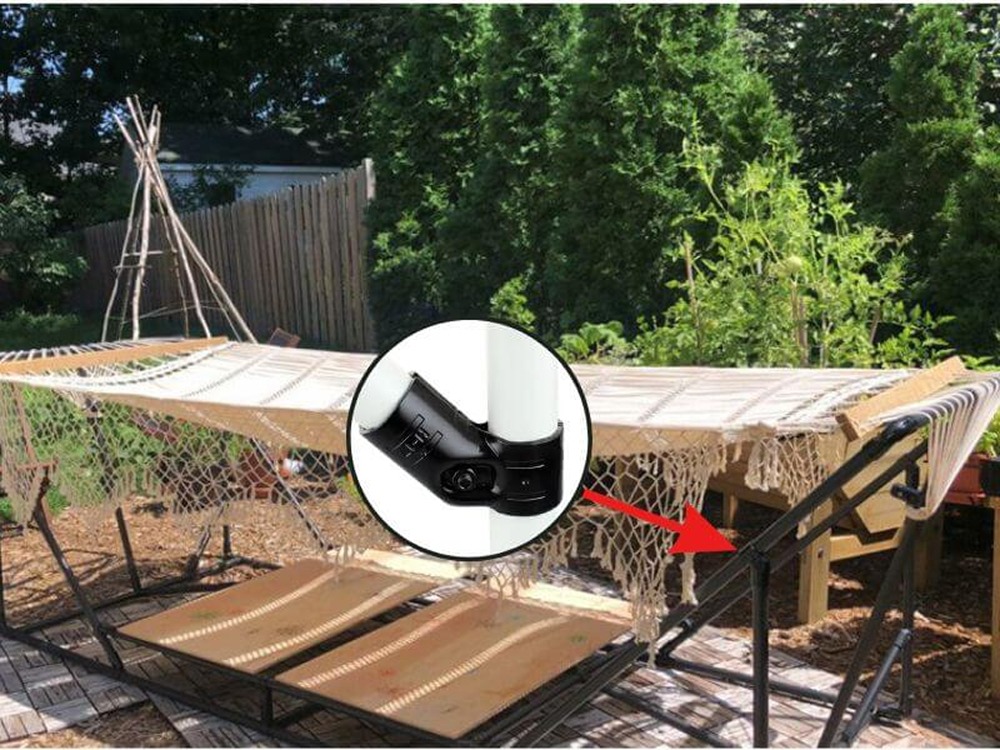
Flat Clamp Connector
Allows you to attach a tube to a flat surface, which could be used for mounting a structure to a wall or joining a pipe to a flat base.
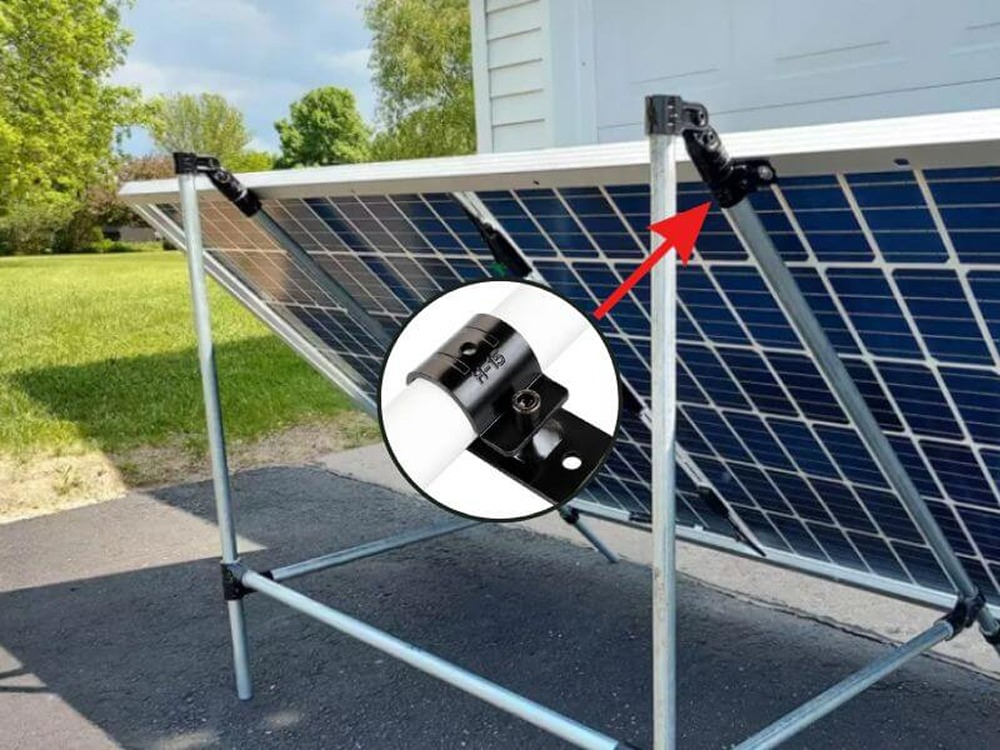
Pivot T-Connector
Gives the ability to create adjustable angles between tubes, adding versatility to structures that may need to change angles or be collapsible. Adjustable from 0 degrees up to 180 degrees, this connector is very versatile.
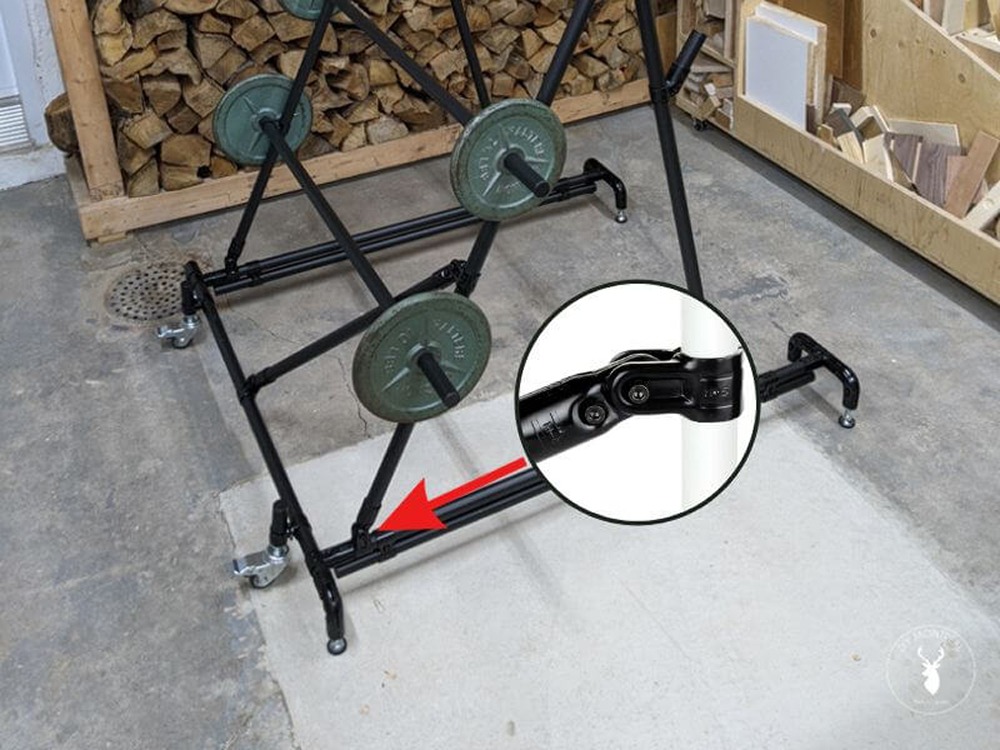
Flat Anchor Connector
Can be used to anchor a structure to the floor or another flat surface, providing a stable base for things like outdoor fixtures or furniture.
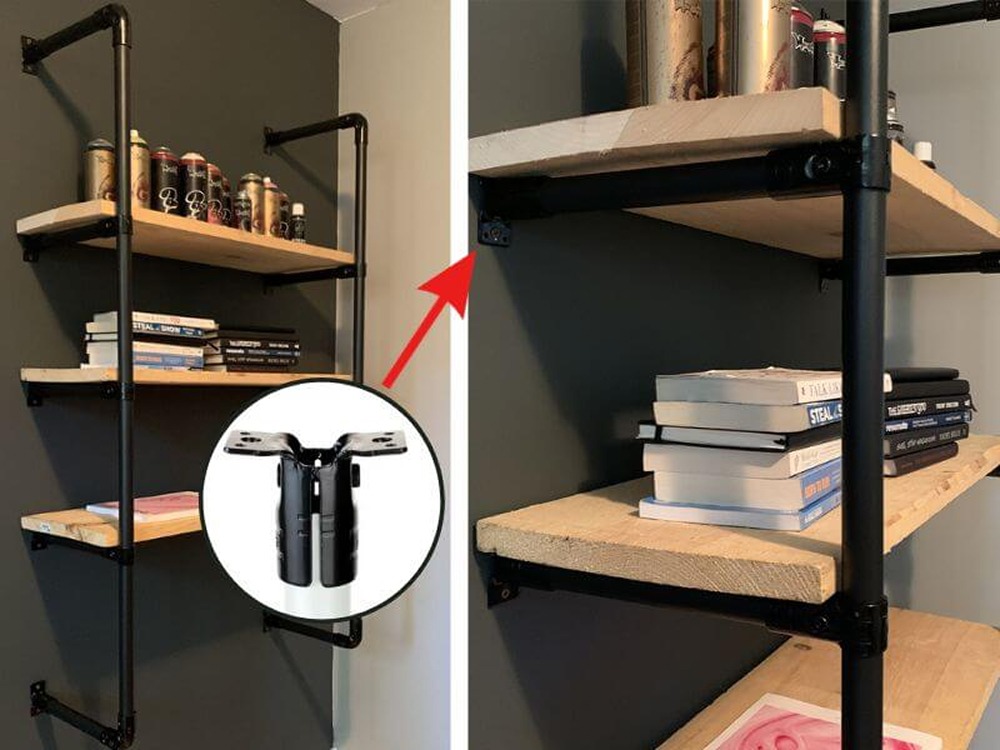
Why use Flexpipe connectors?
Flexibility! We have created many connectors, available in a black or chrome finish, that will enable you to build just about any DIY construction project.
Ease! Even though they were designed to assemble Flexpipe tubes, our connectors can also be used to assemble 3/4″ EMT conduit, thanks to the EMT adapter. There is no discrimination here!
Budget-friendly options! Our EMT conduit-compatible connectors can be used to build any project, without having to mortgage your home. As our connectors are very affordable, they’ll save you from having to go through the family’s board of directors before carrying out your DIY project!
Choosing between classic EMT conduit fittings and Flexpipe’s structural pipe fittings boils down to the scope and requirements of your DIY project.

Still deciding which fittings you need?
If your project demands cost-effectiveness and straightforward, linear or angular structures, such as simple frames or supports, classic EMT fittings might be the ideal choice due to their affordability and wide availability. These are particularly suitable for projects that do not require frequent reconfiguration or complex designs.
On the other hand, if your project is more complex, requires high customization, or if you desire a more modern aesthetic with the flexibility to reconfigure, Flexpipe’s structural fittings would be more advantageous.
They are designed for ease of assembly and structural integrity, accommodating a wide range of designs from furniture to elaborate frameworks. The initial investment might be higher compared to classic EMT fittings, but the ease of use, time savings, and versatility can justify the extra cost, especially for multi-functional or dynamic DIY projects.