Flexpipe Blog

Learn more about the Flexpipe system and its applications with our inspirational articles on continuous improvement, Kaizen Blitz, Lean Six Sigma, 5S and corporate social involvement.


From Chaos to Control: How Shadow Boards Transform 5S Workstations

From Chaos to Control: How Shadow Boards Transform 5S Workstations

As a manufacturer, one of your main advantages is to eliminate wastes, in other words, actions that are unnecessary and provide no added value. Shadow boards are an excellent means of implementing continuous improvement principles because their purpose is to eliminate the 8 manufacturing wastes. This article will give you tips on how to sort your tools and create order so you can efficiently carry out daily tasks, regardless of the nature of your work.

What is a Shadow Board?

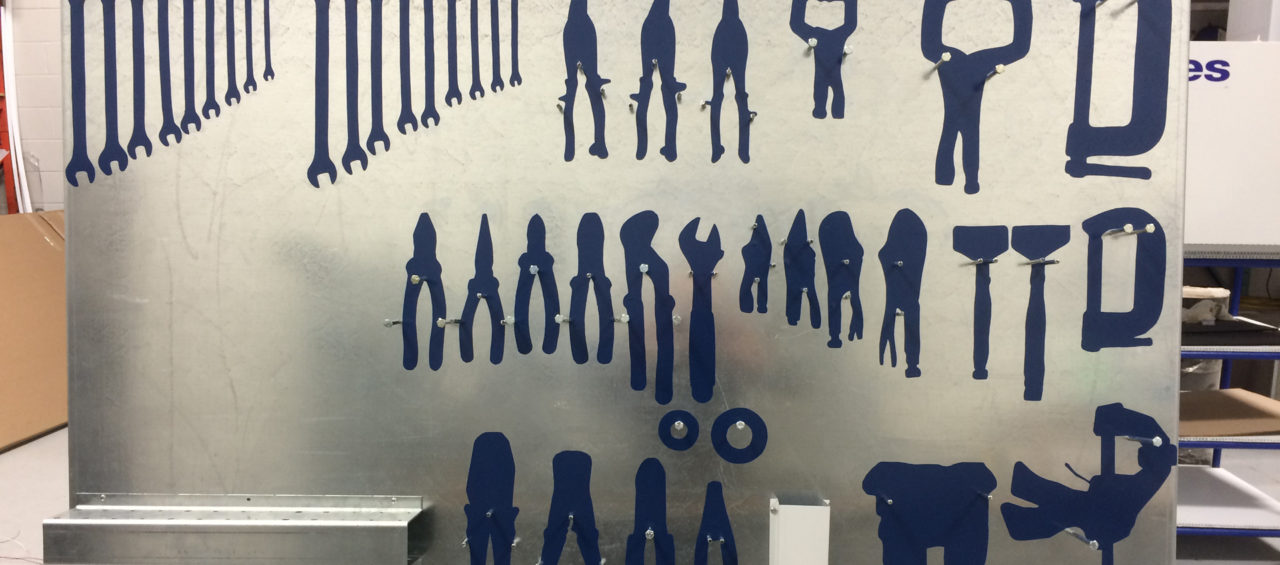
A shadow board is a visual tool used in Lean and 5S workplaces to organize tools efficiently. Each item has an outlined space, making it easy to see what’s missing. By promoting order and visibility, shadow boards reduce downtime, prevent tool loss, and increase workplace safety.

It's in the second S: SET IN ORDER or "Seiton" in Japanese, that the shadow boards come in. The exact meaning of this term is to lay out all objects and put each one in its place. Establishing a designated location for every tool or piece of equipment will help you find what you need when you need it.

Source: 5ssupply


Download the PDF version of our 5S method chart.


 Why Are Shadow Boards Important in Lean Manufacturing?

Shadow boards are essential for implementing 5S methodology — Sort, Set in Order, Shine, Standardize, Sustain.They ensure tools are visible, available, and returned to the correct place after use. This improves efficiency, safety, and team accountability.

Take by exemple this cleaning station where every elements has its place and you can visually know what is missing.

What are the benefits of implementing shadow boards?

Reduce tool search time by up to 30%

Support 5S workplace organization

Promote clean and safe environments

Improve productivity and compliance with ISO/OSHA standards

The key is: a place for everything and everything in its place

You can increase efficiency by significantly reducing wastes that provide no added value, such as time lost looking for a screwdriver a broom or a pair of scissors.

Good to know - For optimal visual management of your tools and parts, here are the 3 essential elements of a shadow board:

ID tag

Color code

Tool's shadow

Comparison Table: Shadow Boards vs. Pegboards: Which Is Better for Your Workspace?

While both shadow boards and pegboards organize tools, shadow boards go a step further by providing visual standardization—each tool has a clearly marked outline, making it easy to identify when something is missing. Unlike pegboards, which rely on memory and habit, shadow boards reinforce 5S principles of Sort and Set in Order, reduce search time, and support Lean workplace audits. They’re the professional standard for industrial safety, consistency, and visual management.

The shadow board above is a kitting cart that one of our customers uses with its supplier to avoid overpackaging and waste materials on the production line.


By sending these boxes back to the supplier, the latter can simply insert all the items ordered by the customer in them again without having to restock packaging materials himself.

In addition to being environmentally friendly, this method prevents the supplier from forgetting any items and makes order prep easier. The color coding calls attention to missing parts.

How Do Shadow Boards Make You More Competitive?

 In competitive industries like manufacturing, aerospace, logistics, and maintenance, efficiency is the key differentiator. A shadow board directly contributes to competitiveness by improving operational performance across multiple Lean metrics — from productivity to safety and cost reduction.

1) Reduces Time Waste and Improves Efficiency

Every second spent searching for a missing wrench, drill, or tool is a hidden cost.Shadow boards eliminate that waste by ensuring every tool has a designated location outlined visually. Workers instantly know what’s missing and where it belongs.

2) Supports Standardization and Lean Workflows

Competitiveness in manufacturing often depends on process repeatability and error-free execution.Shadow boards promote visual standardization, one of the key pillars of the 5S methodology (Sort, Set in Order, Shine, Standardize, Sustain).

When every workstation follows the same visual layout:

New employees onboard faster

Audits and inspections are streamlined

Productivity is consistent across shifts

This standardization supports ISO 9001 compliance, Lean certifications, and continuous improvement (Kaizen) — all factors valued by high-performing organizations.

3) Enhances Safety and Reduces Incidents

Disorganization can create unsafe environments — tripping hazards, misplaced sharp tools, or missing emergency equipment.By maintaining visual control, shadow boards make hazards obvious and reduce the likelihood of accidents.

Insight: Facilities with structured visual management systems, including shadow boards, report up to 25% fewer safety incidents.

Improved safety means fewer disruptions, lower insurance premiums, and higher employee morale — competitive advantages that compound over time.

How to make a Shadow Board?

This section of the article will provide you with tips as well as steps involved in building the type of shadow board that will be most effective and profitable for your business needs.

Step 1 - Decide which tools you needFirst, gather all your tools to decide which ones will go on the shadow board. To help you choose those needed to carry out your tasks, think of the setting in a hospital's operating room. A surgeon should never have more than what is required to operate on the patient nor have to hunt around for a specific scalpel!Tip : If you have trouble figuring out what you use in a typical workday, put in a box all the tools and parts that you utilize as the day progresses. As such, you'll have a better idea of what's essential in your workstation.To avoid unnecessary steps, you should always position your tools as close as possible in your workstation. Normally, these would correspond to those which you use within the hour or during the workday. In an office setting, the same principle applies: Items that are regularly utilized should be placed on the desk.Step 2 - Decide on the type of panel and its locationOnce you've decided on the tools that should be within reach, now it's time to choose the material. The number of items and the shadow board's location is two determining factors at this step in the process.Here are some examples of our customer's shadow boards as a source of inspiration. Some chose to use materials they already had on hand, while others opted for laser cut-outs in foam panels.Choosing the HDPE PegboardHigh density polyethylene is a 1/4 inch thick white plastic surface. This type of material is rigid, the high density of this product makes it shatterproof and ultra durable. This surface is easily cut with a decent saw. For more information, refer to product D-PEGW-4814 on the online store.Choosing the Masonite PegboardMasonite pegboards are the most common on the market. They can generally be found in hardware stores or home improvement big-box stores. The panels are available at low cost and have either 1/8-inch holes or 1/4-inch holes for more robust use.Masonite panels are not intended to hold heavy tools, such as drills. Doing so would cause the panel to warp and eventually rip. Also, with time, the holes in the panels can sustain damage from frequent hook changes.Choosing the Metal PegboardLong-lasting, metal is easy to clean and is one of the most solid materials on the market. It also gives the pegboard a stylish look. It's worth keeping in mind that metal boards are the most expensive option and their weight makes them difficult to buy in larger sizes.Additionally, if the air is humid, be sure to use stainless steel to avoid rust issues. Finally, remember that metal conducts electricity, so take precautionary measures to provide your employees with a safe work environment.Choosing the Acrylic PegboardPlastic or polymer acrylic pegboards offer unparalleled versatility and reliability. They are much lighter than their Masonite and metal counterparts.Their durability is unbeatable, given that they are rustproof, will not crack or warp. This type of board can withstand heavy loads.Step 3 - Draw the outline of your toolsTo begin, set your tools on the panel to use up space in the most optimal way. This task may be painstaking as you'll have to try a few configurations before finding the ideal one.Be sure to properly align all tools. We recommend grouping them by families: adjustable wrenches, hammers, screwdrivers, drill bits, etc. After, draw the tools' outlines at their designated location on the panel.To conclude, all that's left to do is to place the hooks and hang your tools. Take a picture of the final product and show your project to the rest of the team so everyone can use this work method!

The Results

 Each type of material has its advantages and drawbacks; evaluate them all to find the best for your needs.

You can also make your shadow boards out of foam if, for example, you need to store or handle fragile parts a production line. You'll notice that most of these shadow boards are placed on a wheel-mounted cart or rack.

If you decide to build a foam shadow board, there are several grades of foam from which to choose. On the other hand, the more the foam is porous, the more difficult it will be to cut, as Ethafoam for example. There are greater risks of it disintegrating where the knife penetrated it, consequently shortening its life span.


Type-A foam panels, such as Crosslink, are of better quality thanks to their high density. This type of foam will protect fragile parts more effectively.

You can also use materials you already have on hand in your plant to build your shadow board. Some of our customers used MDF panels, whereas others decided on steel panels. A little creativity mixed with a desire to reuse existing materials can give pretty impressive results!

Tip: Regardless of the type of material you choose for the shadow board, we suggest dividing it into sections. It will be much easier to alter only a portion of the entire board, instead of the whole thing, should you have to move tools around.


[cta id="47558"]

{
"@context": "https://schema.org",
"@type": "FAQPage",
"mainEntity": [
{
"@type": "Question",
"name": "Can shadow boards be made mobile with a Flexpipe pipe frame?",
"acceptedAnswer": {
"@type": "Answer",
"text": "Yes. Mounting a shadow board panel onto a Flexpipe 28mm pipe and joint frame with industrial casters converts a fixed wall board into a fully mobile tool station that can be repositioned between workstations, rolled to a Kaizen event, or moved during a line reconfiguration without any disassembly. This is particularly valuable in U.S. manufacturing environments that run multiple products on the same line, where tool sets change between jobs. The pipe frame can be sized to any panel dimension, and locking casters keep the board stationary during use. Browse mobile board and shadow board frame plans at https://www.flexpipeinc.com/us_en/free-plans/"
}
},
{
"@type": "Question",
"name": "Are shadow boards required for FOD (Foreign Object Debris) prevention in U.S. aerospace and defense facilities?",
"acceptedAnswer": {
"@type": "Answer",
"text": "Shadow boards are not mandated by a single federal regulation, but they are considered a best-practice control under FOD prevention programs required by AS9100, Boeing D6-82479, and Lockheed Martin supplier quality standards — all widely enforced across U.S. aerospace and defense manufacturing. A shadow board with Kaizen foam cutouts for every tool makes it immediately obvious when a tool is missing before a technician leaves a work area, directly addressing the root cause of FOD incidents. Many U.S. prime contractors and their Tier 1 suppliers require documented FOD controls as a condition of supplier qualification, and a shadow board audit trail supports that documentation. See how Flexpipe supports aerospace applications at https://www.flexpipeinc.com/us_en/aerospace/"
}
},
{
"@type": "Question",
"name": "What color coding standards should U.S. manufacturers use on shadow boards?",
"acceptedAnswer": {
"@type": "Answer",
"text": "There is no single OSHA-mandated color standard for shadow boards, but the most widely adopted convention in U.S. lean plants follows ANSI Z535 safety color logic as a baseline: red for safety and emergency equipment, yellow or orange for caution items, green for first aid or cleaning supplies, and blue for general maintenance tools. Black or gray outlines are used for shared or standard tools. The most important rule is internal consistency — the same color must mean the same thing on every shadow board across your facility, so that any employee or auditor can read the board at a glance without instruction. Document your color standard in your 5S procedures and include it in new employee onboarding."
}
},
{
"@type": "Question",
"name": "Are shadow boards suitable for cleanroom, food processing, or pharmaceutical environments in the United States?",
"acceptedAnswer": {
"@type": "Answer",
"text": "Yes, but material selection is critical. In FDA-regulated food processing or pharmaceutical facilities, shadow board panels must be made from non-porous, sanitizable materials — HDPE or stainless steel are the standard choices because they resist moisture, chemical cleaners, and microbial growth. Avoid standard Masonite or open-cell foam, which trap contaminants and cannot be adequately sanitized. In USDA-inspected facilities, white or light-colored panels are preferred so contamination is visually detectable. For cleanroom environments operating under ISO 14644 standards, panels should be non-shedding and free of particulate-generating materials. Flexpipe's HDPE panel option meets these requirements for most U.S. regulated environments."
}
},
{
"@type": "Question",
"name": "How do you conduct a 5S audit of a shadow board in a U.S. manufacturing plant?",
"acceptedAnswer": {
"@type": "Answer",
"text": "A shadow board 5S audit has three components. First, a visual check at shift start and end — every tool outline should be filled; any empty outline is an immediate action item. Second, a weekly condition check — verify that outlines are still legible, labels are intact, hooks or holders are undamaged, and the board surface is clean. Replace worn elements immediately rather than waiting for a scheduled maintenance cycle. Third, a quarterly layout review — confirm that the tools on the board still match actual workflow needs; tools that are never used should be removed (Sort), and tools that have been added informally should be given designated outlines (Set in Order). Many U.S. plants attach a simple paper log or QR code to the board frame to record who completed each check and flag open issues for the supervisor."
}
},
{
"@type": "Question",
"name": "What are the most common mistakes when building a shadow board for the first time?",
"acceptedAnswer": {
"@type": "Answer",
"text": "The most common mistakes are: putting too many tools on one board, which creates a cluttered layout that defeats the visual management purpose; placing the board too far from the point of use, adding unnecessary motion waste; using low-contrast colors that make outlines hard to read under industrial lighting; and designing the board without input from the operators who will actually use it, resulting in a layout that does not match real workflow. A practical remedy for all of these is to run a pilot on one workstation first — involve the operator in the tool selection and layout, photograph the result, and use it as the standard template before rolling out across the facility."
}
}
]
}

Additional FAQ: Shadow Boards

Can shadow boards be made mobile with a Flexpipe pipe frame?
Yes. Mounting a shadow board panel onto a Flexpipe 28mm pipe and joint frame with industrial casters converts a fixed wall board into a fully mobile tool station that can be repositioned between workstations, rolled to a Kaizen event, or moved during a line reconfiguration without any disassembly. This is particularly valuable in U.S. manufacturing environments that run multiple products on the same line, where tool sets change between jobs. The pipe frame can be sized to any panel dimension, and locking casters keep the board stationary during use. Browse mobile board and shadow board frame plans at the Flexpipe free plans gallery.

Are shadow boards required for FOD (Foreign Object Debris) prevention in U.S. aerospace and defense facilities?
Shadow boards are not mandated by a single federal regulation, but they are considered a best-practice control under FOD prevention programs required by AS9100, Boeing D6-82479, and Lockheed Martin supplier quality standards — all widely enforced across U.S. aerospace and defense manufacturing. A shadow board with Kaizen foam cutouts for every tool makes it immediately obvious when a tool is missing before a technician leaves a work area, directly addressing the root cause of FOD incidents. Many U.S. prime contractors require documented FOD controls as a condition of supplier qualification, and a shadow board audit trail supports that documentation. See how Flexpipe supports aerospace applications at the Flexpipe aerospace page.

What color coding standards should U.S. manufacturers use on shadow boards?
There is no single OSHA-mandated color standard for shadow boards, but the most widely adopted convention in U.S. lean plants follows ANSI Z535 safety color logic as a baseline: red for safety and emergency equipment, yellow or orange for caution items, green for first aid or cleaning supplies, and blue for general maintenance tools. Black or gray outlines are used for shared or standard tools. The most important rule is internal consistency — the same color must mean the same thing on every shadow board across your facility so that any employee or auditor can read the board at a glance without instruction. Document your color standard in your 5S procedures and include it in new employee onboarding.

Are shadow boards suitable for cleanroom, food processing, or pharmaceutical environments in the United States?
Yes, but material selection is critical. In FDA-regulated food processing or pharmaceutical facilities, shadow board panels must be made from non-porous, sanitizable materials — HDPE or stainless steel are the standard choices because they resist moisture, chemical cleaners, and microbial growth. Avoid standard Masonite or open-cell foam, which trap contaminants and cannot be adequately sanitized. In USDA-inspected facilities, white or light-colored panels are preferred so contamination is visually detectable. For cleanroom environments operating under ISO 14644 standards, panels should be non-shedding and free of particulate-generating materials. Flexpipe's HDPE panel option meets these requirements for most U.S. regulated environments.

How do you conduct a 5S audit of a shadow board in a U.S. manufacturing plant?
A shadow board 5S audit has three components. First, a visual check at shift start and end — every tool outline should be filled, and any empty outline is an immediate action item. Second, a weekly condition check — verify that outlines are still legible, labels are intact, holders are undamaged, and the board surface is clean. Replace worn elements immediately rather than waiting for a scheduled maintenance cycle. Third, a quarterly layout review — confirm that the tools on the board still match actual workflow needs, removing tools that are never used and giving a designated outline to any tools that have been added informally. Many U.S. plants attach a simple paper log or QR code to the board frame to record who completed each check and flag open issues for the supervisor.

What are the most common mistakes when building a shadow board for the first time?
The most common mistakes are putting too many tools on one board, which creates a cluttered layout that defeats the visual management purpose; placing the board too far from the point of use, adding unnecessary motion waste; using low-contrast colors that make outlines hard to read under industrial lighting; and designing the board without input from the operators who will use it, resulting in a layout that does not match real workflow. A practical remedy for all of these is to run a pilot on one workstation first — involve the operator in the tool selection and layout, photograph the result, and use it as the standard template before rolling out across the facility.

CI Workshop: Where Lean Manufacturing Starts

CI Workshop: Where Lean Manufacturing Starts

Every journey starts somewhere. In lean manufacturing, that journey begins with a continuous improvement (CI) workshop. A CI workshop provides the foundation by which your company can make significant lean improvements that reduce waste, increase throughput, and reduce costs. When Flexpipe customers want to learn the most efficient, proven ways to run a successful CI workshop, they combine the scalability of Flexpipe’s steel tube and joints with the insight, expertise, and lean teaching solutions provided by Flexpipe’s global partner – Quadrant 5.  

So, how can the combination of Flexpipe’s ease-of-use material handling system and the lean subject-matter experts at Quadrant 5 help your manufacturing location adopt a continuous improvement, lean manufacturing mindset that provides endless returns?

A Global Partnership Focused on Lean Manufacturing

An experienced consultancy group based out of San Francisco California, USA, Quadrant 5 comprises Toyota Production System (TPS) experts with extensive international experience over three continents and 17 countries. Quadrant 5 has helped some of the most recognized global manufacturers adopt lean manufacturing solutions and best practices. 

Needing a lean manufacturing workstation and material handling assembly system that allows for quick, immediate, low-cost, near-instant changes to workstation structures led Q5 to Flexpipe’s steel tube and joint system. Flexpipe’s system – whose origins can also be traced back to the Toyota Production System – was a natural fit for Q5’s CI workshops and continuous improvement initiatives.  

This partnership provides customers with the tools, training, and expertise needed to make CI workshops that all-important first step to adopting lean manufacturing.

What is a CI Workshop?

Think of a CI workshop as a sequential, step-by-step process to prototyping the perfect manufacturing workstation. In the case of Q5 and Flexpipe, that includes using the steel tube and joints to create a new, lean, much improved, and far more efficient workstation. So, what’s the first step? 

1. Embrace Kaizen 

Long before any changes begin, management and employees must embrace the Kaizen, lean manufacturing doctrine. Kaizen is Japanese for “change for the better”. However, Kaizen is not a one-time event – as some North American manufacturers sometimes assume. It is an every-second-of-the-day, never-ending process where daily improvements are made to increase efficiencies and eliminate waste. 

Within manufacturing, waste can take many forms. Think of waste not just in terms of physical parts and defects, but in the extra movements and steps production technicians often take unnecessarily. Waste can include excess inventory. It can include lost time from machine downtime, and missing parts, tools, and instructions.  

Waste can include high transit times to move work-in-process (WIP) parts across the shop floor and between each workstation. It can include redundant and time-consuming work processes, incomplete and unclear work orders, confusing bills of materials (BOM), repetitive work tasks, and redundant approvals. Most importantly, waste can include production technicians lacking sufficient clean workstations. 

Ultimately, waste becomes much easier to spot once you start the CI workshop. The essence of lean is to allow production technicians to eliminate this waste by empowering them to be proactive. This is the mindset that must be adopted for a CI workshop to be successful. Without this all-important mindset, any incremental improvements will be abandoned. 

2. Identify a Production Area That Requires Improving

In our example, we’ll focus on a workstation that is poorly laid out, poorly structured, and needs to be properly redesigned. We’ll assume this workstation has been chosen because it has high manufacturing cycle times that create unnecessary backlogs for the adjacent workstation. Ultimately, cycle times to complete work tasks are high, backlogs build up, space is at a premium, workflow is constantly interrupted, and production volumes suffer as a result.

Quadrant 5 hands-on consulting provides production technicians will all the tools they need to design lean manufacturing structures and workstations

3. Focus on Small Incremental Improvements

This particular workstation’s frame includes a wooden structure that is dilapidated and warping, insufficient space for the operator or technician to perform their work tasks, and an obvious lack of structure and organization for tool placement and storage. In addition, there is an oversized welded worktable and steel cabinets.

Tools and consumables are often misplaced, and semi-finished parts are often strewn about. With no designated place for tools, accessories, and consumables – and with limited space to perform work tasks – it’s easy to see how this workstation has high cycle times and why backlogs are commonplace.

By focusing on small, incremental improvements, this waste can eventually be eliminated. A new workstation structure can be designed, assembled, changed, and quickly adjusted with Flexpipe’s steel tube and joints and the insightful guidance and lean teaching of the Q5 team.

The welded worktable can be replaced with a right-sized, tailor-made Flexpipe worktable with the proper decking material while all the tools, accessories, and consumables can be properly stored using 5S principles, Flexpipe’s Kaizen foam and either Flexpipe’s white HDPE Peg Board or Flexpipe Rigid Honeycomb Board.

A perfect example of how 5S principles ensure that every tool and consumable has its rightful place.

While this is just an example, the experience, guidance, and insight provided by the Q5 lean manufacturing team along with the scalability and flexibility of the Flexpipe steel tube and joints system allows these incremental changes to produce incredible results.

4. Measure the Performance of the New Workstation

Throughout this entire process, it’s essential to gather feedback and suggestions from the production technician. Their input is invaluable, and they must feel like an active participant in this process. Determining the success of these adjustments ultimately comes down to measuring the performance – or put differently – the production throughput of the newly designed Flexpipe Workstation.

The Q5 team can provide invaluable insight into how this improved performance can be measured and quantified. The result is a much-improved workstation layout where cycle times have decreased, production volumes have increased, the production technician has a cleaner work environment, tools are easily found, and future backlogs have been eliminated.

Quadrant 5’s consulting provides in-class training for senior management, line-side managers, and supervisors.

5. Duplicate Success

The goal is to duplicate this success throughout all the workstations on the shop floor with the overriding purpose of creating a true, lean manufacturing environment. This quickly becomes a necessity as improving one workstation – while not improving the next – would eventually lead to additional backlogs as the improved workstation would easily outproduce and outpace its counterparts.

Customers and Industries that Use Flexpipe and Q5

The strategic partnership between Q5 and Flexpipe has helped numerous manufacturers in the USA, Canada, and Mexico. From automotive manufacturers to aerospace Primes and contractors to corrugated packaging companies and furniture manufacturers, Q5 and Flexpipe’s partnership has had a direct, bottom-line impact on numerous manufacturers.

Some of Q5’s most recognized customers include Acme Corrugated, Bay Cities, President Container, Kento US, AICC, Cartro SAPI de CV with current projects including L&M container, Royal Container, Construction Innovations, Rexmoore, and M3 Components – just to name a few.

A clearly defined daily plan of attack, metrics, KPI, Master Schedule, and performance tracking are staples of Q5 lean manufacturing training and consulting.

A newly transformed crib station designed and implemented by Q5 using customized Flexpipe portable workbenches, customized flow racks, and shelving units with special bins to hold consumables, fasteners, and hardware as well as Flexpipe shadow board for tool placement and storage.

Q5 Workshop Consulting Services With Flexpipe Steel Tube and Joints

The global partnership between Quadrant 5 and Flexpipe provides the tools, training, and insight manufacturers need to create bespoke workshops and lean manufacturing best practices that increase speed, eliminate waste, improve product quality, and reduce costs.

This unique global partnership empowers manufacturers to create unique solutions for their operational teams allowing them to reduce costs and increase production throughput faster than any other solutions on the market today.

To make the best of your CI Workshop with Quadrant 5 and Flexpipe’s steel tube and joint material handling system, training for senior managers (10 Hours) is available to ramp up everyone in the latest lean techniques.

Technical training is also given to your CI personnel during the construction of the workshop. Additional visits can be created, depending on the level of support needed.

Quadrant 5 and Flexpipe: A Global Lean Manufacturing Consultancy Partnership

As a North American designer, assembler, and provider of modular, scalable material handling systems, Flexpipe combines its steel tube and joint system with multiple support products to help manufacturers improve efficiencies and reduce costs.

To learn more about Flexpipe’s modular and scalable material handling solutions, please visit Flexpipe.

By combining its services with the knowledge, experience, and in-depth TPS and lean manufacturing consulting offered by Quadrant 5, both companies provide global manufacturers with the best and most proven solutions for improving operational effectiveness. 

To learn more about how Quadrant 5’s consulting services can help your business gain the upper hand, please visit Quadrant 5.

Examples of Kaizen improvements in the factory - before and after

Examples of Kaizen improvements in the factory - before and after

Make enough small improvements, and your company will achieve substantial returns like stronger product quality, improved workflow, reduced waste, and increased efficiency. While this might all sound theoretical, there are real-world Kaizen examples where companies have transformed workspaces and achieved incredible results – and the tool they use is Flexpipe.

What is Kaizen in manufacturing?

Kaizen is a continuous improvement methodology incorporating multiple practical applications like 5S, value-stream mapping, fishbone diagrams, spaghetti diagrams, Pareto charts, control charts, and the Shewhart PDCA (Plan, Do, Check, Act) cycle. However, at its core, Kaizen is ultimately about fostering an environment where employees and management are motivated to improve where they work, how they work, and how work flows from one step to the next.   

Workspace Efficiency and Flexpipe

Throughout its lifetime, your manufacturing business will most likely experience periods of rapid growth, followed by brief lulls before growing/expanding again. That continuous change requires an efficient workspace solution that can adjust and change as needed. This is exactly what the Flexpipe solution allows.  

Given that the very nature of Kaizen is continuous improvement – coupled with the fact that manufacturing is never static or stationary – a modular, low-cost, scalable solution is needed that allows your employees to design, assemble, and change workspaces/workstations as needed.  

These workspaces can’t be welded. They can’t be fixed structures and they can’t be haphazardly made with suspect materials like wood. These workspaces must be flexible, scalable, and comprised of durable, high-strength materials.   

The Flexpipe’s steel tube and joint system is like an erector set. It is a modular and scalable workspace solution that allows you to design, assemble, change, modify, and adjust workspaces. This increased flexibility is the perfect solution for lean manufacturing/Kaizen environments and their continuous improvement efforts.

Flexpipe in Action: Workspaces Before and After

There are multiple real-world examples of how companies/manufacturers have used Flexpipe to workspaces into extremely efficient, safer, and more functional workspaces. These new Flexpipe workspaces provide employees with increased flexibility, and ideal space, and eliminate wasted movements so often associated with poorly conceived and poorly designed workspaces.

In the example above, a large cabinet manufacturer – that had adopted lean manufacturing – decided it needed to improve its workspaces by doing away with its welded, heavy, and hard-to-navigate workbenches and workstations. By using the Flexpipe modular and scalable solution, this manufacturer created a much safer, more ergonomically friendly workspace which helped to reduce trips, falls, and stumbles.  

This new Flexpipe workspace allowed the manufacturer to increase their 5S score from 64 percent to 75 percent, representing a 17 percent improvement. They were also able to reduce the average distance traveled by employees within the workspace – for each unit assembled – from 180 feet to 18 feet, representing an astonishing 90 percent waste reduction. The operator no longer had to walk around the welded bench or bend over the side to get critical parts.

Another example of how a welded workbench and permanent shadow board did not allow the manufacturer to make any layout changes without incurring a substantial amount of wasted time and labor. This example comes from a corrugated packaging company that experienced high amounts of wasted time due to misplaced tools, consumables, and spare parts. 

By adopting 5S principles – and using Flexpipe’s steel tubes and joints – the company was able to create a mobile-capable workspace where every tool, consumable, and spare part had a proper place. A simple solution of incorporating Flexpipe casters in the design of this workstation eliminates all the wasted time and labor required to move the workbench. Whereas two people were needed before – one is needed now and without any strain involved.

The example above comes from a manufacturer of retail refrigerated merchandisers. At this manufacturing location, efficiency was seen as a critical requirement. Unfortunately, their workspaces were large, heavy structures that didn’t fully adopt the essentials of 5S. Parts and consumables went missing, work instructions and BOM were misplaced, and operators often retained critical tools that could be used by co-workers – as evidenced by the two hand-held cordless drills on the workbench.  

By using Flexpipe, this manufacturer designed a 5S workspace that was cleaner, more compact, easier to see, and had proper placement locations for parts, consumables (fasteners), and tools. Visibility increased substantially and critical parts and consumables were no longer stashed away in underutilized, hidden drawers. This represented huge savings in movement and time as employees always followed 5S end-of-day practices by putting everything away in its proper place.

Real-World Practical Tools for Kaizen Workshops

If you are a current practitioner of Kaizen and lean manufacturing – or are thinking of pursuing these continuous improvement methods – having a customized Kaizen Workshop ready and able to cut, assemble, and adjust your Flexpipe workspaces and workstation structures is an absolute must.  

Here are some examples of Flexpipe structures that Flexpipe and our customers use inside their Kaizen Workshops. Each of these structures has been built using Flexpipe’s steel tubes and joints.

Pipe Cutting Saw Station

Cutting pipe generally takes the longest when assembling your Flexpipe workspaces and workstation structures. As such, a well-designed and well-laid-out “pipe” cutting station is essential. It streamlines the cutting process and makes it easier for a single operator to lay out, measure, and cut the steel pipes.  

This pipe-cutting station above has two designated overhead storage areas to hold pipes so that the operator doesn’t have to leave the cutting station. The operator simply removes the pipes from one of the storage areas on either side of the miter saw. A shop vacuum is positioned beside this saw station so that the operator can ensure a clean and debris-free area at the end of their shift – which is a critical part of 5S.

In some cutting stations, customers choose to use a rigid pipe cutter (image above to the left) or a large bandsaw (image above to the right).

Mobile Pipe Kitting Carts

Mobile pipe-kitting carts are a great way to organize all your pipes in various lengths. These mobile carts are ideal for supplying new pipes for your pipe-cutting saw station, storing pipe that’s been cut but can still be used, or bringing new pipe to a workspace or workstation that needs minor adjustments.

Height-Adjustable and Mobile Worktable

A height-adjustable and mobile worktable gives your assembly team an ergonomic space where they can prepare and assemble pipe structures until those structures are ready to be placed on the floor. This height-adjustable worktable has Flexpipe’s casters so it can easily be maneuvered to different locations on your shop floor. 

A height-adjustable worktable is an ideal solution when assembling larger workstations or other large Flexpipe structures. The table can be adjusted up or down, depending on what’s needed. For example, a larger or taller structure can be lowered so that it’s easier to work on.

Assembly Tool Shadow Board Platform (Kaizen Foam)

Another Kaizen solution is the assembly tool shadow board platform above. This platform uses Flexpipe’s Kaizen Foam – a simple foam solution where employees can trace their tools onto the foam and then cut out that trace to ensure the tool is secured. The Kaizen Foam acts as a Poka-Yoke in that only the right-sized parts will fit in the foam cutouts.

Mobile PC Station

A mobile PC station with a large flatscreen is especially useful when building your Flexpipe workspace or workstation and relying upon digital assembly drawings. It can also be used by production employees for any complex integrated assemblies. Simply display the drawing on your screen near the assembly area for reference. Some customers, replace the PC with a simple display board with the printed assembly drawings on the board.

Mobile Support Carts

The small, mobile support cart above has storage locations for consumables and fasteners both on the main level and underneath level. In addition, an angled shadow board using Flexpipe’s Kaizen foam makes sure that tools are properly placed in the right area. This mobile support cart can quickly be moved into a given area to support employees when assembling or changing workspaces.

Flexpipe Crib - Part Storage Rack

It’s critical to have a designated assembly area for all your Flexpipe parts and that those parts be stored in that area. The Flexpipe Crib includes a mobile rack for consumable and part storage and a mobile cutting cart.  A good rule of thumb is to store all the highest moving parts at waist height for easy and immediate retrieval.

Flexpipe Steel Tubes and Joints: Your Ideal Kaizen Workspace Solution

Empowering your employees to be their best in a Kaizen environment so they reduce waste and make improvements requires giving them the tools they need to succeed. Those tools must be easy-to-use, simple, and straightforward and allow your employees to make a real difference.

Flexpipe is that all-important tool for workspace optimization and efficiency.

To learn how Flexpipe can help your manufacturing facility adopt Kaizen and lean manufacturing solutions that reduce the costs of each of your workspaces, contact us now.

DIGITAL LEAN FOR PROCESS OPTIMIZATION

DIGITAL LEAN FOR PROCESS OPTIMIZATION

Flexpipe embarks on a digital lean transformation, implementing just-in-time and “5-zero” principles to enhance operational efficiency and manufacturing sustainability.

Eliminating bureaucratic waste to streamline processes

Cumbersome bureaucratic procedures are now a thing of the past for Flexpipe. Initiating a digital shift in 2019 regarding the digitization of all administrative documents, the company has now moved on to digitizing assembly drawings, marking a new chapter for Flexpipe, combining innovation, profitability, and manufacturing sustainability.  

Reading of printed drawings by assemblers – Flexpipe 2019

RATHER COSTLY OPERATIONS

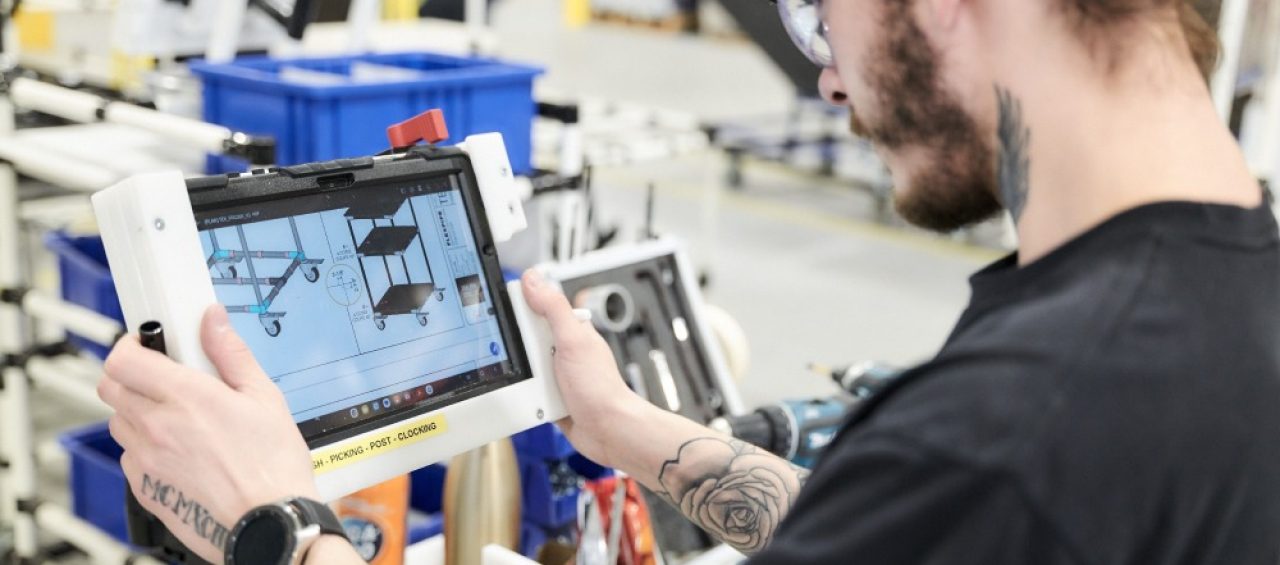
The company’s digital lean, distributing electronic tablets to assemblers for reading assembly drawings, particularly reflects its commitment to zero paper, a pillar of “just-in-time.” By eliminating bureaucratic waste and printing costs totaling over $30,000 annually, the company takes a proactive approach to reducing lead times and enhancing productivity.

The integration of tablet computers underwent rigorous processes, involving key players and focusing on employee training and support to ensure a smooth transition to the new work tools. This approach aligns with the “zero defects” and “zero breakdowns” philosophy, aiming to detect anomalies early and maintain production process continuity.

Training and coaching employees to overcome reluctance to change

GROWTH AND INNOVATION

Flexpipe’s growth and innovation showcase its ability to pursue operational excellence while integrating just-in-time principles. Lean methodologies create a significant competitive advantage, leading to doubled sales while maintaining the same workforce.

The company’s commitment extends to achieving “zero delay” in operations, optimizing every manufacturing stage to reduce downtime and meet customer deadlines. This approach relies on meticulous production flow management, supported by seamless communication and effective digital tool utilization.

In the photo: Mathieu, Distribution Manager, Benjamin, General Manager and Ian, Production Manager.

A CONCEPT OF CONTINUOUS IMPROVEMENT

Today’s “paperless” objective necessitates a comprehensive process overhaul, encouraging the adoption of new, paperless methods. Rather than banning printing for paper enthusiasts, the emphasis is on transitioning to digital documents, eliminating previously associated superfluous steps. This concept remains relevant across all sectors, emphasizing the need to comprehend its principles and limitations. Achieving the “5 zeros” demands continual improvement commitment, evolving gradually rather than abruptly.

Hoshin Kanri for Lean Manufacturing: The Essential Strategic Planning Guide

Hoshin Kanri for Lean Manufacturing: The Essential Strategic Planning Guide

Lean manufacturing isn't just about cutting costs — it's a philosophy of continuous improvement and strategic planning that transforms the entire production process. Among the many lean tools, Hoshin Kanri stands out as a methodical approach to aligning company goals with practical, on-the-ground operations. This guide explores how manufacturing engineers can apply Hoshin Kanri to achieve operational excellence.

What is Hoshin Kanri?

Hoshin Kanri, originating from the Japanese business management system, is a strategic planning process that integrates Lean principles to ensure that every employee is working towards the same objectives. It translates to "direction management" or "policy deployment." By focusing on KPIs, cross-functional teamwork, and the PDCA cycle, Hoshin Kanri empowers engineers and managers alike to steer their teams toward common goals effectively.

The PDCA method or the Deming cycle

This disciplined approach involves several key steps:

Identifying Key Business Objectives: It starts with the vision of the company and breaks it down into clear, actionable steps. 

Developing Strategies for Goals: It involves devising strategies to achieve these objectives, often with the help of cross-functional teams. 

Implementing Action Plans: These strategies are translated into action plans, which are then carried out by employees at all levels of the organization. 

Reviewing and Adjusting: Regular reviews are essential to assess progress and make necessary adjustments.

Benefits for Manufacturing Engineers:

Manufacturing engineers who employ Hoshin Kanri can expect several tangible benefits:

Improved focus on value-added activities. 

Enhanced process efficiency and waste reduction. 

Better resource allocation and inventory management through JIT principles. 

Stronger alignment between management objectives and operational activities.

Planning and online Tools for Hoshin Kanri

The digital transformation of the manufacturing industry has introduced a suite of online tools tailored to support strategic planning and the Hoshin Kanri process. These tools offer a multitude of features that support the various stages of the Hoshin planning cycle, from conception to completion. Here's a curated list of tools that can facilitate each phase of your Hoshin plan: 

Trello: A visual tool that's perfect for monitoring the progress of Hoshin initiatives. 

Asana: Streamlines task assignment and tracking related to strategic actions. 

Monday.com: Offers templates for creating an X-Matrix, a fundamental Hoshin Kanri document. 

Smartsheet: Provides robust planning capabilities for complex strategic documents. 

i-nexus: Tailored for strategy execution, ensuring goal alignment and tracking. 

businessmap: Delivers advanced Kanban boards and analytics to support the Catchball process. 

Lucidchart: Ideal for process visualization, crucial for A3 reports and strategy mapping. 

Understanding the X-Matrix: The Planning Backbone of Hoshin Kanri

A cornerstone of Hoshin Kanri is the X-Matrix, a comprehensive planning matrix that visually maps out the strategic plan, aligning long-term goals with tactics, metrics, and responsible parties. This tool is invaluable for ensuring transparency and coherence in your strategy. This kind of tool facilitate the creation and tracking of the X-Matrix, allowing teams to see how their efforts contribute to overarching company objectives in real time. By leveraging such platforms, engineers and managers gain a birds-eye view of their strategy's execution, ensuring that all actions are purpose-driven and results-oriented.

[cta id="51922"]

Leveraging Online Tools for Strategic Planning

Incorporating these online tools into your Hoshin Kanri strategy can yield transformative results. 

Ensure Alignment: Use the tools to align individual and team activities with strategic objectives. 

Foster Collaboration: Enhance collaboration across departments by providing a common platform for sharing progress and feedback. 

Monitor Performance: Keep track of performance metrics to ensure strategic outcomes are being met. 

Hoshin Kanri is a powerful lean methodology that, when supported by the right set of online tools, can help manufacturing engineers and organizations ensure that every team member is working towards the same goals. By integrating these tools into your Hoshin Kanri framework, your team can work more efficiently, adapt to changes quickly, and achieve strategic objectives with greater precision. 

We're eager to hear about your experiences with Hoshin Kanri and these online tools. Leave a comment below to join the conversation and help others in the lean manufacturing community find the best strategies for success.

Heijunka: A Comprehensive Guide to Leveling Production

Heijunka: A Comprehensive Guide to Leveling Production

In the manufacturing realm, optimizing for efficiency while meeting ever-evolving market demands is critical. Enter Heijunka, a Japanese technique of "leveling production". Renowned as the backbone of the Toyota Production System (TPS) and the foundation of Lean methodology, Heijunka serves as a beacon for operational excellence.

Understanding Heijunka

Toyota Motor Corporation designed their production system to deliver superior quality, optimal cost, and minimized lead time by eradicating waste. The foundation of TPS rests on two main tenets: just-in-time and jidoka. This concept is frequently depicted with the "house" illustration.

Heijunka, pronounced "hey-june-kuh", is more than just leveling production; it represents a philosophy to combat waste, align production with actual demand, and ultimately, streamline operations. Originating as an essential pillar of the TPS, Heijunka's inception was aimed at addressing the unpredictabilities and inefficiencies resulting from erratic production schedules and fluctuating customer demands. 

By integrating the principles of Heijunka, manufacturers are empowered to craft a balanced and rhythmic production cadence. This harmonized approach reduces lead times, ensures high-quality output, and optimizes resource allocation, thus bolstering overall operational efficiency.

Principles of Heijunka

The Heijunka is the solution to the Mura problematic.

Demand Smoothing: Central to Heijunka is the principle of demand smoothing, ensuring production orders are evenly spaced, mitigating the risks of abrupt demand fluctuations. It addresses challenges like overproduction during demand peaks or resource underutilization during lulls. 

 Mixed-Model Production: Unlike traditional manufacturing that emphasizes large batches of a single product, Heijunka promotes mixed-model production. It's a holistic approach, producing varied products in small batches, aligning with changing customer preferences without accumulating unnecessary inventory.

Through Heijunka, the goal is to combat inefficiencies born from inconsistent production times.

Takt Time Integration: Central to Lean methodology, takt time — the rate at which a product must be produced to meet customer demand — is interwoven into Heijunka. This synchronization ensures that manufacturing processes are consistently paced and optimized.

Benefits of Heijunka

When implemented properly, the system ensures consistency by balancing demand, adaptability by reducing the time it takes to switch tasks, and steadiness by maintaining a consistent production volume and variety over an extended period.

Waste Reduction: Heijunka's strategic distribution of production orders significantly trims waste. This includes overstock, overproduction, and the mismanagement of resources. By eliminating these inefficiencies, businesses can realize cost savings and enhanced resource stewardship. 

Enhanced Flexibility: The mixed-model production championed by Heijunka enables manufacturers to rapidly pivot in response to market shifts or evolving customer preferences. This dynamism ensures production remains in sync with real-time demand. 

Employee Empowerment: A predictable Heijunka-driven rhythm reduces the chaos and stress stemming from sudden production shifts, fostering a healthier, more engaged workspace.

Implementing Heijunka with the Kanban System

A successful Heijunka implementation can be further enhanced with the integration of the Kanban system, a visualization tool to improve workflow and manage work-in-progress. 

Demand Forecasting: Start by analyzing past demand trends and market trajectories to craft an accurate production roadmap.

This table represents a mass producer (without Heijunka)

Standardized Work: Create consistent work procedures. This uniformity ensures tasks are executed uniformly, promoting a consistent production flow. 

 Kanban System Integration: Meld the Kanban system for material resupply. It complements Heijunka by ensuring the smooth flow of materials and matching production rhythm. Kanban visualizes the workflow, makes policies explicit, and fosters continuous improvement — all aligned with Heijunka's goals.

Lean manufacturers who embraced the concept of balancing both volume and variety required an efficient scheduling system to manage production.

Collaboration and Communication: Foster effective intra-departmental communication. This synchronization is key to aligning production plans and swiftly responding to any changes.

In our rapidly evolving manufacturing landscape, Heijunka stands out as a robust tool for optimizing production workflows. Combined with the Kanban system, this synergy offers unparalleled potential to transform manufacturing practices. As businesses worldwide strive for operational excellence, Heijunka and Kanban might be the duo driving them to new efficiency frontiers.

How Ekanbans Optimize Your Material Replenishment Process

How Ekanbans Optimize Your Material Replenishment Process

When companies think about Kanban, the image of a Kanban board and Kanban cue cards often come to mind. This simple lean manufacturing scheduling system summarizes workflow on a board, showing individual steps required to complete a given project, work, or operation.

The Kanban board is the repository for the Kanban cards. The board outlines a given manufacturing process or defines each stage of a product or project’s step-by-step process. The cards are then placed on the board outlining what tasks need completion.

Aerospace producibility board – Source: planview.com

Cards define what work has been requested, what is currently being worked on, and what work is completed. They represent what remains to be done before moving to the next process step. These cards are also used to outline different ideas and approaches to help move the process along.

The Origins of Kanban

In its simplest form, Kanban is a method of tracking manufacturing workflow or a project’s history. It is a highly effective scheduling method for lean manufacturing, helping to define how much inventory is needed to support current workloads.

Its origins can be traced back to Taiichi Ohno, who – along with Sakichi Toyoda and his son Kiichiro Toyoda – are responsible for developing the Toyota Production System (TPS) and its many lean and continuous improvement methodologies.

Toyota Production System Kanban board. Source: toyota-global.com

Like many lean methodologies emerging from Toyota, Kanban relies upon simple visual cues. The word Kanban is Japanese and literally translates to “card you can see.” It is considered the core tool for managing Just-in-Time (JIT) manufacturing, another lean pillar of TPS. Toyota introduced JIT and Kanban during the 1940s.

JIT is considered a pull system where customer demand is the driving force behind manufacturing. This customer demand essentially “pulls” products to be made, unlike the North American manufacturing processes at that time that relied on pushing products to the market to spur customers to buy those products.  

Kanban is seen as an innovation in that it follows similar TPS guidelines; minimizing costs, eliminating waste, and shortening lead times is the best way to add value for customers.

Kanban in Today’s Business Environment

Companies still use Kanban boards and even post-it notes as a convenient replacement for the Kanban cards. Other companies have moved away from this manual process. They have instead adopted digital, SaaS, cloud-based, and mobile-optimized software solutions that provide granular data and up-to-the-instant feedback on workflow and production volumes.

This adoption of real-time platforms has given rise to multiple Ekanban (electronic Kanban) systems that are quickly replacing the visual cue systems of the past. These systems provide invaluable details to line-side operators, managers, project managers, employees, and technicians in manufacturing environments.

Having a system that tracks production data and a project’s progress in real-time is invaluable. It shortens the time it takes to make critical decisions and course corrections. It identifies areas of concern and provides pinpoint accuracy on issues that impact workflow. It allows companies to determine when inventory needs replenishment to keep up with demand.

Ekanban systems can be accessed from any laptop, mobile phone, or desktop with an internet or Wifi connection. This means designated employees can easily track production throughput no matter where or when they work. Employees no longer have to view the Kanban board to get a breakdown of production throughput, and nobody has to spend any time updating that board. Instead, everyone merely accesses the information on their own.

Simple, Scalable, and Modular EKanban Systems

One of the drawbacks for manufacturers is the cost of fully implementing an Ekanban system alongside its existing software, like Enterprise Resource Planning (ERP), Material Requirements Planning (MPR), and other production or inventory management systems. However, like Flexpipe’s tube and joint system, there are modular and scalable solutions that allow you to gradually introduce EKanban without breaking the bank.

Steute Technology’s NEXY Digital Shop Floor Solution is one of these modular and scalable systems. Rob Hargis of Steute USA outlines some simple ways the company’s Ekanban system works.

Watch Ian Johnson from Flexpipe and Rob Hargis of Steute USA outlining some simple ways the NEXY Digital Shop Floor Ekanban’s system is working.

https://youtu.be/9HfLjpqFenE

1. What is the NEXY Digital Shop Floor Solution?

Simply put, NEXY is an industrial wireless solution that streamlines the inventory replenishment process by leveraging Steute Technology’s wireless sensor technology.

NEXY’s flow rack sensor is a robust, sturdy, and easy-to-install device that fits easily on any Flexpipe Flow Rack. It operates at 915 MHz, so it doesn’t interfere with other WiFi signals. This is especially important given the number of Wifi sources on today’s production floors.

The flow rack sensor easily snaps in pace on any roller and does away with operators using barcode/RFI scanners to register inventory at a given work cell.

2. What are the Main Benefits?

One common source of waste in manufacturing includes inventory replenishment. In a lean manufacturing work cell, this often involves an operator leaving the cell, walking to inventory, waiting to get the parts, consumables, or materials they need, and then walking back to their work cell. This is all wasted time.

The further the inventory is away from the lean cell, the longer the transit times and the more time is wasted. Some companies ignore this wasted time. However, calculating how often a given work cell needs replenishment each day, week, or month and how many cells are on the shop floor quickly amounts to a considerable amount of motion waste and non-value tasks.

Water Spider is the go-to person who can make the bridge between the lean cell and the supermarket.

In other instances, operators must go outside the cell to register the inventory with an RFID/barcode scanner. Again, depending on how often the replenishment occurs, this time quickly adds up. For cells with high inventory replenishment throughout the day, this wastes time and ultimately affects production throughput for a single cell.

Even companies that still use the manual Kanban processes on a Kanban board with Kanban cards can save considerable time and achieve significant cost reductions with NEXY. Operators can stay in the cell and focus on completing work tasks while NEXY operates behind the scenes.

No more time filling out Kanban cards or updating Kanban boards. No need for RFID/barcode scanners. No need to leave the work cell to replenish inventory. No more long transit times walking to and from inventory/stores.

No RFID/barcode scanners

No time wasted on inventory replenishment

No Wifi interference

No Noise (low sound always)

No more manual Kanban cards and Kanban Boards

“Everything is done behind the scenes. All the operator or employee has to do is focus on their work. They will never notice when inventory is replaced.”

3. Where is the Data Stored?

Once actuated, the flow rack sensor immediately sends wireless signals to Steute Technology’s access point. From there, the access point sends the data to the sensor bridge – a Programmable Logic Controller (PLC) housed in a cabinet on the shop floor.

The PLC then takes all the data and creates an Application Programming Interface (API), which can either be sent to a shop floor server or a cloud-based server. The wireless solution is 128-bit encrypted and works with multiple IT cyber-security protocols.

Wireless tilting sensor RF RW-NET

sWave.NET® wireless technology

eKanban software module

Sensor Bridge

4. How Easy is it to get Started?

The simplicity of NEXY is that companies alone decide how much to buy and when. The system isn’t dependent upon immediate adoption across a company’s shop floor. Companies can start small, learn, improve, and then progress at their own pace adding new flow rack sensors and increasing scalability when they see fit.

“Getting up and running is easy. Customers who buy Flexpipe Flow Racks simply reach out to Flexpipe, and we’ll get involved… We start with a simple consultation to determine their needs and current process and then discuss their goals. After that, it’s simply a matter of doing what the customer asks.”

A Simple Solution to Ease Into Manufacturing 4.0

Nowadays, every manufacturer has heard of “manufacturing 4.0” or “industry 4.0.” Both are the same thing. They simply refer to The Fourth Industrial Revolution, the adoption of automated technologies, and their synchronization with digital data solutions and networks.

The first industrial revolution used water and steam to power machines and equipment. The second included improved communication with the telegraph and the installation of railway lines to transport materials and products. The third occurred during the 1950s with the early adoption of digital solutions that improved communication.

The fourth is simply a natural progression from the third; improved digital solutions linked to automated and robotic equipment ensure a steady stream of real-time data.

NEXY is the simplest way for a manufacturer to be introduced to this all-important fourth industrial revolution. This is especially the case for labor-intensive manufacturers who want to manage their transition at their own pace.

Get the best free plan to build your next Kanban rack

Kanban station

Download this free plan

Flat pipe Kanban rack

Download this free plan

Storage out Kanban rack

Download this free plan

Kanban gravity flow rack

Download this free plan

Rob Hargis

Rob Hargis is a seasoned Brand Manager with the NEXY division of Steute Technologies, providing wireless eKanban, Andon, and AGV integrated sensor networks for manufacturing, assembly and industrial workflow processes in automotive, white goods, and other complex-assembly environments.

Modular, Scalable, and Affordable Material Handling with Flexpipe

Flexpipe is an innovator, supplier, and designer of modular and scalable steel tubes and joints that help companies reduce material handling costs. Based out of Montreal, the company provides multiple products, training, and insight to companies wanting to adopt lean manufacturing.

The company offers a full-service solution that includes its free software add-on SketchUp, multiple outlines and assembly designs, and design and cutting services to help companies build their own material handling structures and reduce costs. 

If you would like to see how Flexpipe can help, contact us now.