


Whether your company is a manufacturer in the medical device, electronics, automotive, or aerospace industries or manage critical environments like cleanrooms – at some point you’ll need to familiarize yourself with electrostatic discharge (ESD), adopt ESD protection processes and may need to become ESD-compliant.
Electrostatic discharge occurs when two different materials, parts, or objects with opposing electrical charges instantly release static electricity upon contact. However small and seemingly inconsequential, this spark can damage electronic components, assemblies, and electronic finished goods to the point where they are no longer operational and encounter constant failures.
In today’s electronic manufacturing facilities – where electronic devices are becoming smaller and smaller thanks to incredible advancements in microchip design – ESD can cause immediate or latent failure. An immediate failure is often manageable within a manufacturing facility whereas a latent failure is not. A latent failure can occur long after the electronic device has been shipped – and in the worst of cases – it happens when that electronic device is being used by customers.
ESD protection matters because repeated failures within manufacturing substantially increase production and assembly costs while also posing a serious safety risk. A single spark not only damages the electronic device, but it can lead to serious fires, accidents, and injuries to employees. Latent failures – once the electronic device is in the hands of a customer – can severely damage a company’s reputation and brand – allowing competitors to steal market share and customers.
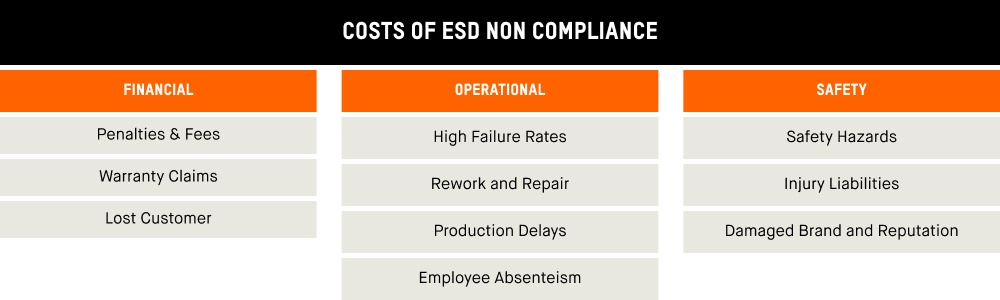
Manufacturers who are required to be ESD-compliant but are not – or decide not to pursue compliance – can incur substantial penalties, fees, and surcharges for safety violations in addition to potentially becoming liable for personal injuries suffered by customers and production employees. Additional costs of non-compliance – or not adopting ESD best practices – can be summarized by high failure rates, rework and repair costs, production delays, safety hazards, employee accidents, employee absenteeism, lost customers, higher warranty costs, and injury liability claims.
When it comes to ESD compliance, it ultimately comes down to the processes your company uses, where it uses them, and the industry your company operates. In general, within the United States, ESD-compliance testing falls under the American National Standards Institute (ANSI) which enforces rules and guidelines set forth by the Electrostatic Discharge Association (EDA). The EDA also acts on behalf of US-based electronics manufacturers on the International Electrotechnical Commission (IEC) with a position on the 101-Elctrostatics Technical Committee.
Ensuring compliance means more than just using the right materials—let’s look at industry standards that guide ESD protection.
For a manufacturer to have ESD-compliant workstations – and adopt anti-static material handling best practices – requires them to enact ESD protection procedures in their production process and use ESD components and materials when assembling ESD-compliant workstations. These ESD-safe materials are used extensively in workspaces, and assembly practices to prevent our outright eliminate prevent electrostatic discharge. Regardless of the specific industry specification, there are some commonalities that all companies must follow when becoming ESD-compliant.
Success requires proper grounding procedures, using ESD components and materials when assembling ESD-compliant workstations, ensuring employees are properly trained in anti-static material handling, and that those employees have ESD-protected equipment. Designating a workspace or ESD-compliant workstation as an Electrostatic Protected Area (EPA) is also critical.
An EPA should easily be distinguished with placards and warning signs. Simply having an ESD mat for flooring isn’t sufficient. To have ESD-compliant workstations – and for those workstations to be considered an EPA location – all the above criteria must be met.

Here is an ESD-compliant workstation assembled using Flexpipe steel tube and joints that offer excellent ESD protection. Three separate ESD-friendly wrist straps are grounded to a table whose base material is ESD-compliant high-density polyethylene (HDPE) decking material covered by an ESD-safe work mat. The same material used to make this workstation is the same material used by customers when making anti-static material handling structures.
To properly build ESD-compliant workstations requires a complete system approach. This means using materials in the construction of your workstation that offer complete ESD protection.
Employees must stand on dissipative ESD mats while also assembling electronic components of ESD-safe workspace mats. Grounding employees with ESD-protected clothing and ESD wrist straps that help to dissipate static electricity is also required. ESD wrist straps must allow for a free range of movement while being grounded to a ground bus bar or electrical outlet.
The Essential Workstation ESD Checklist
When assembling your ESD-compliant workstation or anti-static material handling structure, always choose materials that are certified ESD-safe. These ESD components must have passed the required testing requirements within your industry. This is essential whether you are assembling your own workstation or making an existing workstation ESD-compliant.
There are several misconceptions when it comes to having an ESD-compliant workstation or constructing anti-static material handling structures. First is the idea that all metal structures are ESD-safe and offer ESD protection. They don’t. Another is that a single ESD-compliant material protects the entire workstation, employee, and electrical components being assembled. It doesn’t.
One of the more common problems manufacturers face is having to make existing workstations ESD-compliant. While a steel workstation can be made to be ESD compliant, these steel workstations are static structures that cannot be changed without incurring substantial rework and repair costs. In addition, these steel workbenches and workstations still represent potential dangers concerning electrostatic discharge.
The best solution is to construct workstations using ESD components and materials that offer ESD protection. Flexpipe offers numerous ESD-friendly materials for ESD-compliant workstation assembly. Used extensively by electronic manufacturers and companies within the aerospace and automotive industries, customers use Flexpipe ESD-safe steel pipes and joints to make anti-static material handling structures like mobile picking and kitting carts, trolleys, flow racks, TAKT boards, point-of-use boards, shadow boards, and ESD-compliant workstations.
Flexpipe’s ESD-compliant materials for workstation assembly include steel pipes, joints, roller tracks, casters, round joints, connectors, and decking material – among others. Flexpipe’s steel pipes are galvanized steel covered in a light grey polyethylene (PE) which offers excellent ESD protection.
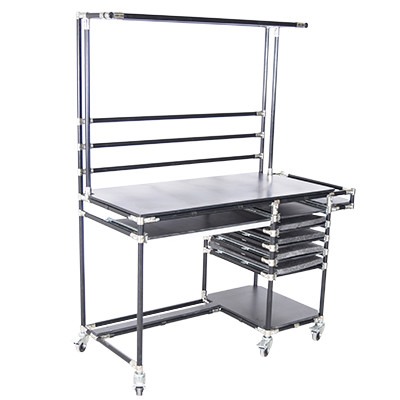
This ESD-compliant workstation is entirely made from Flexpipe steel pipes and joints. Every part of this workstation is made from ESD-safe Flexpipe materials. The black steel pipes are covered with polyethylene (PE), the decking material is high-density polyethylene (HDPE), the joints are nickel-plated and the casters, connectors, fasteners, and other Flexpipe accessories are all ESD-compliant materials.
This modular and scalable structure can easily be modified, adjusted, or changed. The time required to make these changes is minimal compared to static workstations made of steel, wood, or other materials. The cost to change a Flexpipe ESD-compliant workstation is nothing compared to the costs of having a static, stuck-in-place steel or welded structure workstation.
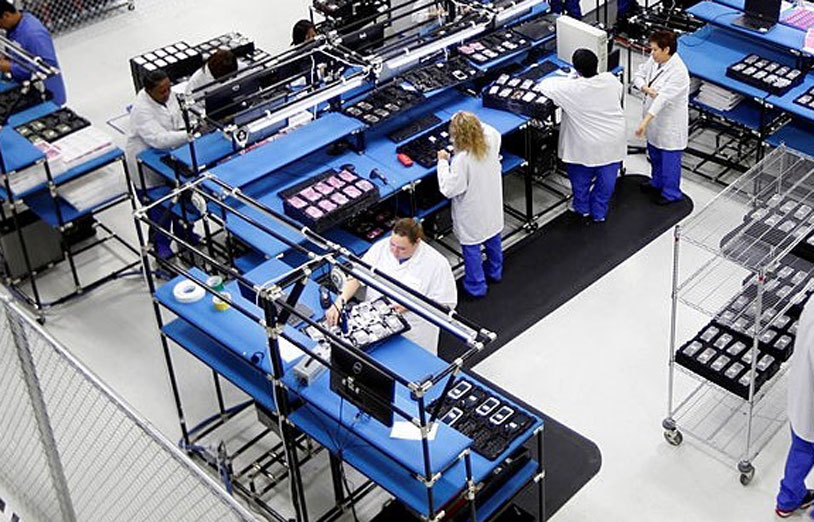
Another example of modular and scalable Flexpipe steel tube and joint ESD-compliant workstations and U-shaped work cells made from Flexpipe steel tubes, joints, and other ESD components for a medical device manufacturer. The mats on the floor are ESD-compliant. The decking material for the countertops and upper levels is made from high-density polyethylene (HDPE) and each level is covered by assembly mats that offer additional ESD protection.
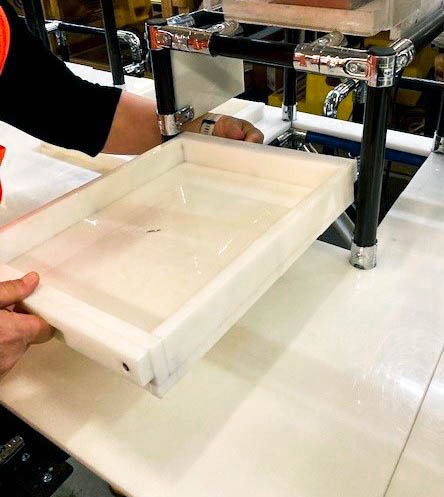
Here an entire pull-out drawer is assembled using Flexpipe’s ESD-compliant high-density polyethylene (HDPE). This offers electronic assembly personnel the perfect location for placing static dissipative tools.
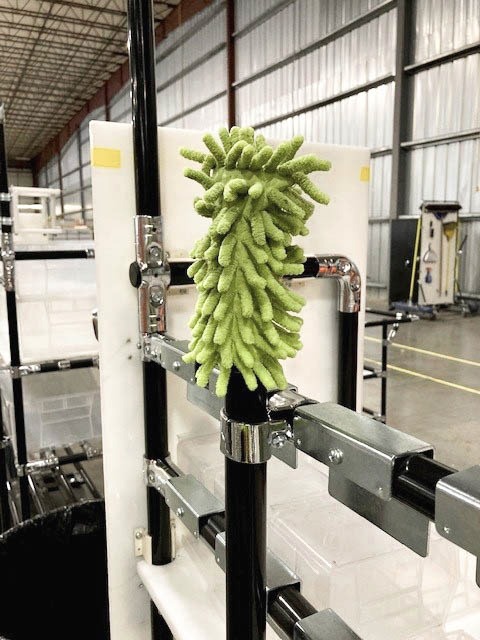
A simple anti-static, carbon-infused cloth is conveniently located for any production employee to use.
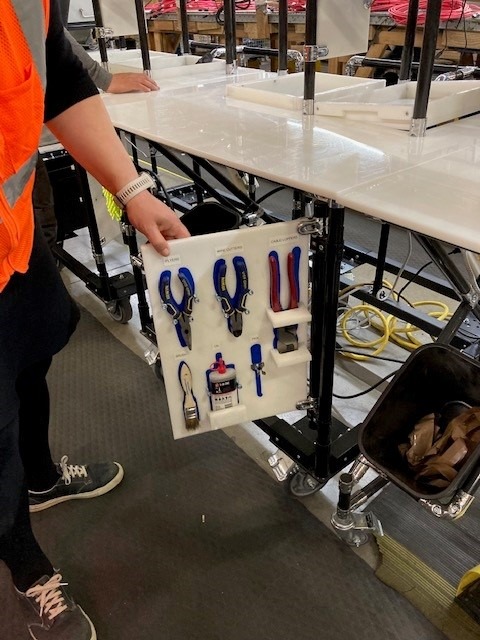
A simple pull-out drawer positioned below a level. The level above and the pull-out drawer are made from Flexpipe high-density polyethylene (HDPE) decking material.
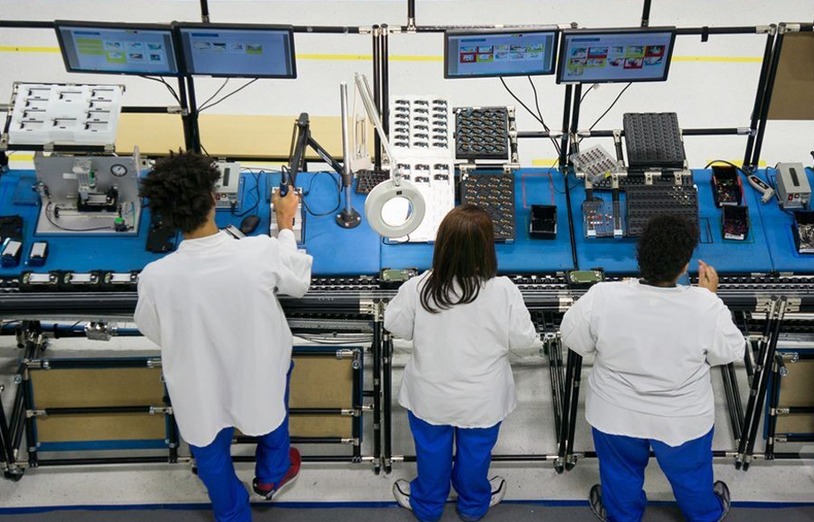
This ESD-compliant workstation was made entirely from ESD-safe Flexpipe steel pipes and joints. This is a one-piece flow process used in a medical device manufacturing facility.
In any manufacturing environment where electrostatic discharge is a constant concern, using the right materials for anti-static material handling structures and ESD-compliant workstations is essential. This ultimately comes down to understanding conductive, dissipative, insulative, and anti-static materials.

A material is considered ESD-safe when its surface resistance reaches a static dissipative level between 105 to1011 ohms. At this range, the material’s surface can sufficiently dissipate static electricity at a “dissipative” level – which is a level that is not too fast or too slow.
This is why some metal workstations – whether they are made of steel or aluminum – can still be made to be ESD-compliant provided the workstation has been sufficiently grounded and has ESD-compliant materials. In this case, a workstation made of steel can become ESD-compliant if it has an ESD-compliant work surface, an ESD-compliant mat for assembly, ESD-compliant flooring, a common ground point, ESD-safe tools, and the employee within the workstation has been properly trained and has the right protective clothing, tools, etc.
There are several important reasons for ESD certification and surface resistance testing.
First, concerning ESD-compliant workstations and anti-static material handling structures, surface resistance testing is critical for companies wanting to retain their ESD certification. That certification attests to the company’s adherence to established standards for managing and eliminating static discharge. This certification is an absolute must in the electronics, automotive, and aerospace industries in addition to the medical devices, healthcare, military, and defense industries.
Second, regularly testing for surface resistance within ESD-compliant workstations is a quality control measure that helps to reduce the likelihood of an immediate or latent product failure. By regularly testing, electronic manufacturers can reduce electronic component failure rates, increase production throughput, better control costs, protect their employees, and ensure their reputation and brand remain intact.
Third, regular resistance testing of different materials in the design stage of a new product allows engineers to avoid costly mistakes in design while ensuring the finished product is less likely to fail. Finally, the traceability of materials is also addressed through regular resistance testing as it allows electronics manufacturers to segregate defective materials or materials that could result in electric discharges.
The most common ESD testing covers ESD-safe flooring or ESD-safe mats. So, how do you perform ESD testing on floor mats and work mats in an ESD-compliant Workstation?
Step 1: Do not use a standard voltmeter. The pins of a standard voltmeter do not make enough surface contact with ESD-safe flooring, mats or even clothing to generate a sufficient reading. Instead, when doing ESD testing, use an ESD resistivity meter (ohmmeter) that comes with NFPA probes.
NFPA probes provide a larger surface area for ESD testing and ensure proper surface contact. Ideally, the NFPA probes should have surfaces that are up to 3 inches in diameter.
Step 2: You’ll now need to ground the floor mat, clothing, or assembly mat. In the case of ESD flooring, it’s common practice to use copper sheets when doing ESD testing. Place the floor mat on the copper sheet. Ensure the copper sheet protrudes beyond the mat. Place one of the NFPA probes onto the mat. Place the second NFPA probe directly onto the copper sheet.
Step 3: Once the NFPA probes are in place, push the test button on the ohmmeter. The ohmmeter will provide a reading. Compare that reading from the ohmmeter to the specification sheet of the flooring or mat.
Summary: With the point-to-ground ESD testing process, you’re testing the electrical resistance point of the mat, flooring, or clothing and how well it dissipates electrostatic discharge to a grounded point. This is a test whereby generating a low resistance value or score means the material effectively discharges static because that material has good conductivity.
Step 1: Using the same NFPA probes, place both on either end of the ESD-compliant mat, flooring, or clothing. Ensure the NFPA probes are at least 40 inches apart. There is no grounding involved in this step.
Step 2: Once NFPA probes are on the material, press test.
Step 3: Take the reading of the point-to-point test and compare them to the results from the first test (the point-to-ground test).
Summary: With point-to-point ESD testing, you’re testing the electrical resistance of two separate points on the same material – be it a floor mat, assembly mat, or clothing. This test measures how conductive the material’s surface is and how well that material dissipates static electricity. By comparing the results of this test to the first, you’ll determine if the material is more conductive point-to-point (two points on the same surface) than it is point-to-ground. If it is more conductive, then it could point to a potential hazard.
Both the Point-to-Ground and the Point-to-Point tests are based on ANSI/ESD STM 7.1 Resistance Tests.
There are several mistakes that manufacturers make when working towards ESD compliance and assembling ESD-compliant workstations. One of these includes improper ESD testing tools, processes, and procedures. In the previous point-to-ground and point-to-point tests, it’s not uncommon for companies to do the tests with a standard voltmeter.
Other problems include adopting stop-gap measures where a manufacturer assumes that only one or two ESD-compliant solutions are needed. In this case, a manufacturer might assume that simply having ESD-compliant flooring, mats, and wrist straps is enough. It isn’t.
Additional mistakes include improper grounding processes for wires, ground bars, and wrist straps or not providing employees with sufficient ESD-safe clothing, tools, and gear. Finally, allowing floor mats and work mats to degrade while not properly training employees on proper ESD procedures is also a common mistake.
Maintaining ESD compliance is a 24/7 responsibility that all production managers, supervisors, and employees must share. This means enacting quality control processes that ensure all ESD-compliant workstations and EPA-designated locations have employees who have been properly trained, are well-equipped with ESD-safe clothing, and have ESD-compliant workstations.
The first step to an ESD-protected environment is to ensure that all materials used to construct ESD-complaint workstations are certified ESD-safe, and have undergone ESD testing.
Second, adopt proactive ESD-testing schedules and maintenance programs to maintain safe and well-grounded workstations. This ensures that damaged or outdated ESD mats, flooring, dissipative tools, and clothing are immediately replaced.
Third, not only should ESD-compliant workstations and workbenches have ground checks, but you may be required to install air filtration systems if dust is a common problem within your manufacturing facility.
Fourth, relative humidity (RH) should be optimized between 40 to 60 percent throughout your facility with 55 percent RH being the target area for eliminating electrostatic buildup.
Finally, ensure all employees are properly trained on proper ESD procedures and that they clean up their workstations at the end of a given shift. ESD rollers help to remove dust particles – which can create electrostatic discharge – from ESD mats and ensure the next employee has a more presentable work area.
There are multiple different types of ESD compliance with industry-specific and process-specific requirements. Some focus on cleanroom environments, others on manufacturing and assembling electronic devices in factory settings, and still others provide guidelines and requirements when painting, printing, and packaging finished goods.
Different industries may require different ESD compliance. While there may be some similarities, there are sufficient differences between automotive – which often relies on the ISO 10605 standard – versus aerospace which typically calls upon ANSI/ESD S20.20.
The best course of action is to define your position within your industry, determine the requirements for your end-user customers and ensure your internal ESD procedures are compliant with those requirements. Given the numerous differences across multiple industries, it’s critical to ensure you have the right certification for your ESD processes.
ESD protection is essential in many industries to prevent costly failures, ensure compliance, and maintain product reliability. See how ESD impacts your sector :
Prevent electronic failures in modern vehicle components.
Protect sensitive avionics and electronic systems.
Ensure safety and durability in electrical manufacturing.
At Flexpipe, we’re driven by innovation. As a critical supplier to numerous manufacturers in multiple industries, Flexpipe is seen as the go-to solution for companies wanting to make modular, scalable and easily changeable anti-static material handling structures and ESD-compliant workstations and work cells.
With an established global reputation for helping electronic manufacturers create modular and scalable workstations while providing essential guidance on adopting lean-manufacturing best practices, Flexpipe is the single-source solution for all your material handling needs.
In addition to the many different types of material handling structures that can be made with Flexpipe, we are proud to offer the following services to electronic manufacturers needing Flexpipe to help them with ESD-friendly workstations and material handling solutions.
If you need Flexpipe to ensure your workstation is ESD compliant and want to us to assemble it for you, then please visit our Assembly Services Page.
If you would like to assemble your own ESD-safe workstation but want the Flexpipe design team to design a customized ESD-friendly workstation or work cell, please visit our Design Services Page.
If you have any questions about our services or would like to know more about the ESD compliance services we offer, contact us now.