

Scalable Modular Material Handling Solutions for U.S. Aerospace Manufacturing
Aerospace manufacturers need production systems that evolve as fast as their programs. This guide to modular material handling solutions shows how Flexpipe USA helps aerospace teams build and scale adaptable workstations, carts, and flow systems that improve efficiency and ergonomics. Designed for environments where precision and flexibility matter most, Flexpipe’s modular approach empowers engineers to redesign layouts and support lean initiatives in days instead of weeks.
Table of Contents
What Are Modular Material-Handling Systems in Aerospace?
A modular system uses reusable pipes, metal joints, and ESD-safe decking to build carts, racks, and benches that adjust quickly to evolving aerospace assembly needs.
In U.S. aerospace production, every workstation must support traceability, ESD safety, and ergonomic efficiency.
Flexpipe USA’s modular pipe-and-joint systems let engineers configure and re-configure work cells for small-lot builds, tooling changes, or mixed-model production, without welding or external contractors.
1. What Are the Material Handling Challenges in the U.S. Aerospace Industry?
The U.S. aerospace industry faces some of the world’s most complex material handling requirements. Teams juggle large-scale production assets, sensitive components, and strict process control while maintaining speed and safety.
Traditional welded or fixed setups often slow reconfiguration and consume valuable space when production changes.
That’s why many facilities combine motorized handling systems (like cranes, lifts, and conveyors) with modular material handling solutions for the U.S. aerospace industry, smaller, flexible structures that support day-to-day operations. These modular carts, racks, and workstations are ideal for transporting tools, fixtures, or subassemblies between stations, enabling engineers to adapt layouts quickly without interrupting production.
Together, both systems create an integrated approach: motorized solutions handle the heavy lifting, while modular systems optimize movement, organization, and ergonomics at the human level.
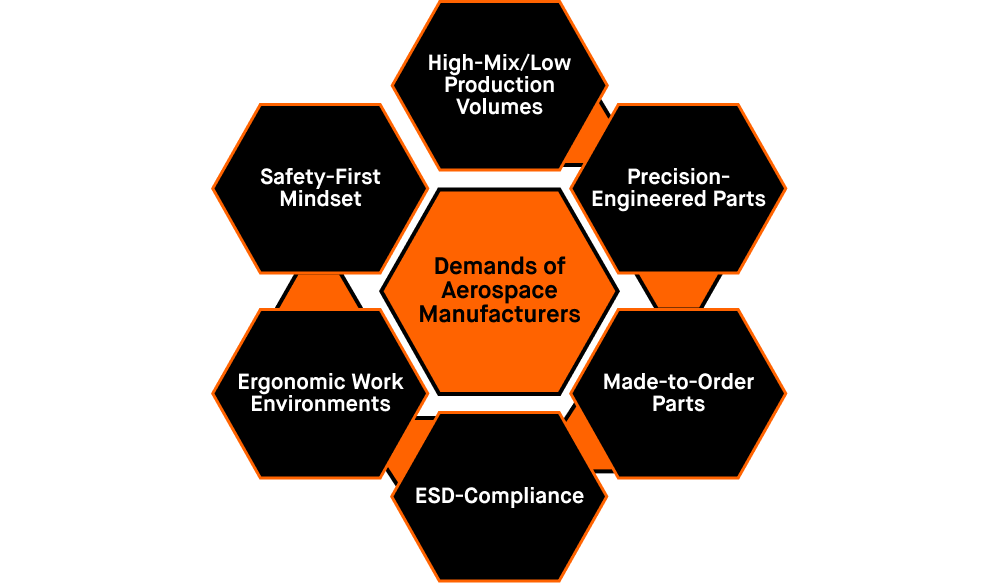
Finally, with new aerospace programs requiring lighter, more efficient, and more accurately made-to-order or build-to-print parts alongside high part and material traceability, the demand for lean tools for aerospace production has never been higher.
- High-mix, low-volume production
- ESD-compliant, ergonomic work environment and strict safety standards
- Constant adaptation for new programs and parts
- Importance of efficiency, traceability, and reusability
Managing the sheer volume of parts and materials requires an entirely new mindset concerning material handling for aerospace manufacturers. This requires doing away with welded material handling structures. It involves eliminating wooden carts and platform carts that don’t properly secure materials and that can’t be changed, altered, or adjusted to new aerospace parts or material sizes.
It means using high-strength steel tubes and joints to assemble made-to-fit aerospace modular workstations. It means using those same materials to customize material bin sizes for lean modular work cells, customized mobile material handling carts, push carts, trolleys, and flow racks.
For manufacturers wanting the very best lean tools for aerospace production, it comes down to leveraging the flexibility, ease-of-use, and quick-change features provided by Flexpipe’s material handling for aerospace manufacturers solution.
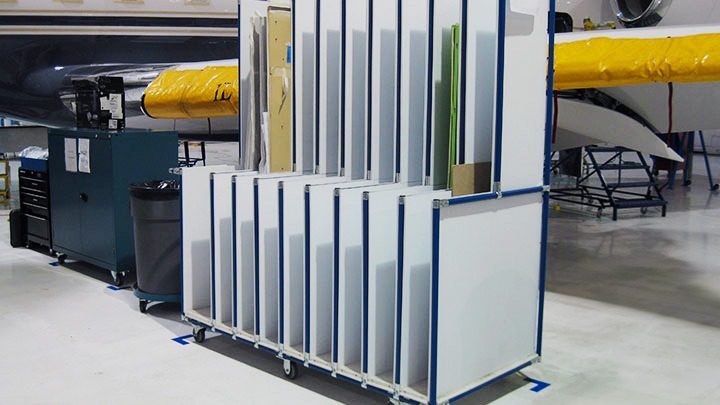
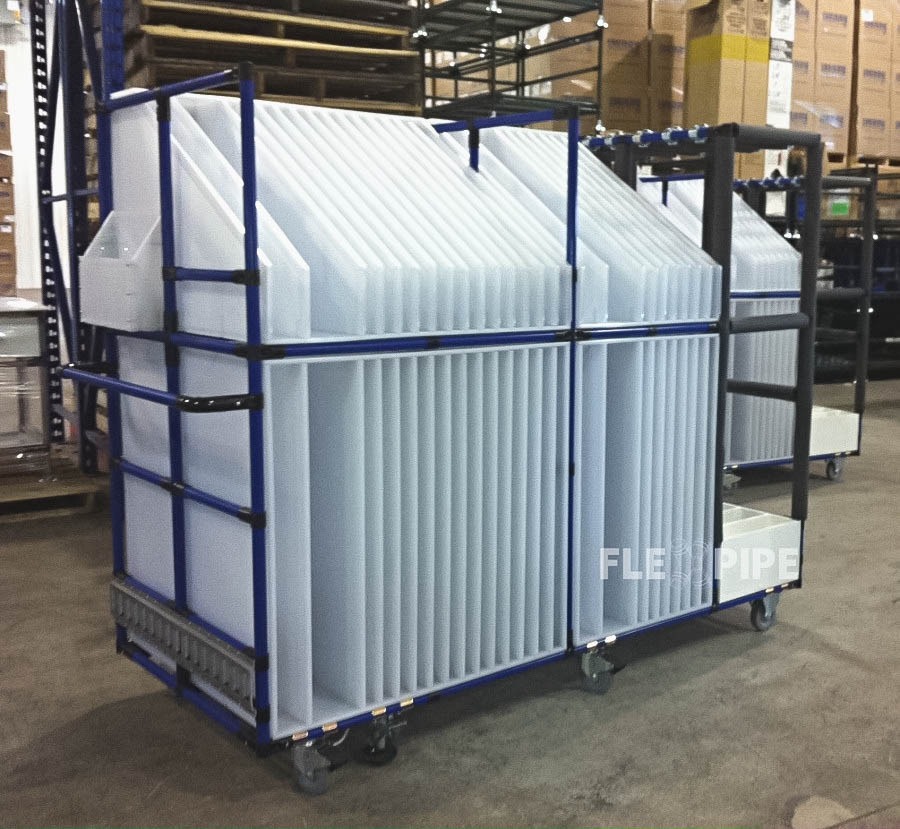
In the image above, an aerospace manufacturer used Flexpipe’s Flexlab Design Services to create custom mobile carts. These custom mobile carts easily transport right-sized panels immediately in front of any rework or repair job. The above mobile cart has been customized to hold specific-sized panels. For this work task, there are nine panels required, which perfectly match the nine (9) slots.
Flexpipe’s Flexlab Design Services

For aerospace manufacturers that want to design their own material handling structures, there’s the free Flexpipe Creator Extension. This simple SketchUp plug-in simplifies the design process for material handling structures and lean workstations. Aerospace manufacturers can design their structures and order a customized parts list directly from the extension.
2. Why Aerospace Modular Workstations Thrive in Aerospace
Modular workstations thrive in aerospace manufacturing because they let teams adapt layouts quickly, assemble or modify structures in-house, and support lean material flow for small-to-medium components. Flexpipe USA’s modular systems complement larger motorized equipment, giving manufacturers flexible, durable, and ergonomic tools that improve daily efficiency on the shop floor.
Highly Adaptable Solution for Complex Layouts
Aerospace facilities constantly adjust to new programs and part sizes. Flexpipe’s modular structures allow engineers to reconfigure or expand work areas without relocating heavy machines. This adaptability lets teams integrate new cells or inspection stations seamlessly within existing layouts — a key advantage in material handling solutions for the U.S. aerospace industry.
Built and Adjusted In-House
Traditional welded benches or carts require outside fabrication for even minor changes. Flexpipe systems can be assembled, modified, or repaired internally by production teams using basic tools. This reduces downtime, labor costs, and reliance on external vendors — a practical fit for lean aerospace environments that demand quick turnaround between builds.
Durable Steel Construction for Industrial Use
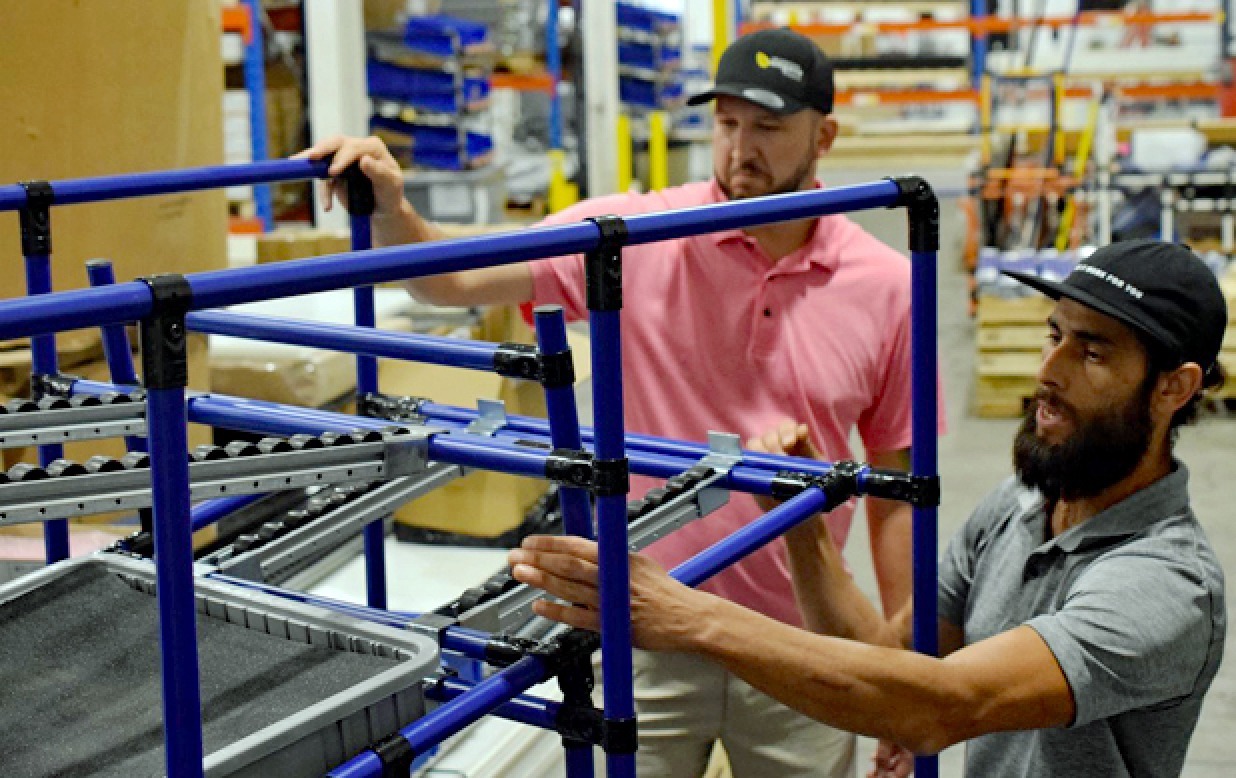
Flexpipe’s Q235 cold-drawn carbon steel offers high strength and impact resistance. The combination of hardness and flexibility makes it suitable for supporting tools, fixtures, or subassemblies in aerospace manufacturing. Each pipe and joint withstands daily wear while maintaining stability for repeated reconfiguration and transport cycles.
A high-strength steel that can support heavy loads, Q235 steel is also infused with carbon, an element that helps increase the steel’s hardness. The result is a sturdy, durable, high-strength steel that can support heavy loads while enduring direct impacts, making it the ideal solution for heavy-industrial aerospace manufacturing environments.
Supporting Aerospace Production Efficiency
Fast changeovers are critical when switching from one aircraft component to another. Modular systems enable teams to adjust workstation height, width, or configuration within hours — keeping production continuous and balanced.
Whether it’s needing wider workbenches with ESD-compliant decking materials to handle larger-sized components or assemblies, or needing to create newer lean work cell designs to account for different assembly work processes, the Flexpipe system is the ultimate solution for quick-change adjustments.
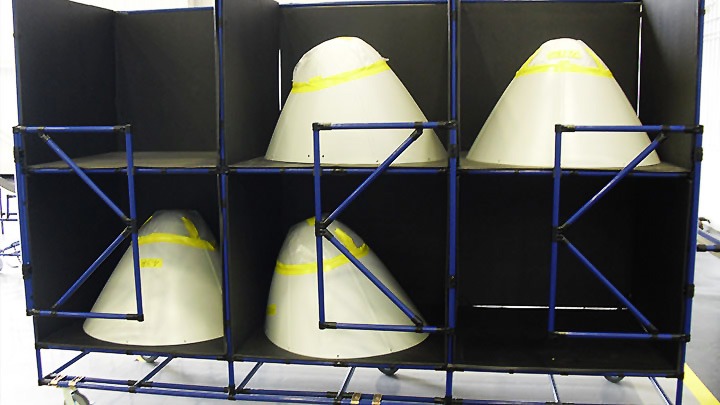
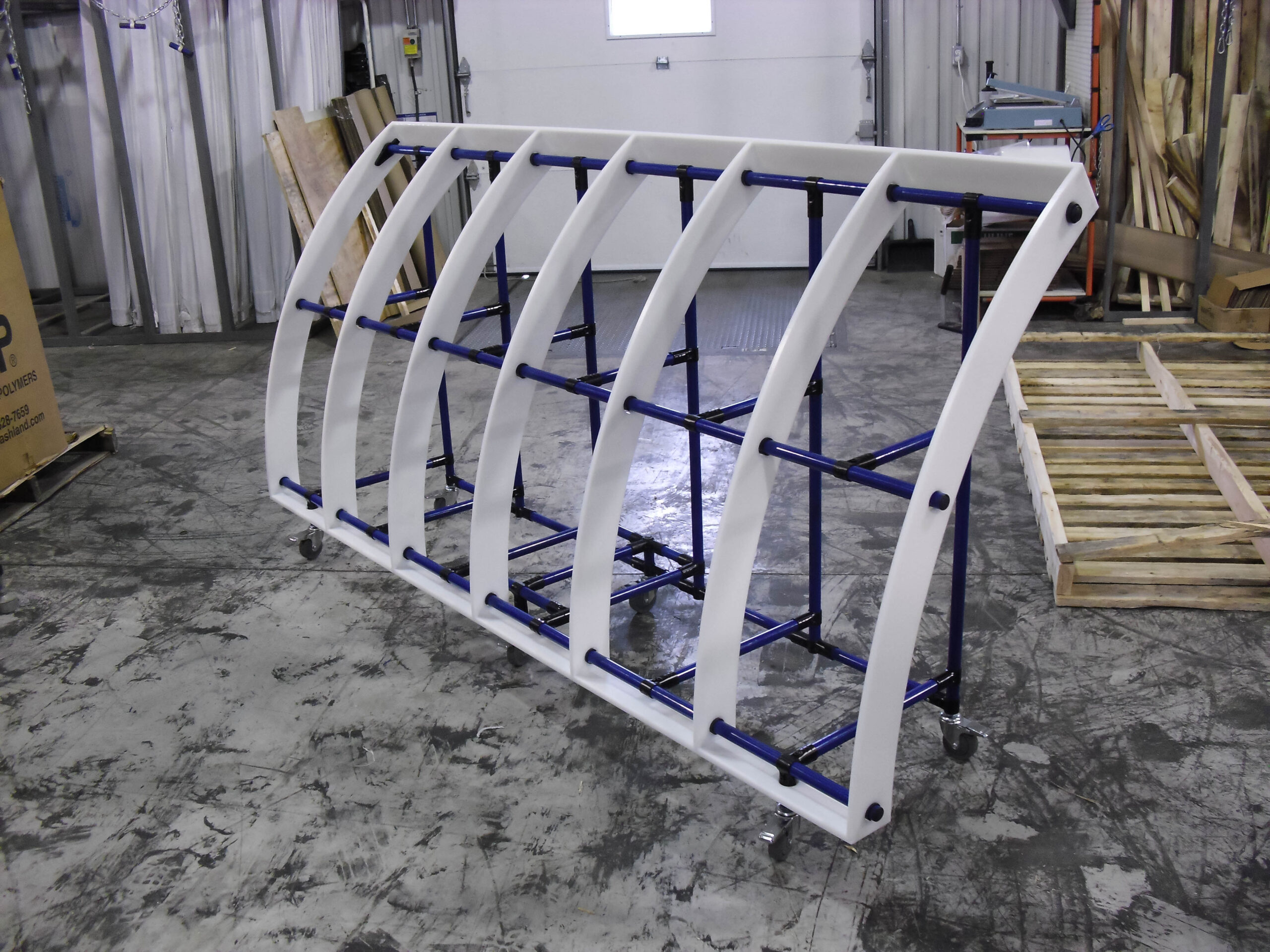
This customized Flexpipe cart was designed and assembled at an aerospace manufacturer. The customized cart is used to transport airplane nose cones for the final staging and assembly. The cart has three separate doors to ensure the cones stay stationary while each cone is surrounded by Kaizen Foam to protect the cones during transit through the various stages of production.

3. What Are Smart Material Handling Solutions for the U.S. Aerospace Industry?
Smart material handling in aerospace combines modular flexibility with process efficiency. Flexpipe systems help manufacturers organize tools, kits, and subassemblies through customizable carts and FIFO flow racks. These modular structures enhance lean manufacturing by simplifying access, improving line-side organization, and protecting sensitive components during every production stage.
Modular Kitting Carts for Lean Aerospace Assembly
In aerospace manufacturing, every part or fastener must arrive at the right place and time. Modular kitting carts allow teams to group and transport small or medium-sized components efficiently. Flexpipe’s systems enable full customization — adjustable shelves, labeling, and foam inserts — for lean assembly, rework, or inspection stations.
Example: An aerospace manufacturer designed a mobile cart with ESD-conscious placement holders, protecting delicate components through each production phase. The cart’s lightweight modular frame allowed easy movement between work cells while maintaining safe, organized storage.
FIFO Flow Racks for Line-Side Efficiency
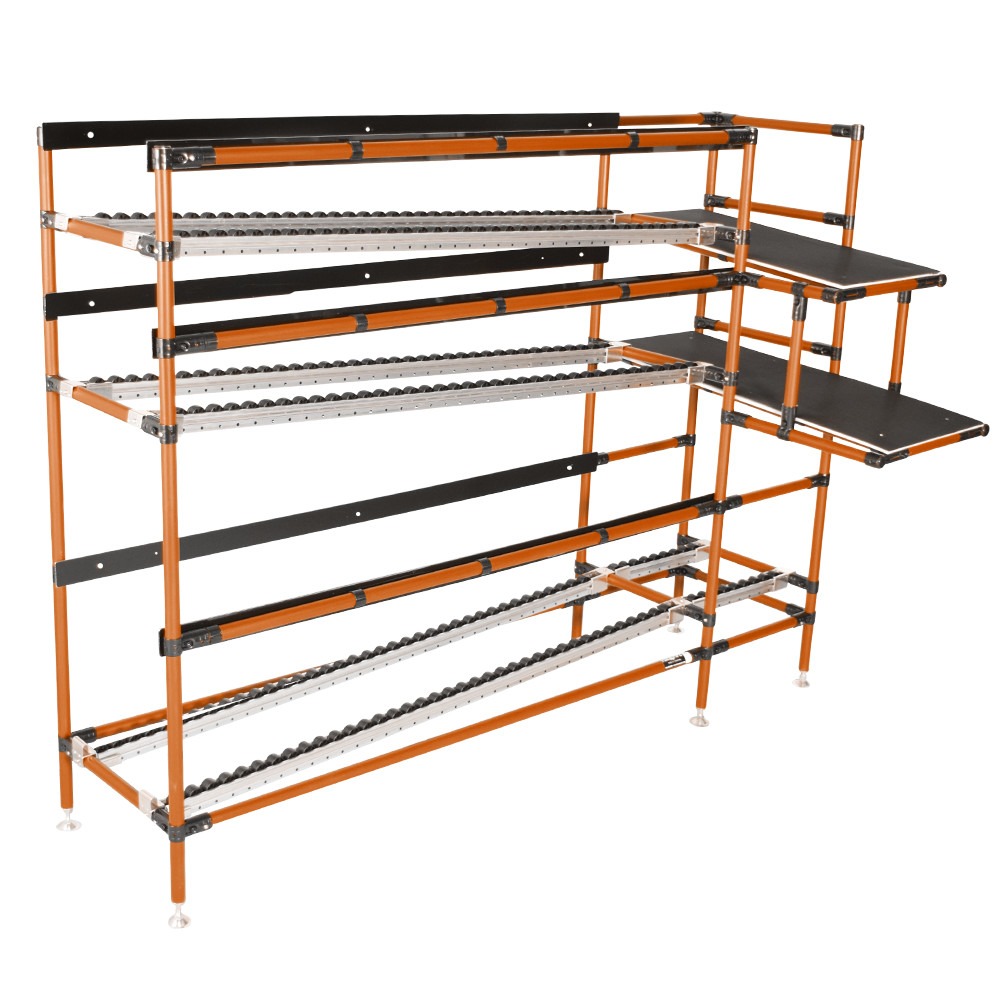
FIFO (First-In, First-Out) racks support line-side operations by ensuring the oldest parts are used first — preventing stock stagnation and improving visibility. Flexpipe’s modular frames make it simple to adjust rack angles, roller tracks, and part bins as new programs or tooling are introduced.
This adaptability keeps production moving smoothly and supports lean pull systems common in aerospace environments.
Integration With Broader Handling Systems
Flexpipe’s smart structures complement — not replace — motorized material handling. While cranes and conveyors move large assemblies, modular carts and racks manage smaller parts, kits, and fixtures. This hybrid approach gives aerospace teams scalable, human-level control within automated workflows, improving both safety and responsiveness.
4. How Do Modular Workstations Support Aerospace Technicians?
Modular workstations help aerospace technicians work safer and faster by allowing ergonomic adjustments, tool organization, and clear material flow. Flexpipe USA’s modular frames can be configured for height, reach, or layout changes, helping reduce physical strain while complementing broader material handling solutions for the U.S. aerospace industry.
Ergonomic and Flexible Design for Technicians
In aerospace manufacturing, technicians spend long hours assembling precision components and managing heavy fixtures. Workstations built with Flexpipe’s modular system adapt to their needs, benches can be raised, tilted, or extended to fit the task. This flexibility reduces awkward postures, limits repetitive motion, and minimizes musculoskeletal stress during assembly or inspection.
Safer, Smarter Workspaces
Safety and efficiency go hand-in-hand on the production floor. Modular designs can integrate guardrails, anti-slip decking, and organized tool storage to minimize clutter and trip hazards. Using ESD-conscious materials, teams can also protect sensitive electronic components during handling and testing without the complexity of permanent installations.
5. Multiple Work Cell Layouts for Improved Workflow
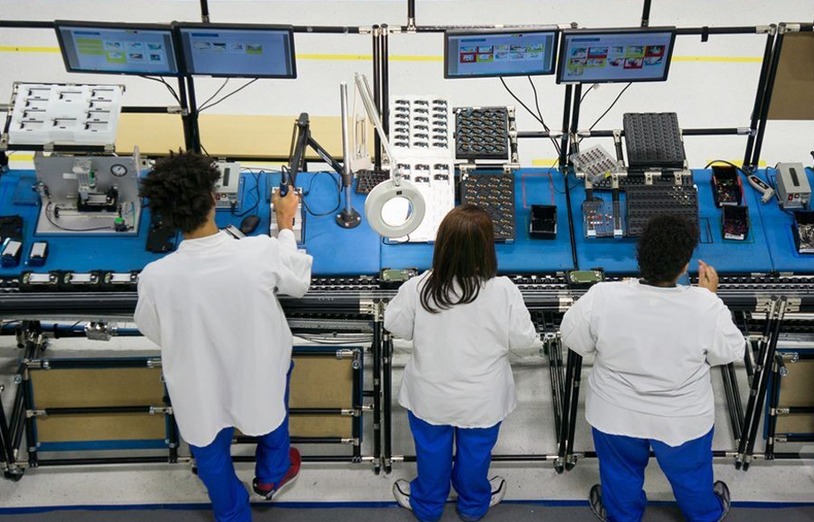
While having lean aerospace modular workstations is important for ergonomics and improved efficiency, it’s equally important to leverage lean work cells for improved workflows. With Flexpipe, aerospace production line efficiency dramatically improves with the ability to create multiple lean work cell layouts.
Whether it’s a standard U-cell layout for improved work processes, wanting an S or Z-cell layout to work around existing obstacles and equipment, or needing a T-Cell layout where production managers can easily access various workstations, Flexpipe allows for any-sided lean work cell.
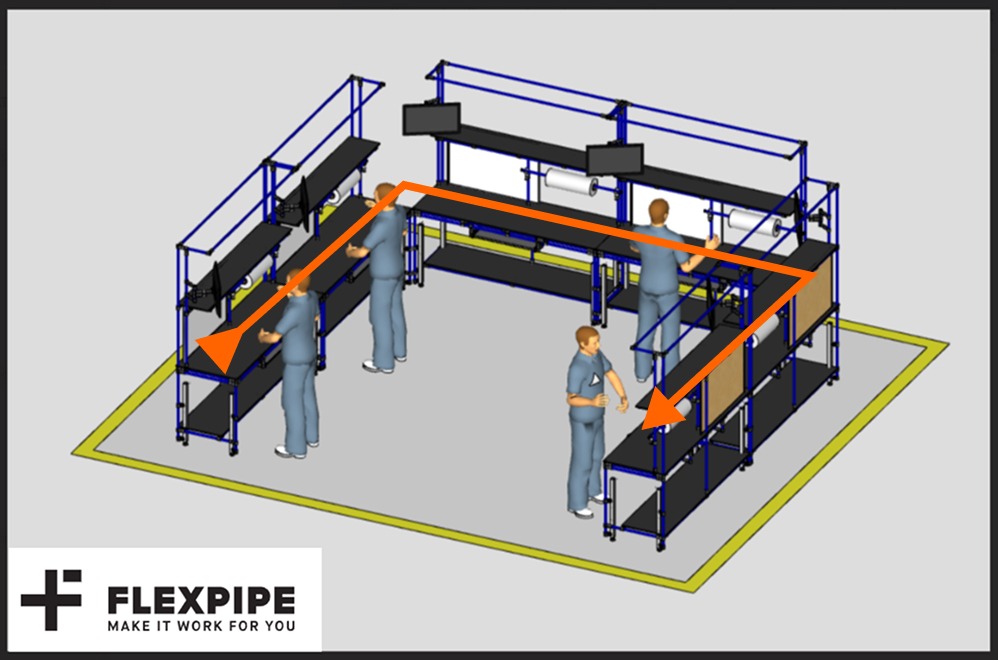
U-Cell – Continuous Workflow and faster assembly times.
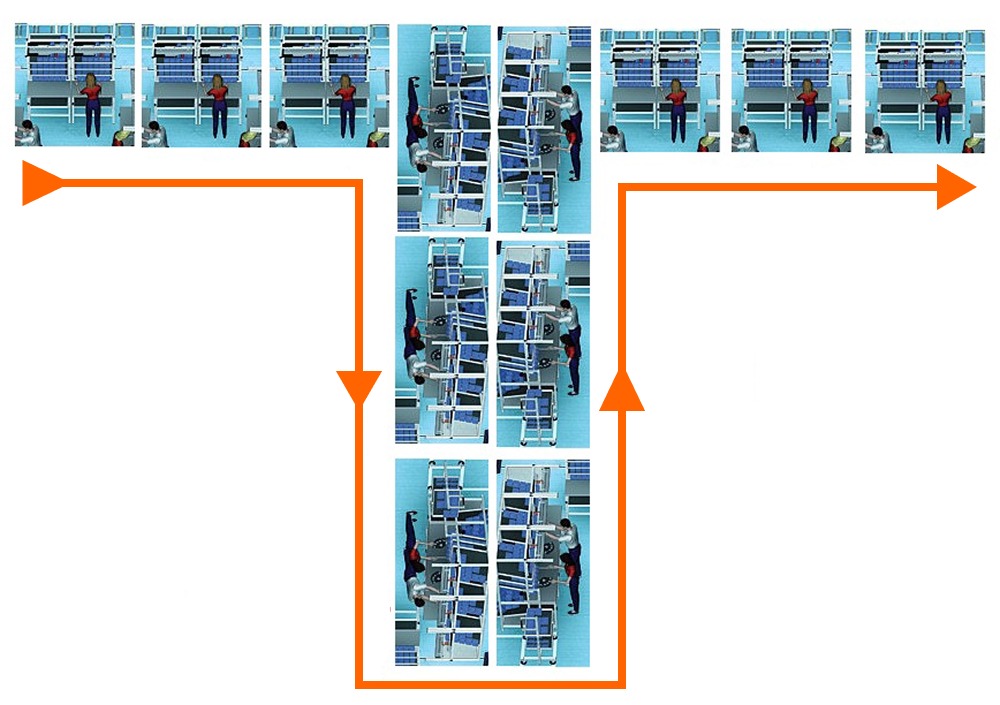
T-Cell – Customized parts and quick access to individual workstations.
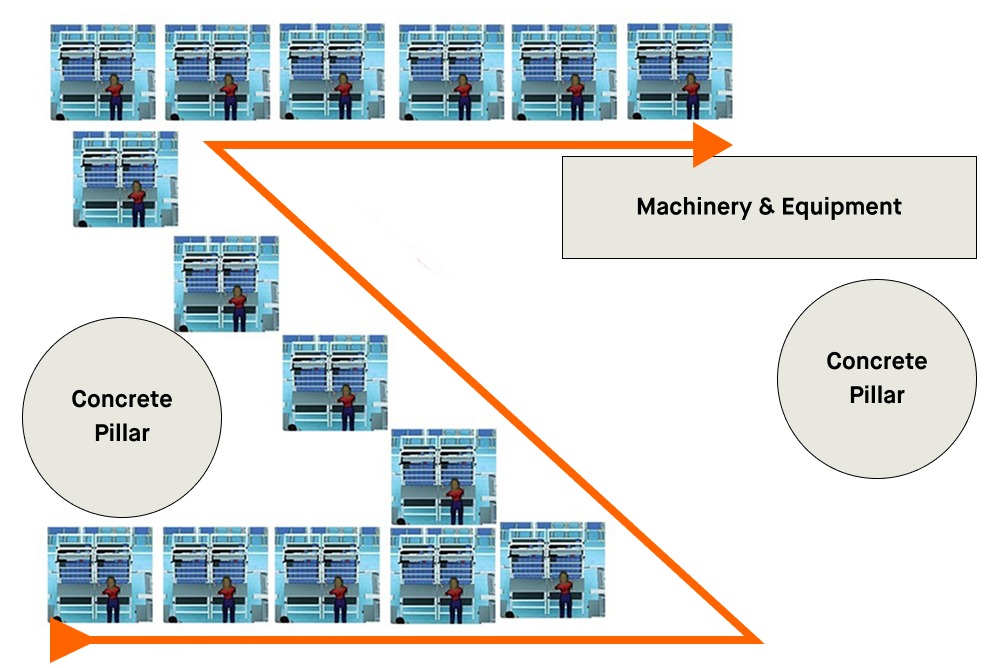
S/Z-Cell – Maximize space around obstructions and existing equipment.
6. Integration With Other Lean Tools for Aerospace Manufacturing
From implementing numerous continuous improvement programs, adopting fail-safe Poka-Yoke material handling practices, to ensuring 5S-compliant workstations and visual signs and indicators for improved safety, the Flexpipe system improves all lean tools for aerospace production.
Flexpipe eliminates the most common tripping hazards so often associated with welded structures that don’t allow for proper locations or placement of wires and cables. The system ensures that 5S initiatives are constantly improved while promoting and fostering a sense of responsibility for workspace upkeep amongst aerospace manufacturing technicians and production employees.
Flexpipe Improves 5S Initiatives.
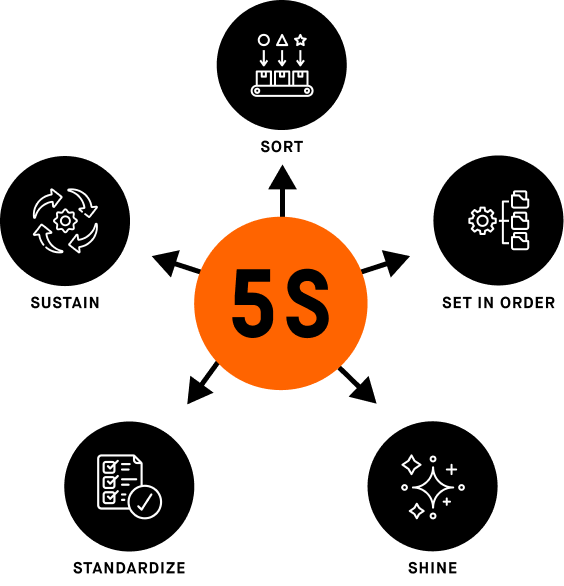
As a continuous improvement methodology, 5S (Sort, Set in Order, Shine, Standardize, and Sustain) is successful when production employees and managers take ownership of their workstations. Its purpose is to ensure the cleanliness of the workstation so that parts and materials are more easily found and work is more easily completed.
Flexpipe ensures that 5S is more easily implemented and changed as needed. Having a modular and scalable material handling system that allows for improvements to existing workstations ensures that 5S remains a constant, never-ending, continuous improvement initiative. If a new aerospace program is awarded, the aerospace manufacturer simply adjusts the dimensions or layout of a given workstation while initiating a new 5S program.
Flexpipe Improves Worker Safety
Whether it’s using simple tie wraps and other accessories to secure wires and cables to steel pipes and joint areas to eliminate tripping hazards, creating ergonomic workstations, or ensuring that placards and warning signs are more easily spotted by production technicians, Flexpipe can dramatically improve worker safety.
Flexpipe Simplifies Continuous Improvement
Adopting lean and continuous improvement requires tools that simplify these processes. Flexpipe does exactly that. It’s a solution that simplifies material handling for aerospace manufacturers while being the perfect complement to improving workstation structures, material handling structures, and lean work cell layouts.
Flexpipe Makes Shop Floors Lean
Having a lean shop floor isn’t just about how it’s laid out. It’s not just about have clean workflow and simple processes. It’s ultimately about how the shop floor looks. Does the shop floor look clean? Does the shop floor look organized? Do employees feel as if they’re working in a clean and well-organized environment?
All these questions are much more difficult to answer with fixed, welded, and bulky workstations and material handing structures that take up too much space. Over time, welded workstations show their age. They look dirty. They are dirty, and they quickly begin to break down. Having multiple, older-looking, delipidated workstations makes the entire shop floor unappealing.
Flexpipe solves all these problems. The galvanized steel pipes are available in multiple colors and have a High Density Polyethylene (HDPE) outer coating that guards against scratches and scuff marks. Not only are workstations, carts, trolleys, flow racks, and other material handling structures made-to-fit, but they also look and feel clean.
Welded Workstation
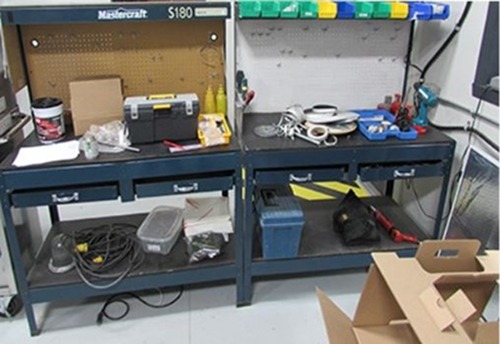
- Cluttered layout
- Not 5S Compliant – No location for part or material placement
- Not organized
- Wire tripping hazards on the first level and the floor.
- Not ergonomic
- Not safe
Lean Flexpipe Workstation
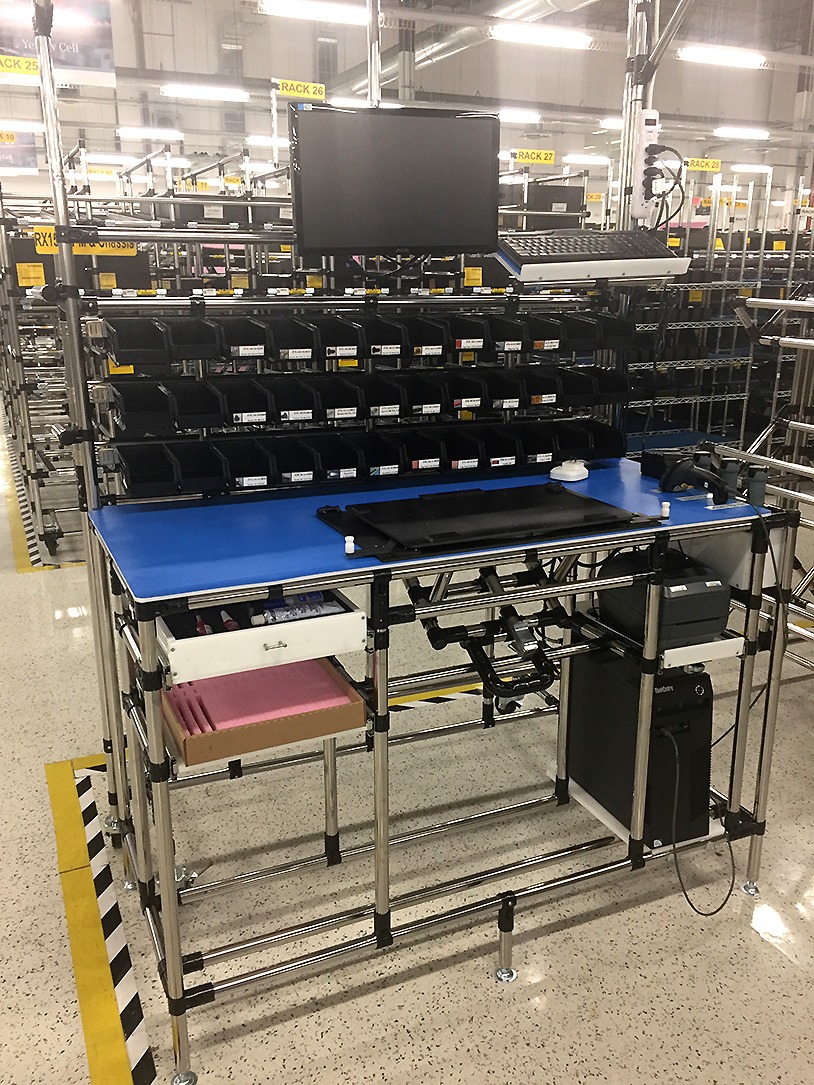
- Clean layout
- 5S Compliant – Specific locations for tools and materials
- Organized
- No tripping hazards as cables and wires are secure
- Ergonomic
- Extremely Safe with floor tape indicating work areas
7. Real-World Applications
Landing Gear Manufacturer Saves 40% on workstations and other Aerospace Lean manufacturing Structures.

Click here to learn more about how this manufacturer saved $758 for all their aerospace modular workstations for a total savings of $454,800.00.
Electronic Manufacturer Uses Flexpipe to Increase Production Volume by 300%
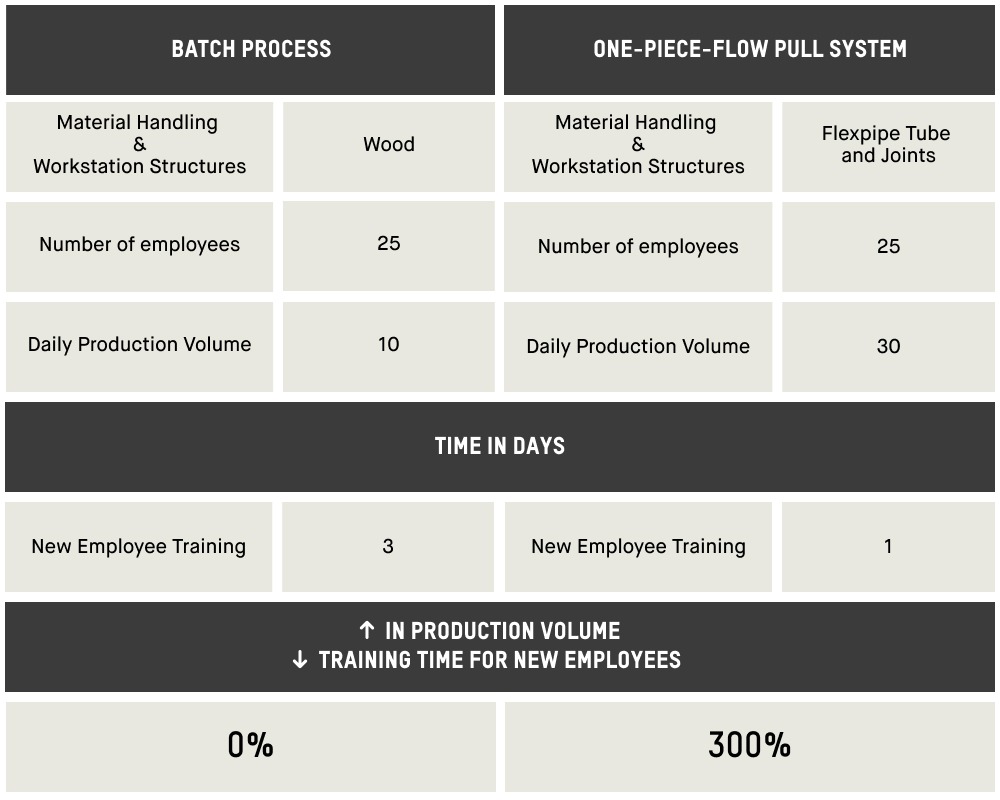
Click here to learn more about how this electronics manufacturer used the Flexpipe steel tube and joint system to adopt lean manufacturing best practices that dramatically increased production volumes by 300%.
Commercial Diagnostics Company Uses Flexpipe to Increase Productivity by 25% and Reduce Shop Floor Space by 20%

Click here to learn about how a medical device and diagnostic company created over 70 modular material handling structures and workstations that increased production and freed up space.
8. Getting Started with Flexpipe
Getting started with Flexpipe is easy. From starter kits, insight into various material handling structures to free starter plans, Flexpipe provides it all.
To gain insight into how to improve material handling for aerospace manufacturers, please reach out to one of our aerospace structures experts.
Build your First Project with a Starter Kit
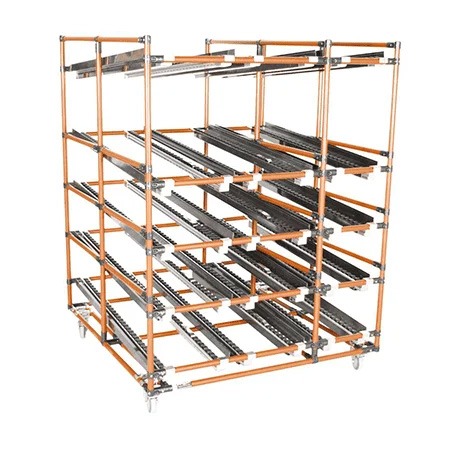
Your team and management are on board, but now you’re racking your brain trying to figure out which parts you need to order and which structures the team must build?
Don’t you worry, we built multiple starter kits to cover your bases.
Benefits
- Best way to ease your team into using this equipment – parts and plans in 1 package
- No more headaches of making sure that you have all the necessary parts
- Can build 4 or 5 sizeable structures with the parts included
- Enclosed plans let you start building right away
- No unnecessary leftover units
F.A.Q – Modular Material Handling Solutions for Aerospace
How long does it take to design and assemble a modular structure for aerospace applications?
Most aerospace teams can design and validate a modular workstation or cart in a few hours using digital tools like Flexpipe Creator. Assembly typically takes less than a day once components arrive, allowing rapid deployment and minimal downtime between production changes.
Can modular structures be reused or repurposed for new aerospace programs?
Yes. Modular systems are built for reusability. Pipes, joints, and accessories can be reconfigured for new layouts, helping manufacturers adapt to evolving programs without scrapping existing assets. This flexibility reduces long term costs and material waste.
What maintenance is required for modular workstations or carts?
Maintenance is minimal. Periodic inspections of joints, casters, and connection points ensure stability and mobility. Worn components can be replaced individually, avoiding full structure rebuilds and extending the product lifecycle.
Are modular structures compatible with digital manufacturing tools or Industry 4.0 systems?
Modular systems can integrate with digital workflows through sensors, barcode labeling, and connected devices. Many aerospace teams use them as part of continuous improvement projects that collect real time data on part movement and workstation utilization.
How do modular solutions support sustainability goals in aerospace manufacturing?
Because components are reusable and adjustable, modular systems reduce the need for new raw materials and cut down on welding, grinding, and painting processes. This supports cleaner operations and helps aerospace manufacturers align with environmental initiatives.
Can modular workstations be combined with automated or motorized systems?
Yes. Modular systems are designed to complement, not replace, motorized handling equipment. They integrate easily with conveyors, lifts, or AGVs, allowing a balanced approach between manual and automated material movement.
What training do aerospace teams need to start using modular systems?
Most teams learn to assemble and modify structures after a short hands on session. Many manufacturers also rely on internal champions who attend workshops or online design training through resources like Flexpipe’s Lean Maker Academy.
How do modular structures impact quality control in aerospace manufacturing?
Modular fixtures help standardize workstations, improve visibility, and organize tools consistently. This reduces the chance of part damage or mix ups, supporting traceability and repeatability across builds without restricting workflow changes.