

Supermarket Flow Racks: A Lean Manufacturing Solution
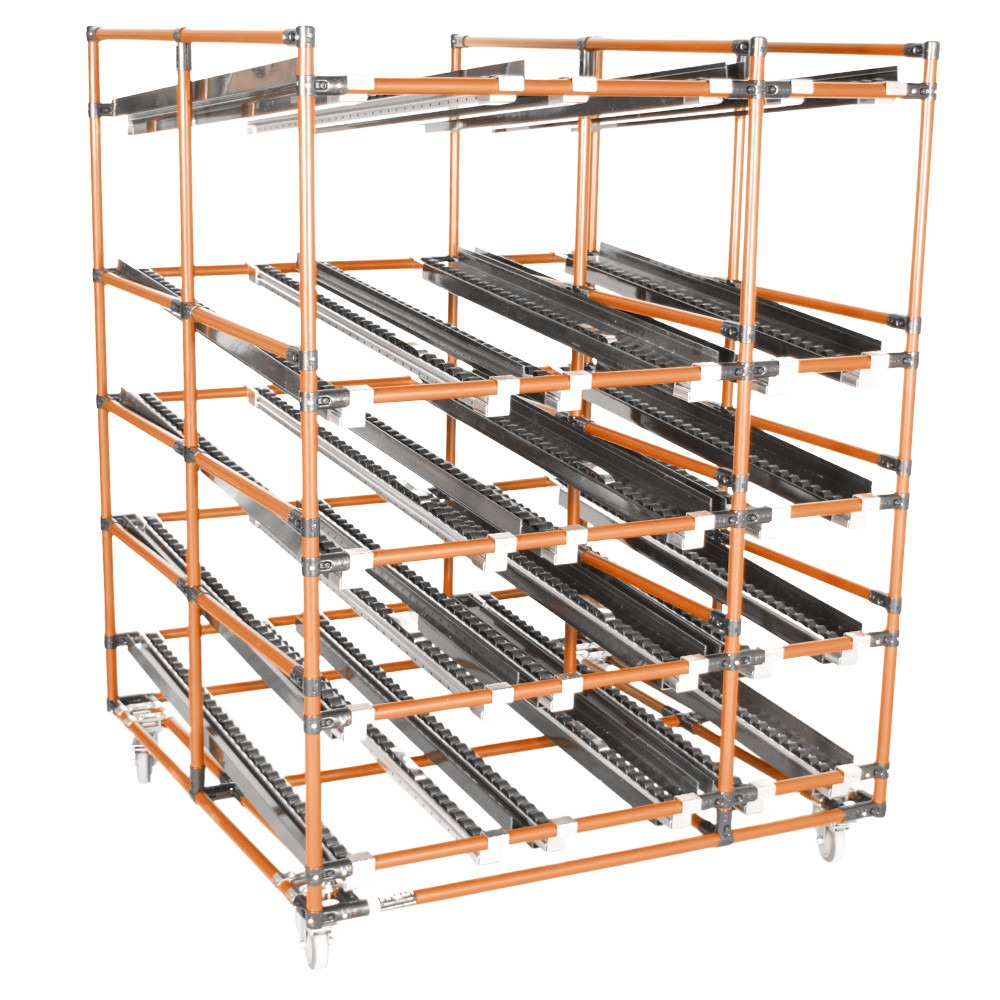
A supermarket flow rack system is a multilayered gravity rack system several rows or columns deep. These rows are set on a slight incline so that users – most often supermarket customers or employees – can load or retrieve finished goods.
Much like the name implies, supermarket flow racks are found within supermarkets. They are also used extensively in retail, wholesale, and distribution. However, it’s their use in lean manufacturing environments that is most intriguing. So, what is it about supermarket flow racks that makes them such an appealing solution for manufacturing environments? Read on.
What are the Benefits of Using Supermarket Flow Racks in Manufacturing?
The benefits of using supermarket flow racks are impressive. Replacing large pallets beside lean work cells with supermarket gravity flow racks helps to save time, improve efficiencies, reduce waste, and lower packing and movement times.
Employees can spend more time on actual work and less time shifting through a large pallet to find the material or parts they need. They also spend less time matching materials to work orders and instructions. Another benefit is that production employees no longer have to spend an inordinate amount of time on cleanup at the end of a given shift.
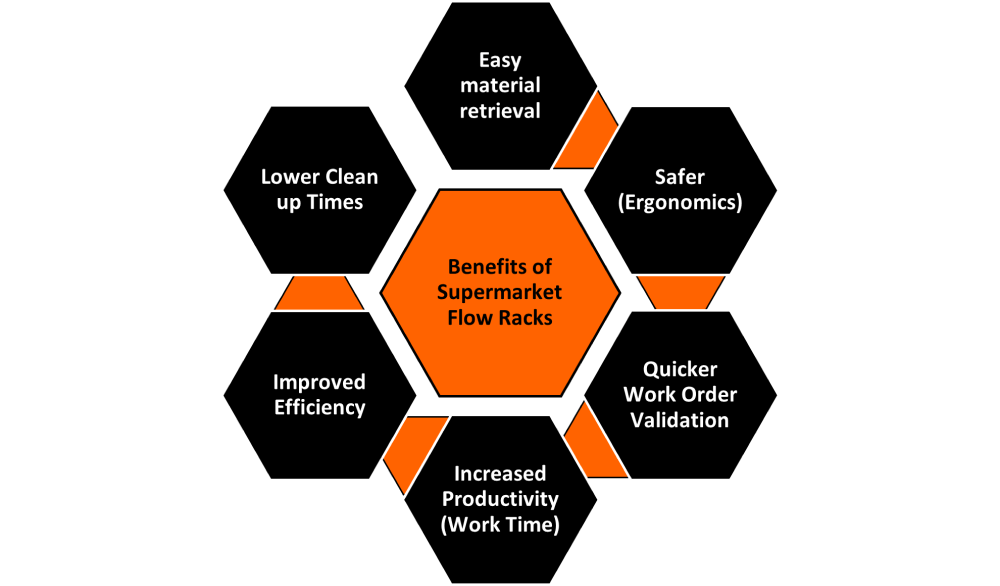
Another benefit is one of safety. Reducing the amount of time employees and production technicians must bend over to retrieve parts helps to reduce the incidences of accidents or injuries. In the end, a supermarket flow rack is an ergonomic solution that ensures line-side operators are not asked to move large, heavy pallets or adjust their placement. With workplace injuries costing American businesses up to 167 billion US annually, improving ergonomics goes a long way to reducing costs.
What Are the Applications for Supermarket Racks in Manufacturing?
Using smaller lots, containers, and boxes with supermarket racks reduces the costs of picking, placing, and transporting while simplifying workflow. It also allows you to better manage consumable and part consumption. Customizing the size and dimensions of your flow racks helps you save space on the production line, improve the part presentation, and organize better workstations. An increase in productivity and an increase in production line density (the production volume per unit area) will be quickly achieved.

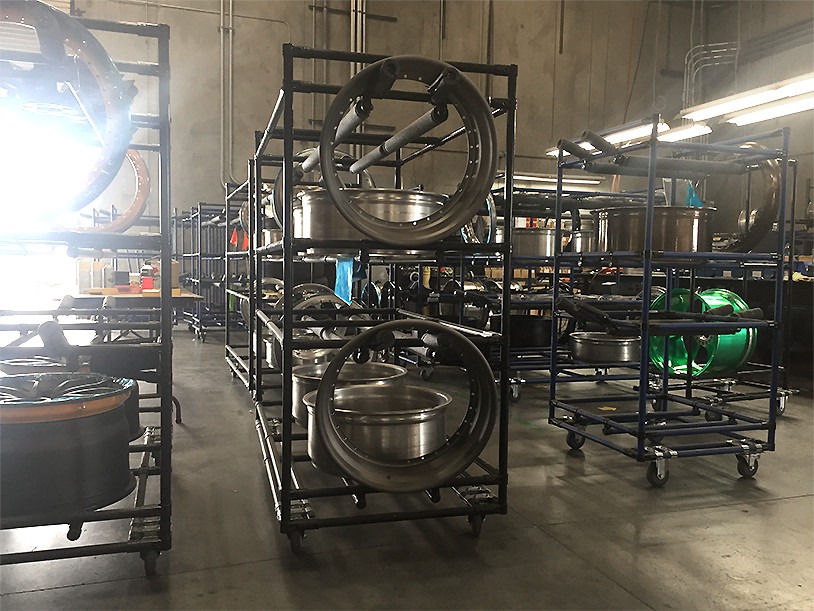
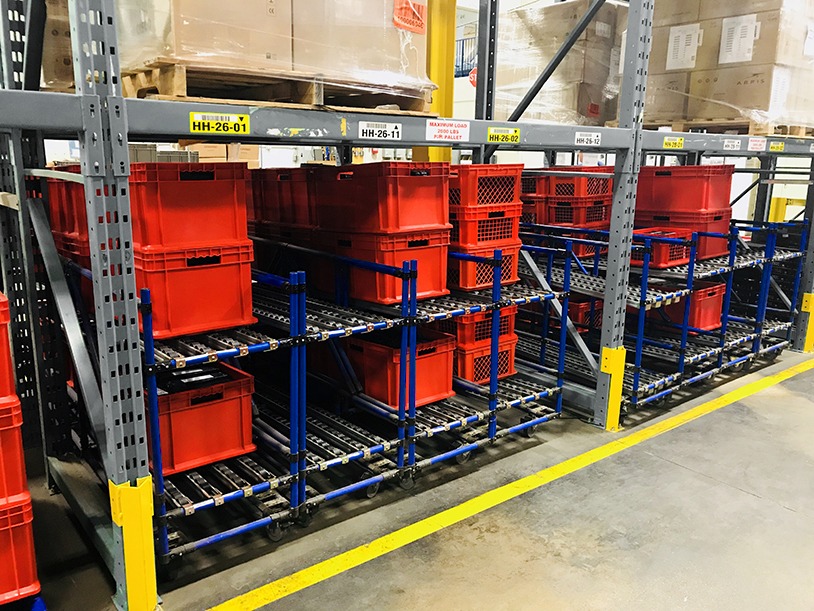
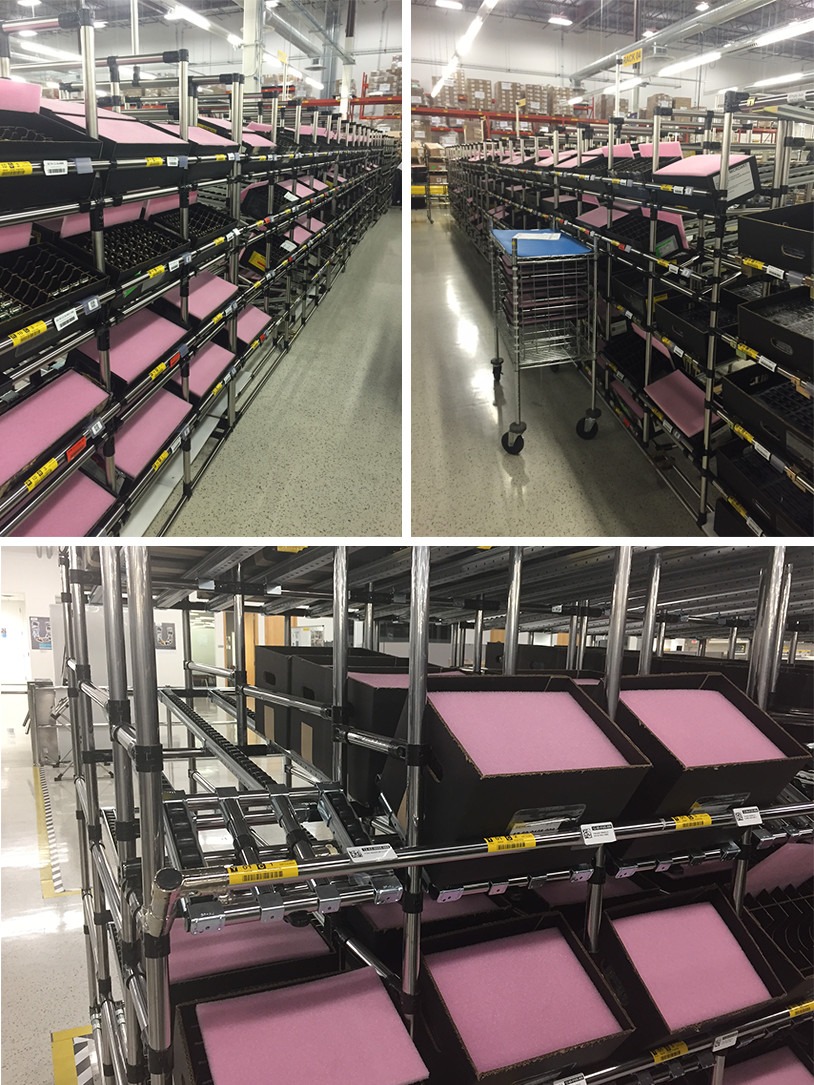
Supermarket racks application examples
What are the Best Locations for Supermarket Flow Racks?
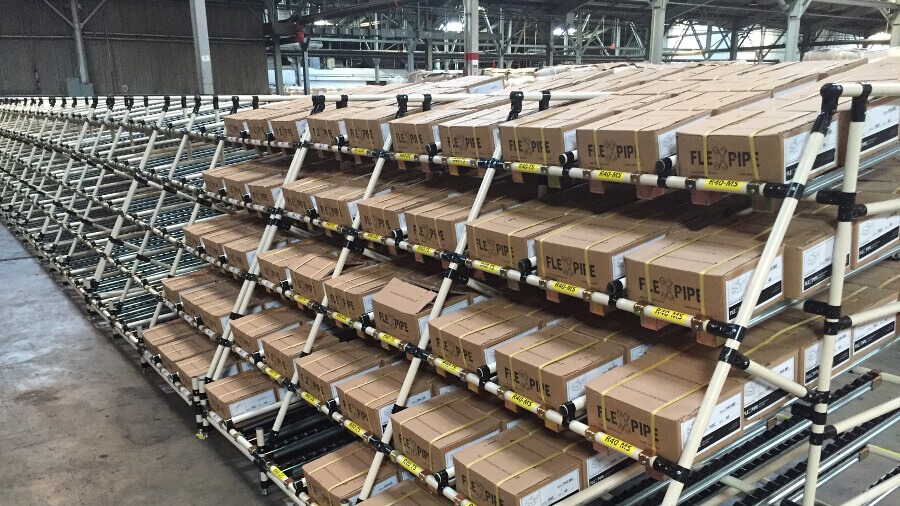
One of the best locations for a supermarket gravity rack is either adjacent to, besides or in front of a lean manufacturing work cell. In some instances, a single supermarket gravity rack can be structured to support an entire group of lean cells. This type of concept is perfectly demonstrated in the image below.
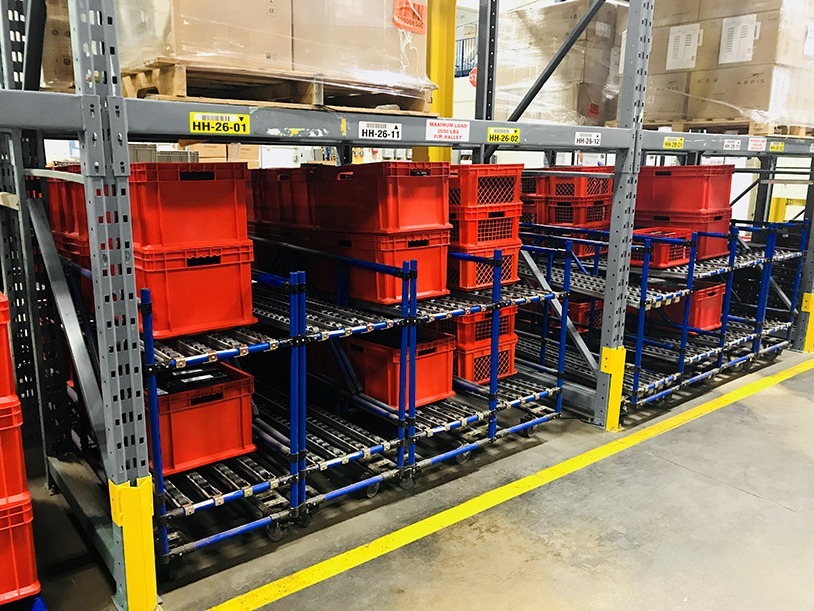
Another application for these types of gravity flow racks includes inventory and storage areas. Warehouses often rely upon supermarket racks as a means of maximizing the square footage of their warehouse while ensuring that parts are readily available.
How Should Supermarket Flow Racks Be Designed?
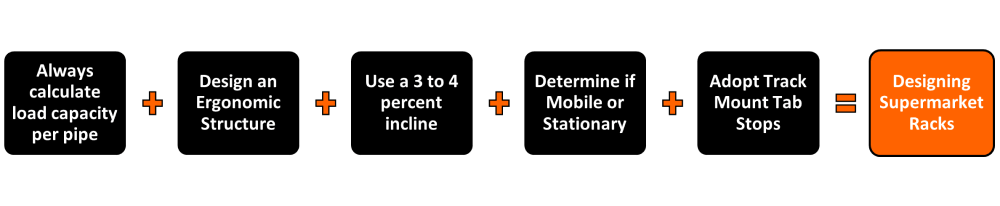
There are several things to consider when designing your Flexpipe supermarket flow rack. First, always be sure to calculate the weight of each of your supermarket levels. Flexpipe provides an easy-to-use online calculator that determines the ideal weight based on the length and thickness of the pipe you’re using.
Second, make sure you’re always mindful of the importance of having an ergonomic rack. Every aspect of your design should be focused on making sure your employees don’t have to strain themselves – in any way – during pick, place, store, and retrieval.
Third, be sure to include an incline in your design so that parcels, bins, and boxes can easily slide down on each of the columns or rack levels. A good rule of thumb is to keep the angle no larger than 3 to 4 percent. This is just enough to allow gravity to continue to drop boxes in place.
Fourth, decide whether your supermarket rack will be mobile or stationary. If unsure, using casters is best. Having a mobile supermarket rack allows you to easily move it around your manufacturing facility – if need be. A mobile rack is much easier to relocate than a single large stationary rack.
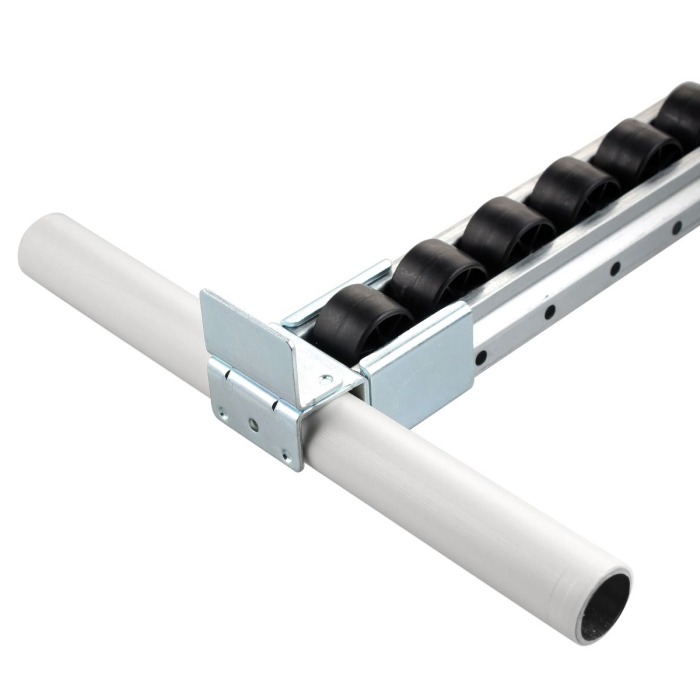
Fifth, determine whether you will incorporate Flexpipe’s track mount tab stops at the bottom of each level of your flow rack. This simple but extremely effective stop ensures your boxes and parcels remain stationary and never fall over.
TOP DOWNLOADABLE SUPERMARKET RACKS FREE PLANS
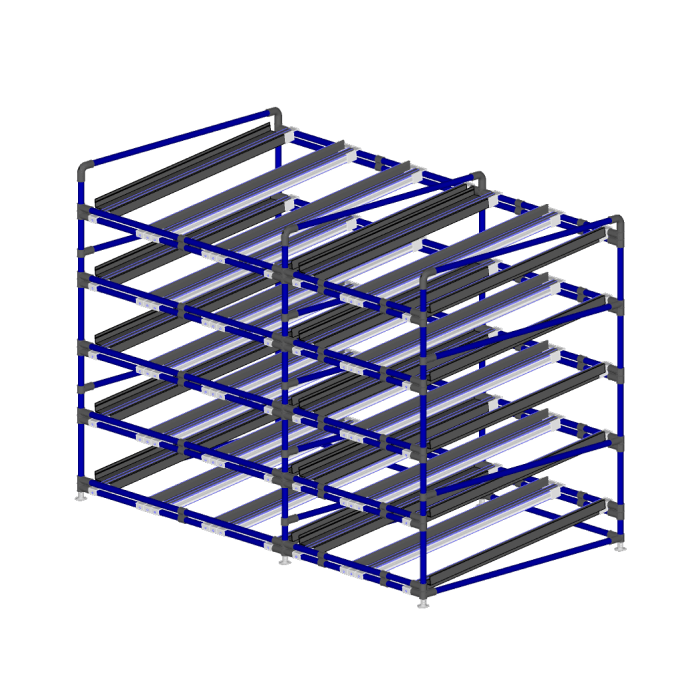
Flexpipe customers have created countless supermarket-type flow racks and mobile gravity flow rack designs over the years. Here is but a small sample of the type of supermarket racks that are available.
FLOWRACK SUPERMARKET
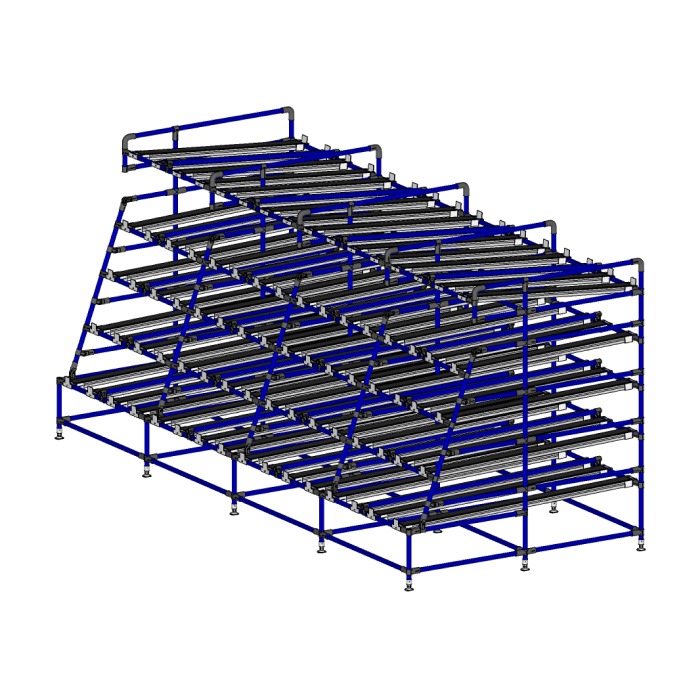
SUPERMARKET FLOWRACK
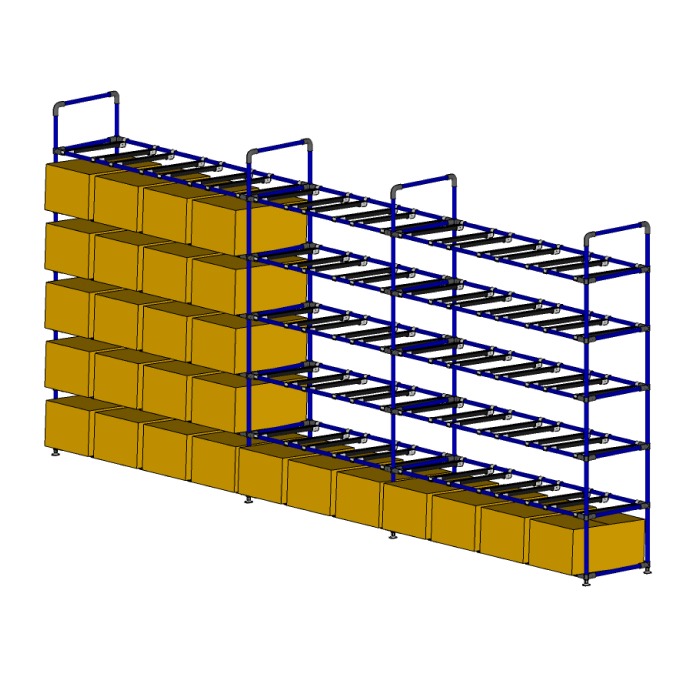
STRAIGHT SHELVES SUPERMARKET FOR BOXES
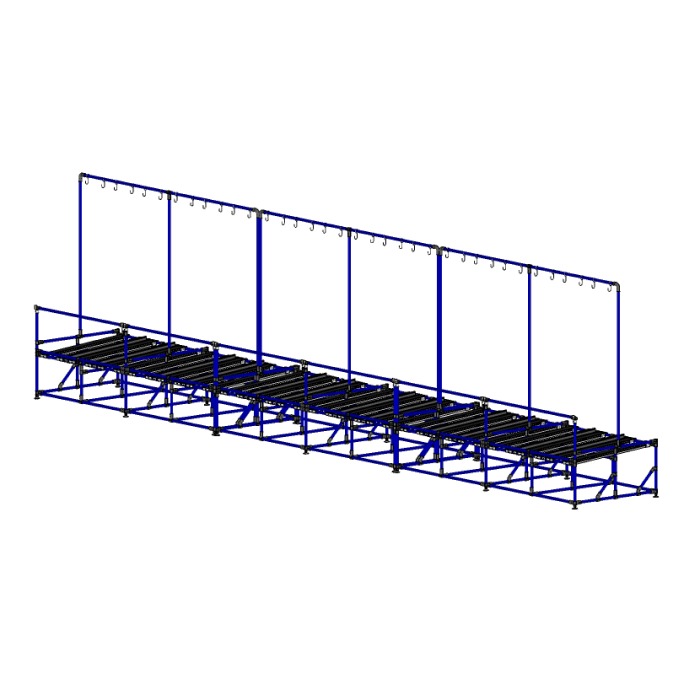
SUPERMARKET FLOWRACK WITH STOPPER
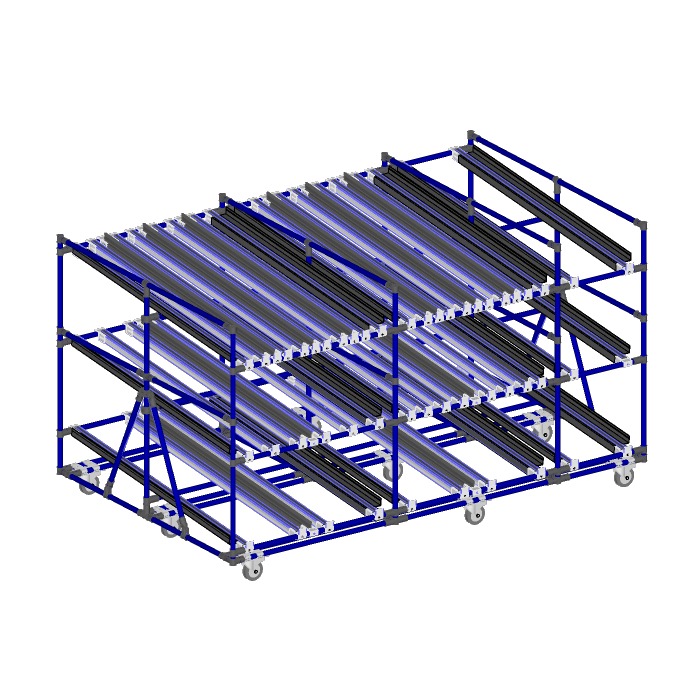
ASSEMBLY RACK
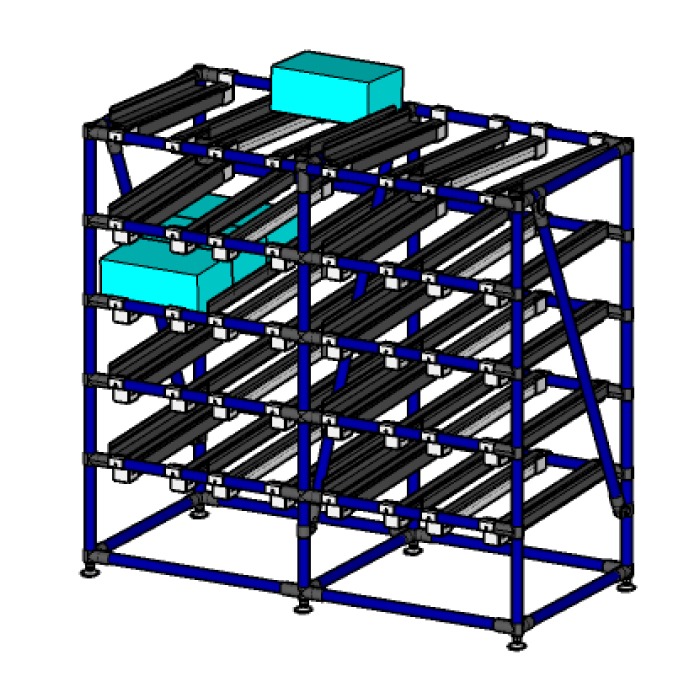
96 BIN FLOW RACK
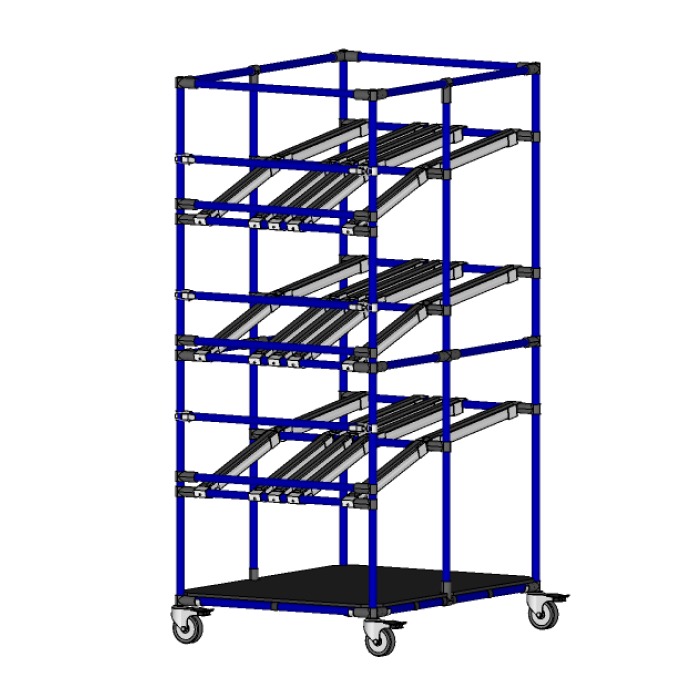
flowrack
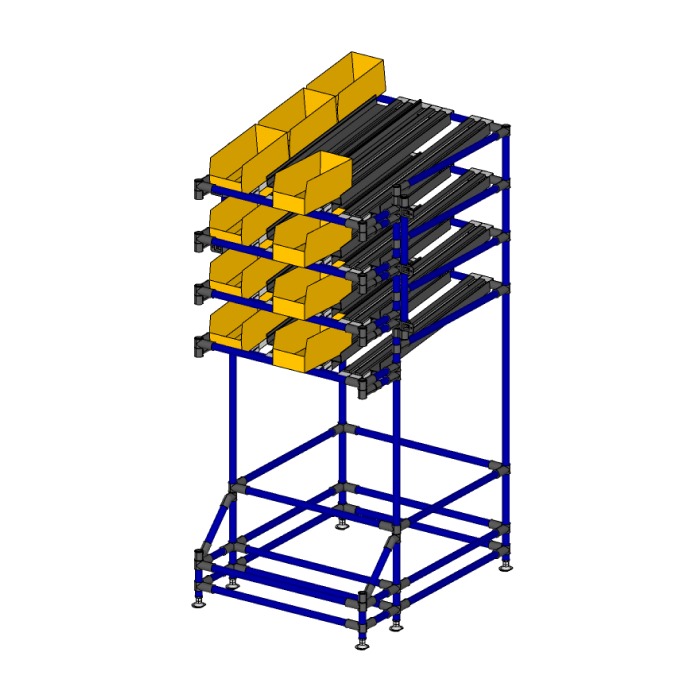
KANBAN STATION
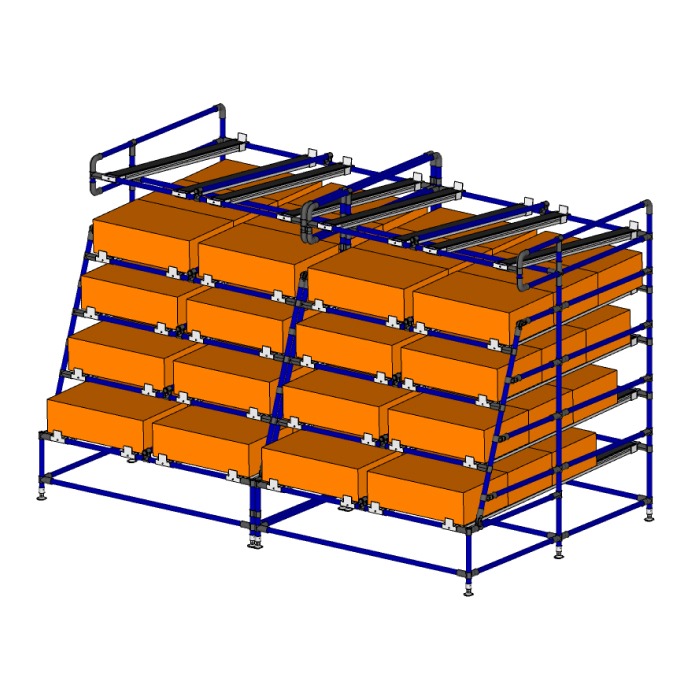
FLOWRACK FOR LARGE BOXES
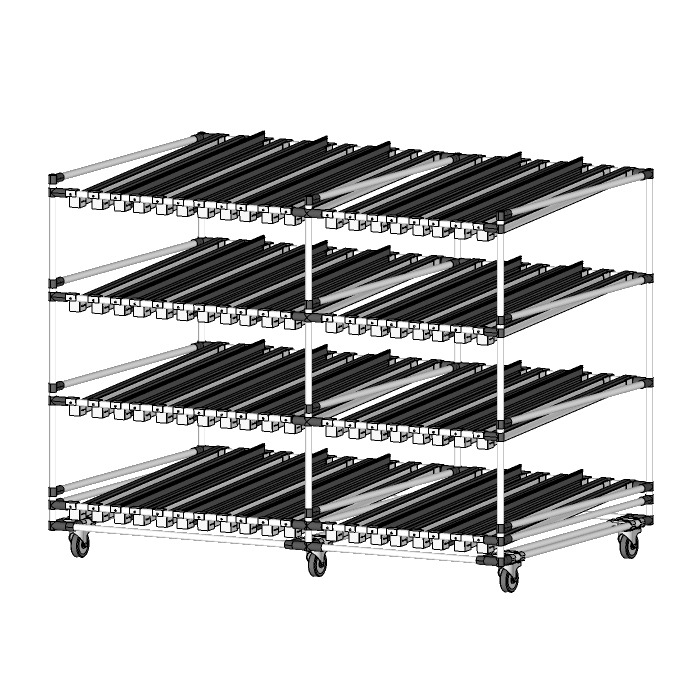
FLOWRACK 4 LEVEL
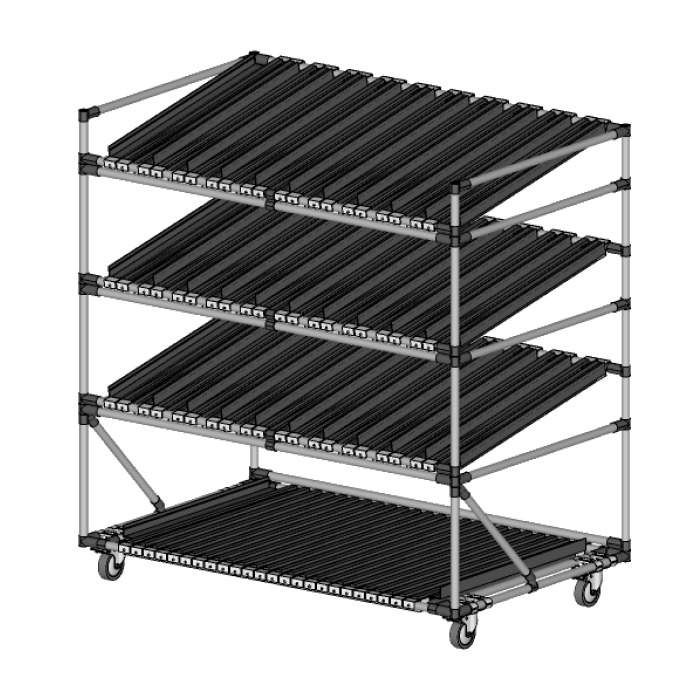
flowrack
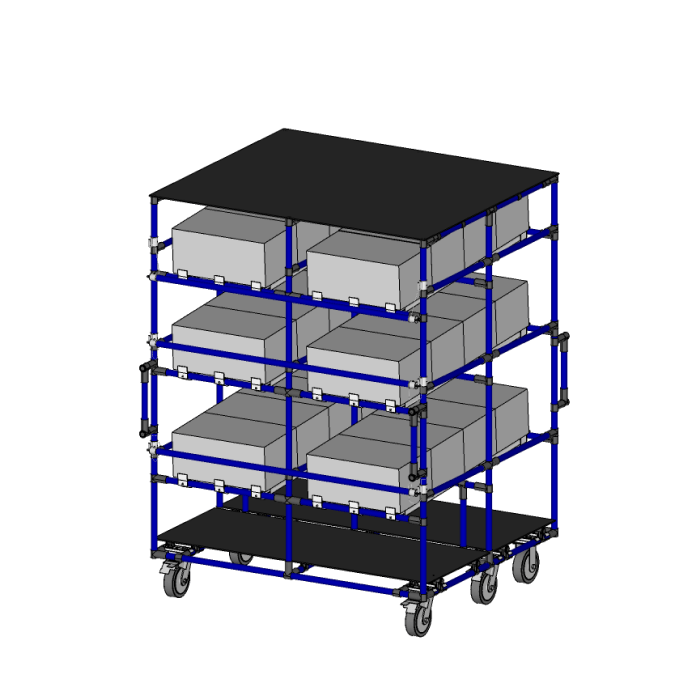
GOODS GFR WITH REMOVABLE STOPPERS
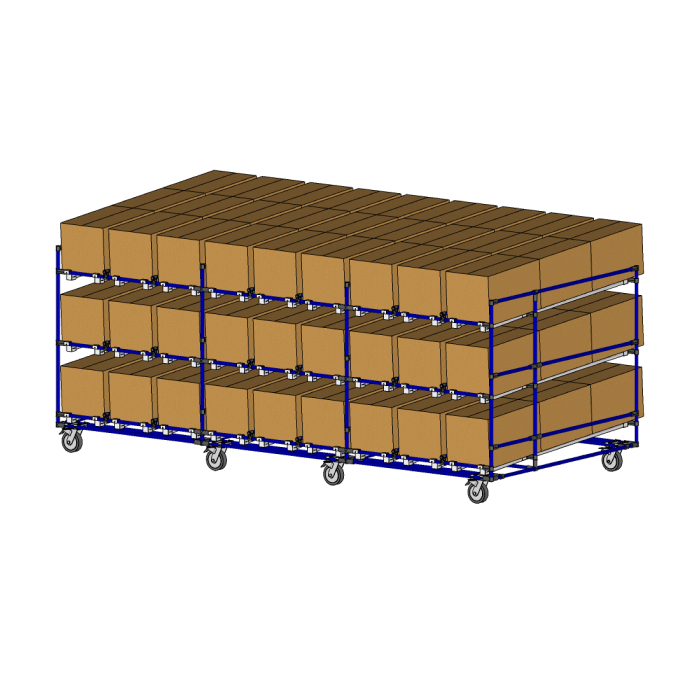
KANBAN GFR
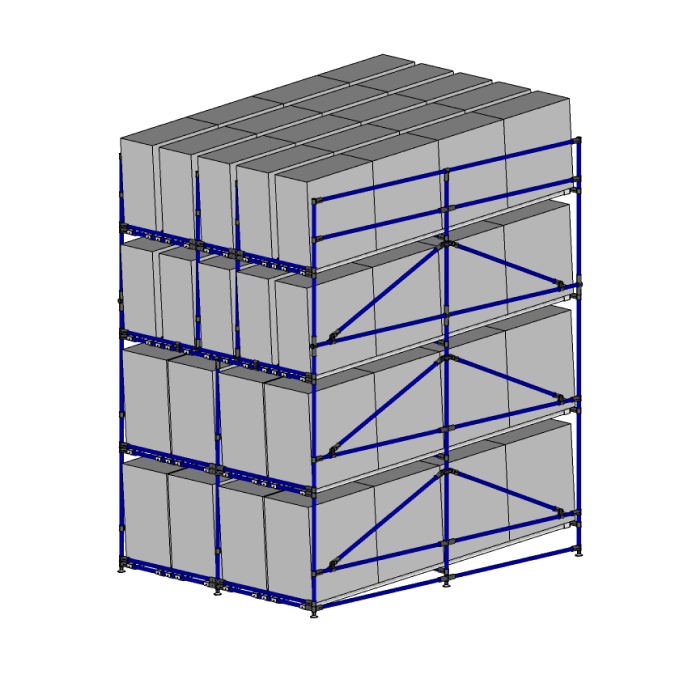
MULTI LEVEL TOTE RACK
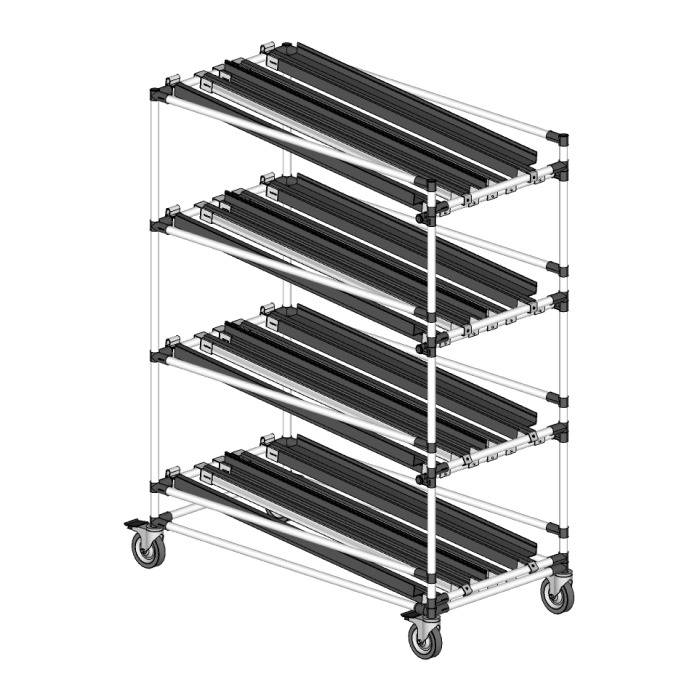
FREEZER PRODUCT FLOWRACK
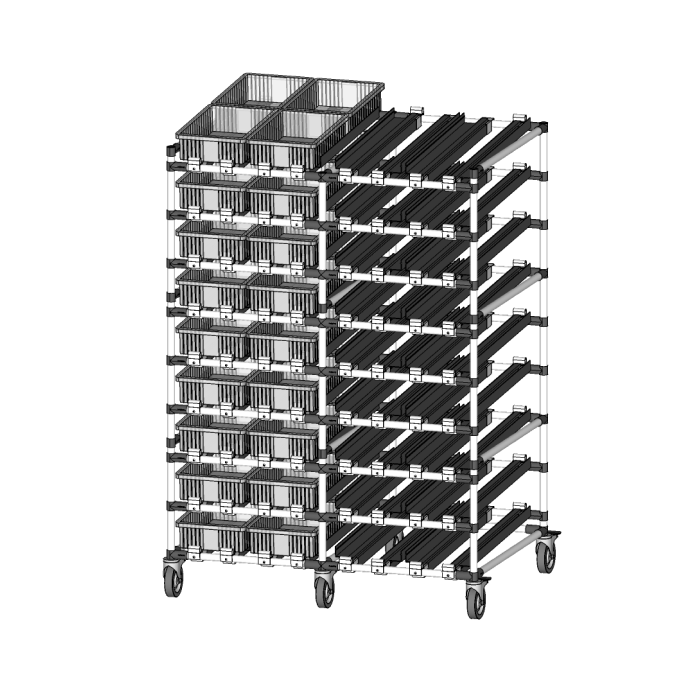
FROZEN MILK RACK
What Installation and Maintenance is Needed for Supermarket Racks?
Ultimately, the success of your Flexpipe supermarket rack comes down to preventative maintenance. In lean manufacturing environments, it’s common to do an end-of-shift cleanup. Having employees report any issues about the sturdiness of your structure goes a long way to avoiding any potential dangers. Ultimately, it’s about developing a periodic inspection of your structure to ensure it’s in good working order.
In Kaizen or lean environments, employees are encouraged to bring up potential issues. Given how often they interact with flow racks, nobody is in a better position to capture potential problems than the employees who use your racks. If you’ve adopted Kaizen principles, then maintenance on your racks is most probably second nature for your employees. If you are just now adopting lean manufacturing or continuous improvement processes, then start with a weekly inspection where the entire structure is checked. This does not have to be elaborate. Once your employees have developed a familiarity with your Flexpipe supermarket rack, you can extend the inspection period to bi-weekly.
What is Lean Manufacturing?
The success of any lean manufacturing environment is in its ability to eliminate waste. The originator of the lean manufacturing methodology was Toyota with its Toyota Production System (TPS). The TPS methodology outlines eight sources or causes of waste. By eliminating waste from these sources, manufacturers can increase efficiency and reduce costs.
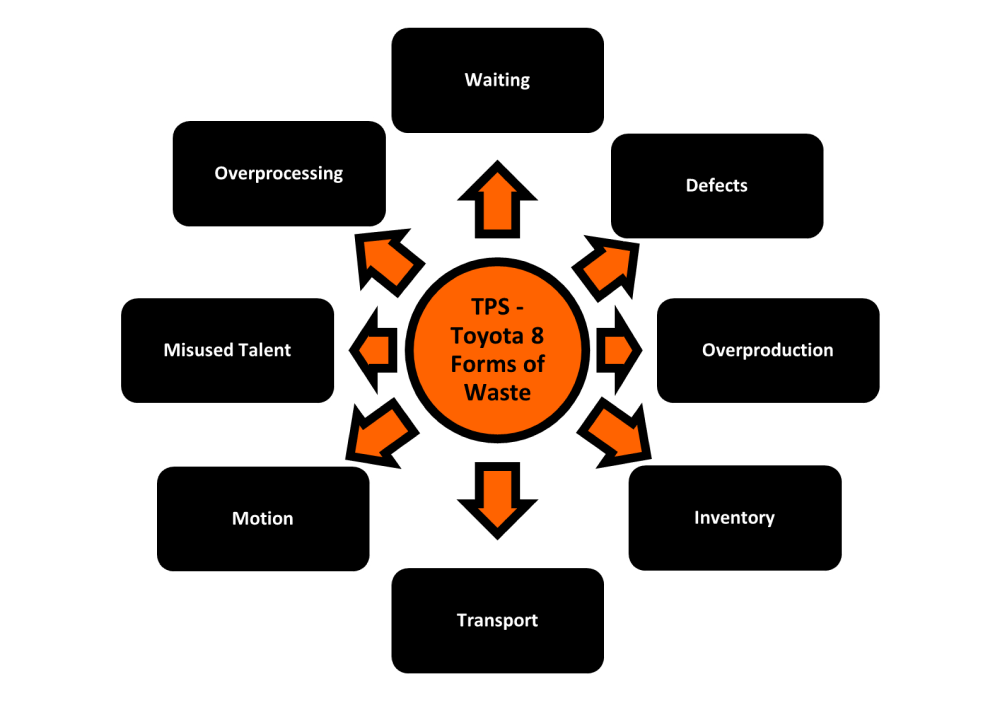
A supermarket flow rack can address several causes of waste. The most obvious one is inventory. However, it also addresses motion, transport, and waiting. Each is explained below.
Inventory: High inventory counts are an obvious form of waste. Having too much inventory ultimately means typing up capital (money) on parts and consumables. However, excess inventory also increases a company’s likelihood of inventory damage and obsolescence.
A supermarket flow rack not only protects inventory within the rack, but it ensures an ample supply of raw materials, parts, and consumables to employees, technicians, and line-side operators. Manufacturers can ensure a steady and uninterrupted supply of parts and materials to support demand.
Motion: Excessive motion in manufacturing represents a substantial cost. Long transit times between lean work cells, traveling long distances to retrieve parts or materials, or unnecessary and repetitive movements are all time wasters.
A supermarket flow rack eliminates unnecessary and excessive motion for technicians and operators as there is always a readily available source of materials and consumables to use. With each pick or retrieval of a parcel or box, another one slides down and takes its place.
Transport: Traveling unnecessarily long distances to retrieve inventory or to move semi-finished or work-in-process parts is wasted time. Ultimately, wasted time means wasted money. Transport issues are only exacerbated when multiple employees and technicians are asked to walk the same long distances or travel long routes to move, retrieve, or store parts.
A supermarket flow rack keeps operators and technicians focused on the task at hand. Production employees and lean work cell operators have immediate access to what’s needed to complete work orders. No more walking long distances for parts. They simply retrieve the box, parcel, or consumable they need, and another one slides down to replace it.
Waiting: Having manufacturing employees wait for work-in-process parts, raw materials, work, instructions, or approvals directly affects manufacturing production throughput. Standing around waiting endlessly has a direct impact on how much a manufacturer can produce. Because all parts, consumables, boxes, and cartons are loaded from the back of the supermarket flow rack, production employees never have to wait. A steady and uninterrupted part and material flow ensures they are never asked to wait for what they need to complete their work order.
Eliminating Large Packaging in Lean Environments
Large packaging placed immediately beside work cells in lean manufacturing environments is a time waster. A common mistake manufacturers make is to transport a large pallet or large container of parts and consumables to a production work cell. This forces the production employee to break down the large pallet themselves.
The belief is that quickly transporting the pallet by forklift helps to shorten the delivery time. Unfortunately, any time saved is quickly eroded by the amount of time the employee must spend opening the pallet. Smaller lots – on the other hand – are much easier to manage and ensure a constant supply.
Supermarket gravity flow racks help this process by ensuring a continuous flow of materials for individual workstations. Employees have a much easier time retrieving smaller parcels and boxes from the supermarket rack. They’re not asked to waste time breaking down pallets, matching material, and part volume to work order requirements, or having to spend time adjusting the remaining materials and parts.
Now the question becomes: How does a supermarket adjust when the demand for a given consumable or material declines or increases?
The Importance of the Steel Tube and Joint System
Answering that question is much easier when using a steel tube and joint system to custom-assemble your supermarket flow rack. It is much harder when having to rely upon fixed flow racks that are welded in place.
First, the costs of welded supermarket flow racks are extremely high. They’re cumbersome, hard to maneuver, and difficult to adjust or move once they’re put in place. Second, adjusting their size, dimensions, or number of columns or racks is next to impossible. The cost of having re-weld a supermarket gravity rack is simply too high for most manufacturers.
Third, the lead time associated with this type of work is untenable. This is especially true for manufacturers that rely upon their maintenance departments and own welders. All this does is divert important production resources away from more important tasks.
A steel tube and joint system – like Flexpipe – allows you to customize every aspect of your supermarket gravity flow rack. More importantly, adjusting the size of your supermarket rack is much easier and far less expensive. Everything you need to make this type of gravity flow rack is available within the Flexpipe system. So, what is needed to make a Flexpipe supermarket flow rack?
TRACK MOUNT TAB STOP
Flexpipe’s tab stop ensures the parcels or boxes – which are on an incline – stop in place and do not flow over.
4 METERS STEEL ROLLER TRACK (ESD)
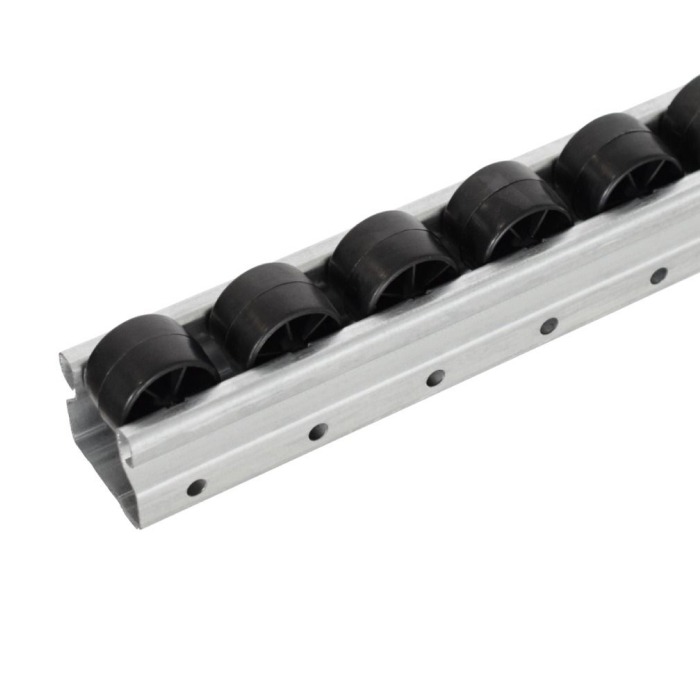
Flexpipe’s steel roller track can be customized in terms of length while also being ESD-compliant.
JOINTS
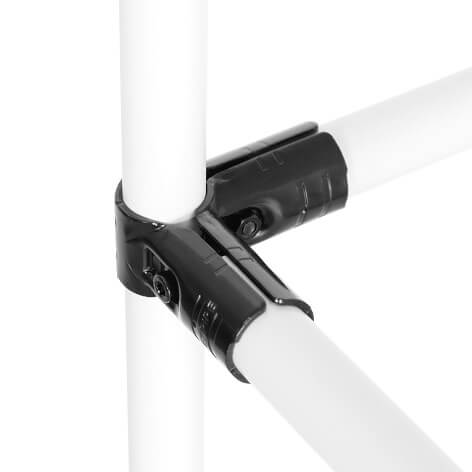
Flexpipe has a complete line of tee, corner, 3-way, 4-way, 5-way, and pivot joints to choose from.
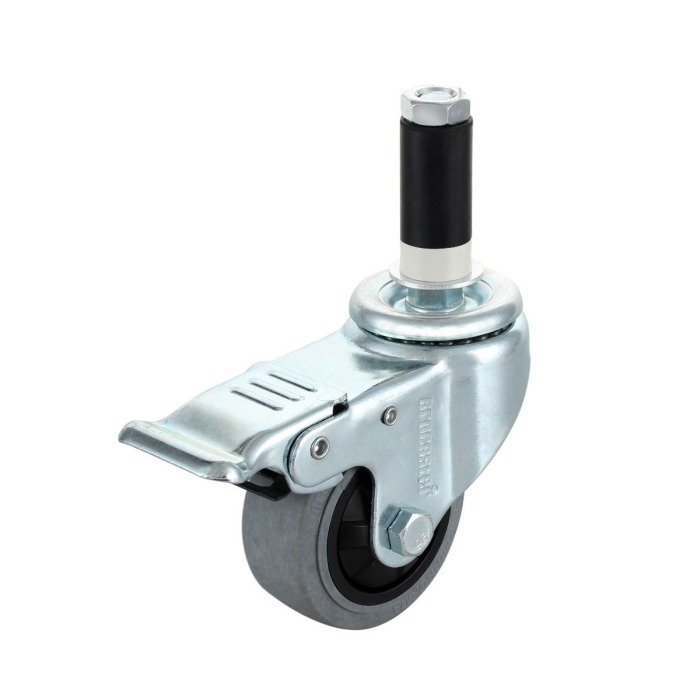
SWIVEL CASTER WITH BRAKE
Flexpipe has a complete line of casters and swivel casters that allow you to maneuver your structure easily.
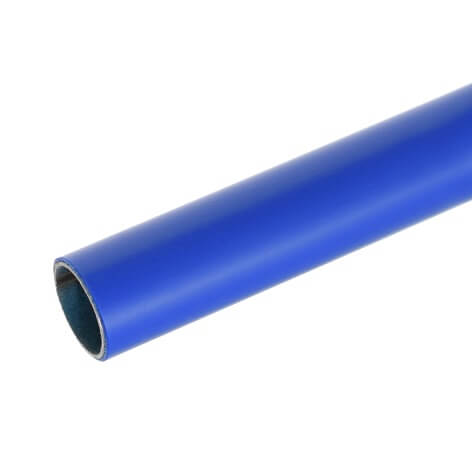
BLUE 8′ STEEL PIPE
Flexpipe provides steel pipes in multiple colors and thicknesses. Colors include white, blue, black, yellow, red, orange, ivory, and gray.

Flexpipe Supermarket Racks: Low-Cost, Sturdy, Modular Lean Systems
Flexpipe is a trusted partner to countless manufacturers across various global industries. Located in Montreal, with facilities in the United States, manufacturers have come to rely upon Flexpipe’s steel tube and joint systems for a wide range of material handling structures.
To learn more about how to calculate the loading capacity for your supermarket structures, please visit our online calculator.
To learn more about the types of flow racks you can design and assemble, visit our free plans gallery.
Frequently Asked Questions: Supermarket Flow Racks
What is the difference between a supermarket flow rack and a pallet flow rack?
These are two different structures that are often confused. A pallet flow rack is a heavy-duty warehouse system designed to move full pallets on high-capacity rollers inside deep pallet racking bays — it requires a forklift for loading and is intended for bulk pallet storage. A supermarket flow rack is a lighter, line-side structure built for individual bins, totes, and small boxes that are loaded and retrieved by hand. In lean manufacturing, the supermarket rack sits directly beside a work cell so operators can pick single units without touching a forklift or breaking down a pallet. Flexpipe builds supermarket flow racks, not pallet flow racks.
How does a supermarket flow rack enforce FIFO (First-In, First-Out) inventory rotation?
FIFO is enforced automatically by the rack’s physical design. Replenishers load new bins or boxes from the back of each lane, and gravity slides them forward toward the pick face at the front. Operators always retrieve from the front, meaning the oldest stock is always consumed first without any sorting or discipline required. This is critical for U.S. manufacturers handling perishable components, date-coded parts, or materials with shelf-life requirements, and it directly supports FDA traceability requirements in food, pharmaceutical, and medical device production.
Can a Flexpipe supermarket rack be integrated with a 2-bin Kanban replenishment system?
Yes, and this is one of the most common configurations in U.S. lean manufacturing plants. In a 2-bin Kanban setup, each lane holds exactly two bins. When the front bin is emptied, the operator sends it to the replenishment area as a visual signal to restock. The second bin slides forward immediately, keeping the line running without interruption. Because Flexpipe lanes are sized to exact bin dimensions, the system is self-regulating with no software, scanning, or manual counting required. Browse Kanban flow rack plans here.
How do I choose between the R40 and R85 roller track series for my supermarket rack?
The R40 series roller track is 40mm wide and suited to standard small plastic bins and totes used in automotive, electronics, and light assembly lines across the United States. The R85 series is 85mm wide and designed for larger corrugated boxes or heavier containers used in warehousing and distribution. To choose, measure the base width of your container and confirm it sits stably across the rollers without tipping. Both series are available in ESD-safe versions, and a single rack can include lanes of both widths on different levels. See the full roller track range at the Flexpipe roller tracks shop.
Which U.S. industries use Flexpipe supermarket flow racks most commonly?
Supermarket flow racks are used across a broad range of U.S. industries. Automotive assembly plants use them to present fasteners and kitted parts directly at the line without forklift traffic. Electronics manufacturers rely on ESD-safe versions to keep static-sensitive components flowing safely to workbenches. Aerospace and defense facilities use them for hardware presentation in FOD-controlled environments. Warehousing and e-commerce fulfillment centers use high-density supermarket racks to maximize pick-face density and reduce picker travel. Medical device and pharmaceutical plants use them to maintain strict FIFO rotation and lot traceability. For industry-specific examples, see the Flexpipe automotive page.
Can a Flexpipe supermarket rack be reconfigured if my bin sizes or production mix changes?
Yes. Lane width, lane depth, incline angle, overall height, and number of levels can all be adjusted with an Allen key as bin sizes or part families change. In U.S. plants where model changeovers happen frequently — especially in automotive and consumer electronics — teams reconfigure their supermarket racks in-house during a Kaizen event or maintenance window, without outside contractors or fabrication costs. The same pipes and joints are reused in the new configuration, so there is no material waste. Learn more about the broader Flexpipe flow rack system here.