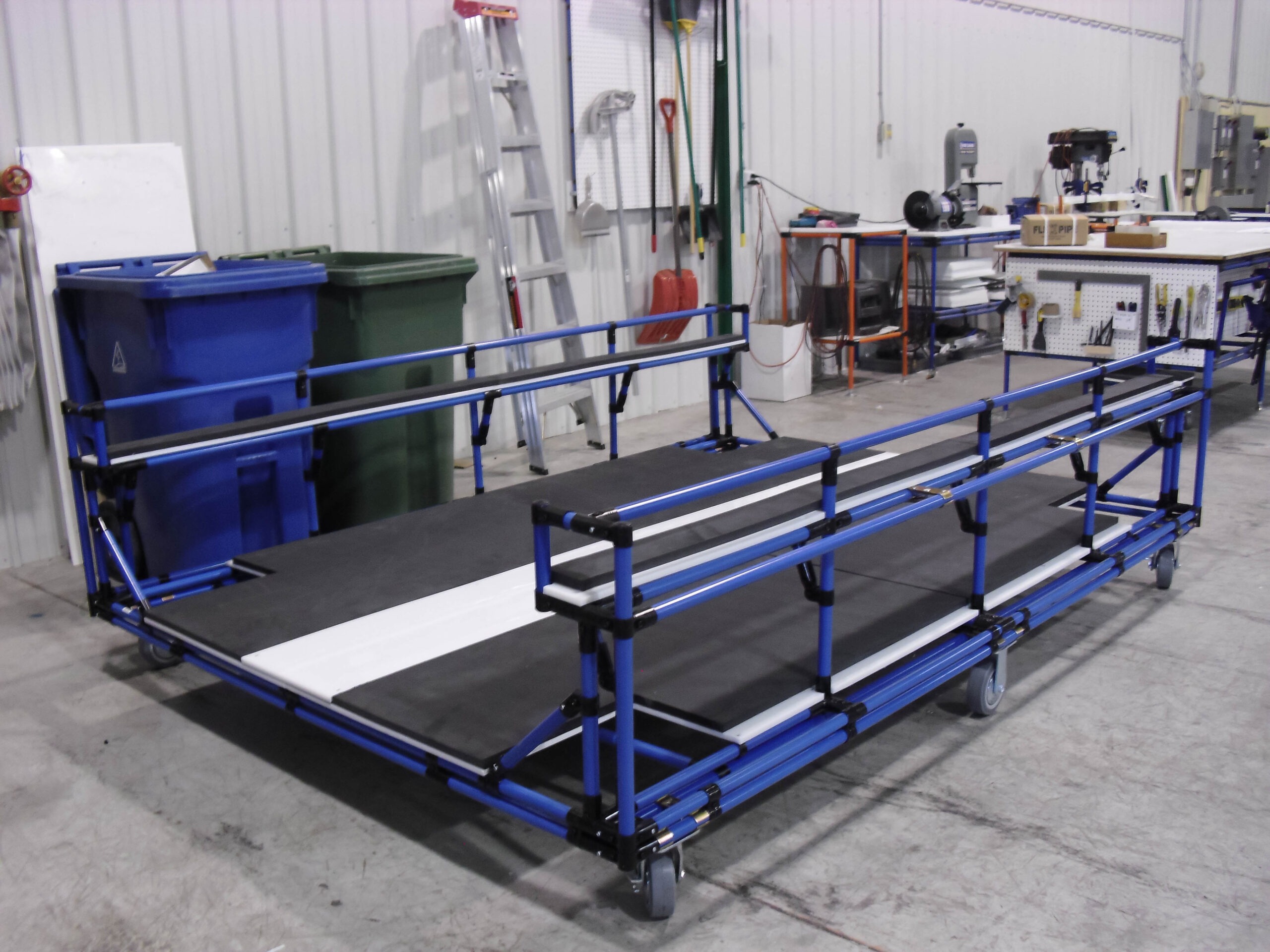
A Guide on Automotive Material Handling Solutions for Lean Manufacturing
Go lean with automotive material handling solutions built to adapt quickly to every production change. Flexpipe’s modular system helps your U.S. automotive team design and assemble cost-effective carts, workstations, and workcells faster, directly on-site. Each structure is durable, reusable, and designed to improve flow and efficiency across your plant.
Lowest prices • 3 warehouses across North America • Next-day shipping
Table of Contents
1. Why Lean Manufacturing is Essential to Automotive Manufacturing
Lean manufacturing is vital in the U.S. automotive industry because it drives efficiency, quality, and cost control throughout every production stage. By reducing waste in material movement, assembly, and supply chain processes, manufacturers achieve higher consistency and safety in vehicle production.
To support these goals, automotive material handling solutions must allow fast adaptation to model changes and evolving line layouts. Flexible, modular systems help teams sustain continuous improvement—lowering downtime and simplifying daily operations without costly external fabrication.
For automotive manufacturers, a lean material handling solution that allows them to make their own material carts, picking carts, trolleys, flow racks, work benches, workstations, and workcells is best.
That lean material handling solution must be easy to use and assemble, allowing faster and less expensive changes and modifications than welded material handling structures and welded workstations.
One solution checks all these boxes, and its origins can be traced back to the Toyota Production System (TPS), long seen as the originators of the lean philosophy.
What makes Flexpipe the ultimate automotive material handling solution?
Flexpipe helps U.S. automotive manufacturers design and assemble modular material handling structures without relying on welding or outsourcing. This flexibility allows teams to create and reconfigure carts, flow racks, workstations, and kitting carts quickly and at a lower cost.
Rooted in the Toyota Production System (TPS), the Flexpipe modular concept supports lean principles by enabling continuous improvement and rapid layout adaptation. Teams can easily build customized, made-to-fit workcells around existing equipment or pillars to maximize space and ergonomics.
The Flexpipe System includes cold-drawn steel pipes, square pipes, multi-angle joints, connectors, roller tracks, casters, and ESD-compliant decking. Each element combines for unmatched customization and long-term flexibility in lean automotive manufacturing.
All modifications can be performed in-house using standard tools, minimizing downtime and capital expenditure. For specialized guidance, Flexpipe’s Assembly and Design Services help U.S. manufacturers accelerate implementation across multiple plants.
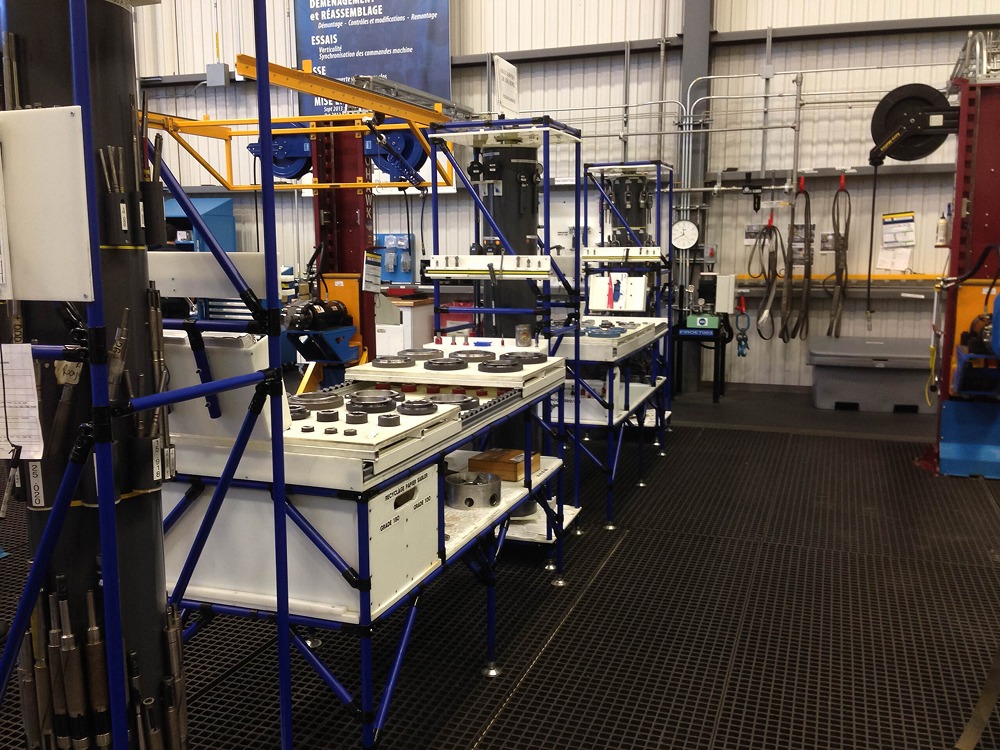
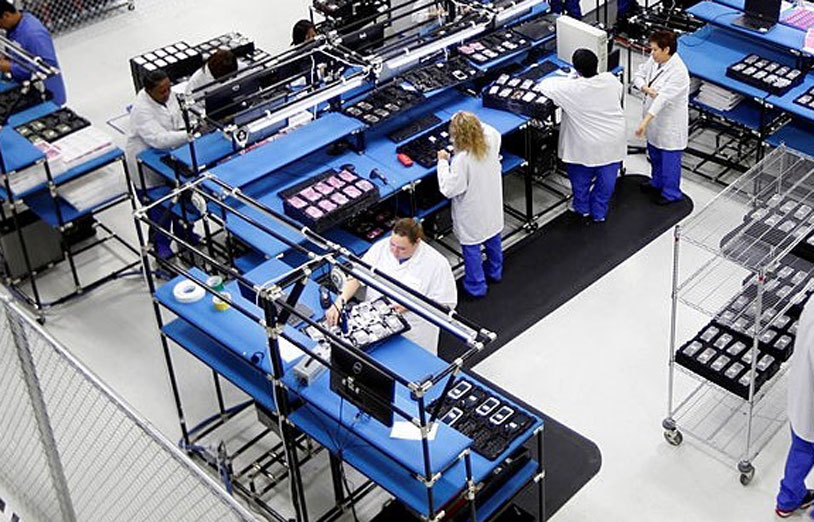
Customized, made-to-fit workstations assembled with Flexpipe ensure automotive manufacturers can create personalized workstations and workcells designed for specific applications. This means creating lean workstations around existing pillars, installed equipment, and other obstructions.
All changes and modifications can be done in-house, saving manufacturers valuable time and capital compared to going outside to third parties.
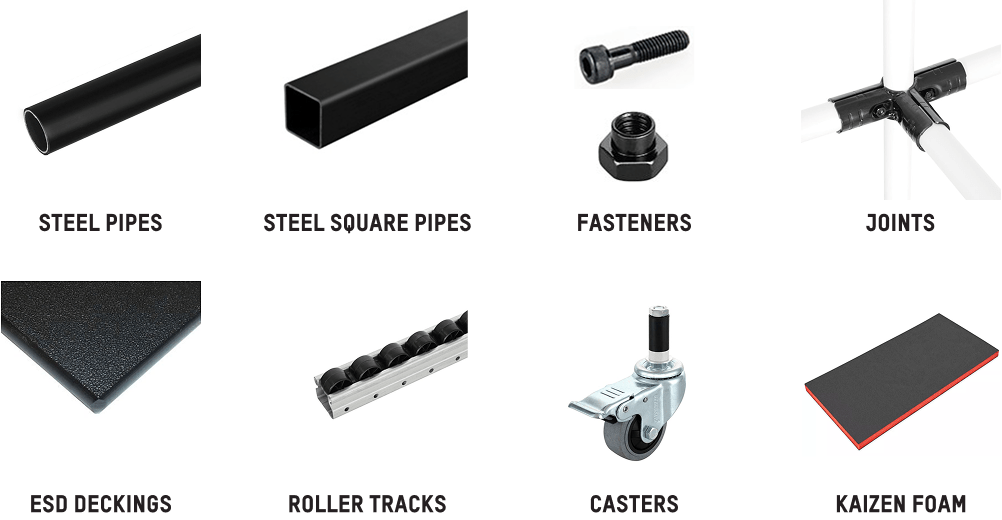
The Flexpipe lean material handling system comprises cold-drawn steel pipes, steel square pipes, fasteners, adjustable, multiple-angle joints and connectors, ESD-compliant decking material, track rollers, industrial casters, and Kaizen foam – in addition to numerous accessories. With Flexpipe, automotive manufacturers have the ultimate in customization and flexibility.
Numerous Designs – Endless Applications
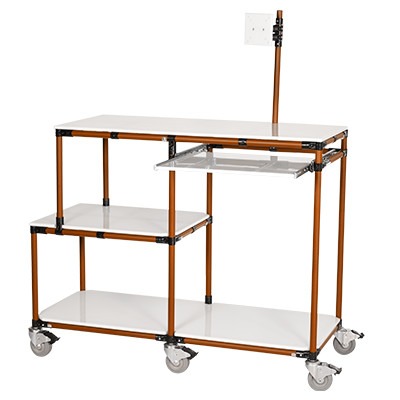
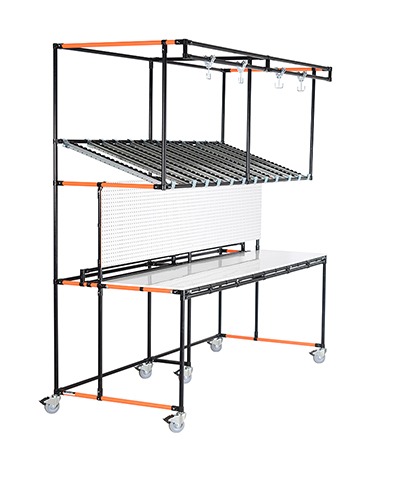
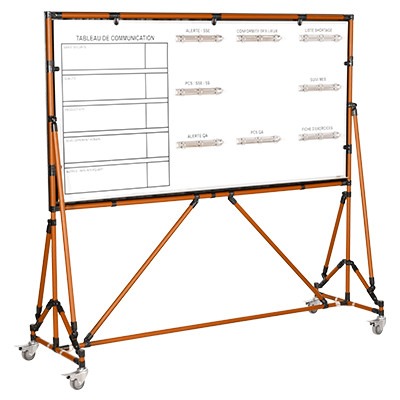
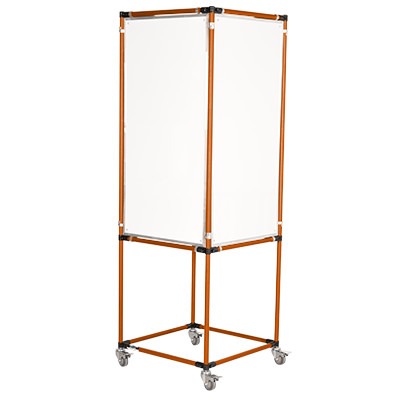
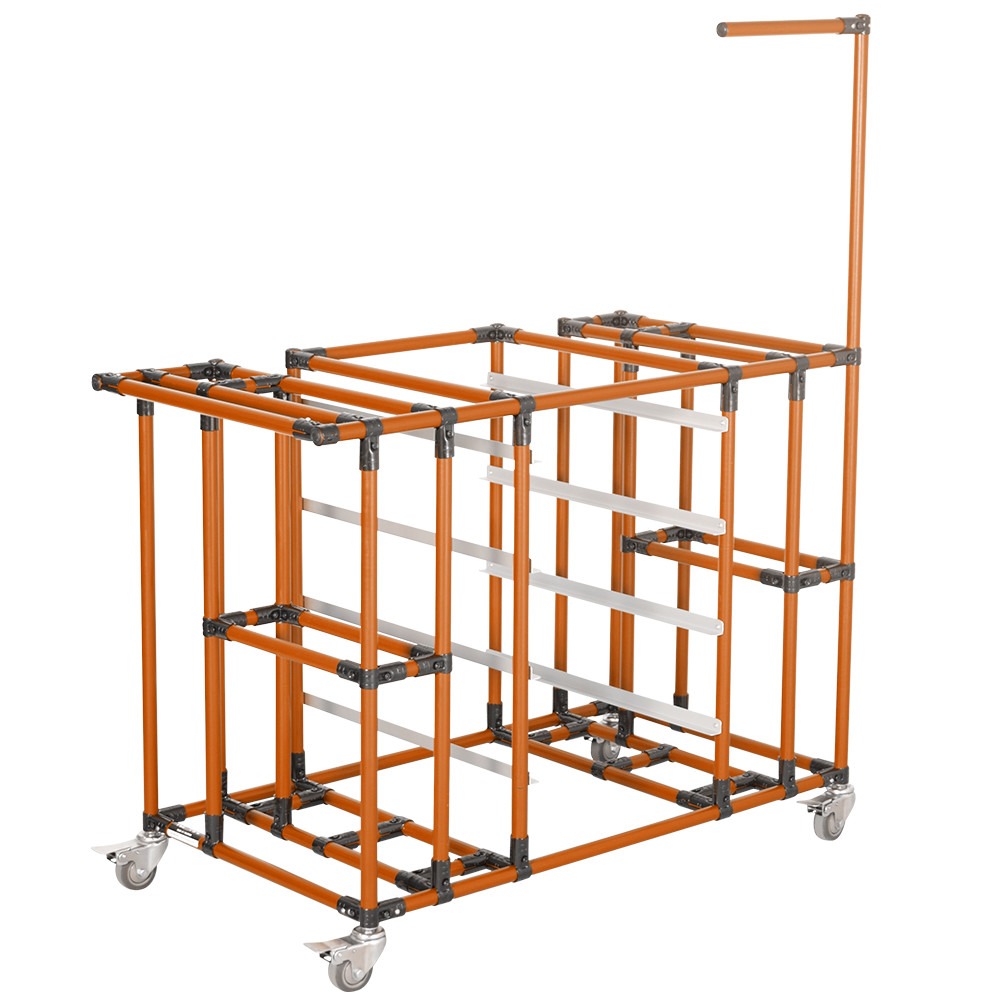
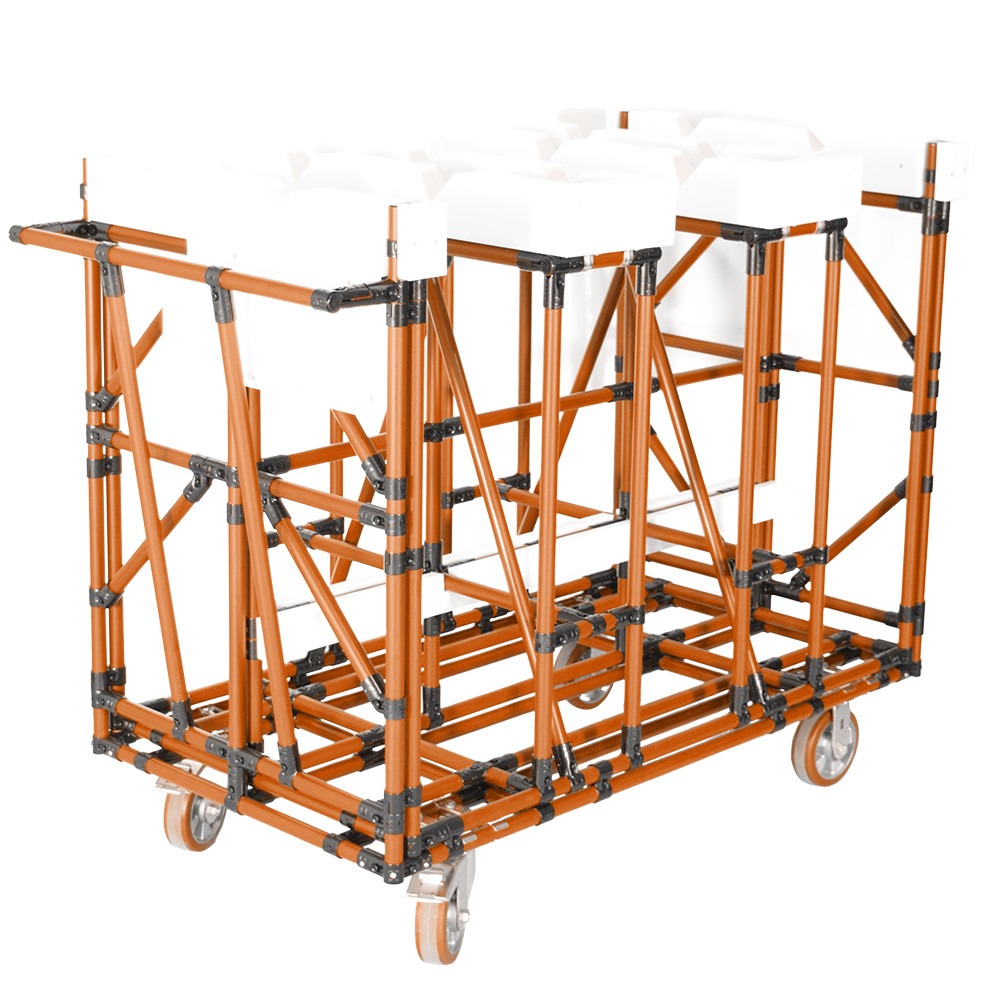
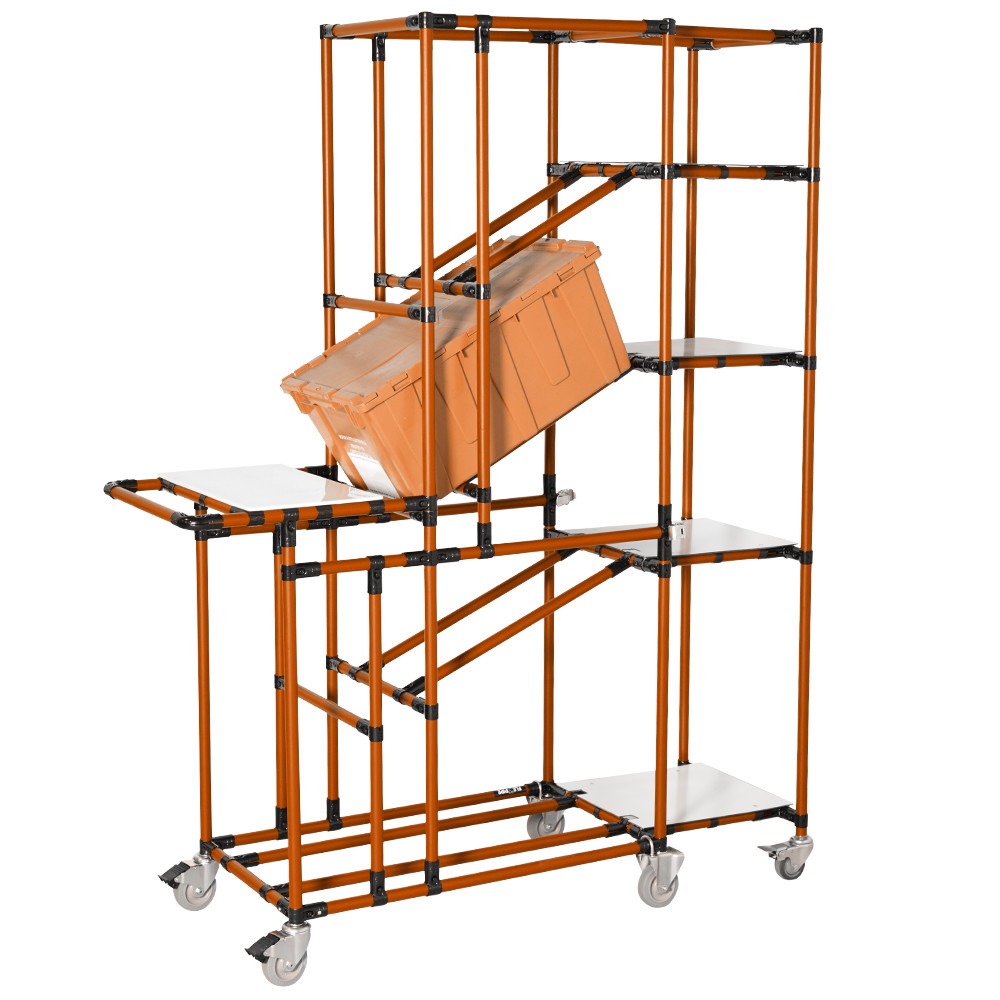
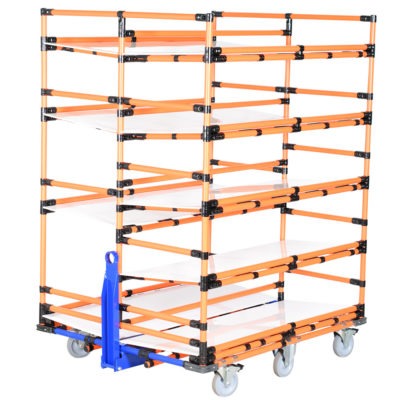
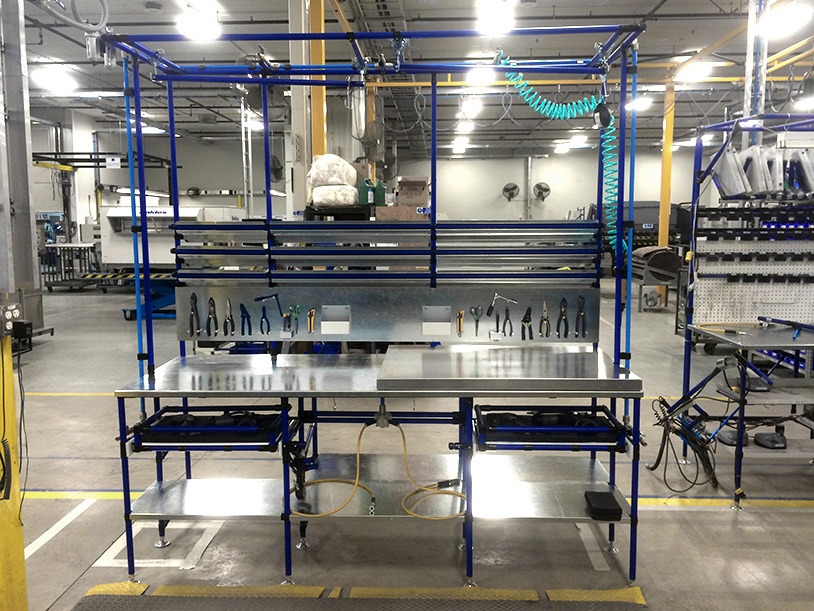
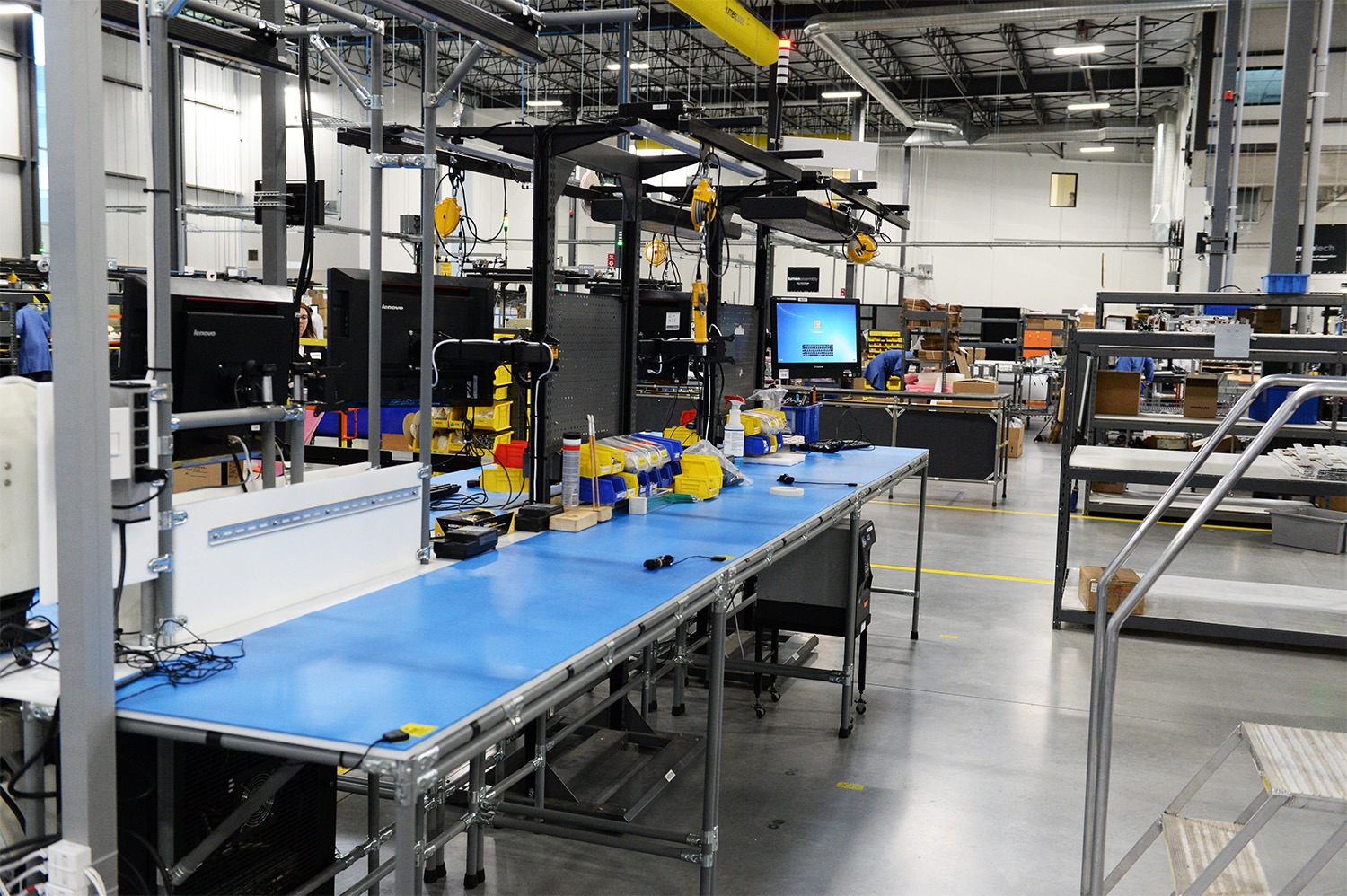
What types of structures can Flexpipe automotive material handling solutions create?
Flexpipe’s modular system adapts to nearly any automotive manufacturing environment. U.S. teams can build and reconfigure portable workstations, flow racks, kitting carts, and WIP carts to match the exact production stage or component size.
It’s equally effective for designing modular vision boards, TAKT boards, and ergonomic workcells around automotive assembly lines. Each structure can be fully customized using the Flexpipe Creator Design Tool to meet changing space, part flow, or operator requirements.
From ESD-safe stations to compact four-panel boards, every Flexpipe design is built for continuous improvement—helping manufacturers eliminate wasted motion and optimize layout efficiency across their production floor.
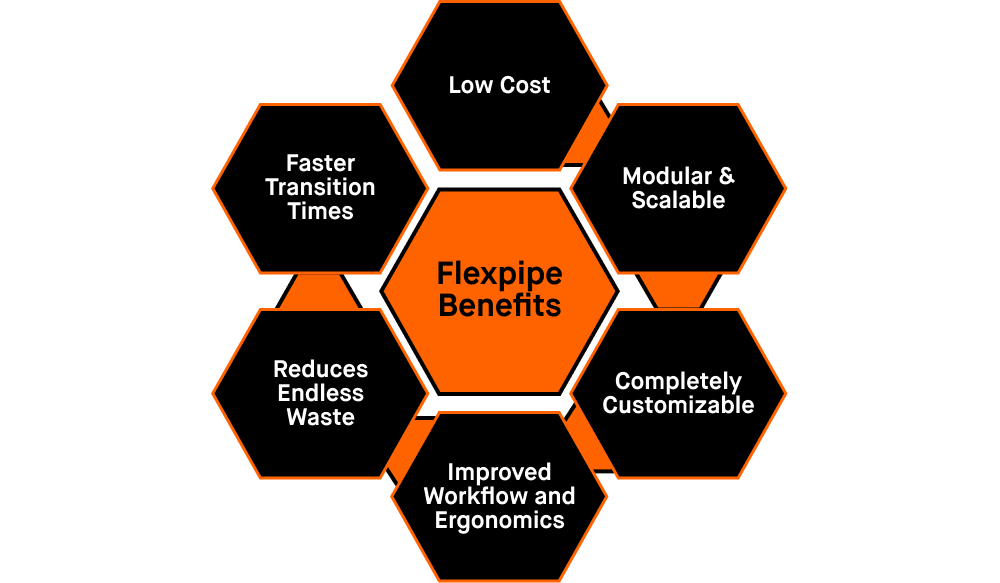
2. What are the top benefits of using Flexpipe automotive material handling solutions?
Automotive production in the U.S. changes quickly as new vehicle models, components, and part dimensions evolve each year. Flexpipe’s automotive material handling solutions make it easier to adapt to these shifts without expensive welded rework or extended downtime.
The Flexpipe modular system offers measurable advantages for lean automotive manufacturing:
- Faster reconfiguration: Workstations and flow racks can be adjusted in-house in under an hour using standard tools.
- Reduced motion waste: Custom kitting carts and WIP carts streamline part flow and ergonomics on the production line.
- Lower total cost: The reusable structure eliminates outsourced fabrication and shortens project turnaround.
- Improved workflow: Integrated workcells and modular racks reduce transit distances and simplify assembly sequencing.
These combined benefits help manufacturers transition efficiently between high-mix, low-volume and high-volume runs—keeping production lean and adaptable across multiple U.S. facilities.
With Flexpipe, companies can account for faster transition times with minimal downtime when moving from high-mix, low-volume to low-mix, high-volume requirements.
3. What are the most common Flexpipe workcell layouts used in U.S. automotive manufacturing?
Flexpipe’s modular system supports several automotive workcell layouts that help U.S. manufacturers improve workflow, ergonomics, and space utilization. These layouts—U, T, and S/Z configurations—can be built quickly using workstation and flow rack structures from the Flexpipe system.
U-Cell Layout:
Promotes continuous workflow and faster assembly cycles. Ideal for high-mix, low-volume environments where operators can rotate tasks efficiently.
T-Cell Layout:
Allows easy access to specialized or custom assembly areas while maintaining line-side visibility. Commonly used for subassemblies and detailed component work.
S/Z-Cell Layout:
Designed to maximize floor space and work around fixed obstacles, pillars, or installed equipment without interrupting material flow.
Each configuration can be customized using the Flexpipe Creator Design Tool and further refined through on-site Flexpipe Training programs that guide teams in optimizing cell ergonomics and layout efficiency.
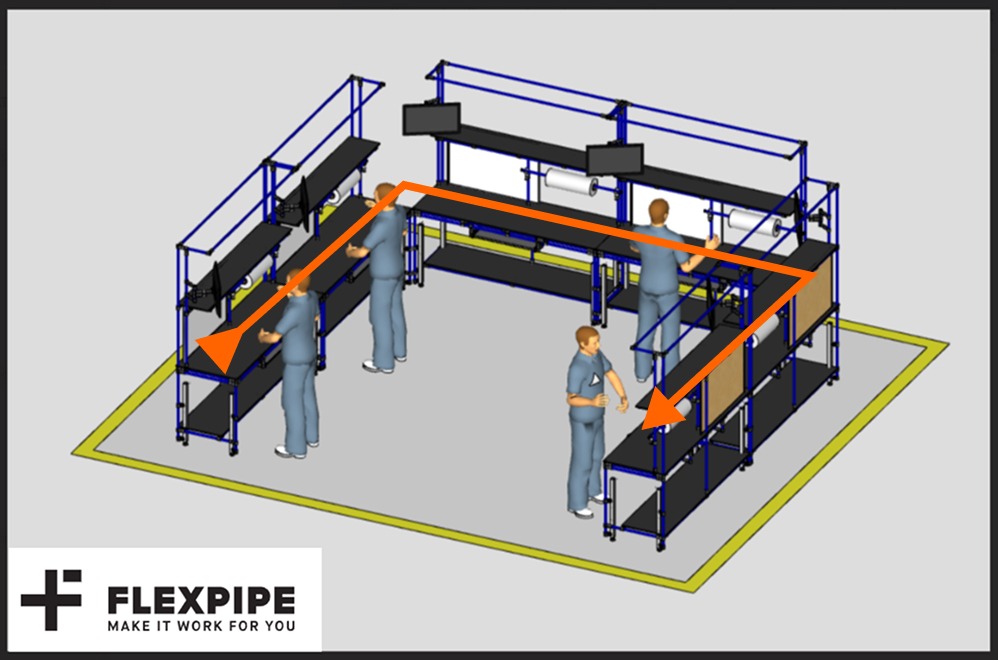
U-Cell – Continuous Workflow and faster assembly times.
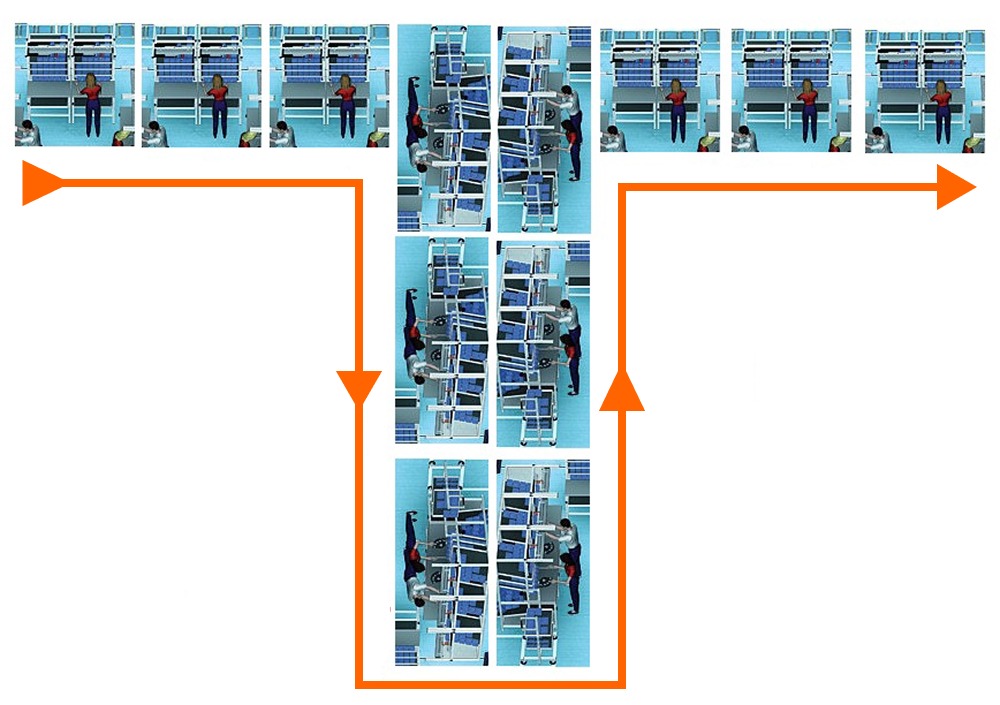
T-Cell – Customized parts and quick access to individual workstations.
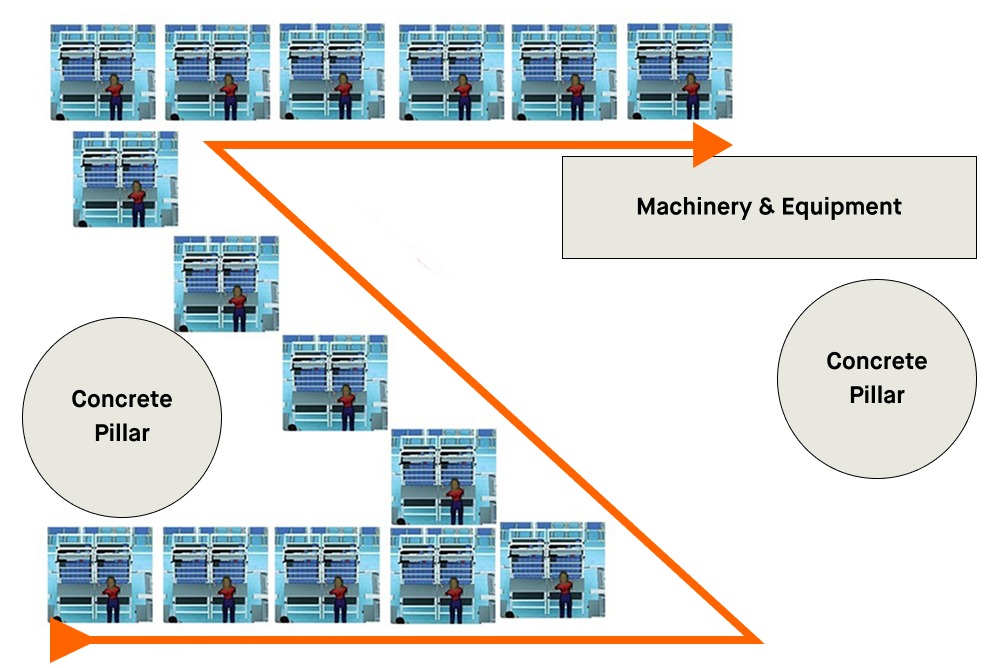
S/Z-Cell – Maximize space around obstructions and existing equipment.

4. Case Studies & Real Results
Flexpipe’s pipe-and-joint modular system has proven its value across multiple U.S. production facilities by reducing lead time, increasing floor efficiency, and improving ergonomics. These results highlight our long-standing expertise in designing scalable material handling systems that meet the rigorous demands of automotive manufacturing.
1. Streamlining Production at HRE Performance Wheels (California)
Through custom kitting carts built with Flexpipe, HRE transformed its assembly process into a single-piece flow system.

Key Results:
- 65 precision-built carts designed for continuous flow and easy visual management.
- Color-coded layouts improved prioritization and material traceability.
- 4 hours of daily labor saved by eliminating part search.
These improvements demonstrate the modular system’s impact on workflow visibility and space recovery.
2. Boosting Productivity with Modular Racking (Michigan)
A Michigan-based automotive supplier transitioned from rigid steel racks to a flexible modular system—resulting in increased productivity, better ergonomics, and smoother line-side operations.

Key Results:
- Over 220 custom racks in operation, reconfigurable by in-house maintenance teams.
- Ergonomic handling improved through roller track integration.
- Long-term durability and adaptable design enabled sustained lean performance.
This case shows how a pipe-and-joint architecture enables ongoing efficiency gains without engineering downtime.
3. Why Lumenpulse Chose Flexpipe for Its Expansion
When Lumenpulse outgrew its former plant, it chose Flexpipe’s modular system to build ergonomic, scalable, and reusable workstations tailored to fast-moving LED production lines.

Key Results:
- 80,000 square feet optimized with modular workstations.
- 185 operators equipped with flexible, reusable setups.
- Design input from engineering teams ensured precise fit and repeatability.
Flexpipe’s modular components supported scalability while preserving production continuity and operator comfort.
Explore more verified examples in the Inspiration Hub and learn how Flexpipe supports multiple sectors—automotive, aerospace, and warehousing—through its lean design philosophy.

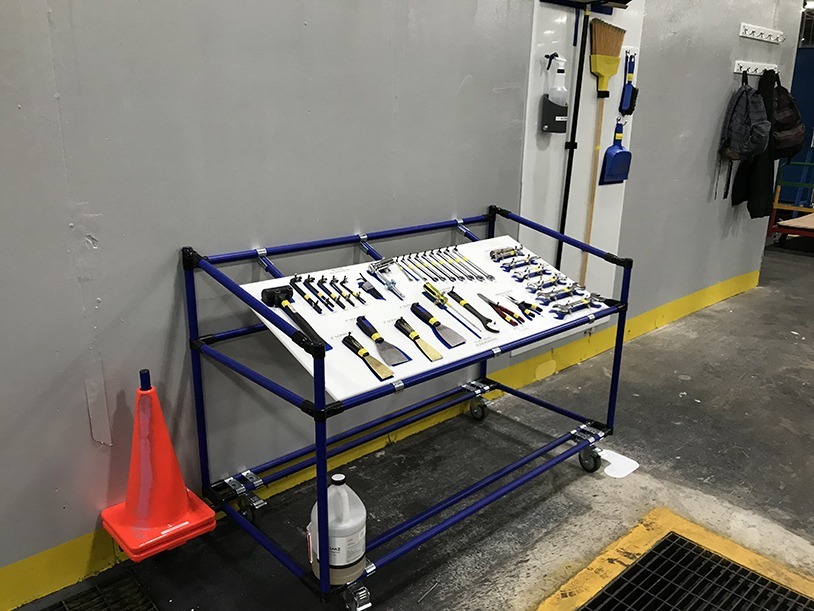
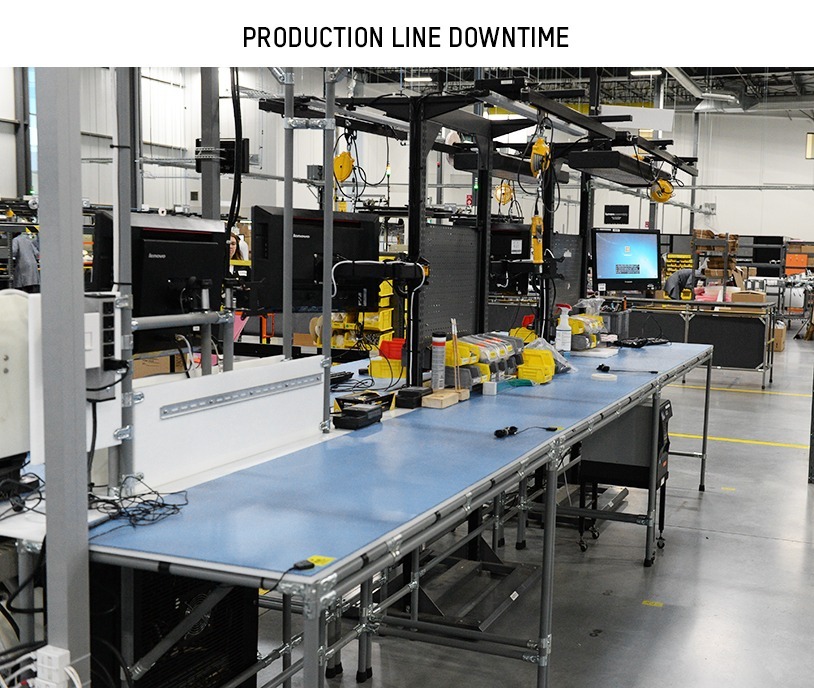
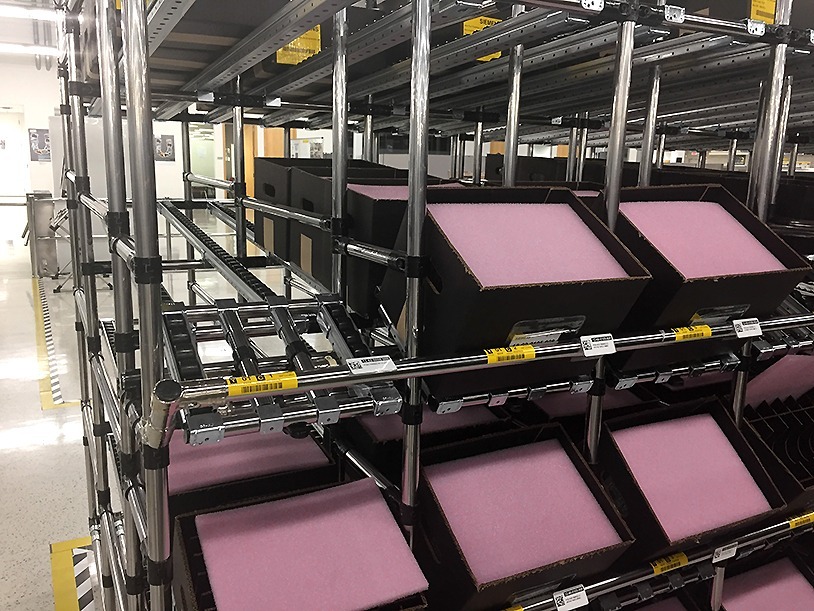
Automotive Structure Inspiration Gallery
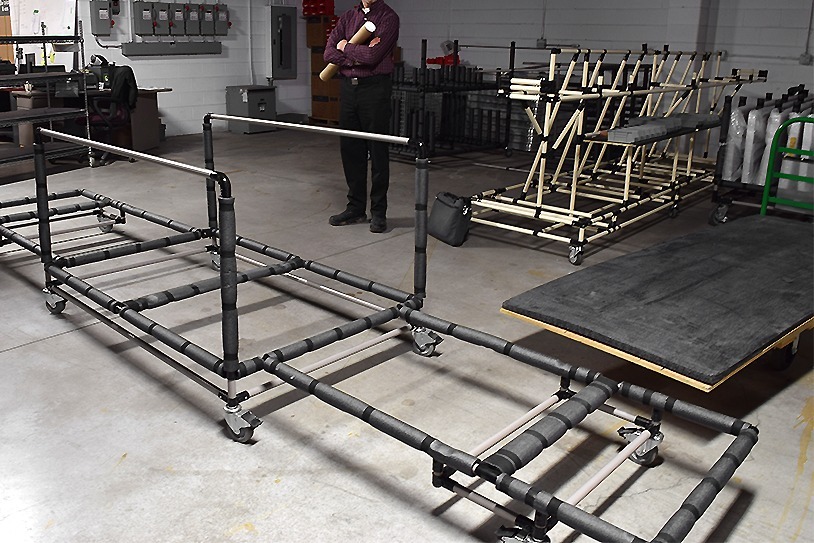
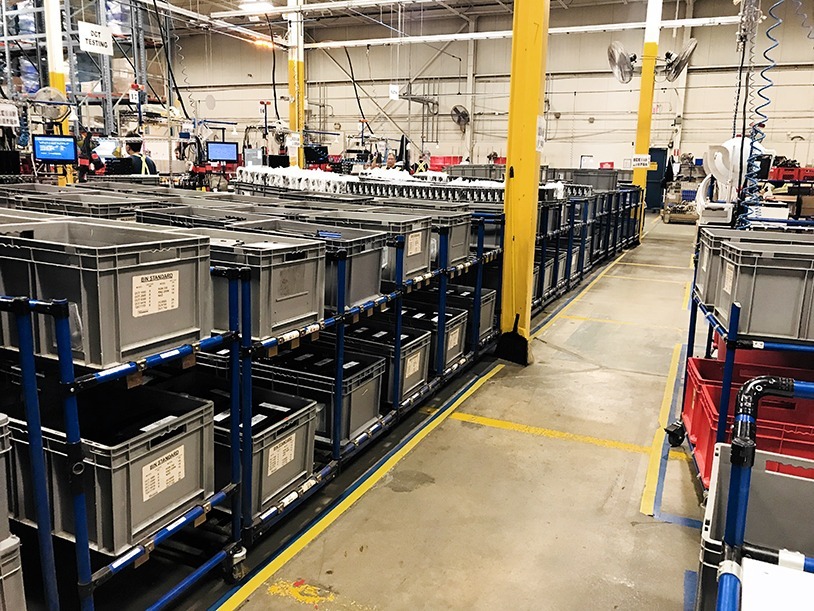
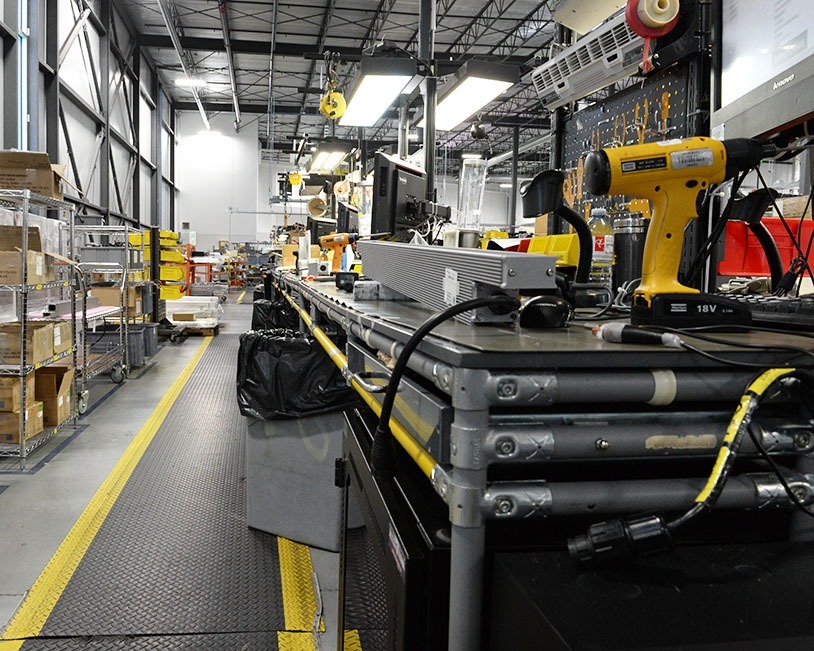
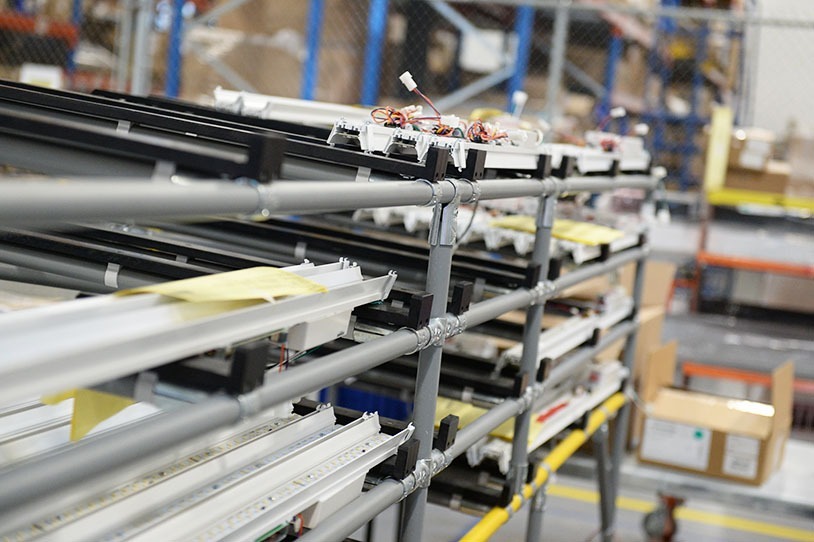
Discover dozens of real modular structures designed for automotive facilities—from picking carts to ergonomic stations.


5. How can U.S. automotive manufacturers get started with Flexpipe?
The Flexpipe modular material handling system is built for simplicity and scalability.
Made from precision-cut steel pipes and adjustable joints, it lets manufacturers create tailored flow racks, workstations, and carts that evolve with production needs.
Used widely across the U.S. automotive sector, Flexpipe structures are recognized for their ease of assembly, durability, and adaptability.
Starter Resources for U.S. Teams:
- 15 Free Starter Plans tested in active automotive facilities.
- A 6-Step Getting Started Guide covering cutting, assembly, and continuous improvement best practices.
- Flexpipe Creator Design Tool for 3D customization of carts, racks, and workstations before purchase.
Example Projects Include:
Gravity flow rack, headlamp cart, L-flow rack with return, WIP cart, tire storage rack, and line-side workstation—each proven to reduce setup time and improve on-floor flexibility.
Manufacturers can rely on Flexpipe’s assembly and design services to get support through every phase of implementation.
Get 15 Free Plans for Automotive Facilities
Download ready-to-build structures like flow racks, carts, and workstations—tested and proven in real auto plants.
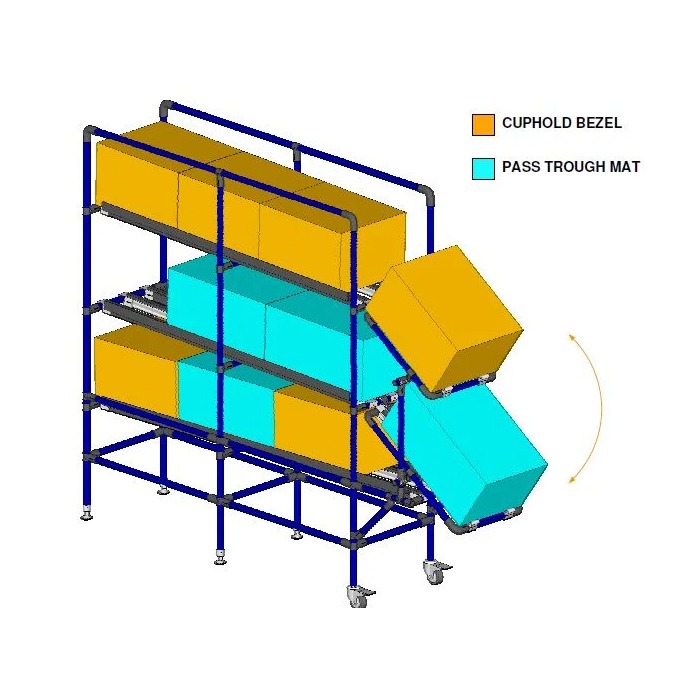
Gravity flowrackravity flowrack
Download this plan
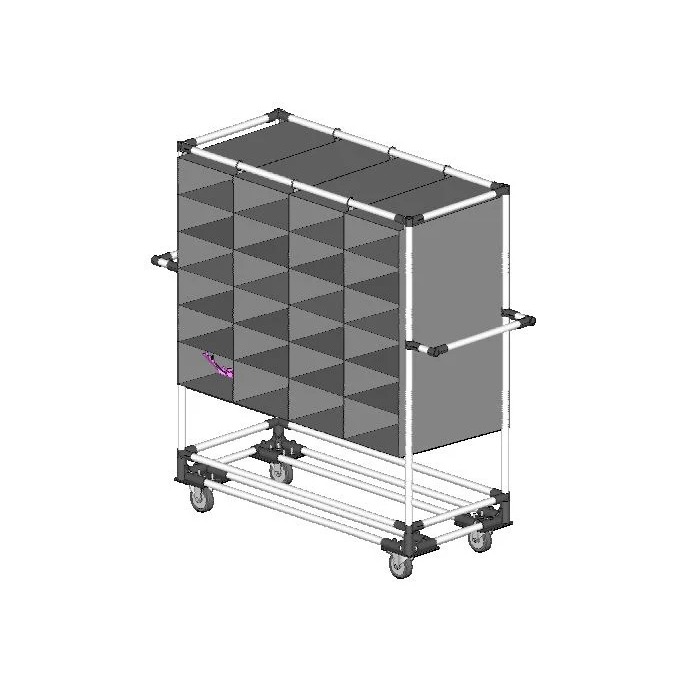
HEADLAMP CART
Download this plan
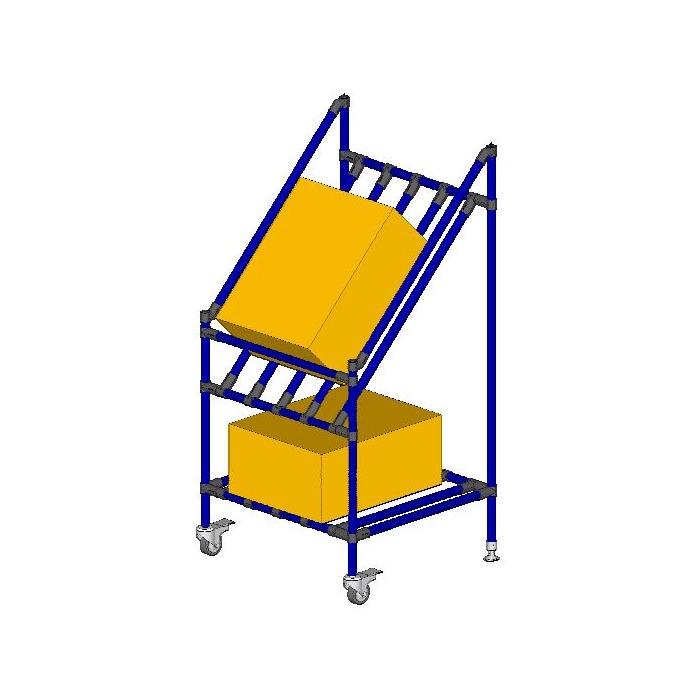
Gravity flowrack with pipe
Download this plan
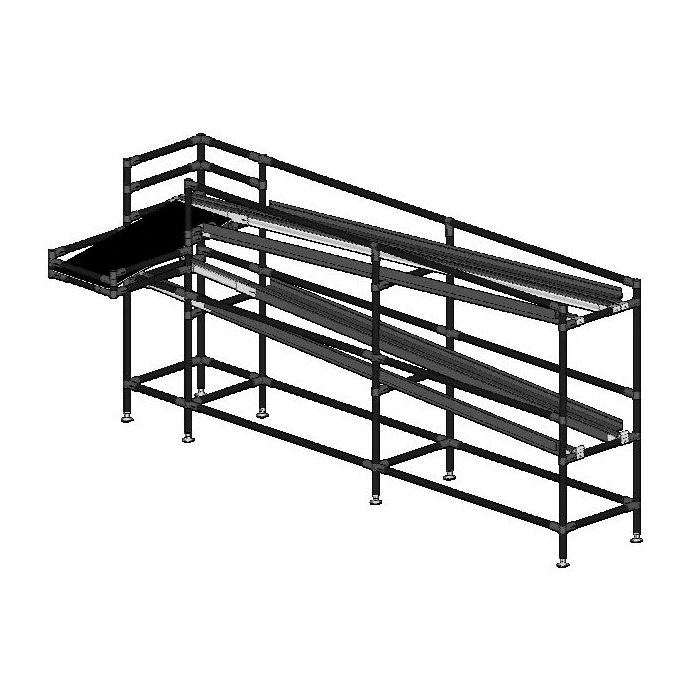
GRAVITY FLOWRACK 1 IN 1 OUT
Download this plan
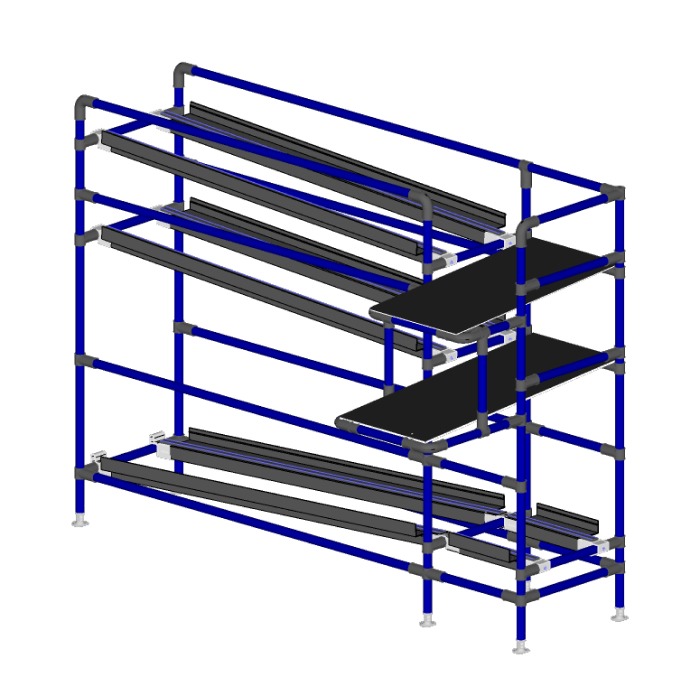
L-flowrack with return
Download this plan
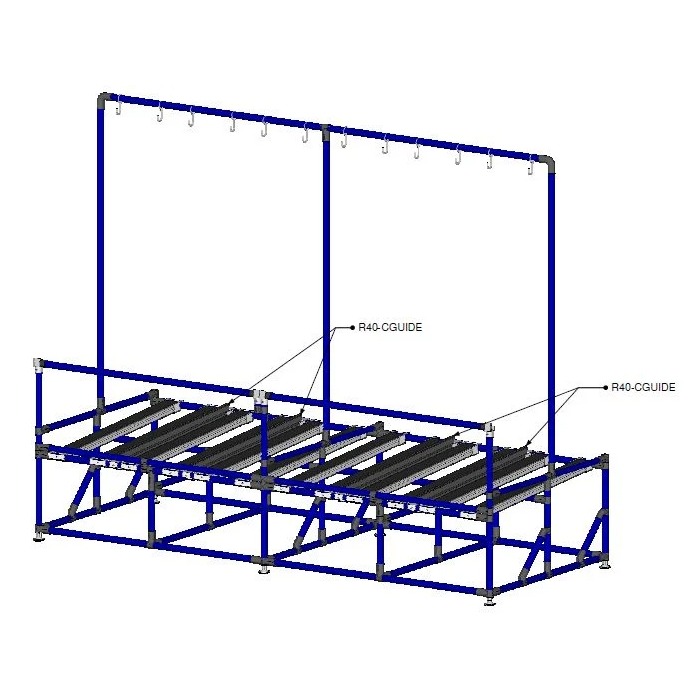
SUPERMARKET FLOWRACK WITH STOPPER
Download this plan
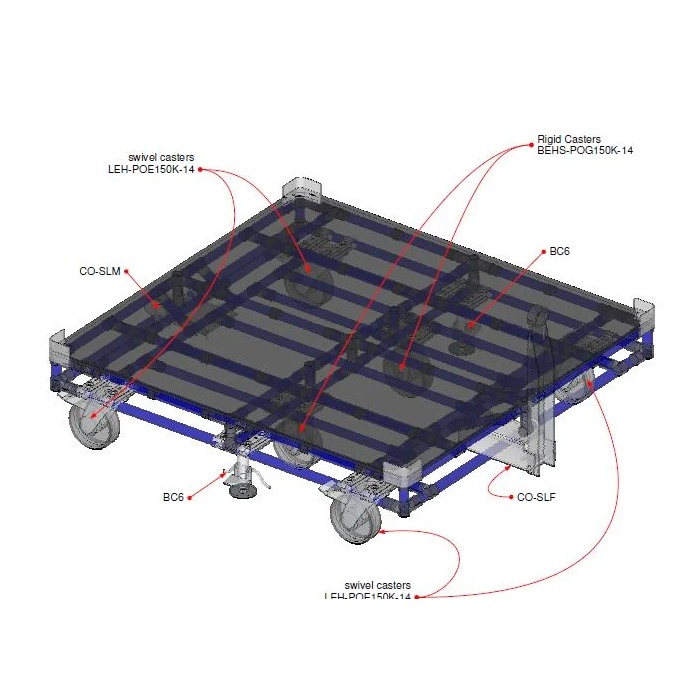
WIP CART
Download this plan
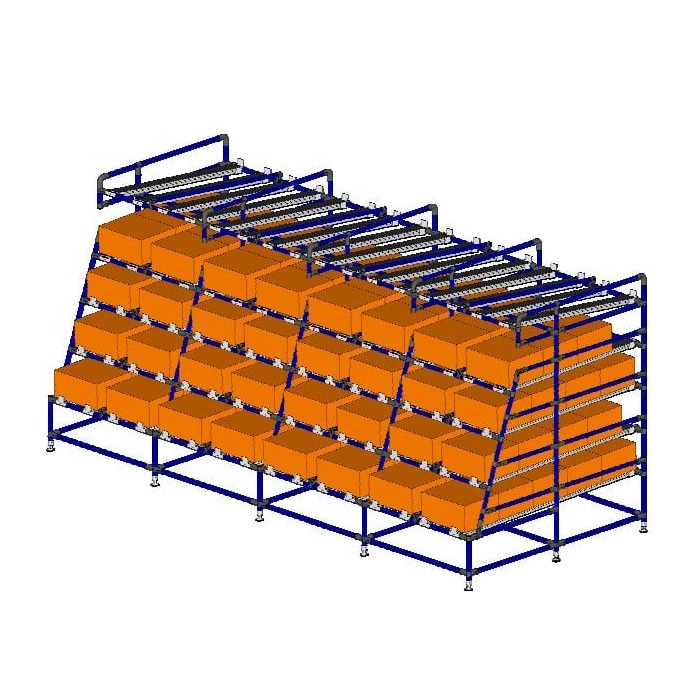
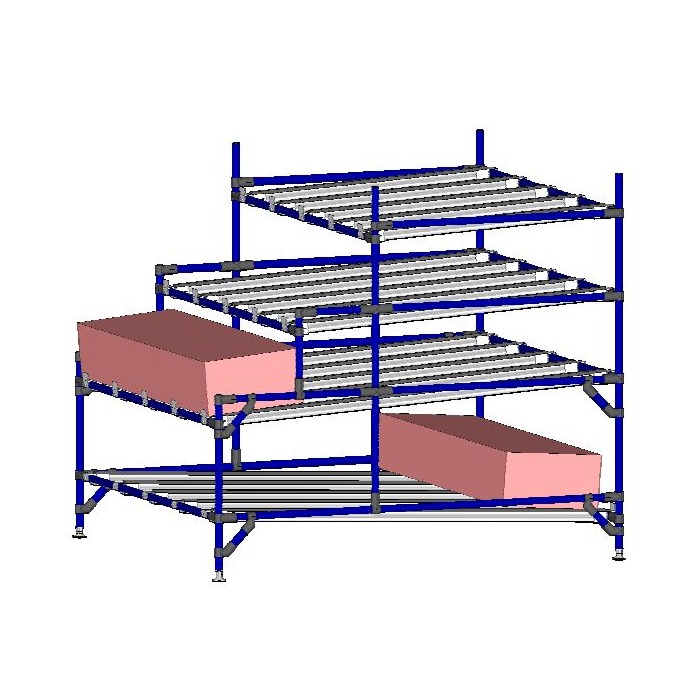
Flow rack for large boxes
Download this plan
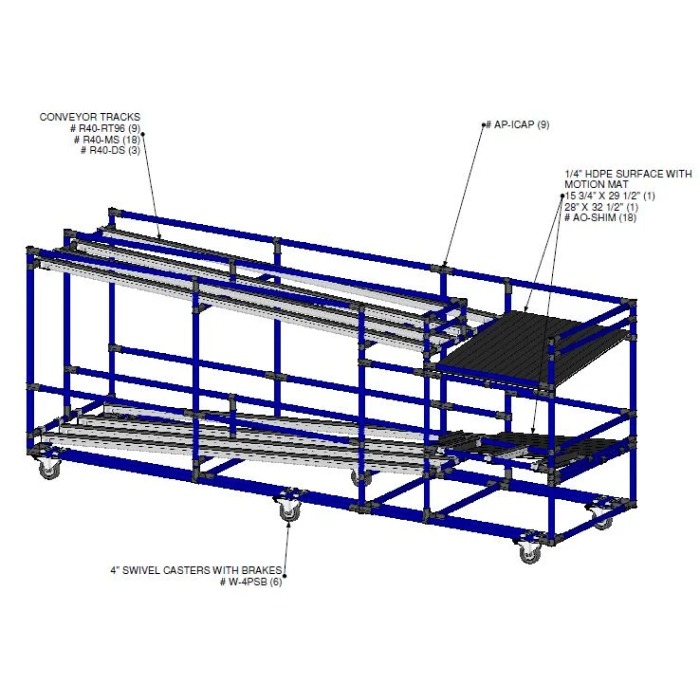
RAW POD GFR
Download this plan
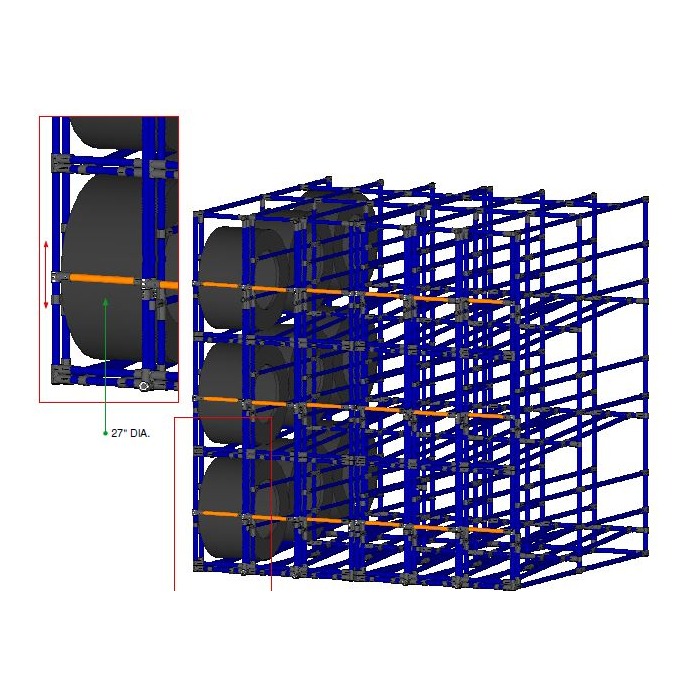
TIRE STORAGE RACK
Download this plan
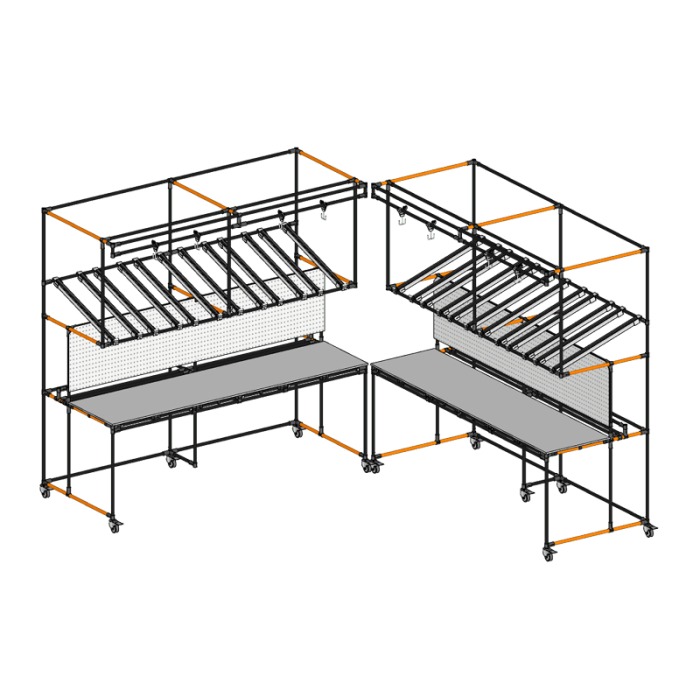
L-workstation
Download this plan
Lineside rack
Download this plan
6. How does Flexpipe compare to traditional welded material handling systems?
Choosing between welded and modular systems often comes down to cost, speed, and flexibility. Flexpipe’s pipe-and-joint modular system consistently outperforms fixed welded setups by allowing in-house modifications, faster reconfiguration, and full part reuse—all without specialized labor or downtime.
For manufacturers evaluating a switch, the Flexpipe Compatibility Guide outlines how existing systems—such as Creform or Fastube—integrate seamlessly with Flexpipe parts.
Companies seeking a turnkey transition can explore Assembly and Turnkey Solutions for complete implementation support, including design validation and production-ready assembly.
Get a personalized recommendation and cost analysis through our Custom Quote Service or request a Free Sample to experience the difference firsthand.
7. What are the key takeaways about Flexpipe automotive material handling solutions?
Flexpipe’s modular material handling system provides automotive manufacturers with a practical, proven way to achieve lean production goals. Built for adaptability, the system enables teams to build, modify, and expand workstations and workcells without welding, outsourcing, or long delays.
Key Takeaways:
- Highly Customizable: Build carts, workstations, and flow racks tailored to each automotive process.
- Low Cost and Efficient: Lower setup costs and implement fast, repeatable changes entirely in-house.
- Flexible Layouts: Design U-, T-, and S/Z-cell configurations to improve flow and reduce material waste.
- Scalable Across Plants: Easily reconfigure structures as production lines evolve or new models are introduced.
- Lean-Driven: Supports continuous improvement initiatives and optimized space utilization on U.S. automotive shop floors.
This combination of flexibility, cost efficiency, and speed positions Flexpipe as a cornerstone tool for automotive material handling solutions that deliver measurable operational value.
8. FAQ for Automotive Material Handling Solutions
What is a lean workcell in automotive manufacturing?
A lean workcell is a group of integrated workstations and benches arranged to improve workflow, reduce assembly cycle time, and shorten material and WIP transit. By minimizing transport waste and keeping parts within reach, teams improve repeatability and overall efficiency across the production line.
Can Flexpipe structures support heavy automotive parts?
How fast can I change my Flexpipe material handling structure or workstation?
Most changes can be completed in-house in under an hour with minimal tools, allowing teams to adjust shelves, roller tracks, or dimensions as production needs evolve. To get started quickly, visit Getting Started or explore Flexpipe Training.
What other industries aside from automotive use the Flexpipe material handling system?
Flexpipe is used across multiple sectors where lean practices thrive, including Aerospace, Warehousing, Packaging, Electrical Equipment, and the Battery Industry.