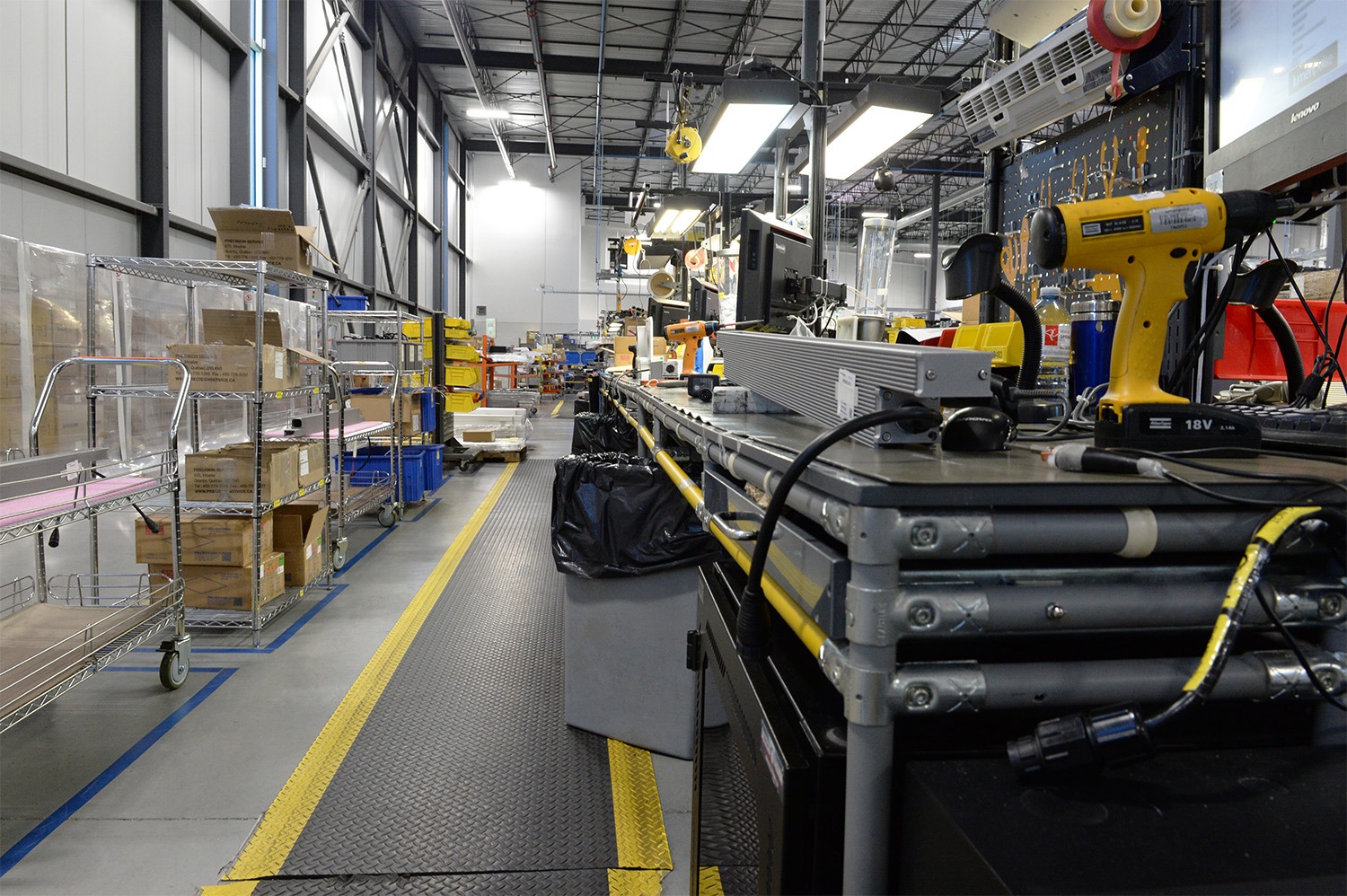
Lean Material Handling in the Battery Industry
The increased demand for more energy efficient lithium-ion, Nickel-metal hydride, AGM, and EFB batteries and changing designs are driving battery manufacturers to adopt lean manufacturing and leaner material handling.
Whether driven by the increasing demand for electric vehicles (EVs) and plug-in hybrids (PHEVs), the growth in portable consumer electronics and mobile devices or the unstoppable push towards green, renewable energies, and numerous global government incentives and tax credits, innovation and growth within the battery industry is at an all-time high.
Table of Contents
1. Introduction to Lean in Battery Manufacturing
Battery manufacturing trends can best be described as always being in a state of flux. Change is a constant, and scalability in both battery design and manufacturing is paramount to success.
For battery manufacturers, that means accounting for rapidly changing battery designs driven by the need for increased energy efficiency, improved quality, and greater consumer safety. With this constant change comes the need to adopt proven lean manufacturing battery methodologies.
Whether it’s Just-in-Time (JIT) supply chain management, inventory Pull systems, Kaizen best practices or 5S (Sort, Set in Order, Shine, Standardize, and Sustain), all are essential to increasing production throughput, reducing costs, eliminating waste, and lowering battery defect rates.
Unfortunately, just adopting lean manufacturing isn’t enough. Just using continuous improvement processes isn’t enough. More is needed. That’s why today’s battery manufacturers must extend their lean mindset to how they handle, store, move, and use materials.
2. EV Battery Manufacturing & Assembly
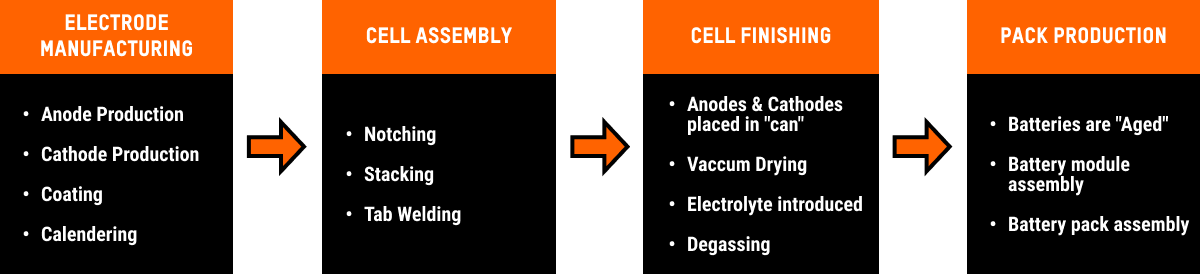
EV battery manufacturing — especially lithium-ion battery manufacturing for EVs — is broken down into four sequential process steps within an EV battery assembly line. Throughout these four steps, lithium battery safety handling is a priority to ensure worker safety and a high-quality finished battery pack.
Electrode Manufacturing
Within any EV battery assembly line, the first step is electrode manufacturing. This step involves producing the battery’s anode and cathode, which are then coated and pressed through rollers (calendering) before being split.
Cell Assembly
The second EV battery manufacturing process step involves cell assembly, where the battery is notched, stacked, and then tab welded.
Cell Finishing
The third step includes cell finishing. This is where the anodes and cathodes are placed within a self-contained metal enclosure or can, and vacuum dried before having electrolyte introduced. The battery must be at room temperature to allow the electrolytes to penetrate. The electrolytes allow the ions to freely move between the anodes and cathodes within the enclosure. Degassing is the final process in this step.
Pack Production
Pack production is the fourth and final step. All batteries are “aged”, which involves repeated charging and discharging. Multiple batteries are combined into larger battery modules, which are then combined into battery packs. Finally, cooling plates, casing, and connectors are added to complete the battery pack.
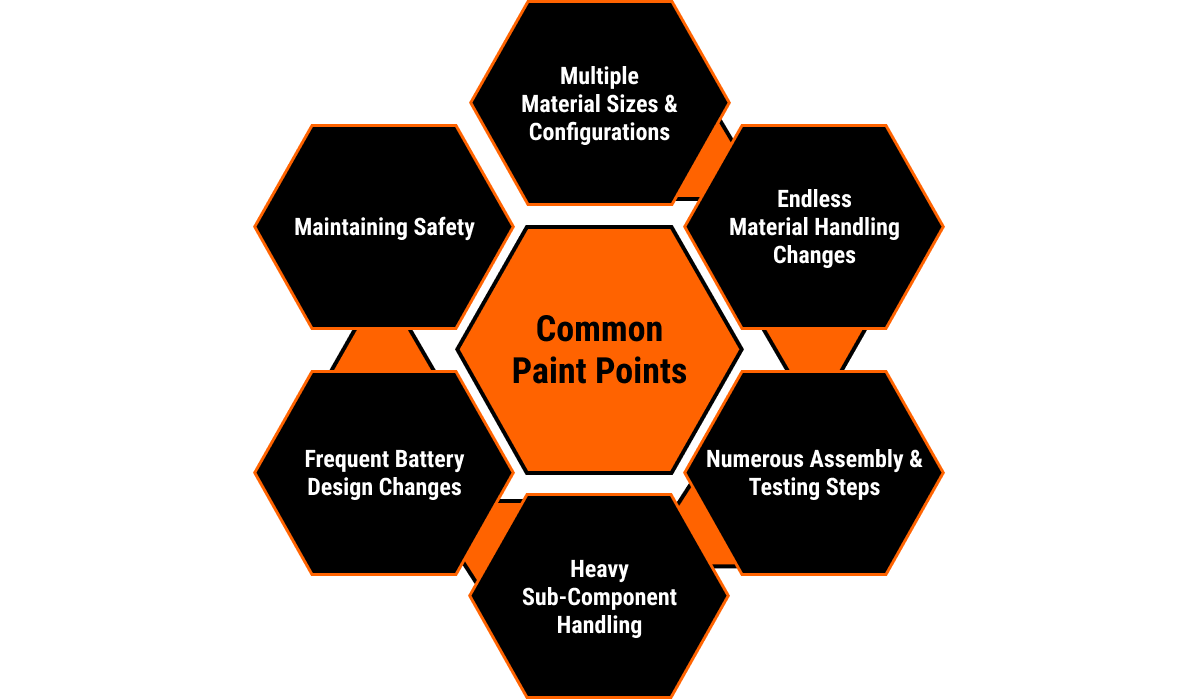
Common Paint Points
The EV battery manufacturing process involves multiple individual processes and assembly steps. Pin-point precision with regards to the handling, moving, storing, using, and assembling materials is critical. Frequent design changes are common, and heavy component handling and technician and assembler safety must always be emphasized.
EV Battery Assembly Line
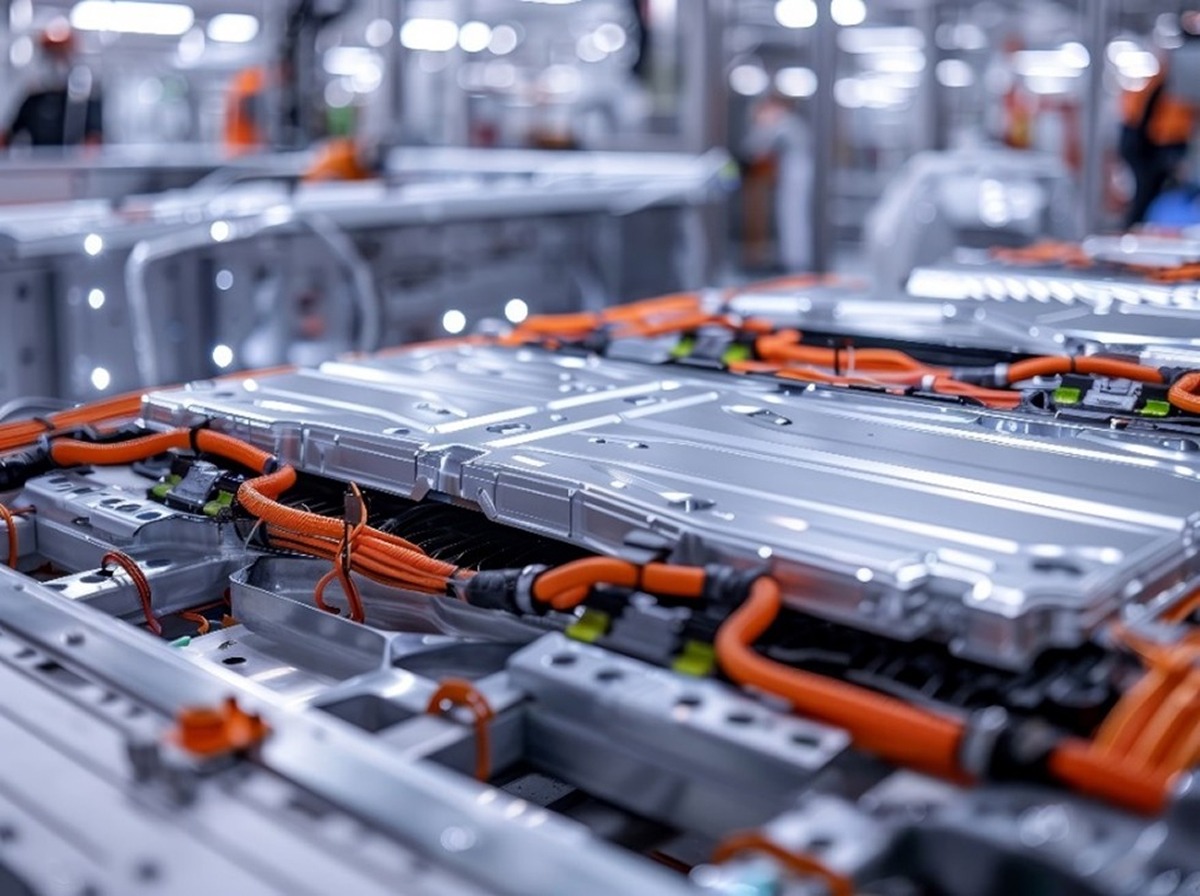
A common theme throughout an EV battery assembly line is how the finished assembly – the battery pack – continually grows larger and more complex. This complexity increases in terms of assembly and testing as well as size and overall dimensions of the finished battery pack.
From combining the cathode and anode, coating and press rolling, notching, aging batteries, and assembling modules, until eventually combining modules into even larger battery packs, the material handling and assembling requirements grow with each stage of EV battery manufacturing.

With so many production steps just to make a single battery, before combining multiple batteries in a module and multiple models within a pack, it becomes essential to have lean material handling solutions that can keep up.
- Multiple Material Sizes and Configurations
- Multiple Different Material Handling Requirements
- Numerous Assembly & Testing Processes
- Heavy Sub-Component/Semi-Finished Part Handling
- Frequent Design Changes
- Constant Safety Concerns
Flexpipe Modular & Scalable Material Handling System
The Flexpipe solution is ideally suited to the constant material and work-in-process (WIP) changes that semi-finished battery packs go through. This steel tube and joint system means battery manufacturers can customize whatever material handling structure, workstation or work cell layout they want and change them as needed, without ever having to go outside to a third-party contractor.
From each stage of the EV battery manufacturing process and for every step of the EV battery assembly line, there’s a Flexpipe material handling structure that can be cut, customized and modified to store, handle and move that material or part.
From custom kitting carts, push carts and tugger carts attached to Automated Guided Vehicles (AGVs), to Takt Boards, 4-panel instruction boards and modular, scalable, custom-sized manufacturing and assembly stations and entire lean work cells, anything needed for material and battery handling equipment can be made with Flexpipe.
Raw Materials, WIP, Semi-Finished and Finished Part Management
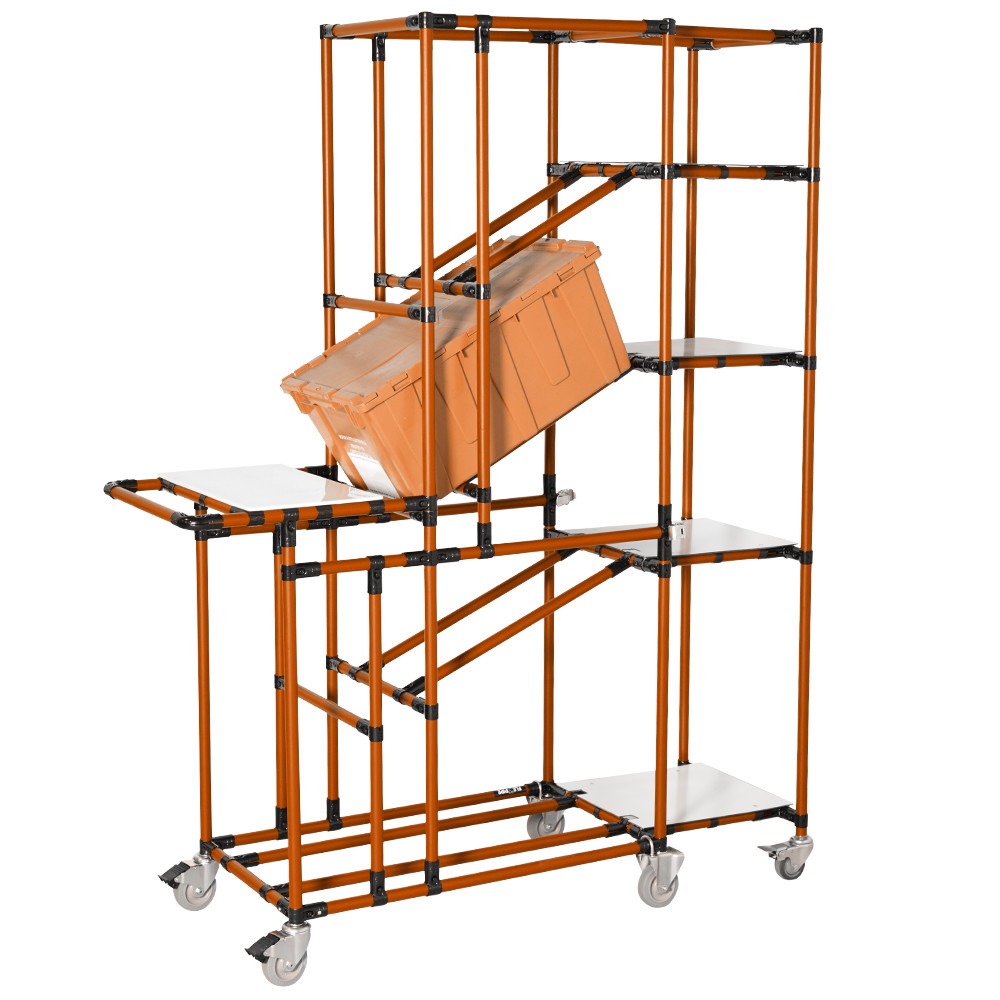
Kitting Carts
- Work order management
- Raw material management
- Made to fit for custom kitting requirements
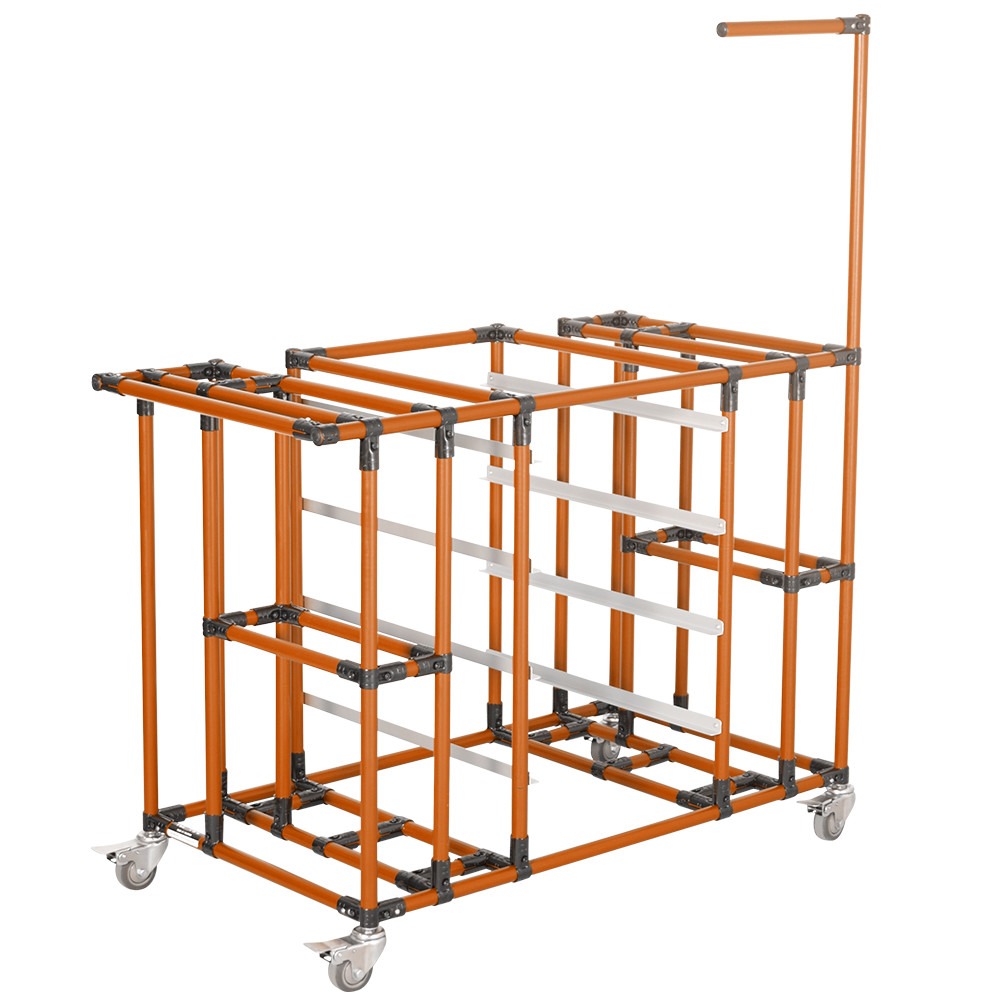
Push Carts
- Materials management and transport
- Work-In-Process (WIP) part management
- Customized to part and bin sizes
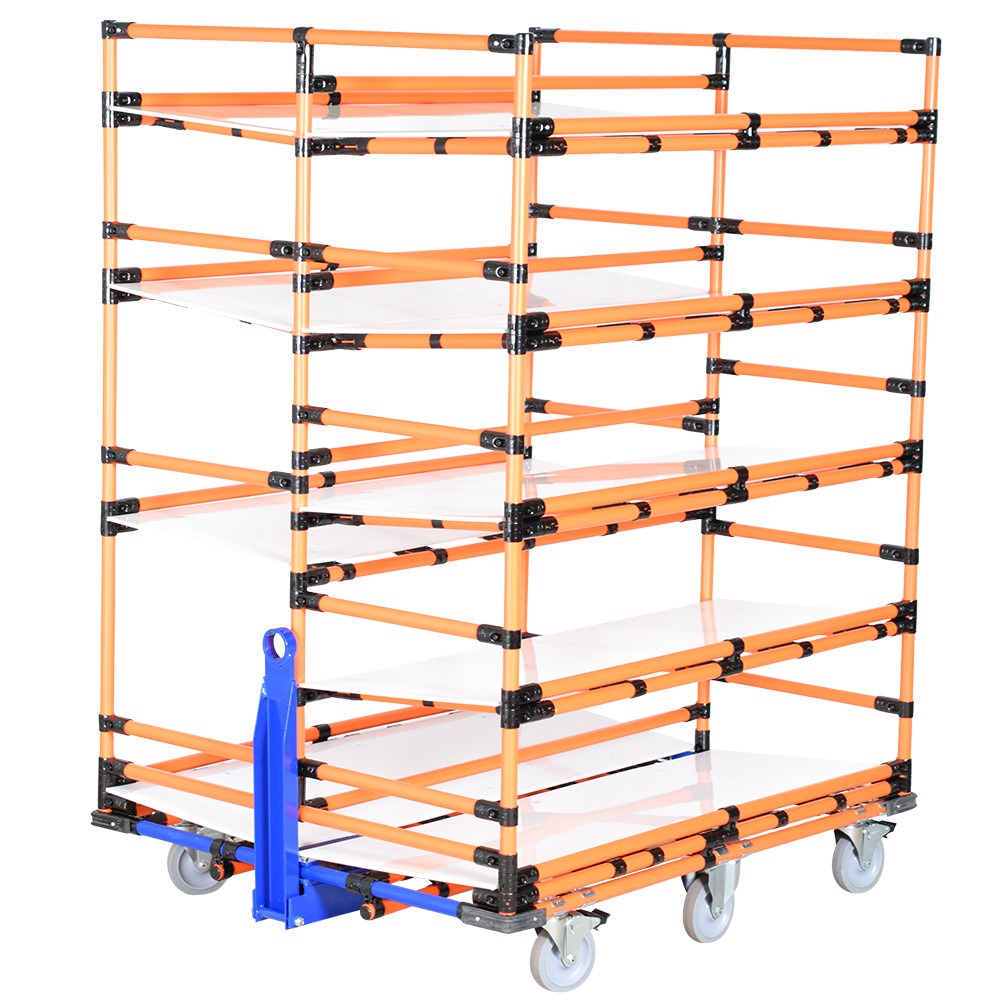
Tugger Carts
- Transport large volume bulk materials
- Transport finished products to warehouse
- Quick loading and unloading solution warehouse wide
EV Battery Assembly Line Material Handling Structures
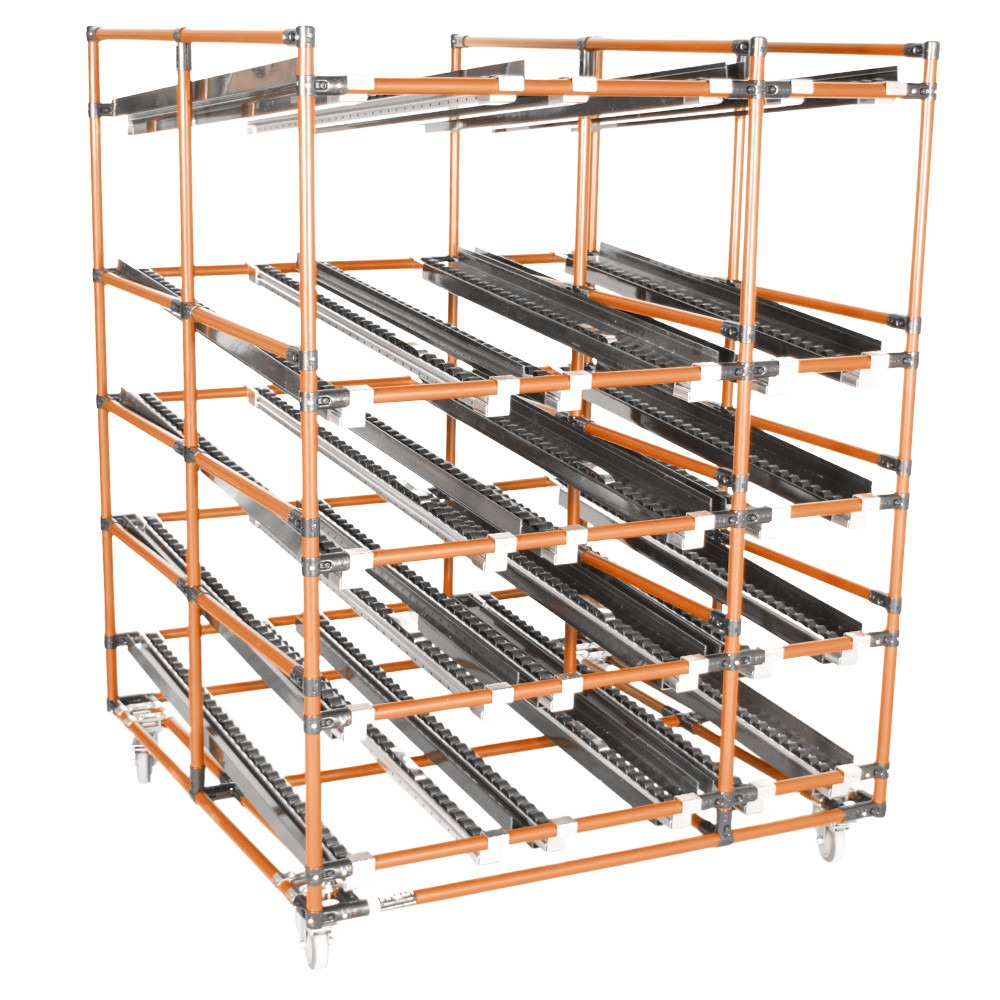
FIFO Flow Racks
- Angled levels for easy part retrieval
- Level stoppers keep bins in place
- Minimizes movement waste
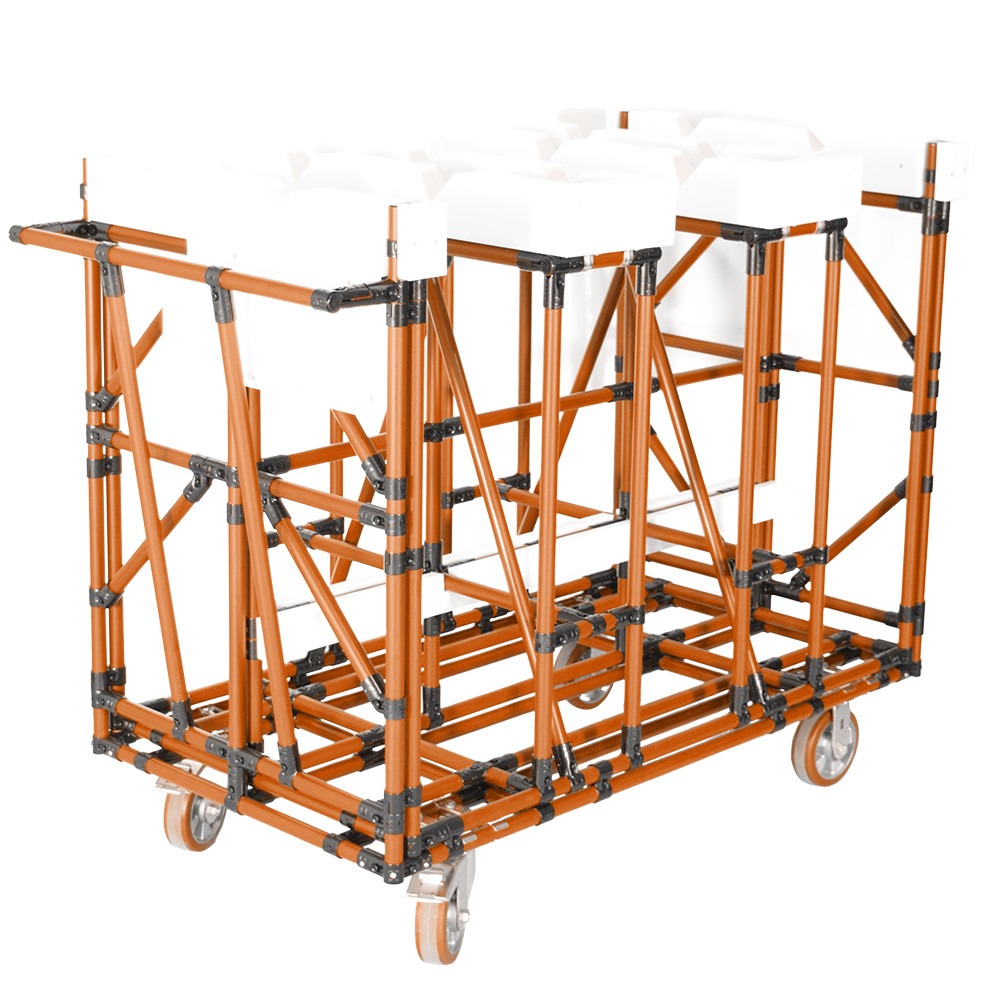
Customized WIP Carts
- Custom-made to hold semi-finished parts
- ESD-compliant decking protects parts
- Durable, high-strength solution for any part size
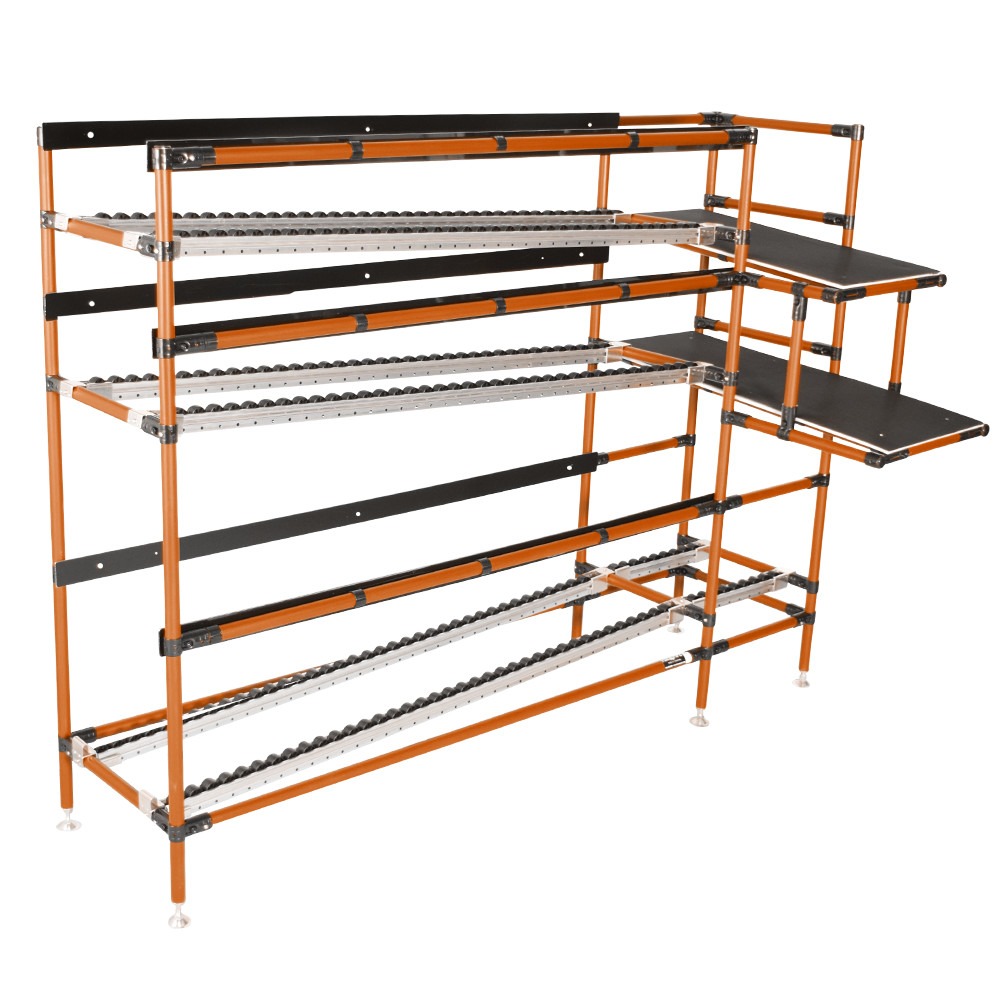
Line-Side Gravity Racks
- Minimized movement for part or material retrieval
- Quick access to parts and material bins
- Easily scaled or modified
Assembly Instruction and Information Locations
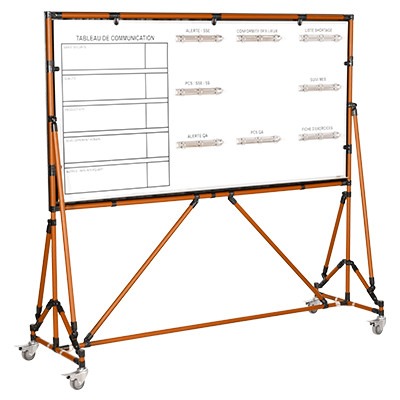
1 and 2-Sided Takt Boards
- Customized for easy production tracking
- Industrial casters allow for easy maneuverability
- Essential board for visual management
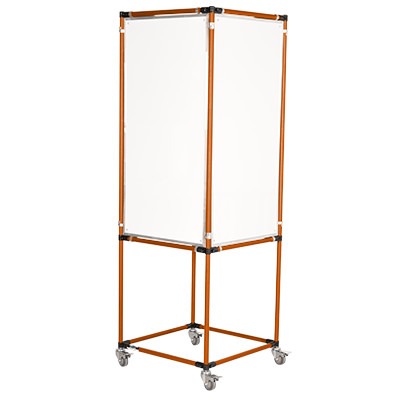
Four-Panel Information Boards
- Track deadlines
- Outline daily objectives
- KPI and Metric Tracking
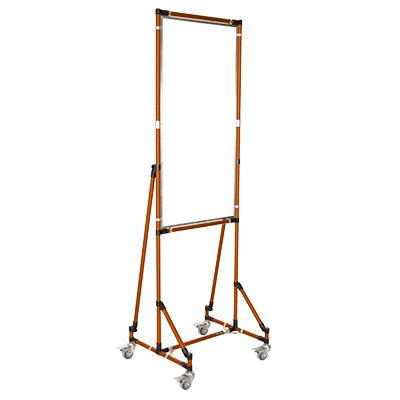
Meeting Place Boards
- Brainstorming ideas
- Summarize roadblocks
- Allocate resources
Modular Ergonomic Workstations
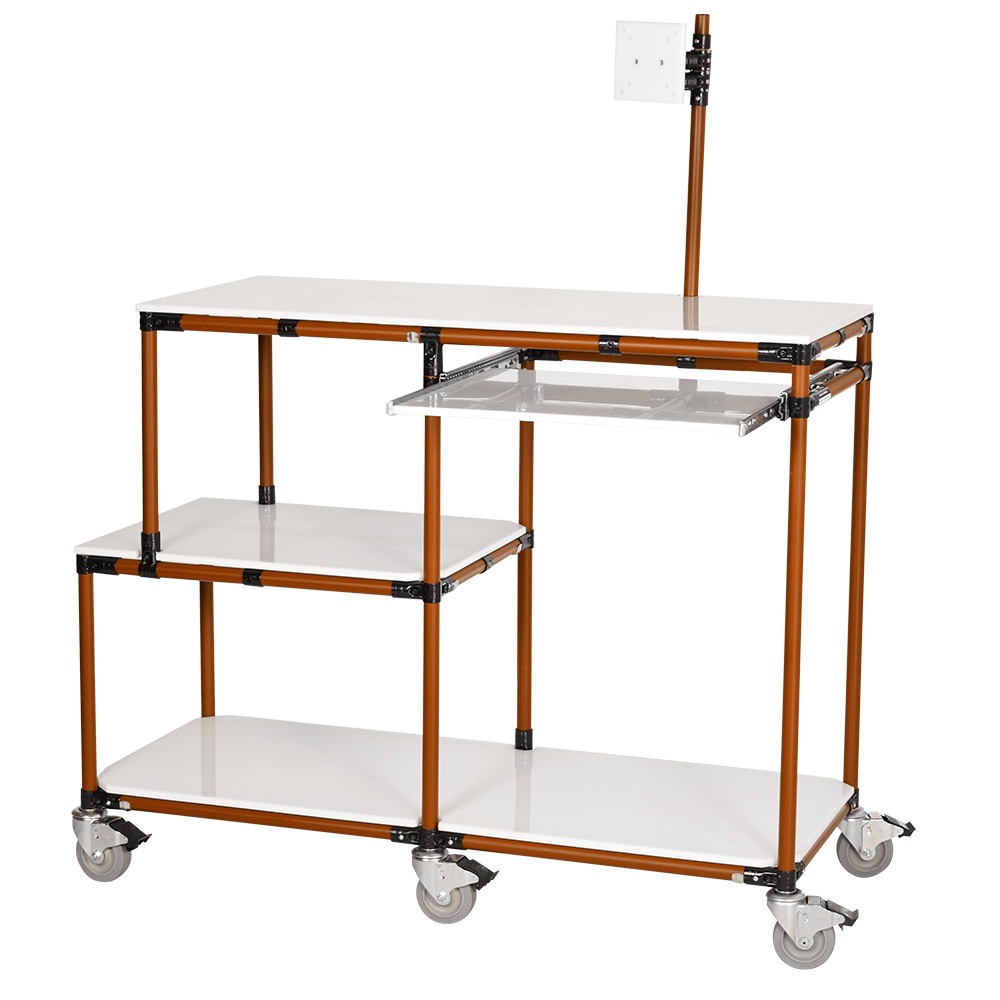
Mobile Workstation Carts
- ESD-compliant decking
- Easy maneuverability with industrial casters
- Customized to part and material requirements
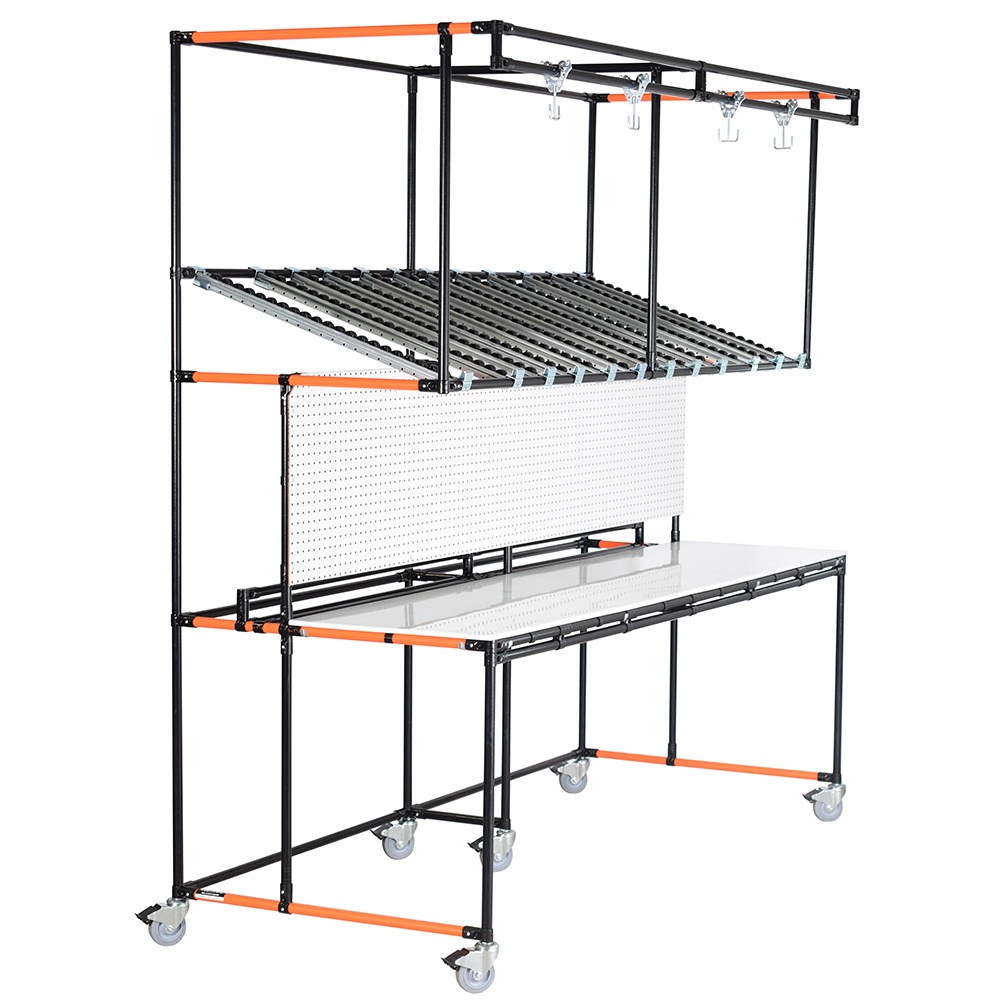
Stationary and Mobile Workstations
- Angled rack for easy part retrieval
- Metallic ESD-complaint backboard for tool placement
- ESD-compliant decking and back board
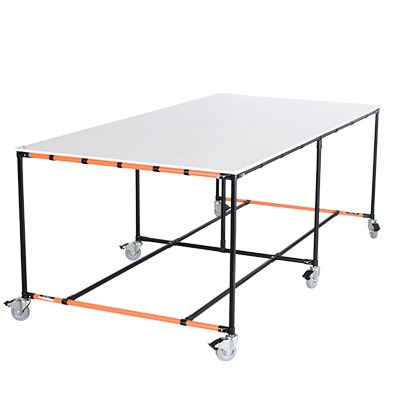
Customized Work Tables
- Level surface and size easily customized
- Wide surface area
- Ideal for assembly instruction and breakdown
Start Your Modular Journey
Get hands-on experience with our system. Request your Flexpipe Starter Kit today and see modularity in action.
3. Consumer Electronics Batteries
Consumer battery production includes manufacturing small single batteries that can easily accommodate hand-held mobile devices, game consoles, laptops, tablets, and other consumer-related electronics. However, the process is no less complex.
Consumer Battery Production Process
There are three steps involved in consumer battery production. These include electrode manufacturing, cell assembly, and finishing.
Electrode Manufacturing
With electrode manufacturing, raw materials (nickel, cobalt, etc.) go through chemical synthesis before the slurry is coated onto metal foils. These foils are then dried and rolled (calendaring). Once this process is finished, the rolls are cut to the specific size required for the given battery.
Cell Assembly
During cell assembly, electrodes and separators are added to a metal can or casing before being laminated. Afterward, electrolytes are introduced.
Finishing
With finishing, the purpose is to activate the electrolytes to initiate a solid electrolyte interphase (SEI). The battery is charged, and the anode is interphased.

Common Paint Points
Much like EV Battery manufacturing, small-format battery production provides several issues for manufacturers. First, not only are designs constantly changing, but the volume and variety of battery types for consumers are constantly increasing.
Second, consumer battery production constantly requires newer, smaller-sized, more powerful, and longer-lasting batteries.
Third, given the constant change in consumer preferences, consumer battery manufacturers must produce high volume with short delivery times – which means battery packaging, storing and handling requirements are constantly evolving.
- High Mix and High Volume Materials
- High Mix and High Volume Battery Types
- Constant Design Changes
- Quick Turnaround Times
- Constant Energy-Efficiency Improvements
- Demand for Small-Envelopes
- ESD Compliant Manufacturing
ESD Compliance in Battery Production
Understand the critical importance of electrostatic discharge protection in battery manufacturing environments.
Flexpipe Material Handling Solutions
The Flexpipe system offers numerous ESD-compliant solutions for small-format battery manufacturers. From electronics assembly ESD carts and workstations to battery packaging stations, everything can be made with Flexpipe.
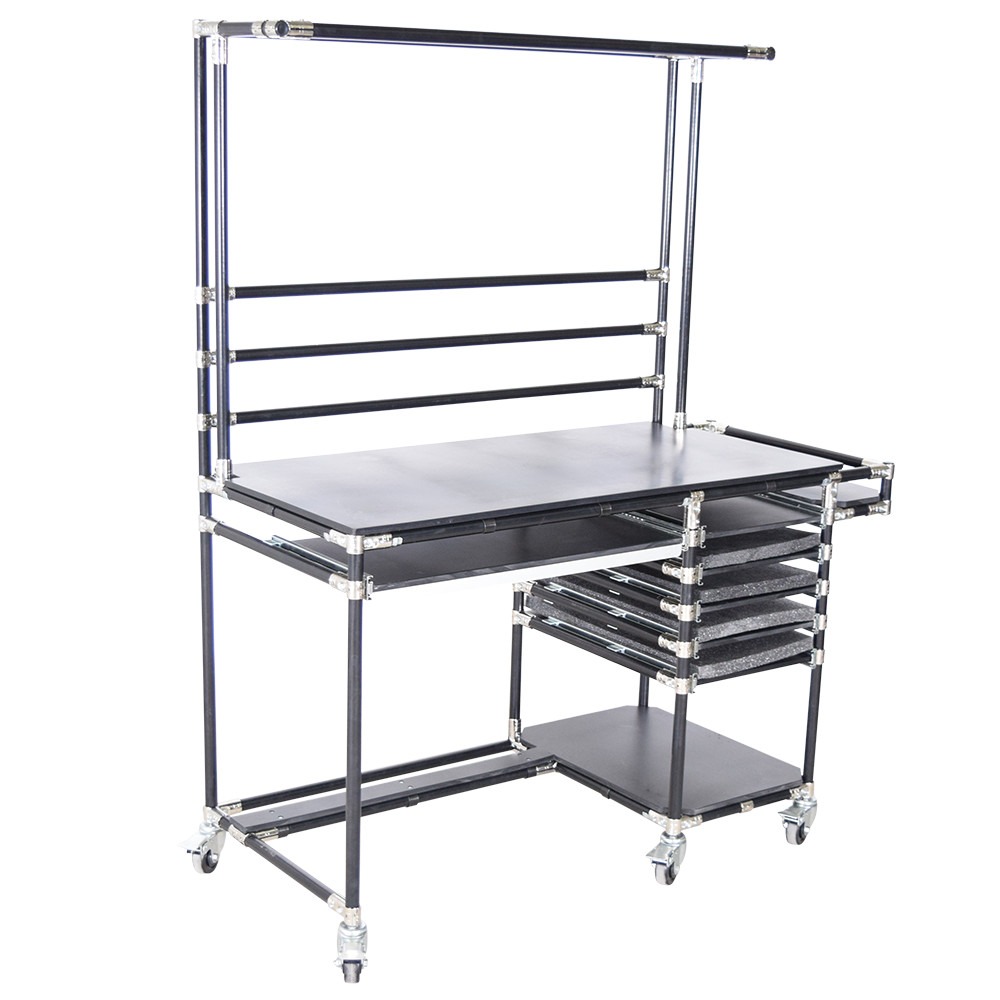
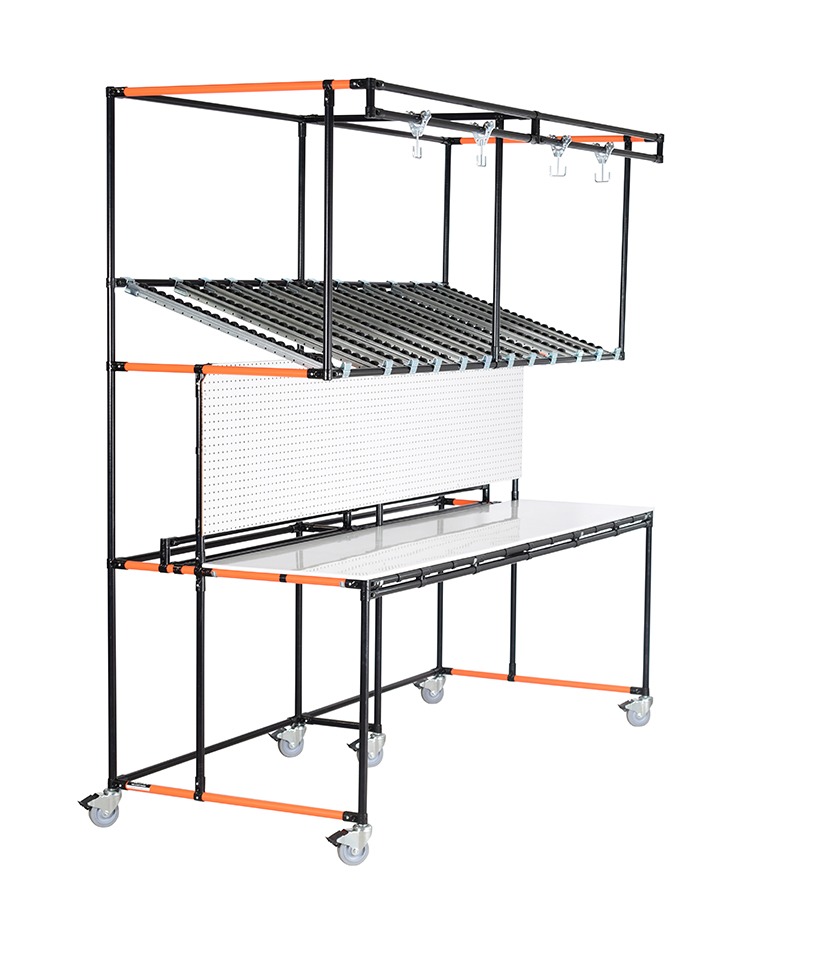
Whether it’s ESD-compliant workstations with ESD decking materials for assembly and part management or customized ESD-compliant WIP carts and push carts to move semi-finished parts and materials, the Flexpipe solution allows for the ultimate in customization.
ESD-compliant worksurfaces are essential in electronics and consumer battery production – both for the safety of production employees and the quality of the finished product. ESD-compliant surfaces help to reduce battery reject rates while ensuring a safe surface for assembly and part management.
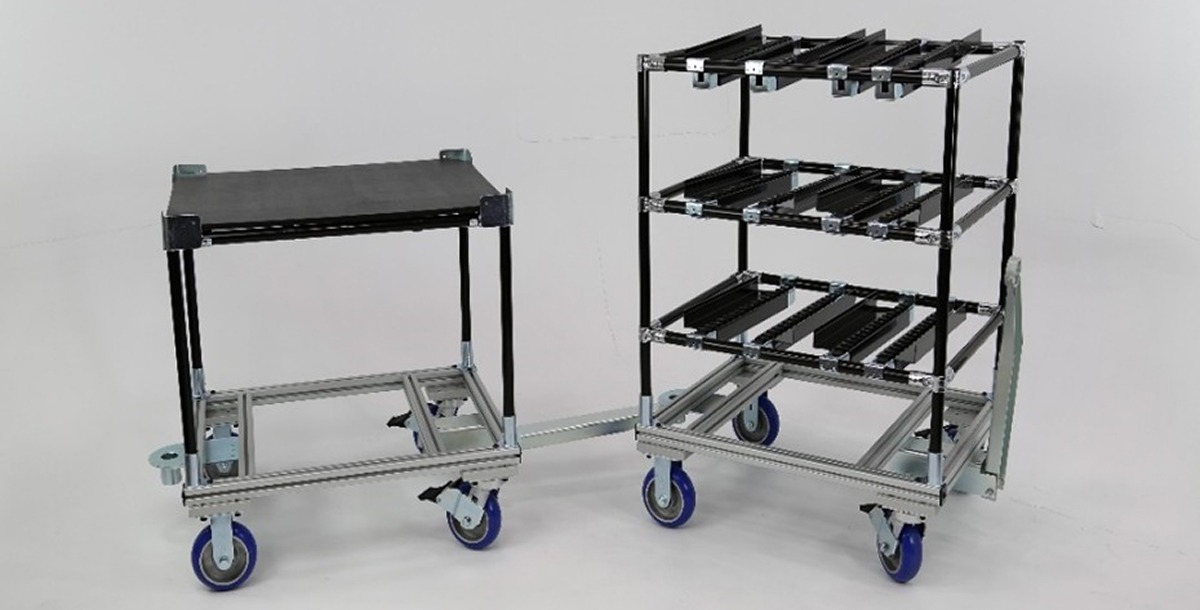
In addition to ESD-safe workstations, battery manufacturers require compact mobile flow racks to manage ever decreasing materials. With Flexpipe, mobile flow racks can be combined with electronic assembly ESD carts so that every workstation has a steady supply of critical parts and materials.
With the Flexpipe solution, small mobile flow racks and modular shelving units can be customized to material bin sizes, ensuring inventory space is always optimized. With customized production workstation and battery packaging carts, every critical process step is taken care of when using Flexpipe.
4. Stationary Energy Storage
Stationary battery systems are fixed-location, utility-scale battery systems that store high volumes of electrical energy. Whether improving grid stability or being used to power on-site equipment and machinery, these fixed-place, large-sized battery systems rarely, if ever, move.
Fixed-Location Stationary Battery Components
There are several components that go into making stationary battery systems. First, the battery itself is typically a lithium-ion, nickel metal hydride, lead-acid or lithium-cobalt oxide battery.
Second, all stationary batteries come complete with integrated control systems, giving on-site personnel access to battery charging and energy storage levels. These systems also provide essential thermal management and energy management systems, ensuring on-site operators can safely manage energy distribution and the heat generated by the system’s battery.
Third, given that fixed-location battery systems generate direct current (DC), bidirectional inverters are essential to allowing DC to be converted to alternating current (AC).
Flexpipe Material Handling Solutions
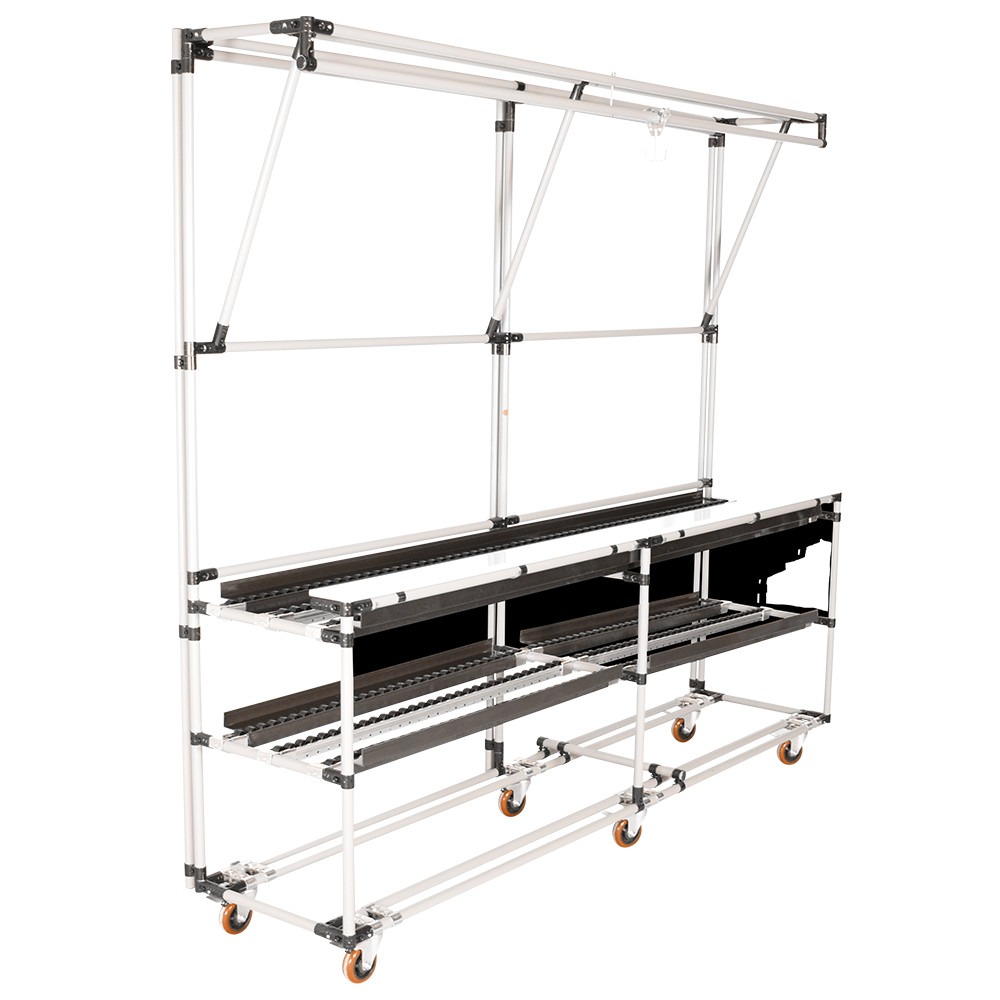
For stationary battery system manufacturers, strength of the material handling structure and workstation along with the ability to adapt to a quick-changing manufacturing process is critical. Also important is that these structures are durable, impact-resistant and always safe.
Flexpipe meets all these criteria and more.
With Flexpipe, stationary battery system manufacturers can customize heavy-duty modular flow racks and conveyor systems as needed. From stand-alone modular flow racks to handle different-sized material requirements to mobile conveyor structures, all can be designed, assembled, changed or adjusted in-house.
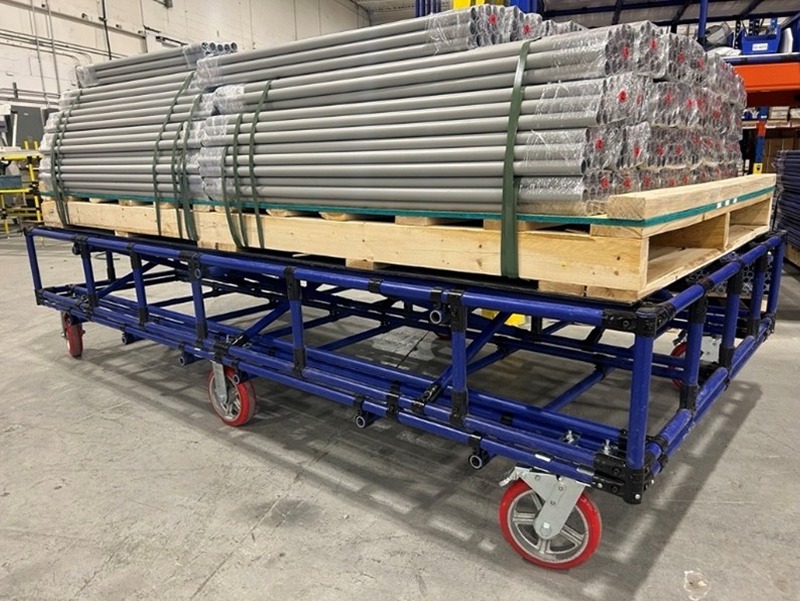
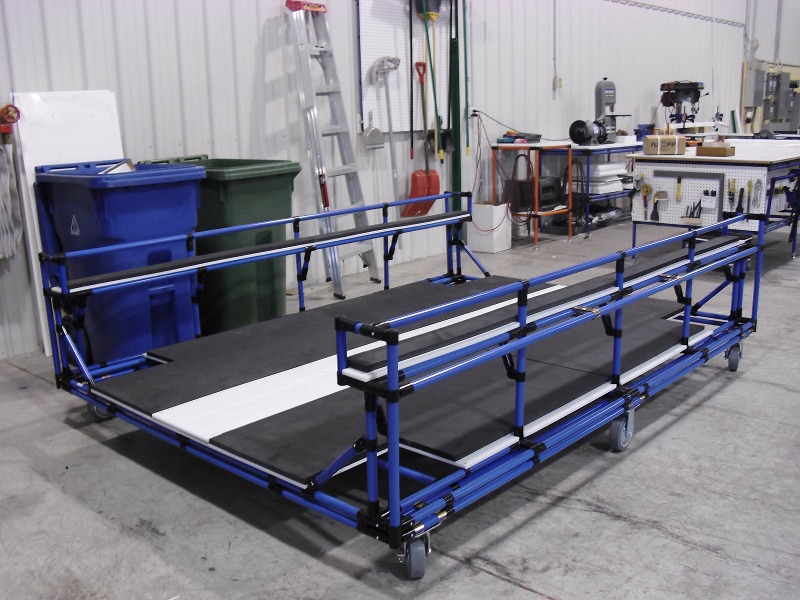
Given the size of today’s stationary battery systems, having large, high-strength customized mobile transport and installation carts is essential. Whether it’s needing heavy-duty transport carts to manage pallet-sized shipments or needing softer surfaces for larger integrated assemblies, everything from the steel tubes and joints to the platform material and industrial-strength casters come from Flexpipe.
5. Essential Lean Material Handling Tools and Solutions
Regardless of whether it’s making lithium-ion battery packs for electronic vehicles, small-sized batteries for consumer-related products or stationary battery systems, adopting lean manufacturing is essential.
While the Flexpipe system is one type of lean tool, there are others. Adopting all lean principles along with continuous improvement methodologies ensures battery manufacturers control costs, eliminate waste, ensure safety and improve quality while being able to scale production as needed.
5S Methodology
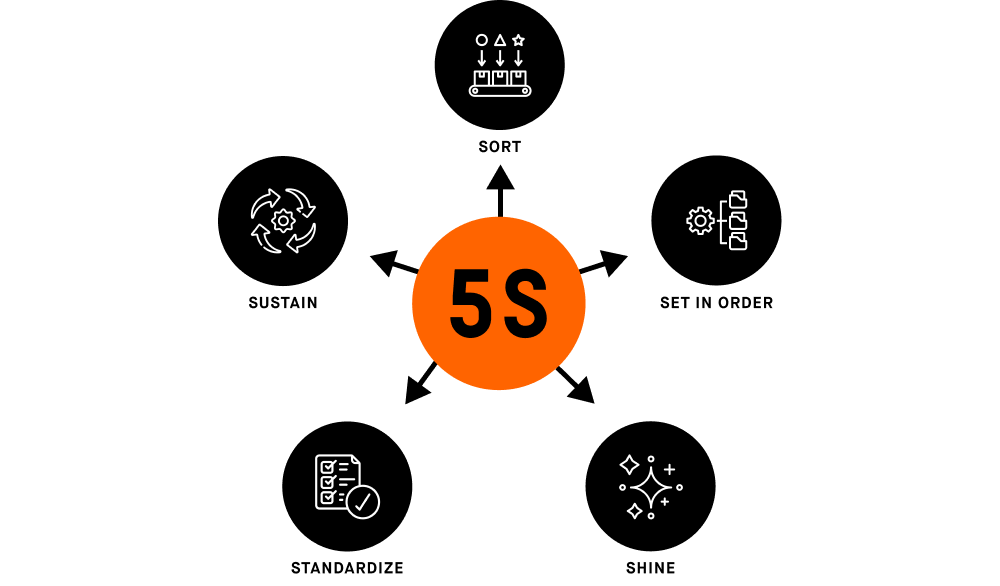
5S stands for Sort, Set in Order, Shine, Standardize, and Sustain. A staple of lean manufacturing environments, 5S in battery manufacturing ensures the cleanliness of individual workstations, helping to improve workflow and reduce human errors.
With Flexpipe, constructing, changing and maintaining 5S workstations is simple. The system allows for the ultimate in customization while allowing for changes at any time.
JIT Inventory Management
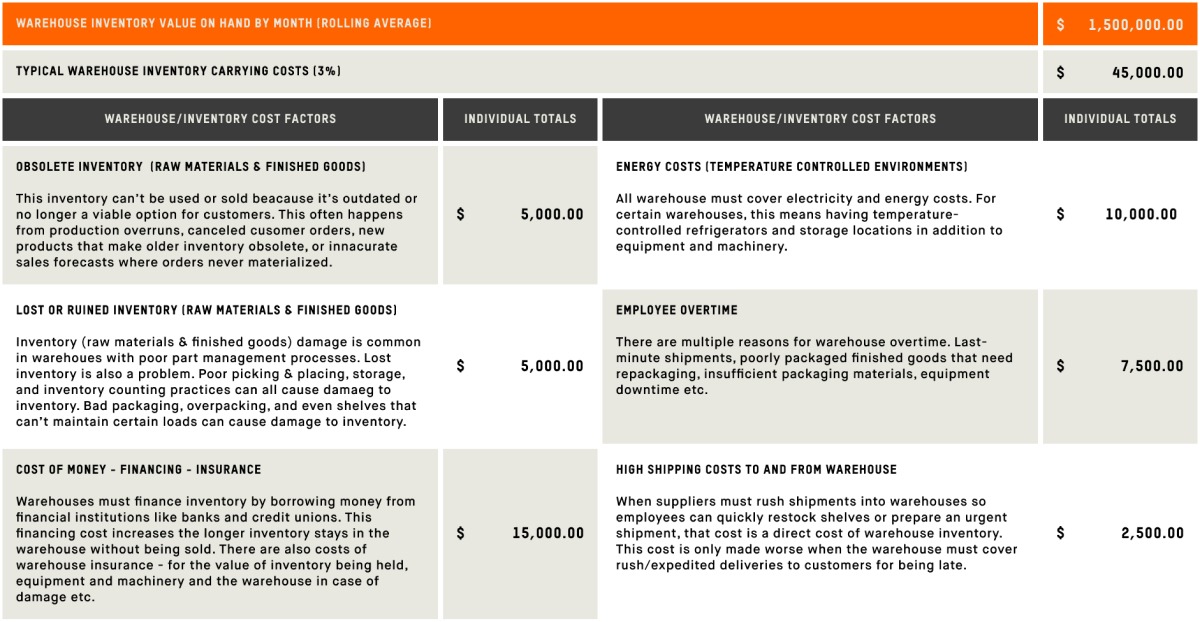
With JIT inventory management, the focus is to eliminate the most common cost drivers of a manufacturer’s inventory while ensuring a steady supply of readily available inventory. The focus all the forms of inventory waste to ensure seamless, uninterrupted supply of parts and materials.
Pull System Logistics
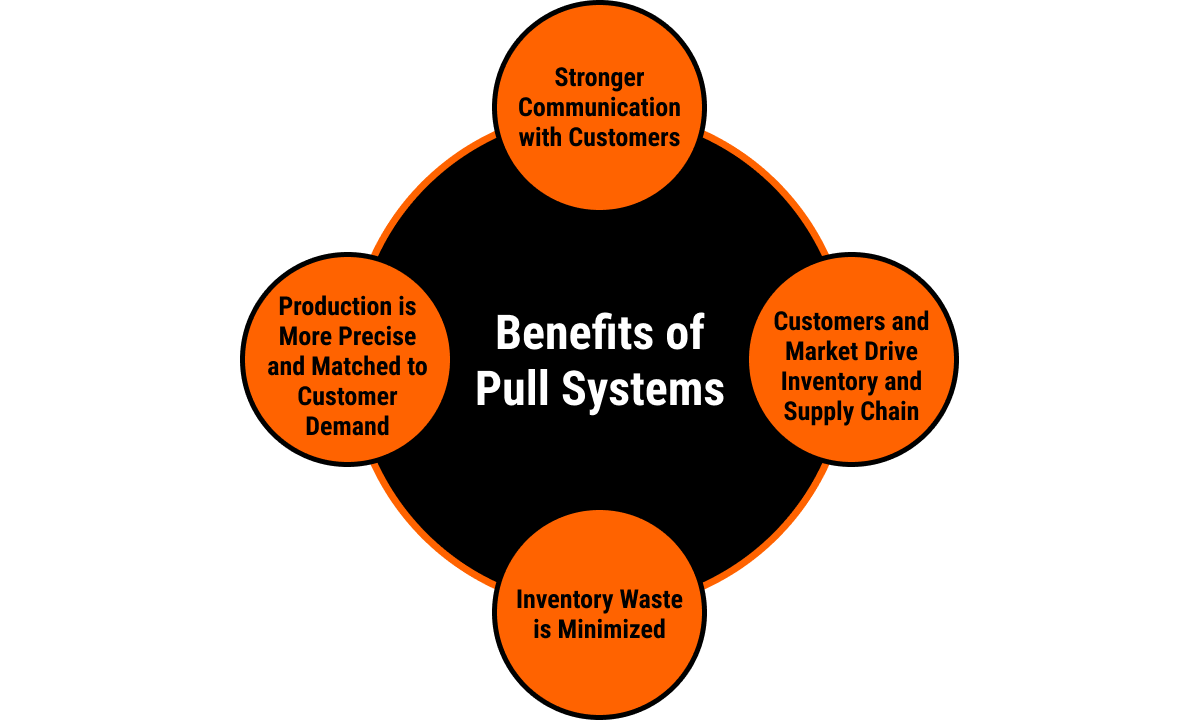
With a pull system, customer and market demand drive inventory and supply chain logistics. Whereas a push system is based on companies pushing products to customers within the market, the pull system reacts according to changing customer and market conditions.
With a push system, inventory excess and waste are common as a push system is based on projected demand. With a pull system, this inventory and supply chain waste doesn’t occur.
With pull systems, inventory and supply chain logistics are optimized to keep up with real-time customer needs. As demand falls, inventory counts decline and costs are reduced. As demand increases, raw material and part usage increases and production efficiencies are maximized.
Battery manufacturers that adopt pull systems maintain better communication with their customers while having a much better understanding of market demand.
Visual Management
Visual safety markers and placards ensure that production employees are always made aware of potential safety hazards. Visual management is also critical to ensuring compliance across the shop floor. From limiting human errors and ensuring safety to improving communication while conveying objectives and goals, adopting visual management is a critical part of any lean environment.
Ergonomics
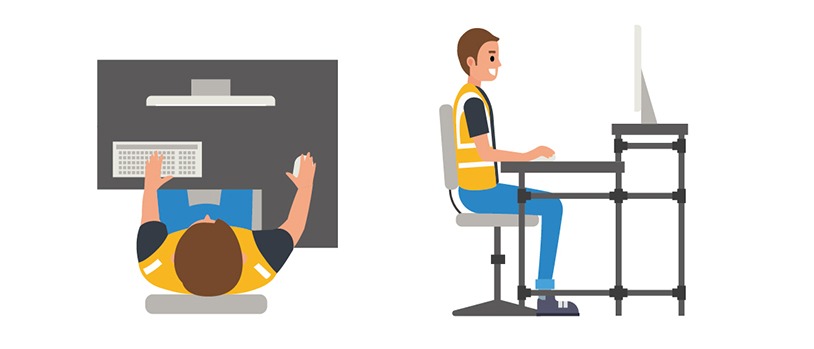
Ergonomics is essential to reducing work-related accidents and musculoskeletal injuries. Fewer work-related accidents mean lower absenteeism and increased productivity. With the Flexpipe solution, ergonomic workstations and work surfaces can be tailored to limit excessive lifting, pulling and pushing, further helping to reduce the number of accidents that occur on the shop floor.
6. Overcoming Common Challenges with Fixed or Welded Material Handling Structures
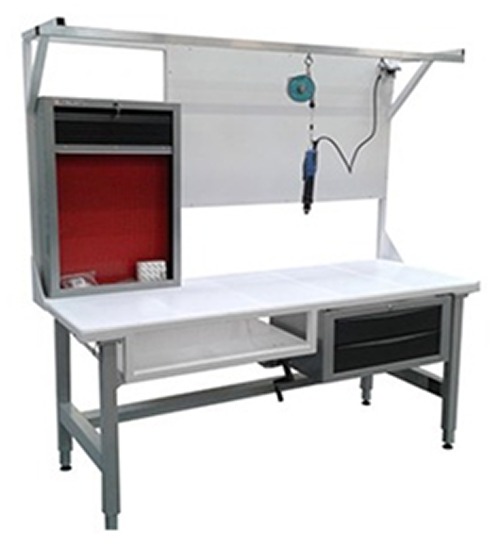
Welded workbenches and material handling carts, trolleys, flow racks and worktables cannot be changed or modified in-house. They cannot be adjusted or scaled which makes battery plant layout flexibility impossible. Welded workbenches are fixed-in-place structures that occupy the same space regardless of how battery production needs and layouts change.
Flexpipe modular material handling solutions are the exact opposite and the perfect solution to these common battery manufacturing challenges.
Quick Changeover
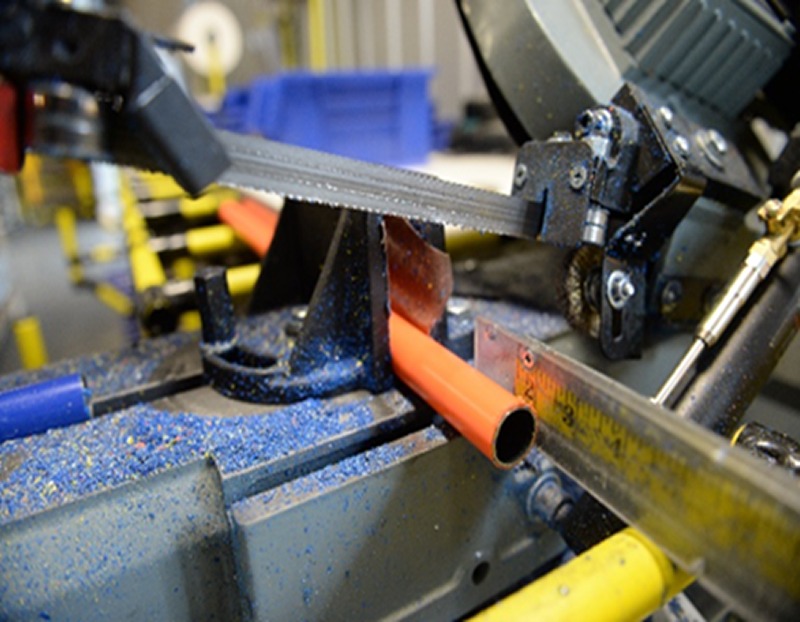
Flexpipe modular material handing solutions allow for easy changeovers to match changing battery designs. With different materials and material dimensions, battery production teams can adjust any Flexpipe cart, trolley, flow rack or work surface to account for new material bin sizes, WIP parts and finished products.
All changes can be done in-house compared to welded structures that must go outside the facility to contractors. Cutting the steel pipes is easy which makes changes to structures quick and stress-free.
Modular and Scalable

The Flexpipe system is scalability and flexibility personified. Any Flexpipe material handling structure, workstation or lean work cell can be changed and modified to account for changing battery part designs, changing material handling requirements and changing volumes and assembly processes.
Low Cost
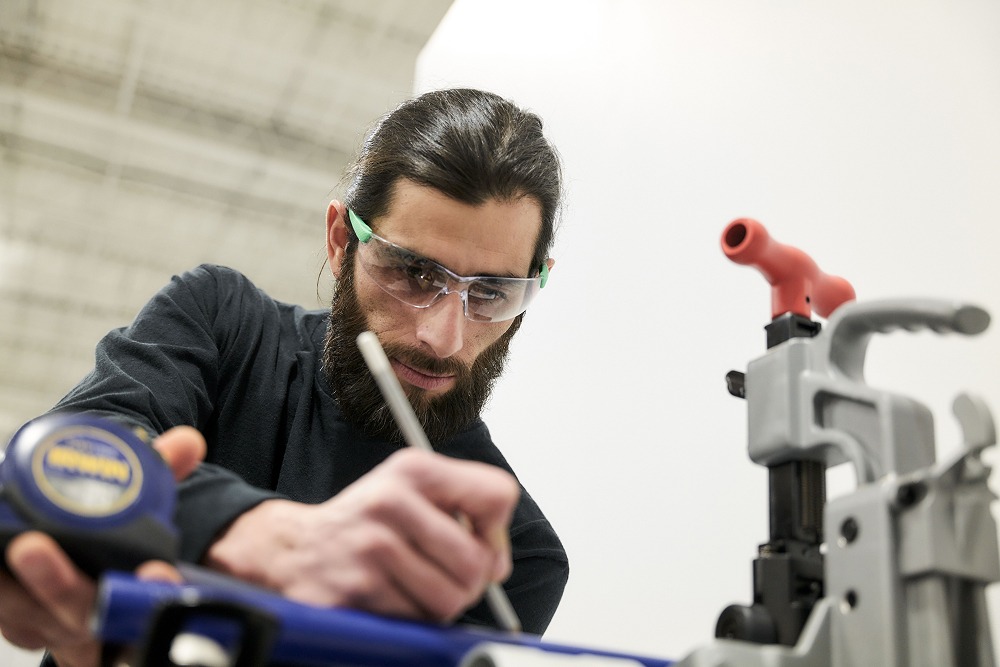
Fixed, welded workbenches, worktables, flow racks, carts and trolleys are expensive. Changing them or modifying these welded structures is even more expensive. Flexpipe is not.
Flexpipe empowers line-side technicians, battery production managers and production employees to take ownership of their material handling requirements with a low-cost alternative.
Durable, High-Strength Solution
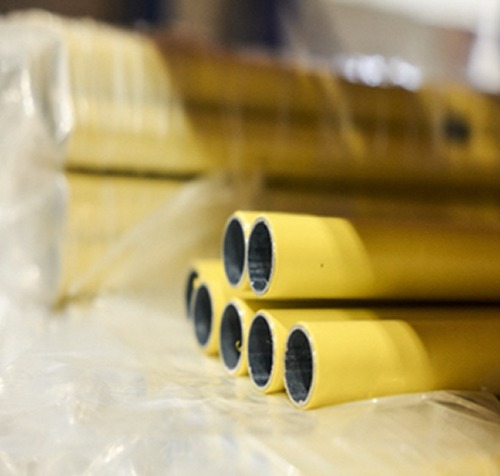
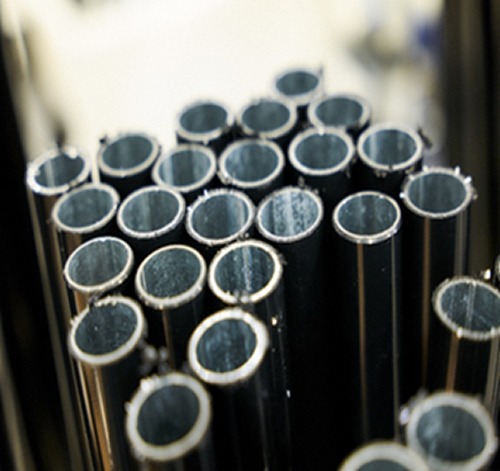
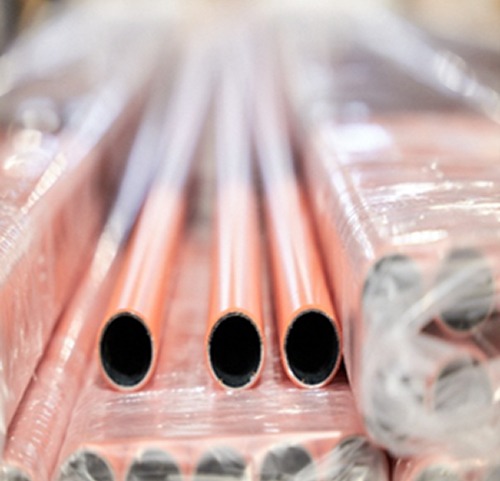
The Flexpipe steel pipes are a cold-drawn steel tube that is incredibly durable and impact-resistant while having exceptional strength. Cold-drawn steel has undergone heat treatment and cooling to increase its strength and wearability.
Available in multiple colors to aid in any visual management process, Flexpipe steel tubes are coated with a thermoplastic polyethylene layer which provides superior impact resistance while providing excellent protection against scuff marks.
Perfect Ergonomics and Safety
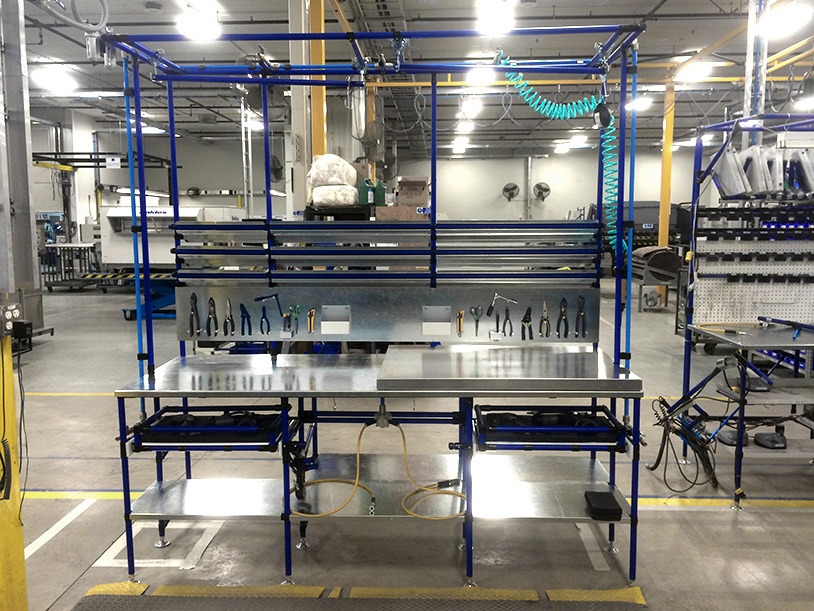
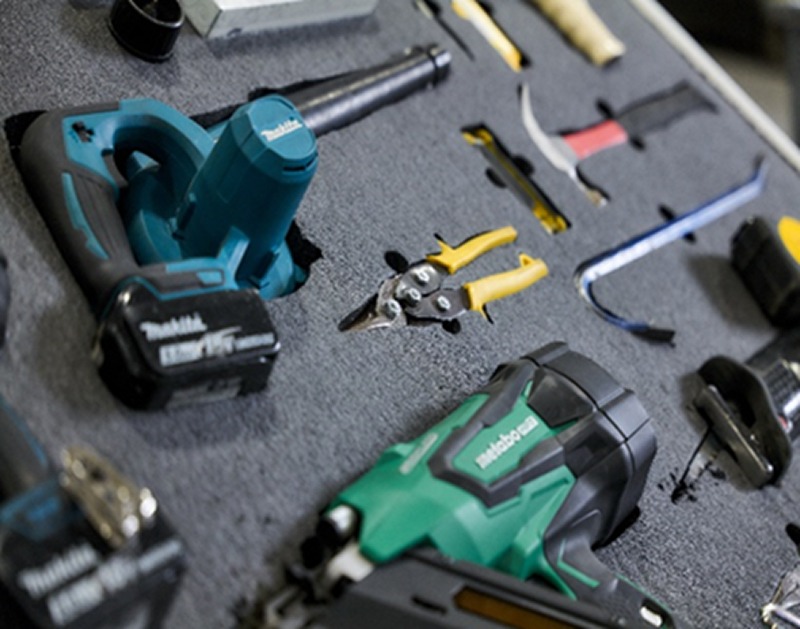
Clean, safe, ergonomic and 5S-compliant workstations are synonymous with the Flexpipe system. From customized and right-sized workstations with made-to-fit specific part assembly requirements to using pull out drawers with Kaizen foam for tool and part placement, everything about a Flexpipe workstation is lean.
7. Case Studies: Real-World Applications
Why Manufacturer Adopted the Flexpipe Steel Tubes and Joints Material Handling System
Wanting to adopt a linear production system, this manufacturer used Flexpipe to allow it to better adjust to changing production line requirements. Workflow improved, delays were minimized, productivity increased, and new employee training times were substantially reduced. Click here to learn more.

Manufacturer Reduces Costs of Workstations and Material Handling Structures by Over 40%.
Tired of buying extremely expensive welded workstations, this manufacturer used the Flexpipe steel pipe and joint system to redesign their entire shop floor. From saving over $740 per workstation to using Flexpipe to create leaner workstations and workcells, this manufacturer has built over 700 lean, customized, made-to-fit Flexpipe workstations, lean work cells and material handling structures. Click here to learn more.

8. Future Trends in Lean Battery Manufacturing
The future of battery manufacturing couldn’t be brighter. Growth within the global battery industry is expected to attain a compound annual growth rate (CAGR) of close to 20% between 2024 and 2030. That means increased requirements for smaller, more efficient batteries, modules and battery packs.
With this increased global demand, the need to fully integrate lean philosophies and continuous improvement for battery manufacturers will become even more important. Future demand means ESD-compliant production shop floors and clean-room environments will become the norm.
9. Key Takeaways
Adopting Lean and Continuous Improvement is a Must
Adopting lean manufacturing best practices and continuous improvement for battery manufacturer is essential to reducing costs, lowering waste and battery defect rates, while increasing production throughput and worker safety.
Lean and Flexpipe Material Handling Are the Same
Modular material handling solutions like Flexpipe are the perfect lean manufacturing tool to allow battery manufacturers to adjust to rapidly changing market and customer demand. From lower costs and improved workflow to providing a more ergonomic and much safer solution, Flexpipe improves efficiency.
Global Manufacturers Embracing Lean
Manufacturers worldwide are embracing lean manufacturing and continuous improvement approaches. From aerospace, automotive, and electronics to hydraulics, high-technology and EV battery manufacturing, the push for lower costs and less waste means adopting lean manufacturing is critical to securing a company’s future.
10. About Flexpipe & 80/20 Solutions
Flexpipe battery industry solutions enable global manufacturers to adopt and embrace lean philosophies and continuous improvement methodologies. The build-as-you-want, modular pipe-and-joint systems offered by Flexpipe helps to reduce material handling costs, improve workflow, reduce waste and increase throughput while providing a much safer and cleaner work environment.
When integrated with the T-Slot aluminum, Quick Frame® and Ready Tube® solutions offered by 80/20, battery manufacturers can seamlessly transform their shop floor, increase their production throughput and lower costs even further.
To learn more about how to combine 80/20 aluminum extrusions and Flexpipe’ modular pipe-and-joint systems, contact us now.