Technical Data
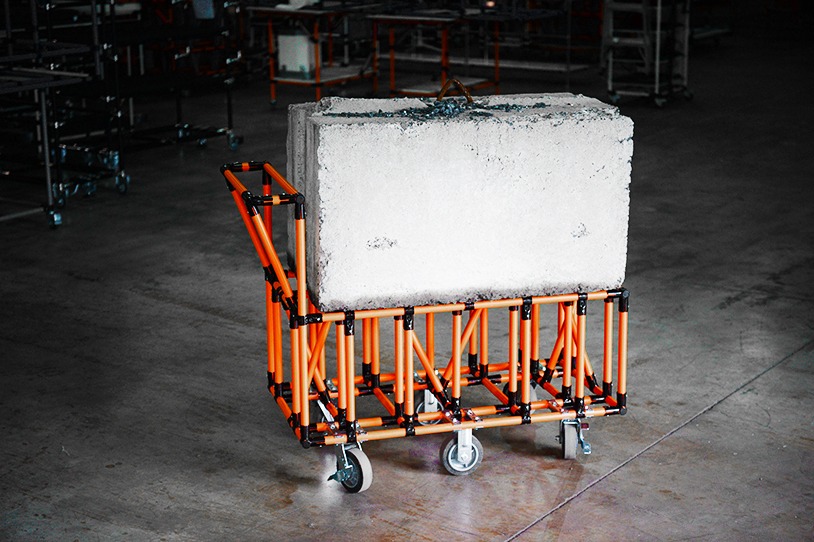
HOW TO CALCULATE THE LOADING CAPACITY FOR MODULAR STRUCTURES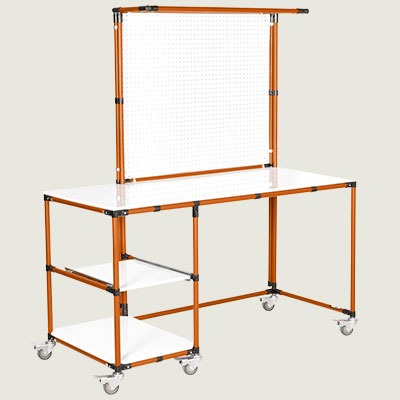
Structure
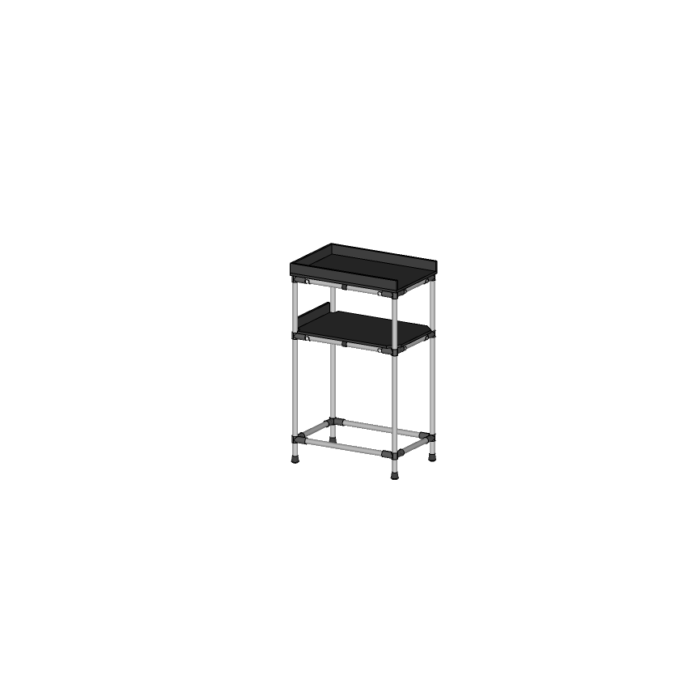
WORKSTATIONS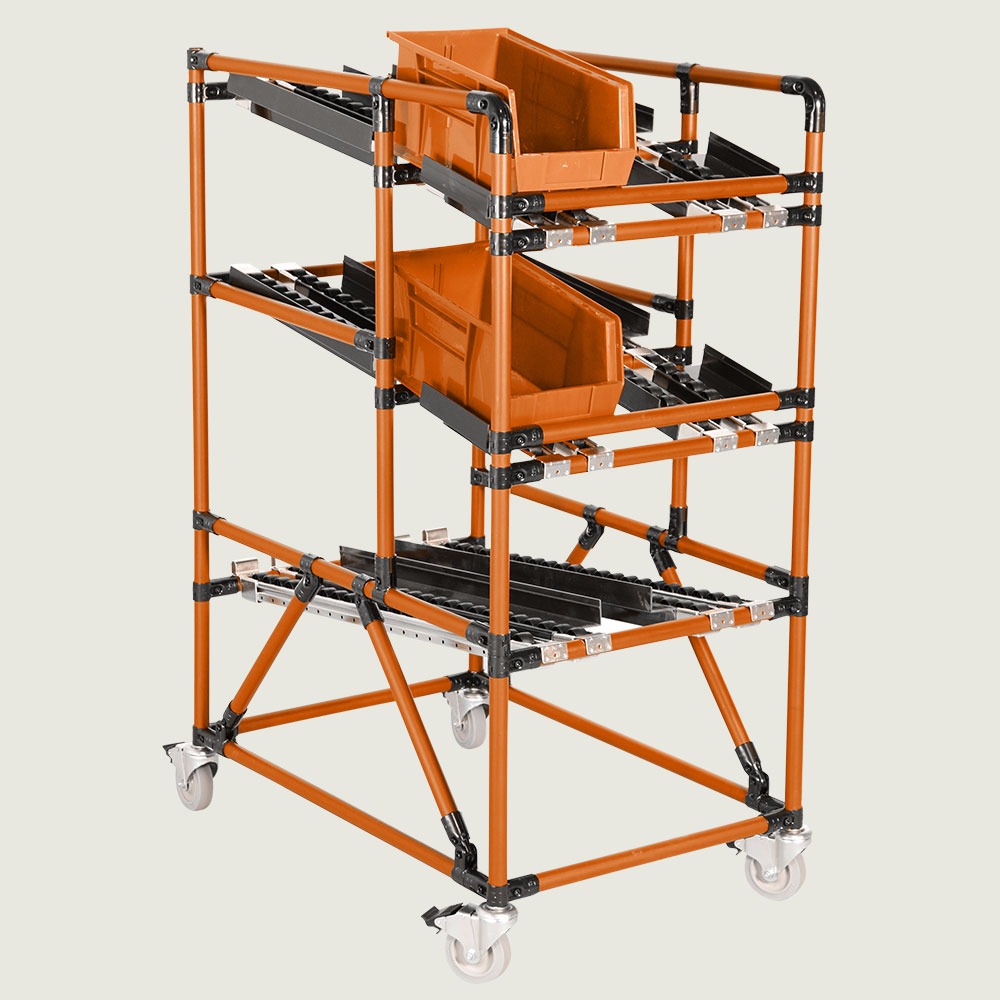
Structure
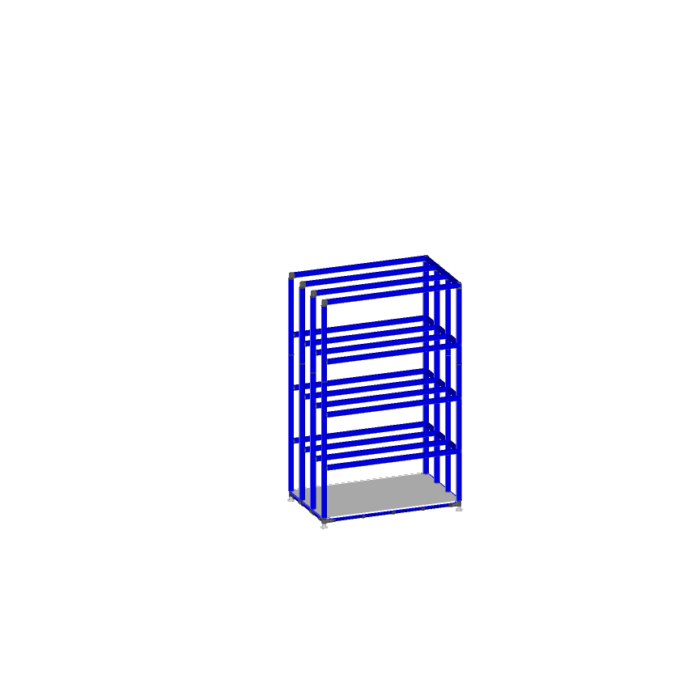
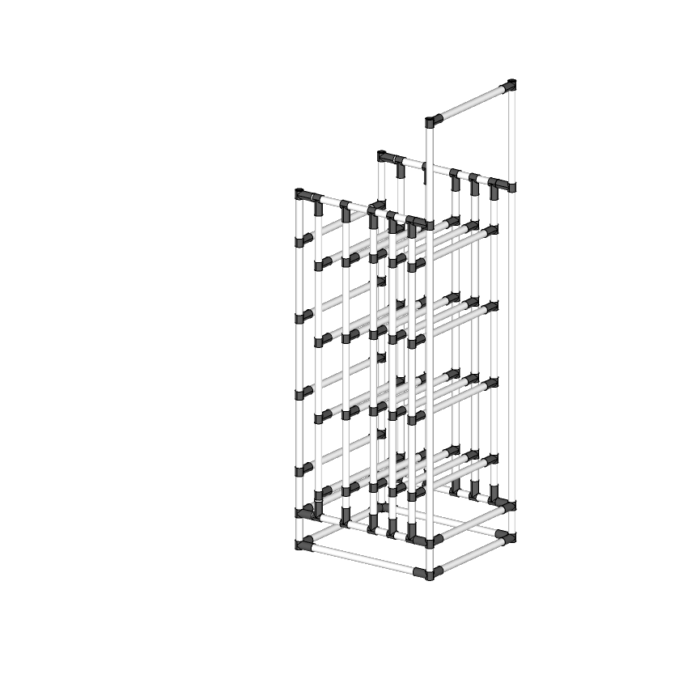
FLOW RACKSShelving is shelving, right? Well, there’s more to it than that. There are the basic shelves from hardware stores that hold plastic boxes and bins—and then there’s the modular system with which you can create custom-made racking to meet your specific needs. Entirely adaptable, modular racks shield your parts from potential damage and free up precious floor space – sound appealing?
Racking systems are engineered frameworks used to store and organize materials, tools, or products in warehouses, factories, and assembly areas. An efficient racking system improves space utilization, workflow, and safety. Flexpipe’s modular racking systems use pipe and joint components, allowing businesses to design, adjust, and expand racks without welding or fabrication. This makes them ideal for operations that require frequent layout changes or continuous improvement initiatives.
A modular racking system is an adjustable storage structure designed from pipes and metal joints that can be easily reconfigured. Unlike fixed pallet racks or boltless shelving, Modular racks can be built to any size or layout, making them ideal for assembly lines, workstations, and warehouse optimization projects.
Key attributes:
Adjustable height and width
Compatible with casters and work surfaces
Designed for continuous improvement layouts
Reusable, sustainable, and lightweight
The racking can be adapted to the exact size you need, fit into the designated location you have available. They can be designed to accommodate odd shapes such as cutting dies, WIP bulk parts, and raw materials. Our Learning section will show you how to create racks and calculate loading capacity.
These modular shelving systems are ideal for lean manufacturing setups, where quick reconfiguration and continuous improvement are part of daily operations. Each shelf can be adjusted or expanded as your workflow evolves.
Manufacturing lines – to organize WIP materials.
Warehouses – for vertical storage and picking optimization.
Distribution centers – to improve throughput efficiency.
Assembly cells – for ergonomic access to tools and parts.
Important: Flexpipe’s modular racking system isn’t a substitute for heavy-duty pallet racks. Instead, as lean storage racks, it excels in flexible, small-to-mid-scale operations where reconfigurability and workflow optimization are the priorities.
Traditional industrial racking systems are often welded or bolted, which makes reconfiguration time-consuming. Modular systems, on the other hand, use pipe-and-joint connections that can be quickly modified as storage needs evolve. Flexpipe’s approach reduces downtime, lowers material waste, and enables engineers to redesign racks in minutes rather than days, a major advantage for continuous improvement environments.
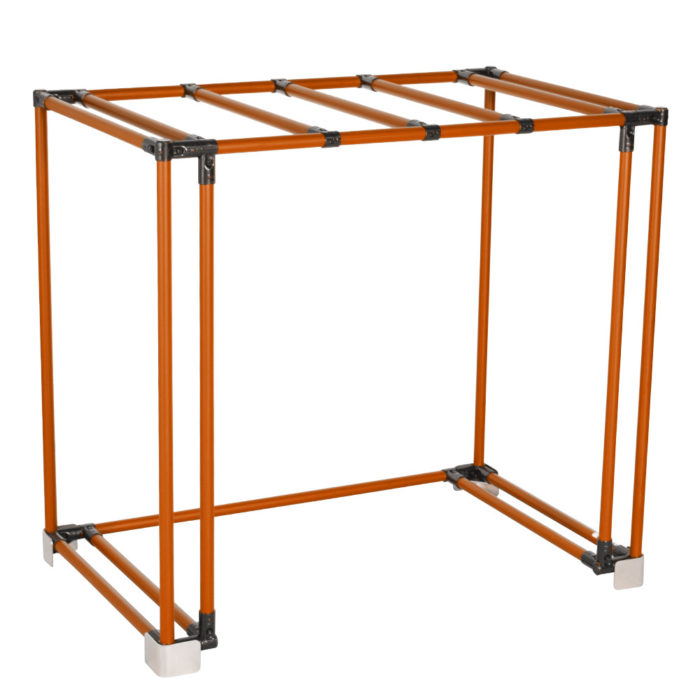
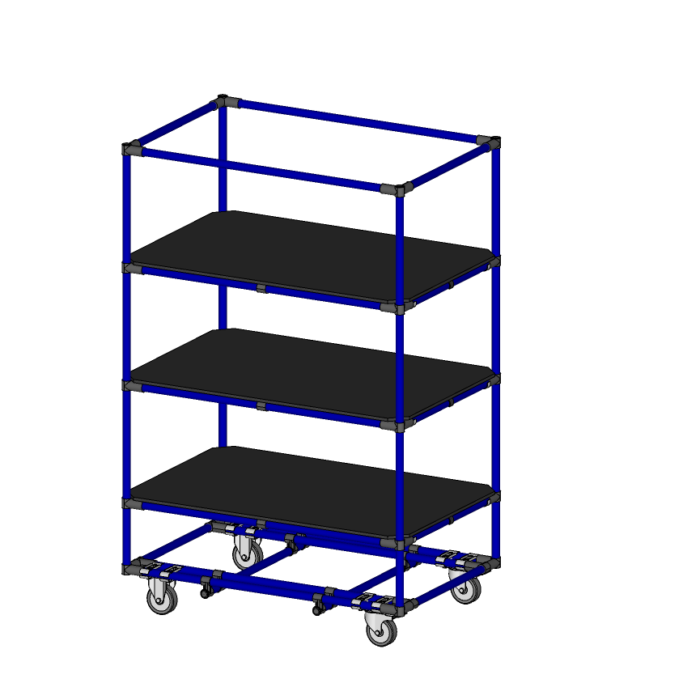
In environments with frequent layout or product shifts such as automotive assembly lines, Flexpipe’s modular industrial racking system shines. It supports prototyping, temporary setups, and quick reconfiguration. Stack racks built with the AF-STACK or AC-SKID accessories can go up to three levels, thanks to their lean, stable design.
Modern facilities need shelving systems that can evolve with constant layout changes. Our modular industrial racks are engineered for flexible layouts, giving you the freedom to redesign your floor plan without replacing equipment.
And this isn’t theory: an automotive supplier in Michigan now uses over 220 Flexpipe racks across its facility boosting efficiency, worker morale, and line flexibility
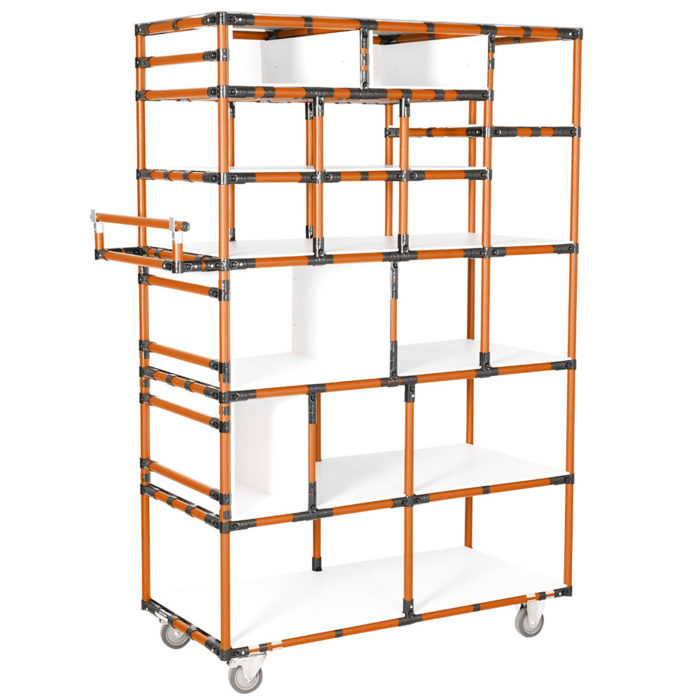
While generic shelving may seem like a cost-effective solution initially, lean storage racks provide significant long-term advantages that make them a worthwhile investment. These racks are designed for optimal space utilization, allowing you to maximize every square foot of your storage area.
Their ergonomic design ensures easy access to stored items, reducing the risk of injury and enhancing productivity. Additionally, lean storage racks are built to last, offering superior durability compared to standard shelving options.
They also support 5S methodologies, promoting organization and efficiency in the workplace. Ultimately, by choosing lean storage racks, you make a one-time investment that yields continuous benefits over time.
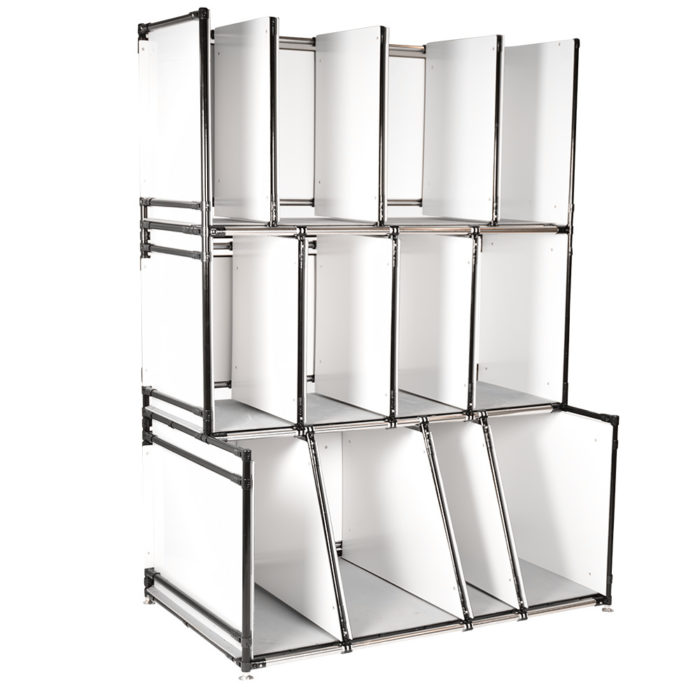
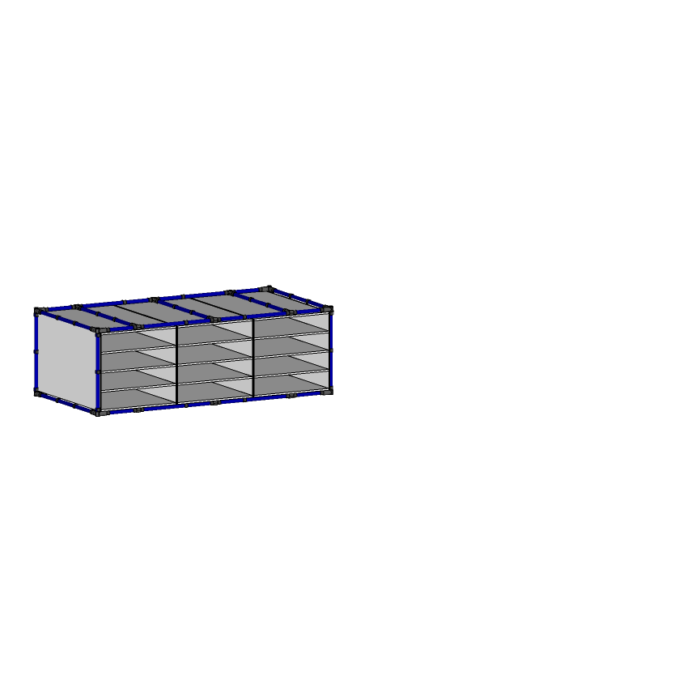
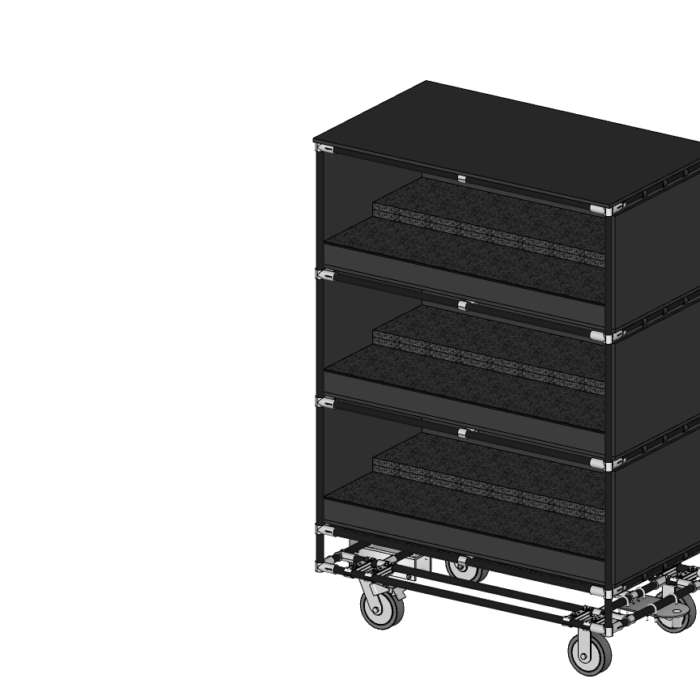
Work-in-Progress (WIP) racks are essential in lean workflows, keeping products organized between two manufacturing steps. With pipe-and-joint construction, you can create custom compartments sized for each product at its stage.
This prevents scratches, reduces defects, and saves floor space—all contributing to continuous improvement and flow efficiency.
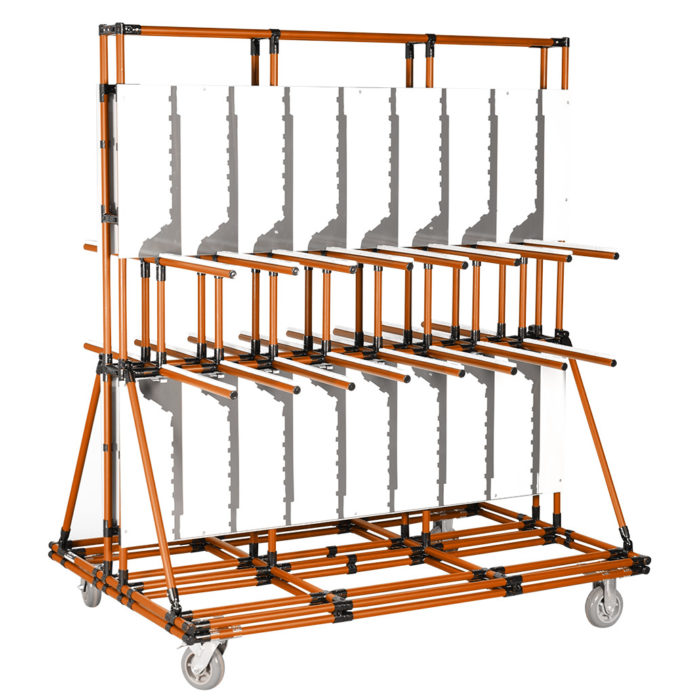
Lean storage racks can be built as poka-yoke systems—storage designed for a single component so no incorrect part can be placed. Just like the children’s shape-sorting toy, these racks only fit the right part in the right space. This mistake-proofing principle improves assembly accuracy, reduces errors, and maximizes production floor efficiency.
Learn how to build safer, compliant workstations and avoid electrostatic damage.
Perfect for electronics, medical, aerospace, and automotive industries.
Well-designed racking systems directly influence productivity and safety. They optimize vertical space, improve accessibility, and reduce manual handling risks. Flexpipe’s modular racks go further by offering reusability and scalability, meaning one structure can serve multiple roles across different departments or product lines, saving both floor space and capital expenditure.
The best racking system depends on your storage needs, weight requirements, and operational flexibility. For facilities seeking adjustable, ergonomic, and cost-effective designs, modular racking systems provide unmatched versatility. They combine the durability of industrial racks with the adaptability of lean manufacturing solutions.
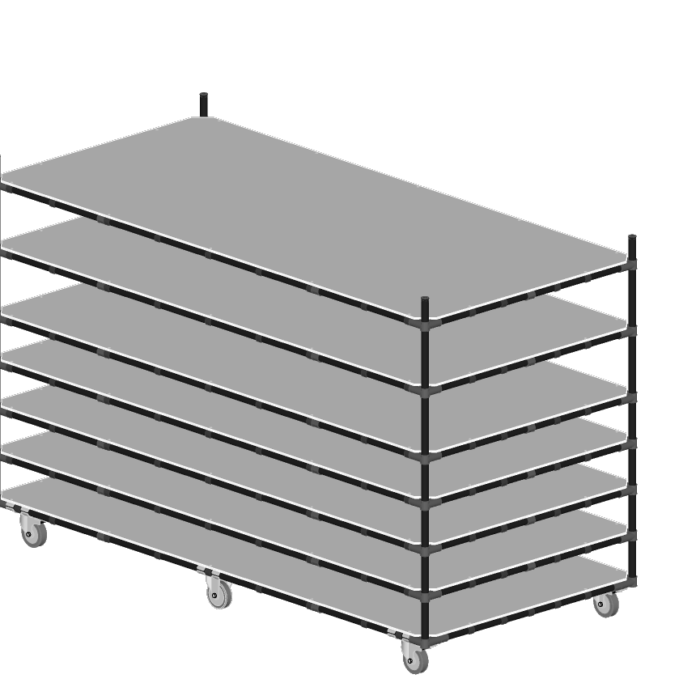
Modular shelving isn’t just about storage, it’s about efficiency. Adjustable heights, integrated rollers, and ergonomic designs make these racks essential for optimizing space and improving operator workflow.
Whether you’re redesigning a workstation or scaling production, Flexpipe’s modular shelving systems give you complete control over your layout. Build, move, and reconfigure—your system grows as your operation does.

Assembly requires only a standard Allen key (hex wrench) to tighten the M6 bolts that secure the joints to the pipes. No welding, drilling, or specialized equipment is needed, which means your own team can build and modify racks on the shop floor without outside contractors.
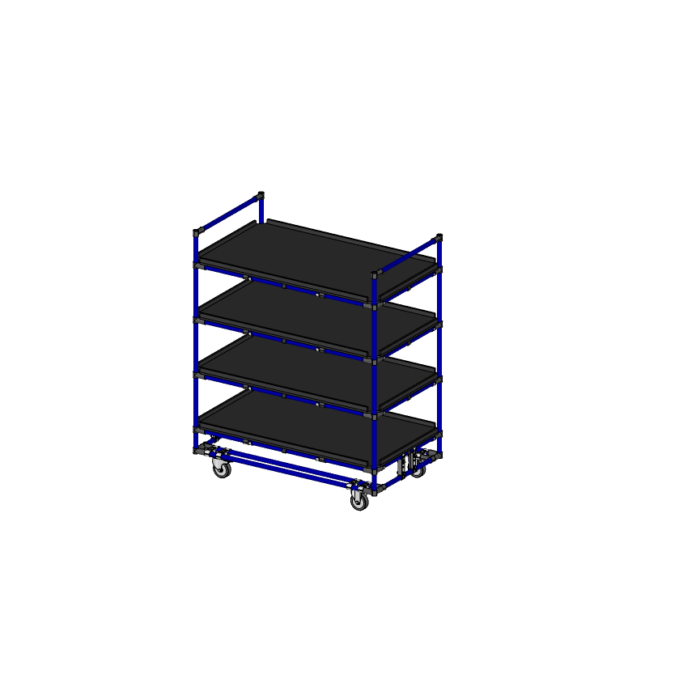
Yes. By attaching industrial casters — available in swivel, rigid, and brake-equipped versions — any Flexpipe rack can become a rolling storage cart. Caster sizes range from 3″ to 8″ with load ratings up to 1,200 lbs per caster, so you can match mobility to your payload.
You can integrate gravity-fed roller tracks (placons) into a modular rack to create flow lanes where parts travel from the loading side to the picking side by gravity. This enforces First-In, First-Out usage automatically, reduces overstock at the line side, and pairs naturally with 2-bin Kanban replenishment signals.
All Flexpipe pipes use a standardized 28 mm outer diameter for universal joint compatibility. Wall thickness options range from 0.8 mm for lighter shelving up to 2.0 mm for heavy-duty applications like tugger carts or multi-level storage racks, so you can scale strength without changing the joint system. Use the Flexpipe downloads and tools page to access the loading capacity calculator and verify the right pipe thickness for your project.
Yes. The Flexpipe Creator is a free extension for SketchUp that lets you design your rack in 3D, test different configurations, and automatically generate a complete bill of materials and cut list. This lets you validate the design with your team and get accurate cost estimates before ordering a single component.
Flexpipe’s pipe-and-joint system is approximately 30% less expensive than T-slot aluminum extrusions and significantly cheaper than custom-welded steel fabrication. Beyond the upfront savings, every component is reusable — if your process changes, you disassemble and rebuild rather than scrap, which dramatically lowers total cost of ownership over time.
Yes. Flexpipe offers a full range of ESD-safe pipes, casters, and work surfaces that maintain a continuous path to ground, protecting sensitive components from electrostatic discharge. You can build complete ESD-protected storage racks for electronics, medical devices, and aerospace parts. Learn more in the Flexpipe ESD protection guide.