

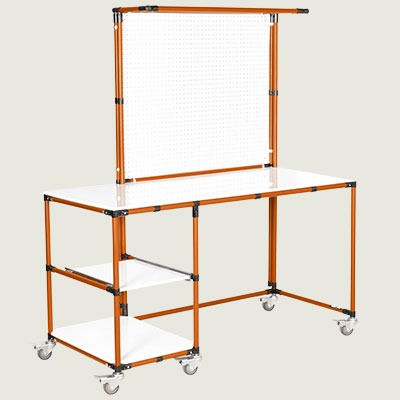
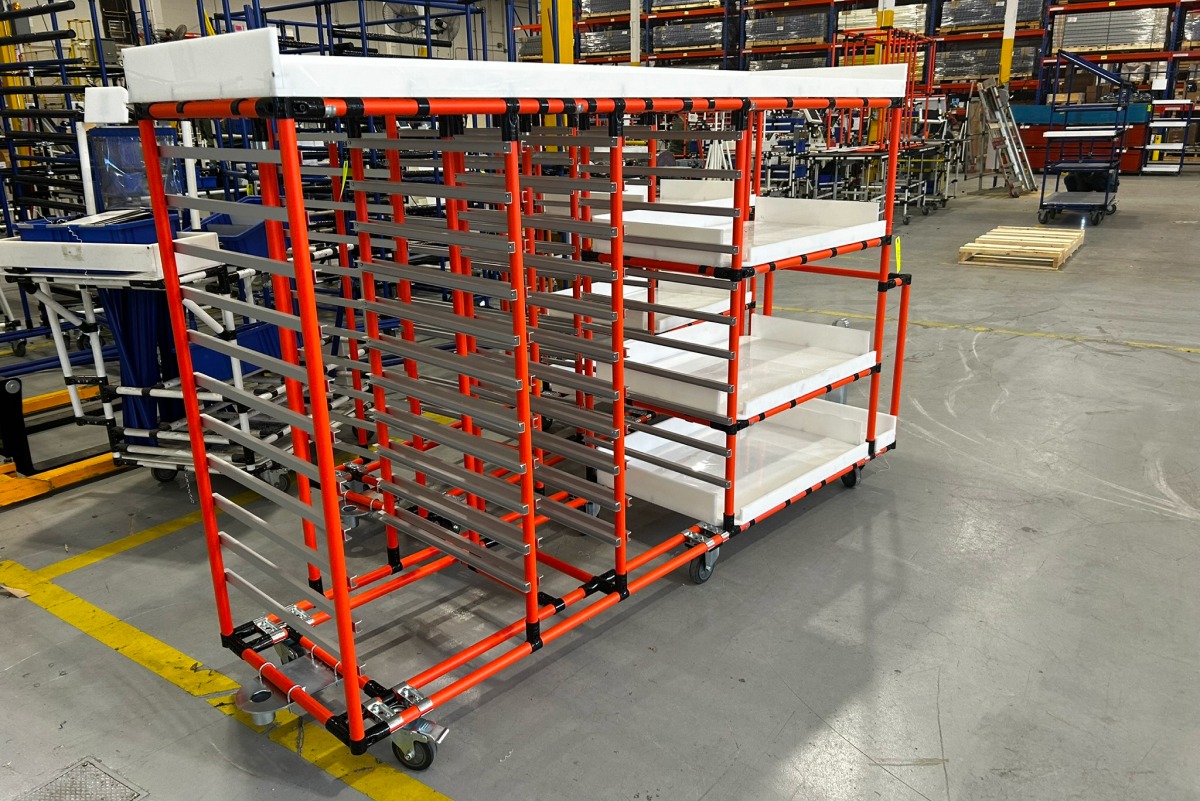
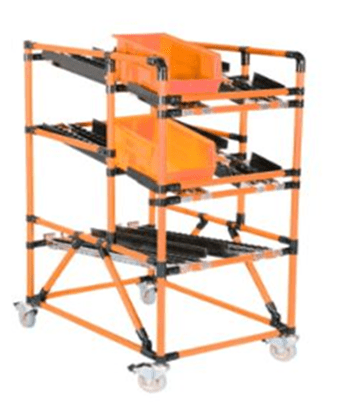

A packing station is a dedicated workstation where packaging teams prepare, package, and label customer orders for shipping. A well-designed warehouse packing station must provide employees with easy access to all the packaging materials and boxes needed for a seamless packaging operation. That means employees have instant access to tape, labels, barcode scanners, boxes, bubble wrap, tools, and cartons without straining themselves.
While a packaging workstation can be a steel-welded, generic packing table, Flexpipe’s steel tubes and joints allow warehouse teams to design and assemble their own custom modular packing station. The Flexpipe system is a cut-and-connect system that requires no welding.
Shelving, work surfaces, racking, tool placement, storage, and monitor mounts can be customized to reduce movement waste. A Flexpipe warehouse packing station is part of an effective lean warehouse management strategy that promotes ergonomics, continuous improvement, and smoother packaging workflows.

There are multiple variations of packing workstations. Each depends upon the specific workflow and processes of the company using them. Some are stationary while others are mobile. These warehousing solutions are critical to seamless order fulfillment.

A single-parcel e-commerce packing station is ideally suited to high-volume order fulfillment. These packaging workstations have single operators who typically pack similar orders across a smaller product line. This smaller product line means box configurations and packaging supplies are streamlined so that the operator can support a quick packaging workflow.
A multi-format packing station is ultimately a multi-product-line packing station in that the packaging workstation is designed to accommodate a larger product line needing multiple boxes and packaging materials. This is why this packing workstation has additional shelving and storage space. The purpose is to allow the operators within the packaging station to be able to package a wide product line.
This modular workstation allows finished, packed boxes to slide across a conveyor beside the packing workstation onto the next stage of fulfillment. Operators don’t have to leave the workstation to move the boxes. They can focus on packaging while allowing the rollers on the conveyor to move the packed boxes to the next stage.
Mobile packing workstations have casters so they can be moved to different areas of the warehouse. This makes them ideal for relieving shipping backlogs and when optimizing warehouse layouts. They are also a great solution when the shipping location is not defined or changes.
A pack-out or kitting station is for operators who must combine multiple SKUs into a single order or kit for production. A kitting station would involve the operator combining different materials and parts within a kit where a work order defines what the customer wants. The same applies to pack-out.
A returns processing station is for customer returns. This workstation allows an operator to inspect, sort, and repackage customer returns. Returned products are inspected, sorted, and then either repackaged for other orders or returned to stock (inventory).
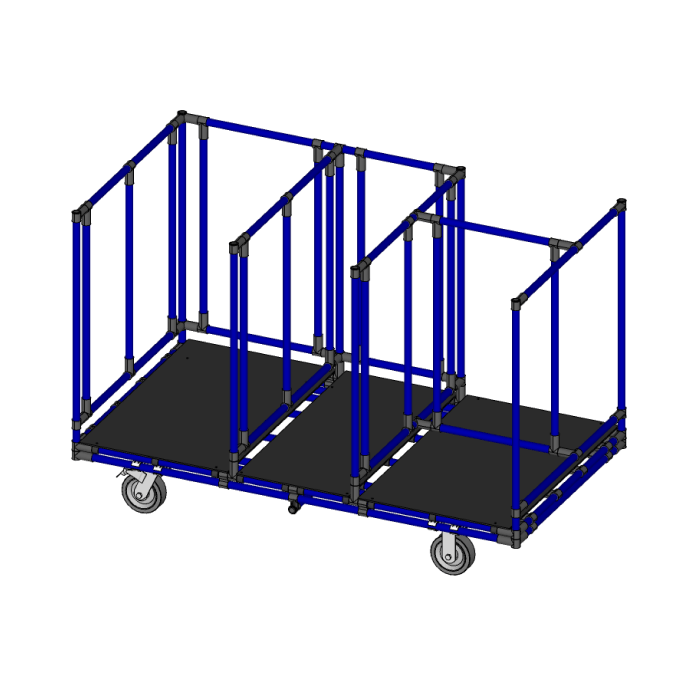
Packaging Cart
Download this plan

Small Box Transport Cart
Download this plan

Box Rack
Download this plan

Storage Rack
Download this plan
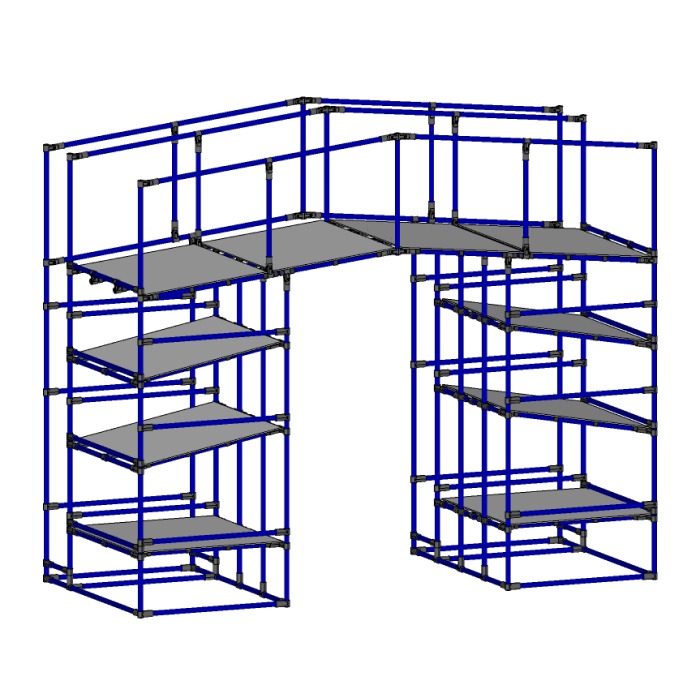
Packing Station Box Rack
Download this plan
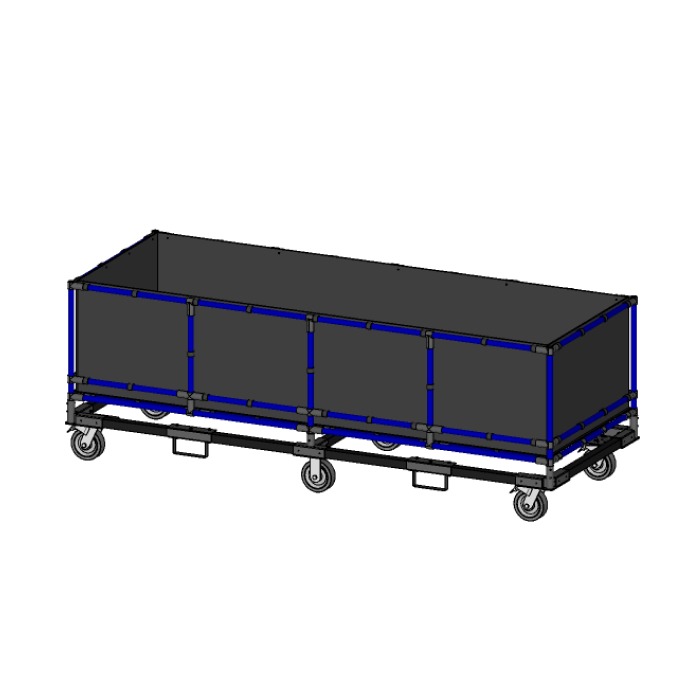
Scrap cart
Download this plan

Gravity flowrack
Download this plan
The following video explains the importance of having a clean, well-designed, and well-maintained packaging workstation. That means maintaining a continuous workflow where all packaging materials are within reach.

When the workflow is optimized, picking, verifying, packing, labeling, completing the order, and shipping become a much simpler and more reliable process.
There are several important aspects of a well-designed packing station. First, the work surface must allow the operator to properly pack products while providing ample space for tools and consumables. Second, the packaging workstation must be able to support the weight of the tools, consumables, packaging materials, and products that will be packaged.
Third, packaging materials and supplies must be easily accessible for the operator without them having to strain themselves. This is a question of ergonomics. All boxes, packaging materials, envelopes, tape, bubble wrap, and box-filling Styrofoam should be within easy reach. Fourth, tools and consumables such as knives, staplers, RFID barcode scanners, labelers, printers, and packaging scales must be positioned inside the packaging workstation.
Finally, there must be a clearly defined outbound flow for finished, packed orders and a packaging waste area. For the completed-order flow, the finished and packed order should be directed away from the packing station towards the shipping area. For the packaging waste, all empty cartons, cardboard, Styrofoam, packing peanuts, and other void-fill materials like bubble wrap should have a designated waste area, such as a scrap cart.
Ultimately, a packaging workstation’s ideal height depends on the height of the operator. The Flexpipe Workstation Height Calculator allows you to input the height of the operator, and the calculator provides the exact height for that packaging workstation.

Over time, a packing workstation may have different operators. An adjustable Flexpipe packaging workstation means that adjustments and changes to the height of the workstation can be done in-house without welding, extended downtime, or high costs. With Flexpipe, the work surface height can easily accommodate employees of different heights over time.
| Table A – Packing Station Height Considerations | |
|---|---|
| Packing Station Setup | Height Consideration |
| Standing | Based on operator height and the type of packaging work being performed. |
| Seated | Should accommodate a comfortable seated working position and adequate leg clearance. |
| Sit-Stand | Requires an adjustable range that accommodates both seated and standing working positions. |
| Adjustable | Can be adjusted for different operators and different packaging tasks. |
The goal with any ergonomic packing station is to optimize workstation height while ensuring sufficient work surface so that the operator isn’t forced to do any unnecessary reaching, bending, and physical strain during repetitive packaging tasks.
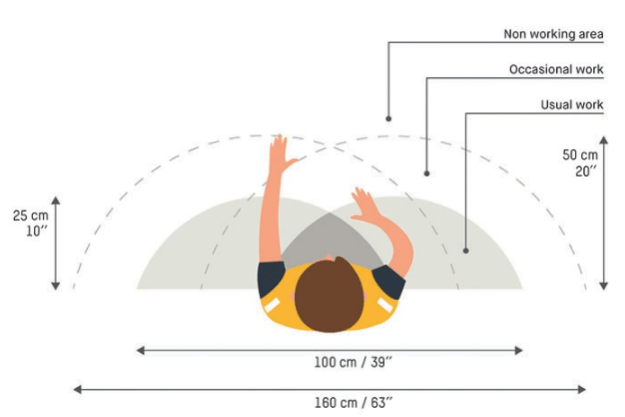
When work zones and reach zones are optimized, strain is reduced. Less strain means operators are less likely to encounter injuries, which in turn reduces the high costs associated with absenteeism.
| Table B — Packing Station Work Zones | |
|---|---|
| Work Zone | What Goes There |
| Primary | Most frequently used tools and packaging materials. |
| Secondary | Items used regularly but not continuously. |
| Outside Optimal Zone | Infrequently used supplies and materials. |
Ensuring work and reach zones are optimized is one of the more important aspects of having an ergonomic packaging workstation. Both play a critical role in ensuring the packing station is comfortable, safe, and ready for use.
5S is a primary continuous improvement methodology within lean manufacturing. It stands for Sort, Set in Order, Shine, Standardize, and Sustain. Organizing your packing workstation along 5S guidelines means designing and assembling a workstation that addresses all the 5S criteria.
To ensure your team is properly following 5S, schedule periodic inspections where teams inspect the cleanliness and organization of the workstation. This can also include team meetings and 5S audits.
All packaging cartons and boxes must be properly organized and have a permanent storage location within the packing station. Often, this means storing these cartons and boxes on one of the workstation’s primary racks. It should be easy for the operator to retrieve these boxes as needed.
All packaging material bins (tie wraps, tape, rubber bands, twist ties, envelopes) and consumables should be properly identified and labeled. This ensures no time is wasted looking for critical supplies while making the transition easy from one 8-hour shift to the next.
Take advantage of shadow boards. They can be positioned within the packing station so that operators can quickly grab tools like cutters, staplers, nail guns, and other essential tools.
You want all the everyday tools and packaging materials to be stored within the operator’s normal working area. Everything should be visual so that the operator knows exactly what to look for.
In the end, there are always commonalities among well-designed and well-put-together Flexpipe packaging workstations. First, there must be a defined work area. Flexpipe addresses this by allowing companies to custom-size their own work surfaces. Second, packaging supplies, boxes, bins, tools, and other consumables must be within reach. This is easily solved as companies can customize their packing workstation layout according to their needs and ensure the operator never has to strain themselves.
Third, there must be space for labels, documents, RFID scanners, monitors, or screens while maintaining a defined material flow. Again, companies using Flexpipe can customize the entire layout of their packaging workstation. Companies design, assemble, and modify their workstations as needs and requirements change.
Fourth, casters ensure that the packing station can be positioned at different locations throughout the packaging area, while roller tracks within the workstation itself or adjacent on a conveyor help to guide packed boxes over to the shipping team.
Finally, an ergonomic packing station is best when it has sufficient lighting, uses Kaizen foam for cut-out tool placements, embraces 5S organization principles, and has designated locations for packaging waste.
| Modular Packing Station Components | |
|---|---|
| Need | Packing Station Solution |
| Main work area | Custom-sized work surface |
| Packaging supplies | Upper and lower shelving |
| Boxes and bins | Angled shelves or flow racks |
| Tools | Pegboards / shadow boards |
| Labels and documents | Document holders |
| Scanning and screens | Scanner and monitor mounts |
| Material flow | Roller tracks |
| Mobility | Casters |
| Organization | Kaizen foam / bins |
| Lighting | LED lights |
| Waste and empty cartons | Scrap cart / recycling bin |
Packing stations often include electronic equipment such as thermal label printers, scanners, keyboards, monitors, and other devices. Ensure you have positioned these electronics within easy reach of the operator without unnecessarily reducing the available work surface.
The Flexpipe steel pipes and joints system allows power bars to be mounted directly to the workstation frame. Cables can also be routed and secured along the frame. Just ensure you keep them away from the work surface and secure them underneath the frame properly so they don’t become a tripping hazard.
Finally, thermal printers and other frequently used equipment can be positioned or mounted where operators can access them quickly while packing and labeling orders.
Prefabricated, steel-welded packaging workbenches are made for general applications. They are never customized to the company’s unique needs. Flexpipe allows for the ultimate in customized features. It’s about being empowered to design, assemble, tweak, modify, and enlarge your packaging workstations as needed versus making do with a heavy, cumbersome steel-welded workstation that is either too small, too large, or doesn’t have enough of the features you need.
| Modular Flexpipe Packing Station vs. Steel-Welded Packing Station | ||
|---|---|---|
| Feature | Modular Packing Station | Steel-Welded Workbench |
| Adaptability | Fully reconfigurable; no cutting or welding required | Permanent; difficult and costly to modify |
| Initial Cost | Moderate investment | Often lower upfront |
| Lifecycle Cost | 30% – 50% savings over time due to reuse | Higher maintenance and replacement costs |
| Implementation Time | Fast assembly; no special tools | Slow fabrication; welding and painting required |
| Safety & Lean Compliance | Supports 5S and Kaizen principles | Requires modification to adapt to lean layouts |
Flexpipe allows you to adjust the size, configuration, and features of a packaging workstation as your needs change. With Flexpipe, companies can add or remove shelves, change dimensions, and add new features without having to weld anything. Better yet, all these changes can be done in-house without having to hire outside companies.

Skipper Groupe is a third-party logistics company managing 34 different product lines across 13 warehouses. Given that their customers have different packaging requirements and processes, Skipper Groupe turned to Flexpipe to create modular packaging stations that could easily adapt to changing customer needs.
The Skipper Groupe team built a custom Flexpipe packing station alongside its existing conveyor system, which improved packaging workflows.

“We customized this new packaging station to serve our specific customers in a better way. What I like most about Flexpipe is that today this packaging station works for some customers. However, if tomorrow a new customer needs a different setup, we can adjust this Flexpipe station ourselves.”
– Camille Jouvet, General Manager, Skipper Groupe
To learn more about how Skipper Groupe uses Flexpipe solutions to adapt its warehouse operations, read the full Skipper Groupe case study.
A manufacturer of residential and commercial ventilation products, Aldes Canada used Flexpipe’s steel tubes and joints to modernize its workstations and material handling structures. The company replaced its prefabricated, steel-welded workstations and other material handling structures with modular Flexpipe replacements.
Over 125 modular Flexpipe structures were built, and over 85% of the company’s departments use Flexpipe.

To learn more about how Aldes Canada used Flexpipe to reduce workstation costs while creating adaptable material handling structures, read the full Aldes Canada case study.
When it comes to designing a Flexpipe packing station, start with how orders, materials, and operators move through the packaging workflow. The workstation should provide packaging employees with enough space to package products while having easy access to consumables, packaging materials, supplies, and packaging equipment.
The following nine-step process outlines how to go about designing and building an ergonomic packing workstation while being able to improve upon it over time.

It’s important to embrace continuous improvement with an ergonomic packing station. After the packing workstation is assembled, observe how operators use everything within their workspace. Ask for their input. Understand if they feel comfortable and ask them what they like or don’t like.
The focus is to ensure you have an ergonomic workstation that operators feel comfortable in. The best part of a Flexpipe packaging workstation is that you can change it as your needs change. Because Flexpipe structures are modular, changes to the packing workstation can be made as packaging workflows, products, equipment, and operator requirements change over time.
Flexpipe steel tubes and joints can be used to create ergonomic packing stations in addition to whatever-sized material handling structure is needed. A modular Flexpipe packing station can be designed and assembled around your specific packaging workflow.
With Flexpipe, you can maximize your available space by creating a custom, modular workstation that can be modified as needs change. Flexpipe also provides numerous free plans and design resources and tools to make your first packaging station a much simpler process.
To get your hands on a free Flexpipe sample, visit our free sample page.
To get in touch with us at Flexpipe with questions, contact us now.
To get inspired about what Flexpipe can accomplish, visit our Flexpipe building resource center.
A packing station is a dedicated workstation where packaging employees receive, prepare, package, label, and complete orders for shipping. The packing station provides a specific work area where employees have easy access to the boxes, packaging materials, and tools needed to package products.
A packing station should include a large enough work surface, storage for boxes, packaging materials, tools, labels, and document storage, in addition to scanners, printers, scales, and monitors. Shelving, bins, roller tracks, lighting, monitor mounts, and waste collection are incorporated within the packing station.
A packing station should be optimized to the height of the operator. Modular packaging stations are adjustable solutions that can accommodate different heights while also allowing teams to modify the entire workstation when requirements change.
There is no universal rule or ideal width for every packing station. The width depends on the size of the work surface needed and the amount of space available for the packing station. The primary rule is that the packing station should provide sufficient working space while keeping frequently used materials and tools easily available.
The work surface should be positioned at the ideal height for the operator to complete their work tasks without having to strain themselves. This means having tools, consumables, packaging materials, and boxes/cartons within the primary reach zone. Success means the workstation will minimize unnecessary reaching, bending, walking, and other repetitive movements.
Use designated locations for boxes, packaging materials, tools, and consumables so operators can easily and quickly locate them. Properly label all bins while incorporating shadow boards and point-of-use storage that improve organization.
A packing station is essentially a packaging station where finished products are packed within boxes or cartons, protected, labeled, and then shipped out to customers. A picking station is a location where warehouse or inventory employees pick different materials, tools, consumables, or products.
Modular packing stations make it easy to store different box sizes on either the upper or lower shelving locations. The number of shelves, their angles, and whether flow racks are incorporated all help to ensure that all box sizes have their appropriate locations.
Yes, a packing station can include gravity flow racks so that material bins easily slide down when one bin is used by the operator. This means that replenishment material bins are stored behind the packaging station so that the operator in the packing station never has to leave their workstation.
Yes, a modular packing station can be assembled with casters so the station can be moved to different locations within a warehouse or facility. Mobile packing stations help when packaging needs, demand, or workstation locations change.
There is no universal rule on how many packing stations a warehouse needs. It depends on the types of products being packed, the process itself, the size of the package, and how many packages are processed each day. It’s a question of continuous improvement and always striving to optimize packaging workflows.
Only those packaging stations that handle electronic components need to be made with ESD-safe materials. This is essential for protecting electronics or other electrostatic-sensitive products and packaging employees from electrostatic discharge.