

Everything You Need to Adopt Lean Warehouse Management
In today’s business world, on-time deliveries have taken on an entirely new meaning. With the increased adoption of digital supply chains and mobile-optimized tracking, today’s warehouses must react in near-instant-real-time with optimized material handling solutions. That means warehouse managers and logistics coordinators must eschew conventional warehouse approaches for faster, leaner, and less costly lean warehouse management strategies.
When successful, lean warehousing strategies can reduce warehousing costs 20% to 50% by lowering inventory carrying costs, minimizing human errors, eliminating stock outs and improving delivery times.
Want to learn more about implementing lean warehousing? Download our free 57-page guide: Lean Warehousing Mastery
Table of content
What is lean warehouse management?
Lean warehousing is a systematic approach that maximizes labor, space, and equipment utilization while streamlining inventory and material-handling workflows to reduce operational costs. In U.S. warehouses, this approach applies continuous-improvement methods such as 5S, Kaizen, and Just-in-Time (JIT) inventory management to eliminate waste, shorten lead times, and improve order accuracy. By adopting lean warehouse principles, warehouse operators gain measurable efficiencies—reducing travel time, minimizing picking errors, and cutting material-handling costs across the facility.
How does lean warehousing evolve?
Although the term lean warehousing is relatively new to logistics, its principles originate in lean manufacturing. Proven practices like 5S, Kaizen, and JIT have optimized production lines for decades and form the foundation of the Toyota Production System—the model that transformed global manufacturing. Today, those same methods guide modern U.S. warehouses toward higher productivity, safer work environments, and stronger supply-chain performance.
Lean Warehousing Principles
Adopting methodical, proven continuous improvement methodologies is a must when looking to optimize your warehouse. It’s the adoption of these continuous improvement methods and lean warehouse principles that provides the impetus for increased efficiency.
The most common lean warehouse principles include 1) Value Stream Mapping, 2) Just-in-Time (JIT) Inventory Management 3) Kaizen and 4) 5S – which stands for Sort, Set in Order, Shine, Standardize, and Sustain.
Each of these lean warehousing principles is explained below and is following by a simple step-by-step process for the implementation of lean warehousing.

Value Stream Mapping
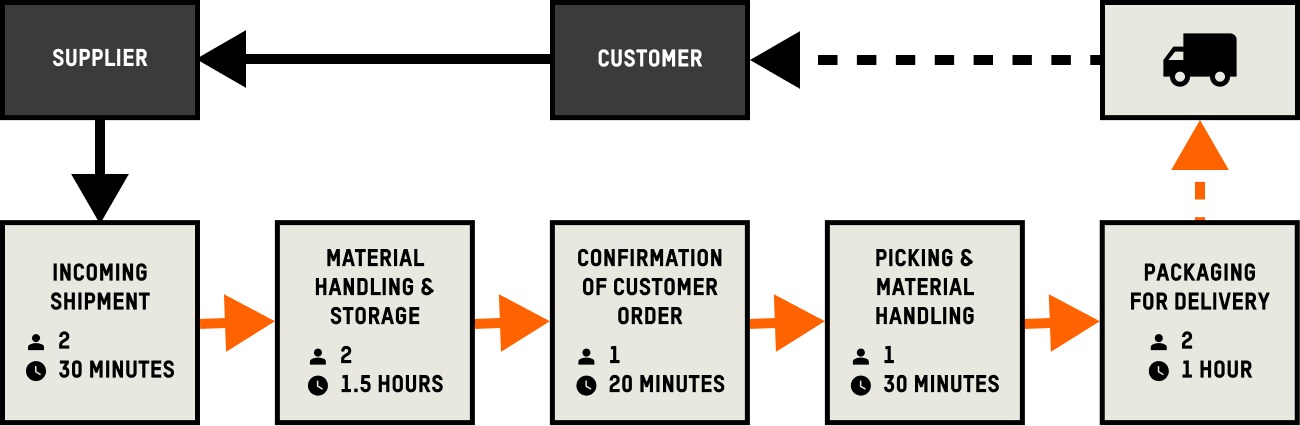
Value Stream Mapping is a lean solution where a flow diagram uses visual queues to outline the work tasks and material handling requirements that occur within a warehouse process – in this case, receiving an incoming shipment from a supplier, inspecting the shipment, unpacking, storing the finished goods on shelves, picking, repackaging for customer orders, preparing the shipment and then getting that shipment ready for delivery out to the customer.
Cycle times for each material handling activity are defined in terms of how many warehouse employees are needed for a given work task and how long that work task takes.
How Does Value Mapping Help Lean Warehouse Management?
Value mapping is one of the more important warehousing principles because it identifies backlogs – or waste – in warehouse management and material handling. The goal is to identify which material handling tasks have the highest cycle times and identify solutions to reduce those times.
By eliminating unnecessary waste – be it simplifying material handling or eliminating repetitive process steps – warehouses can reduce the cycle times for each work task, become leaner, and ultimately, reduce costs.

Just-In-Time (JIT) Inventory Management
Just-in-time warehouse and inventory management approaches focus on eliminating the most common waste in managing inventory. While lean manufacturing is seen as a customer-centric philosophy that improves customer value by improving manufacturing processes, JIT is seen one of the more important lean warehousing principles that makes lean manufacturing possible.
The essence of JIT is to have exactly the inventory you need to manufacture or ship a product at the exact time you need it. It requires a seamless integration of a company’s supply chain so that suppliers provide the right quantities of parts, materials, or finished goods at the right time.
To understand why JIT works and why it’s needed within warehouse operation, it’s important to understand the most forms of waste and costs that come with retaining inventory.
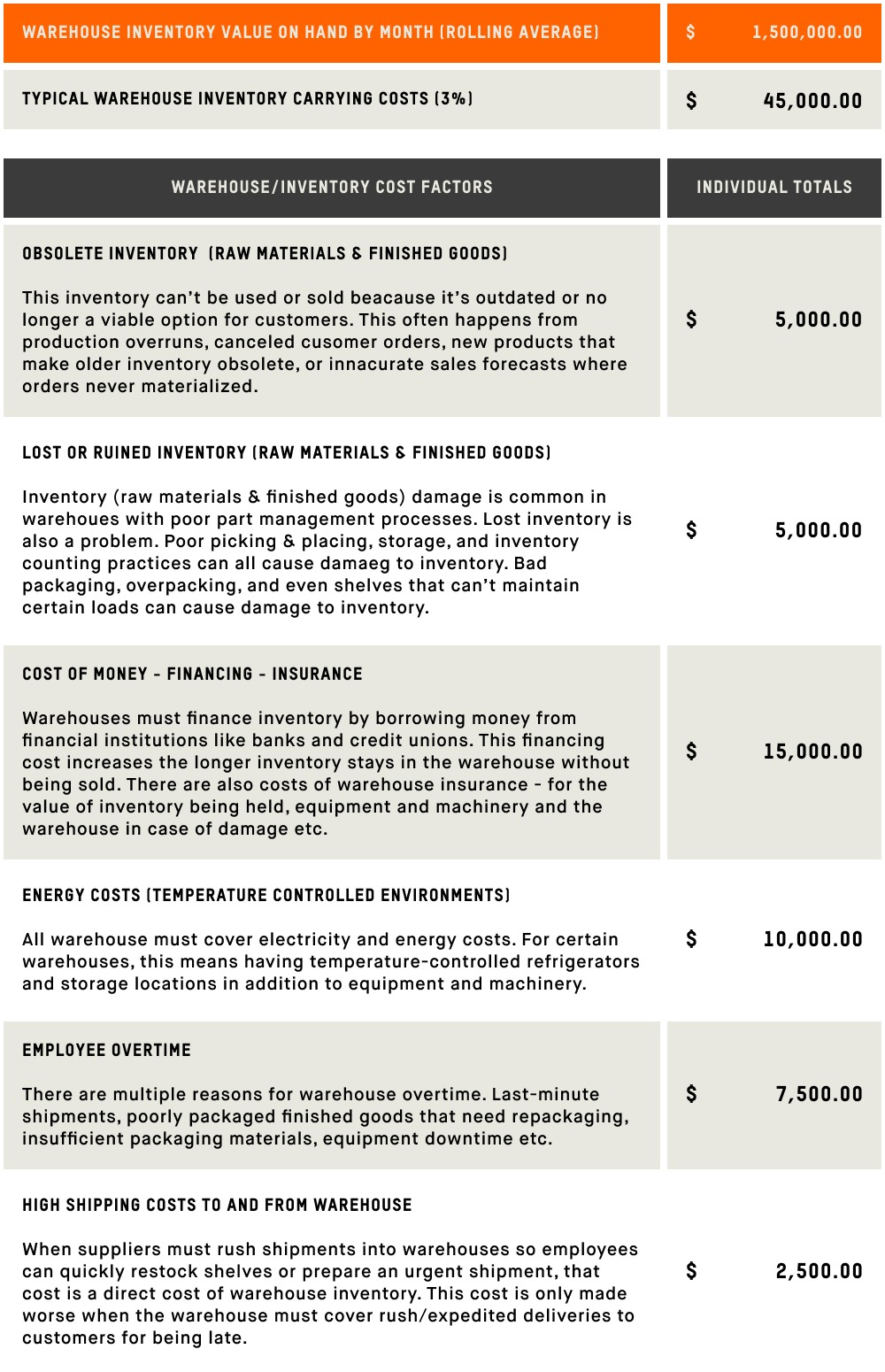
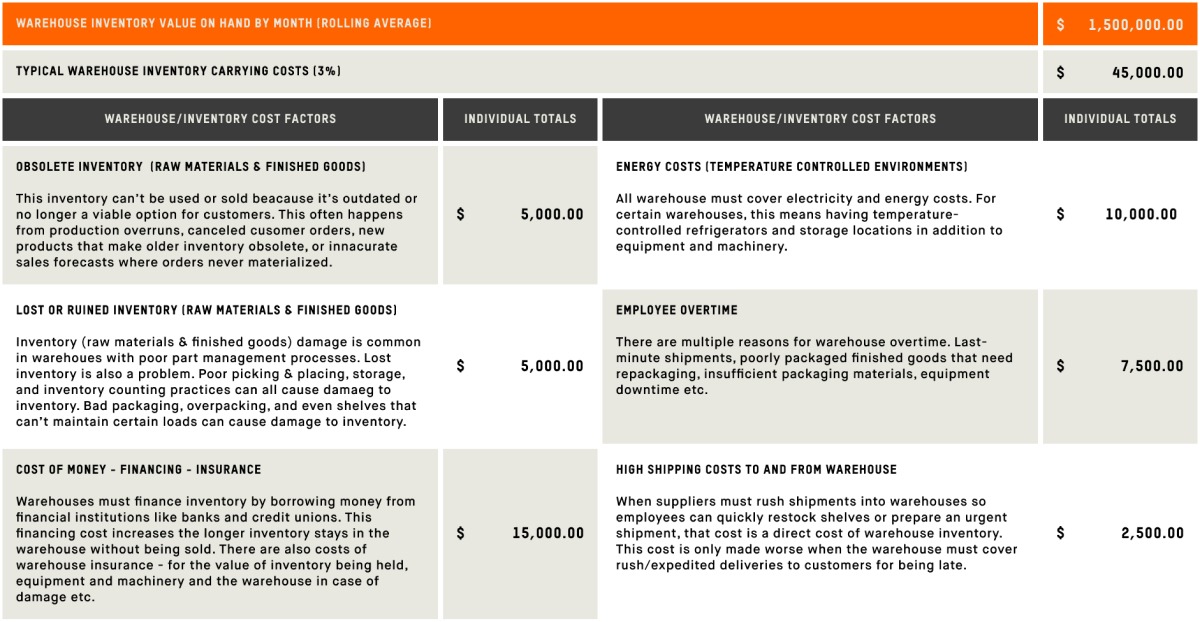
In non-JIT inventories, a company typically has an inventory carrying cost of about 3 percent of the value of their inventory in any given month. This 3 percent carrying cost comprises multiple different inventory wastes and excesses – which JIT focuses on eliminating.
This 3 percent does not include warehouse employee wages, insurance, benefits, etc. It is solely focused on the direct costs attributable to the raw materials or finished goods on warehouse shelves.
In conventional inventory management, companies hold inventory in anticipation of customer orders. However, the longer they hold that inventory the more impactful the inventory waste becomes. The most obvious waste includes financing. Companies borrow money from lending institutions like banks to buy inventory and store it on their shelves. Borrowing costs in today’s economy are high, so the inventory waste (costs) of products sitting on shelves without being sold is also high.
While financing is most definitely a waste of inventory, it’s most certainly not the only waste. Inventory obsolescence is also a costly inventory waste. Having inventory that can’t be used or sold either because of poor sales forecasts, changing customer preferences, or upgrades in product designs most often means obsolete inventory can only be sold as scrap. This is another warehouse inventory waste.
Misplaced, lost, or damaged/ruined inventory is another warehouse inventory waste. This is a common occurrence in warehouses with poor material handling practices. However, in general, the longer a warehouse must keep inventory the more likely that inventory – whether it’s raw materials or finished goods – is likely to become damaged at some point. It’s not uncommon for some warehouses to have inventory on the shelves for months and even years.
Other warehouse operation waste relates to excess material handling movement. Inventory that is not properly forecasted or not available at the right time typically coincides with higher incoming and outgoing freight costs. Expedited incoming freight to cover low inventory counts and expedited freight out to customers to maintain delivery schedules are expensive costs. Not only are the freight costs high, but warehouses often must cover employee overtime.

How Does JIT Help Lean Warehouse Management?
JIT is one of the more important lean warehousing strategies. JIT effectively reduces every aspect of waste within conventional warehouse inventory management. JIT reduces financing costs because inventory is only purchased when it’s needed. Companies aren’t paying a daily financing cost just to have parts sit on warehouse shelves, waiting for orders. Material handling times are optimized as inventory arrives, is processed, and immediately used.
JIT also reduces the costs of obsolete and damaged inventory as only the inventory that’s needed is received and used. That inventory doesn’t sit on warehouse shelves long enough for it to become obsolete or damaged due to excessive material handling. In essence, JIT ensures high inventory turnover, and the faster inventory is turned over – the faster it is used or sold – the lower the waste and the lower the costs.
Overtime and expedited freight are also lowered by adopting lean JIT warehouse inventory management. There’s less incidence of overtime and expedited freight as incoming shipments are matched to consumption or customer demand.

Continuous Improvement (Kaizen)
The continuous improvement philosophy of “Kaizen” loosely translates from Japanese to English as “good change”. It emerged from the Toyota Production System – or TPS. However, other influences also played a role.
Borrowing aspects of statistical process control, process optimization, and analytical quality control, companies that effectively adopt Kaizen make it part of their culture. Kaizen is a belief system where warehouse managers, logistics coordinators, and continuous improvement managers are constantly focused on eliminating every form of process waste and material handling waste within the warehouse.
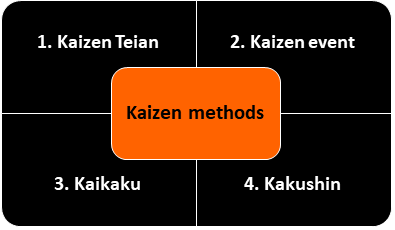
While there are multiple aspects to Kaizen, the most important for warehouse managers and logistics coordinators is Kaizen Teian – which refers to the every-second-of-the-day continuous improvements all employees should be encouraged to make. With Kaizen Teian, every warehouse employee focuses on making daily incremental improvements. Always mindful of waste, warehouse employees are motivated to bring up material handling process backlogs to supervisors so effective resolutions can be found.
Ready to start your lean journey?
Our comprehensive 57-page guide walks you through :
- The 8 critical forms of warehouse waste
- Step-by-step implementation guides
- Real case studies and measurable results
How does Kaizen support continuous improvement in warehouses?
Kaizen—Japanese for “continuous improvement” or “good change”—is a lean management philosophy rooted in the Toyota Production System (TPS). In modern U.S. warehouses, Kaizen drives efficiency by empowering every employee—from warehouse managers to material handlers—to identify and eliminate waste in daily operations. By combining statistical process control, workflow optimization, and quality analysis, Kaizen creates a culture of continuous improvement that reduces downtime, improves safety, and enhances productivity across the supply chain.

5S Methodology
5S is an optimization process that improves workflow. Warehouse employees structure their workstations for improved efficiency to ensure that no time is wasted looking for tools, instructions, work orders, or materials.
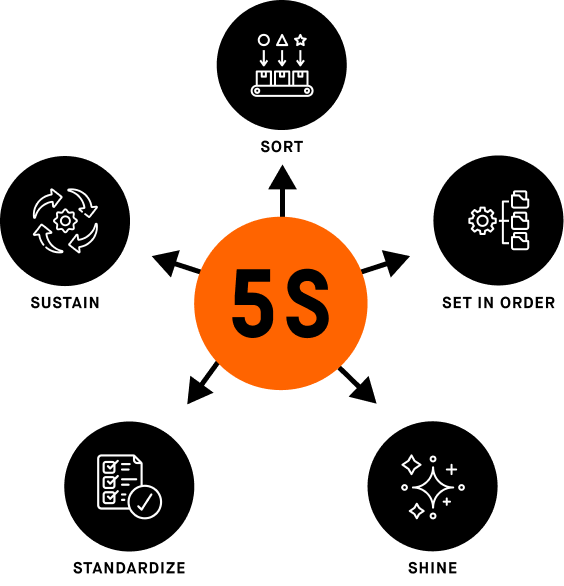
Sort: The first step involves a warehouse employee identifying the must-have tools and packaging materials that are essential to performing their work tasks. All other non-essential tools and packaging materials are discarded or stored outside the workstation.
Sustain: In keeping with a Kaizen culture, warehouse managers should use 5S audits and periodic workstation inspections to ensure that warehouse employees are properly maintaining an efficient workstation.
Set in Order: Next, warehouse employees use visual identifiers or queues such as labels or stickers to ensure all tools and consumables have a proper place and that all materials are properly labeled.
Standardized: Warehouse managers must duplicate efforts by ensuring that all workstations that perform similar work tasks are structured in the same way. This ensures a seamless transition from one warehouse employee to the next.
Shine: Warehouse employees ensure their workstations are clean, presentable, and well-managed. This is an everyday responsibility and one that warehouse employees must perform at the end of their shift.
Transform Your Warehouse with 5S!
Cut waste, boost efficiency, and keep your warehouse organized with our 5S eBook. Learn practical tips tailored to the warehousing industry.
How Does 5S Help Lean Warehouse Management?
Adopting 5S is a building block of all lean environments. Applicable throughout an organization, 5S can be used to streamline and improve workflow, optimize work tasks, and reduce cycle times. Within warehouse management, a 5S workstation ensures that different employees using that same workstation know exactly where everything goes – from materials, instructions, work orders, and tools.
This cuts down on multiple forms of warehouse operation waste. Warehouse employees don’t waste time searching endlessly for that all-important tool. There is no tribalism as no single warehouse employee can resource guard important tools and packaging materials. As one of the more straightforward lean warehousing strategies, 5S ensures that the most critical tools and materials are accessible to all as needed.
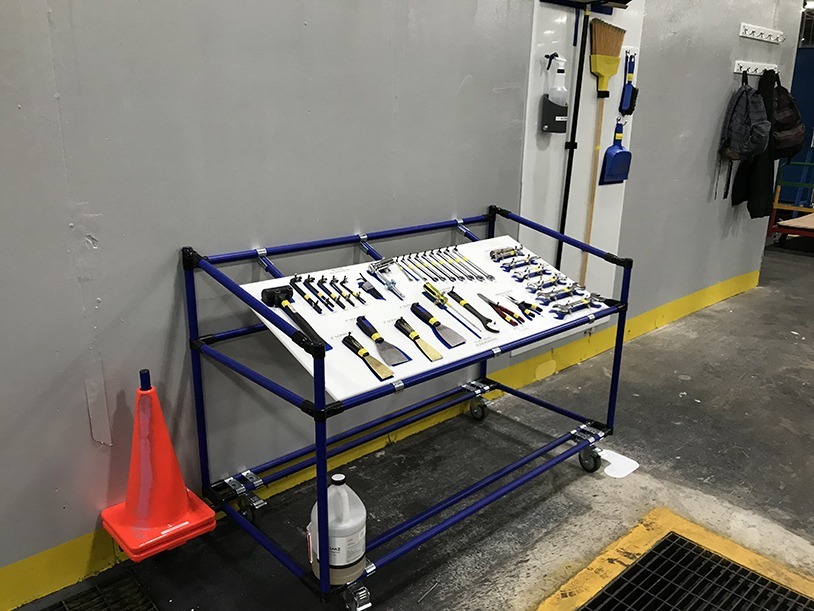
5S in Action: Robinson Innovations’ Journey to Efficiency Testimonial
Robinson Innovations streamlined its logistics operations with a custom modular cart system, replacing bulky platform trucks. With dedicated spots for each part, they reduced preparation time and protected sensitive parts from damage. Thanks to Lean manufacturing processes and the 5S methodology, they optimized space, improved handling, and cut down on order cycle times.
What are the Benefits of Lean Warehousing?
For warehouse managers and logistics coordinators, a lean warehouse is the ultimate in efficiency. Tools like value stream mapping help warehouse managers present a big-picture view of the material handling processes within their warehouse. They can identify problem areas and proactively address them. Simple improvements that reduce material handling waste improve efficiencies and reduce costs.
JIT warehouse inventory management focuses on the excess waste that comes from having inventory for longer than necessary. By adopting JIT inventory management, warehouse managers and inventory professionals can lower multiple forms of waste while also improving a company’s cash flow and cash position.
With Kaizen Teian and 5S, warehouse managers, and continuous improvement managers ensure warehouse employees are always making the daily improvements that help improve efficiencies and reduce costs.
Finally, an efficient warehouse that adopts continuous improvement and lean methodologies experiences far fewer accidents and absenteeism. A single lost day due to an injury costs companies an estimated $1040 US each day. This is just a company’s cost of lost productivity and efficiency. It does not include the costs of medical expenses, insurance claims, extended injuries, or death.
- Reduced waste
- Increased efficiency
- Cost savings
- Improved safety
- Enhanced employee morale
How to Implement Lean Warehousing Practices
Step 1: Simplify the Value Mapping Process
Step 2: Define Your Warehouse Inventory Carrying Costs
Step 3: Gradually Adopt Just-in-Time (JIT) Inventory Management
Step 4: Apply Kaizen and 5S Principles
What is the Role of Material Handling in Lean Warehousing
In lean warehousing, material handling plays a central role in driving efficiency and reducing waste across every stage of warehouse operations. Each time a warehouse associate in a U.S. facility receives, unpacks, stores, retrieves, or ships a product, they’re performing material handling activities that directly impact productivity, safety, and cost.
Optimizing these touchpoints through lean principles—such as standardized workflows, ergonomic workstations, and modular handling systems—helps minimize motion waste and improve overall warehouse performance.
Improve Your Packing Station Efficiency with Lean Principles 🎥
Watch this short video to see how an optimized packing station setup can significantly reduce waste and streamline your order fulfillment process. From the ideal layout to essential tools and ergonomic considerations, learn how to implement lean principles in your packing station design. 👇
How your warehouse employees move inventory from one location to another determines your warehouse’s overall material handling costs. Whether it’s using a pushcart or trolley to move products to shelves or storing essential raw materials, tools, and consumables on flow racks, effective material handling practices go a long way to reducing costs.
The problem facing today’s warehouse managers and employees is the fixed-structure material handling solutions they’re forced to use. Welded carts and trolleys are perfect examples of fixed material handling structures. These structures have portable storage areas and physical dimensions that cannot be changed or adjusted without incurring substantial costs and extended downtime.
Most workstations are also welded or made of unstable materials like wood. Welded material handling structures are not suited to lean warehouse management practices, Kaizen, or 5S. The very essence of these continuous improvement methodologies is to continuously improve – which means making simple and effective changes.
Welded carts, trolleys, material flow racks, and welded workstations are not easily changed or adjusted which makes adopting lean warehouse practices extremely difficult. However, this is one material handling solution that is easily changed, incredibly durable and strong, is much less expensive than welded structures, and is more scalable, modular, and flexible.
How Flexpipe Can Help Material Handling
Flexpipe is a steel tube and joint material handling system whose origins can be traced back to TPS. Yes, the Toyota Automotive company was the originator of this modular and scalable material handling system.
The very same company where lean manufacturing and Kaizen originated from created the same material handling system Flexpipe is built upon. However, back then, Toyota relied on bamboo as opposed to the cold-drawn, high-strength steel used today by Flexpipe customers.
In essence, Flexpipe is a lean tool. It emerged from lean practices.
This simple material handling system empowers warehouse managers and warehouse employees to design, construct, assemble, and change or modify their material handling structures or individual workstations as they choose. Some changes take as little as a couple of minutes to a half hour – while others can take an afternoon. However, it is substantially cheaper and faster to make changes as opposed to trying to make changes to welded structures.

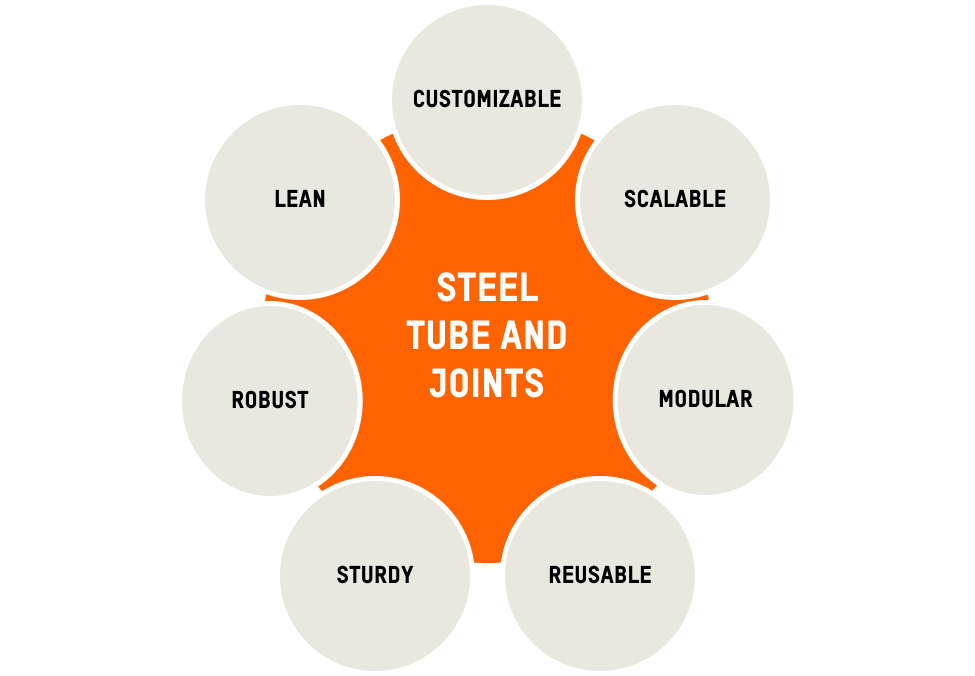
The steel tube and joint system addresses every possible lean warehouse requirement. It’s a customized solution that can be configured to whatever dimension, size, or configuration is needed. It’s scalable in that you can make simple adjustments to increase its functionality.
The Flexpipe solution is also modular, allowing you to create material handling structures of identical size. It is a reusable and renewable solution that you can use to optimize your warehouse. It is incredibly sturdy, robust, and exceptionally strong as structures are made from cold-drawn temperature-treated steel.
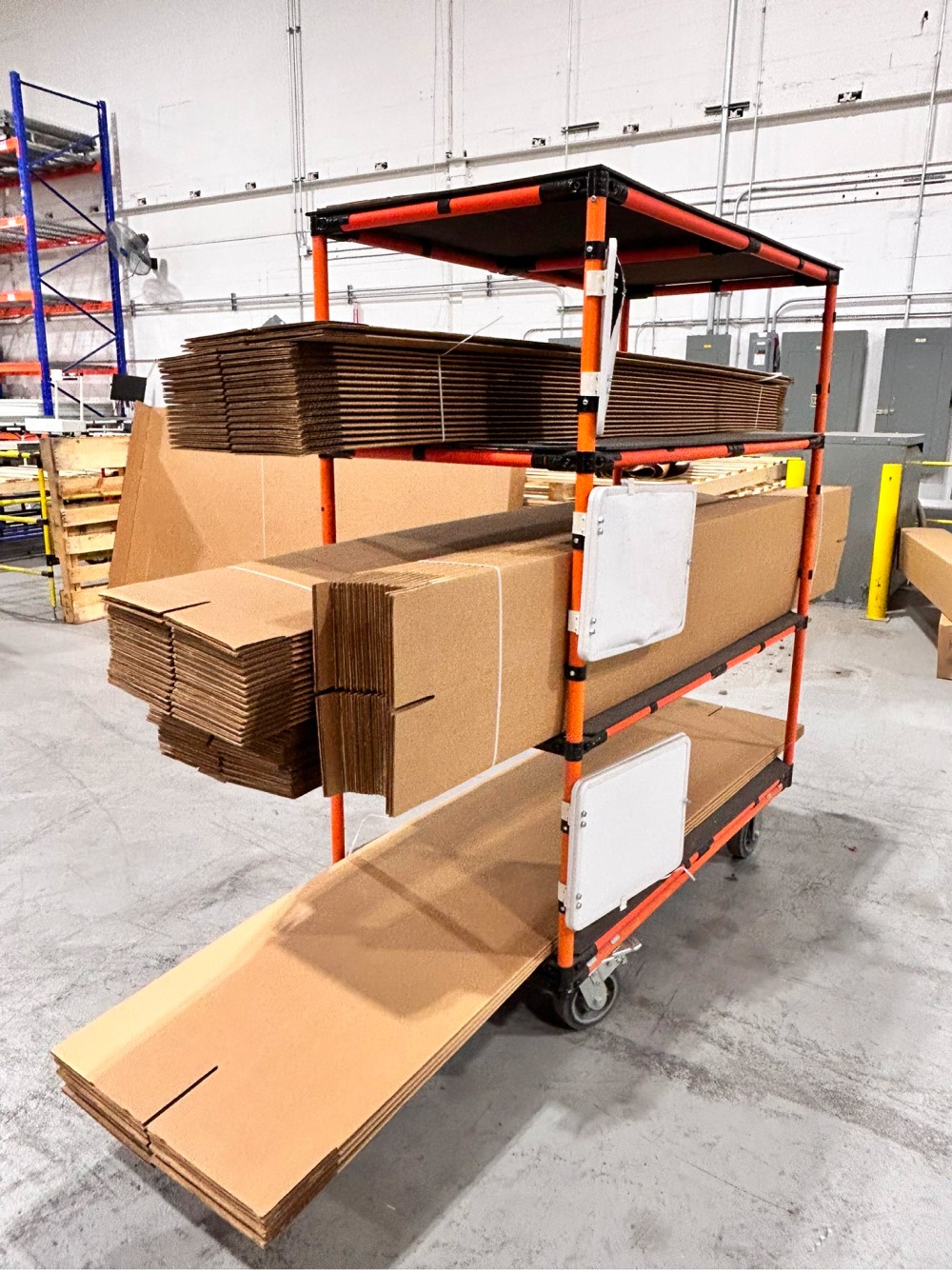
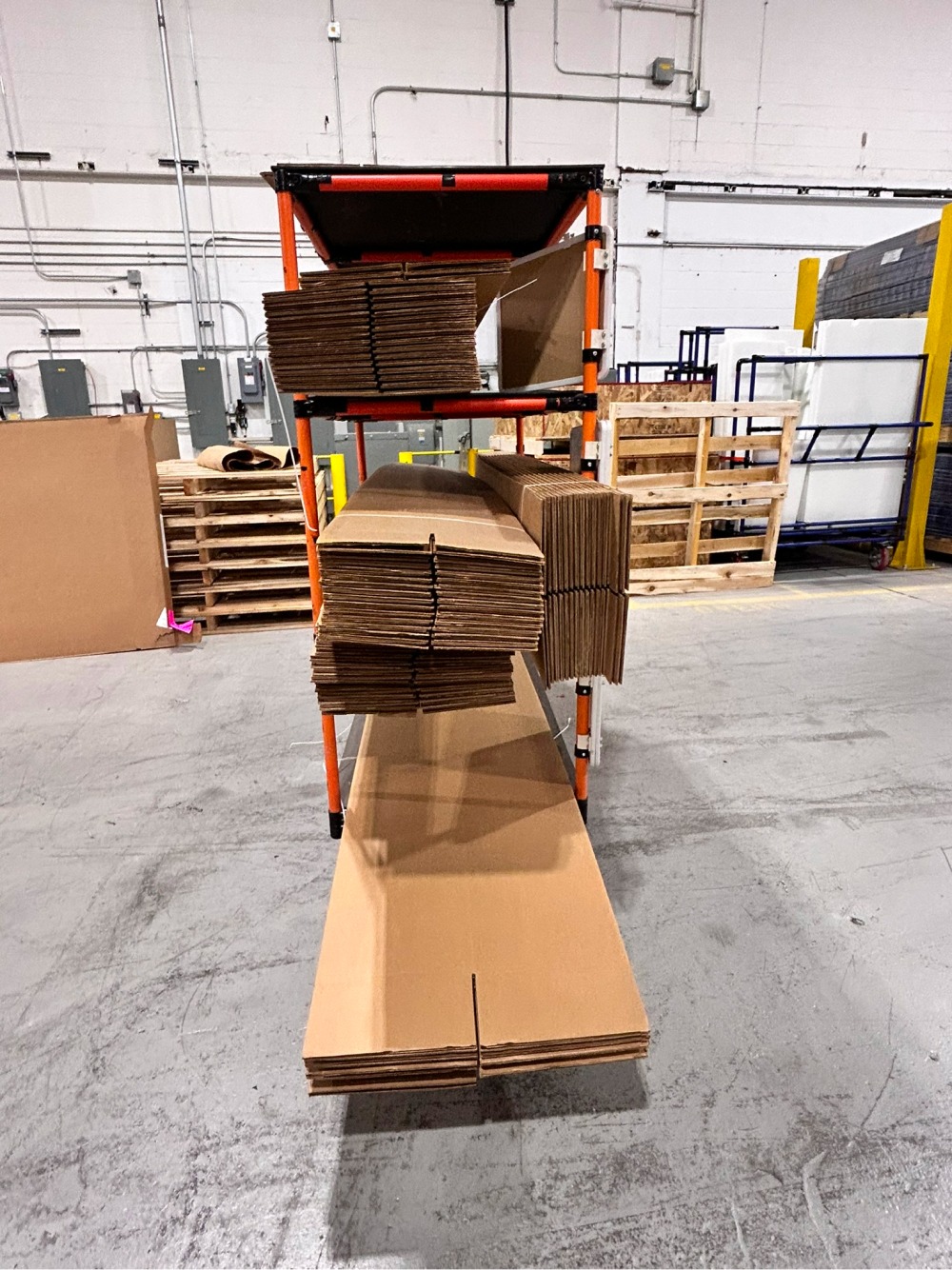
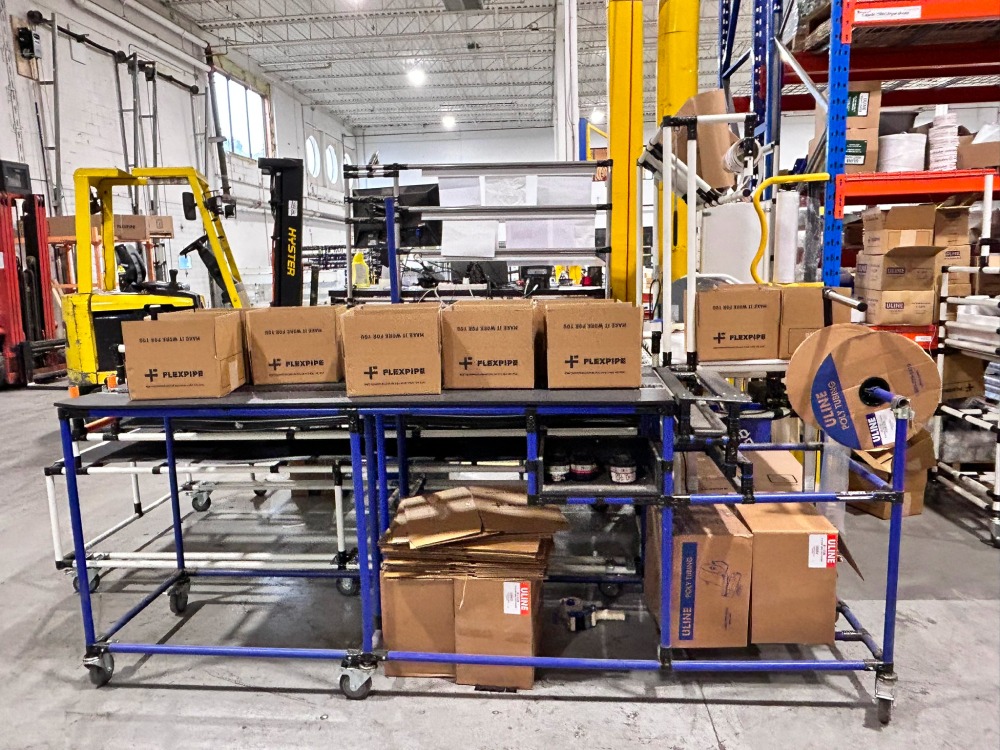
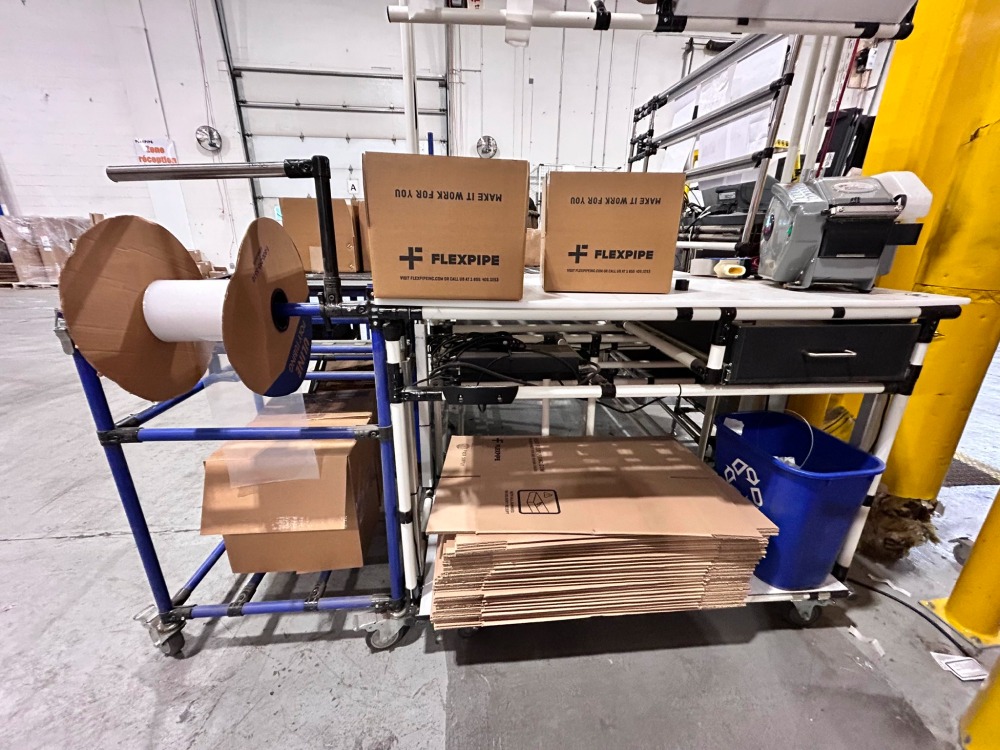
Examples of Flexpipe Structures for Warehouses
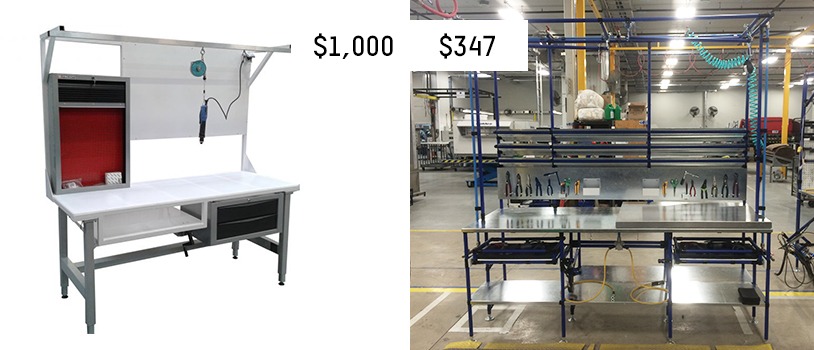
Here is a perfect example of the limitations and waste of welded warehouse packaging workstations. A customer commissioned a company to design multiple welded steel packaging workstations.
The cost of each station was $1,000 and over 25 separate workstations were purchased.
As the warehouse’s packaging requirements changed, these welded steel structures became obsolete. Instead of purchasing more, the warehouse opted for a much less expensive modular, scalable Flexpipe option whose structure can be adjusted or changed to accommodate changing requirements.
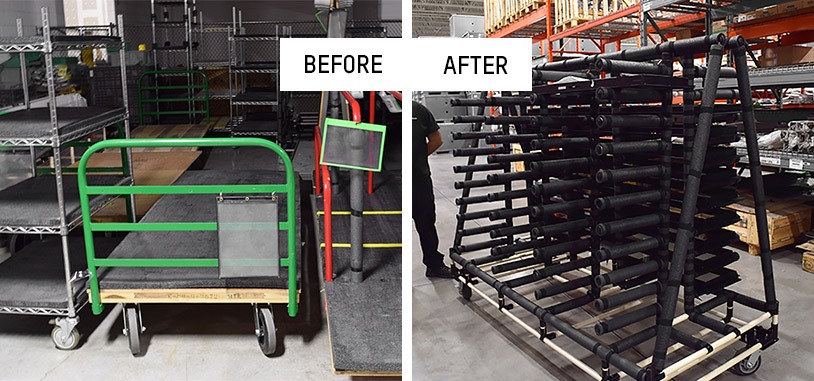
A third-party logistics company was using platform truck carts to receive complex painted parts with unique part dimensions and geometries. These parts could not be secured on the platform truck. They were haphazardly stored, not secured, and constantly moved, resulting in extensive damage which became a recurring problem within the warehouse.
The warehouse swapped their steel platform truck cards for mobile, scalable Flexpipe carts that were configured to the exact dimensions of these painted parts while protecting each part with foam on all sides.
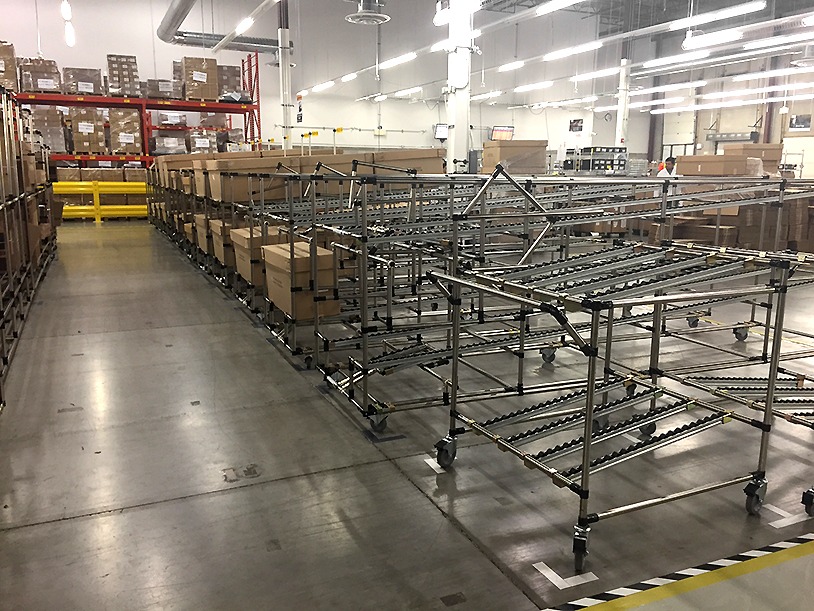
Top 12 most popular plans to download from the warehousing industry
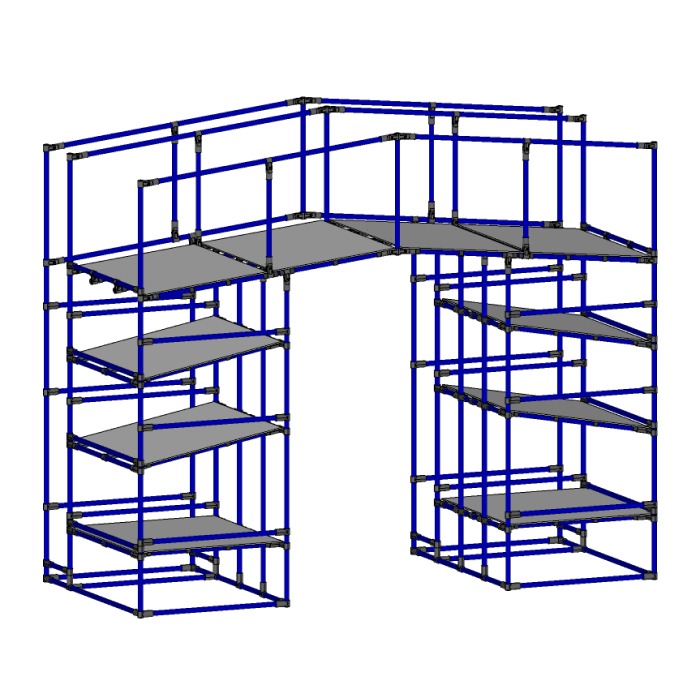
PACKING STATION BOX RACK
Download this plan
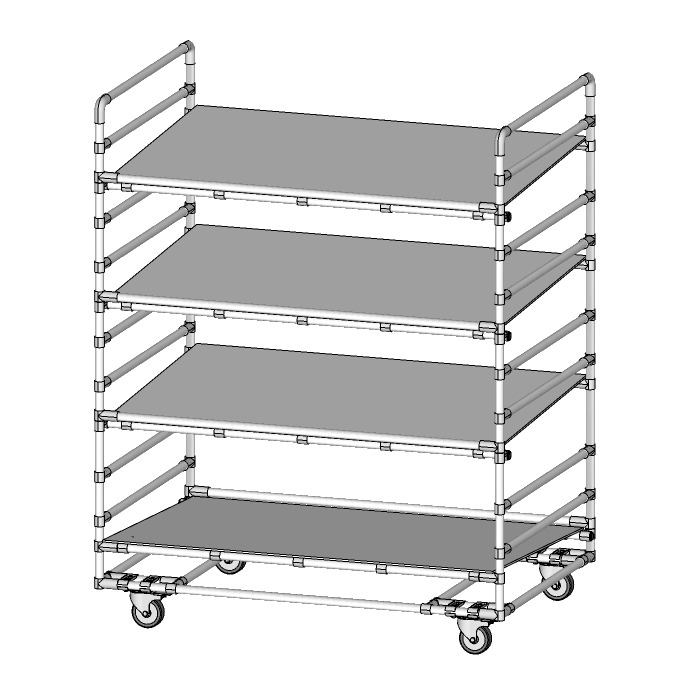
4 SHELVES RACK WITH CASTER
Download this plan
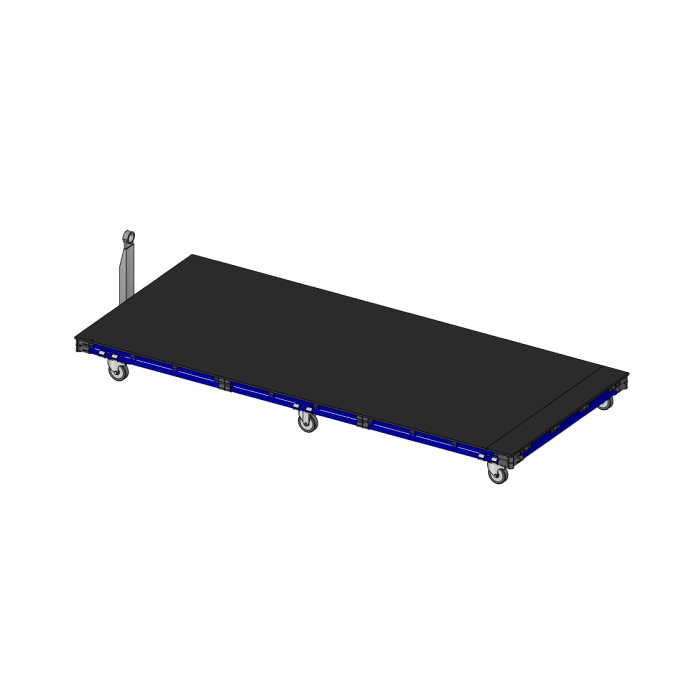
LOW CART
Download this plan
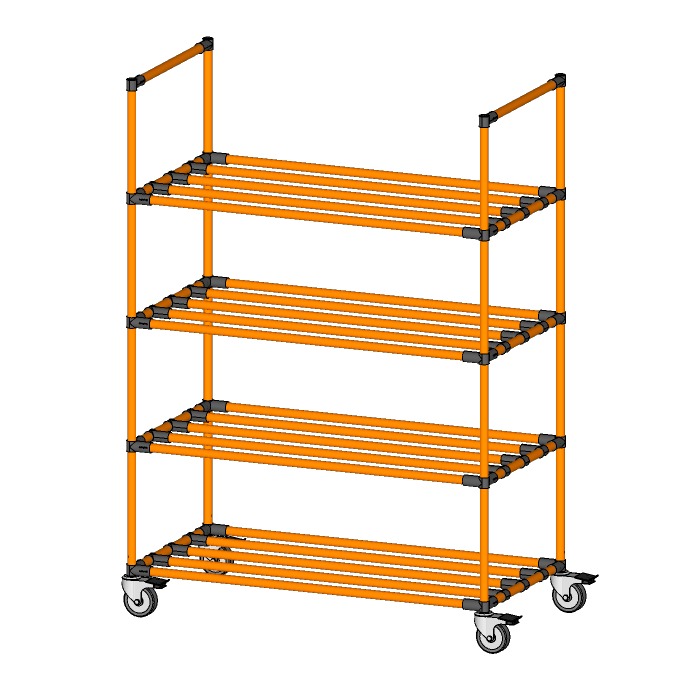
SHELVING RACK WITHOUT DECKING
Download this plan
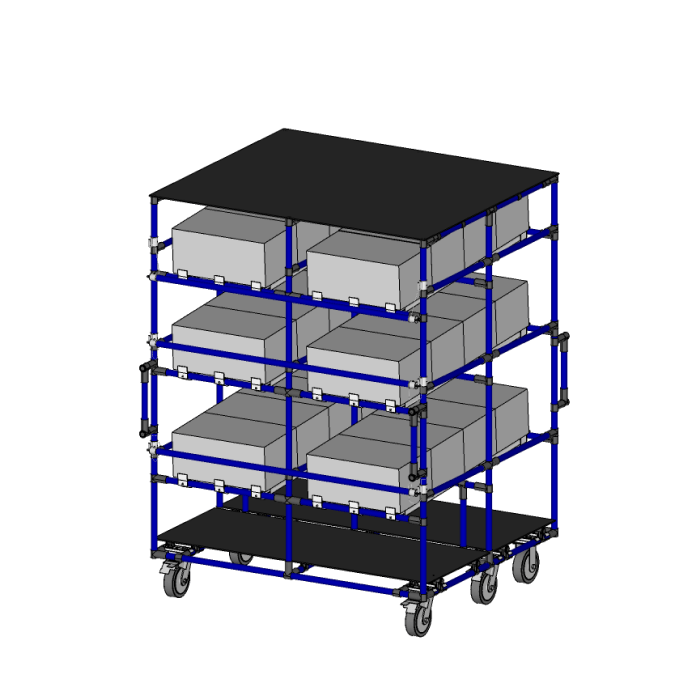
GOODS GFR WITH REMOVABLE STOPPERS
Download this plan
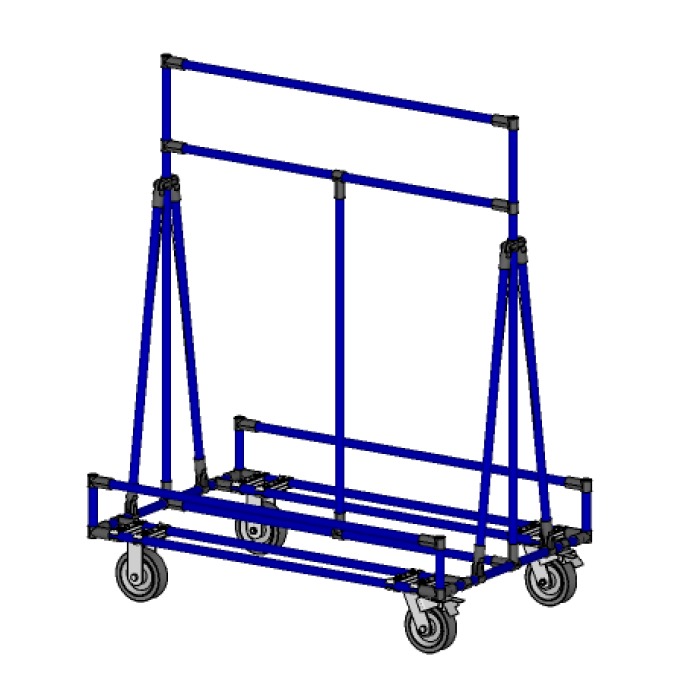
DECKING CART
Download this plan
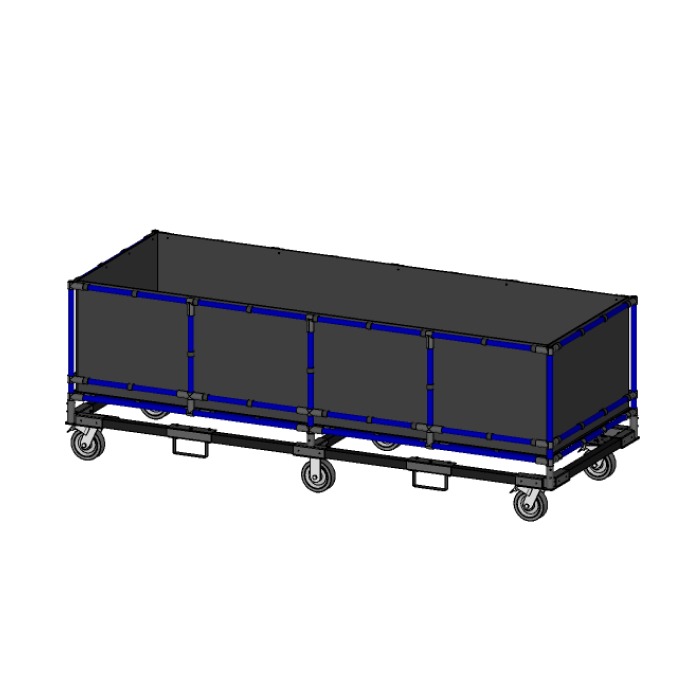
SCRAP CART
Download this plan
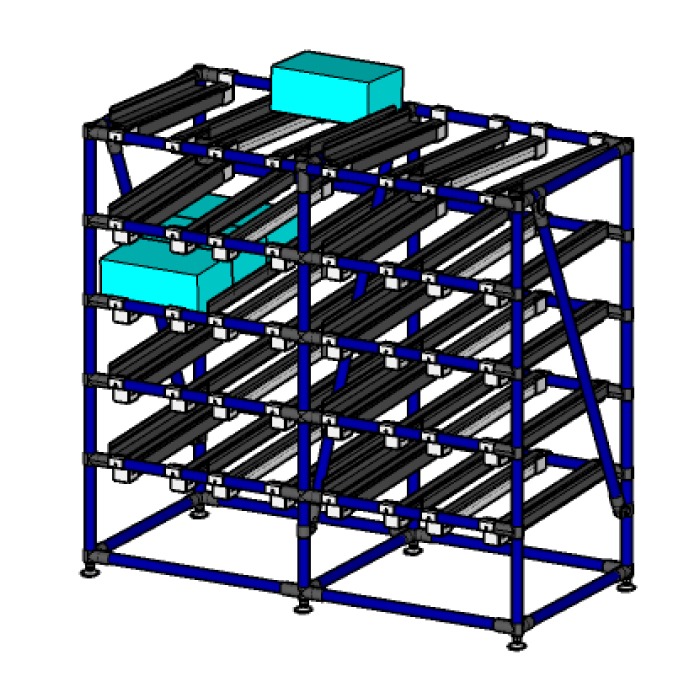
96 BIN FLOW RACK
Download this plan
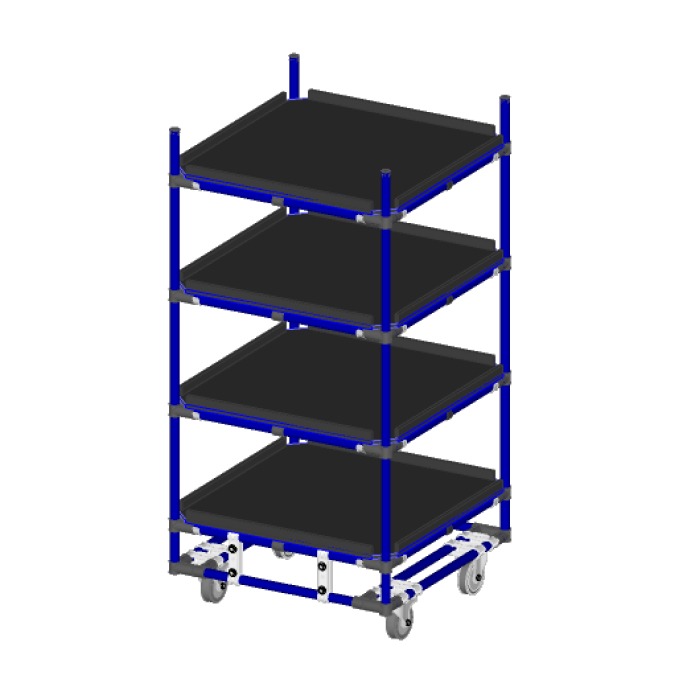
SHORT CART
Download this plan
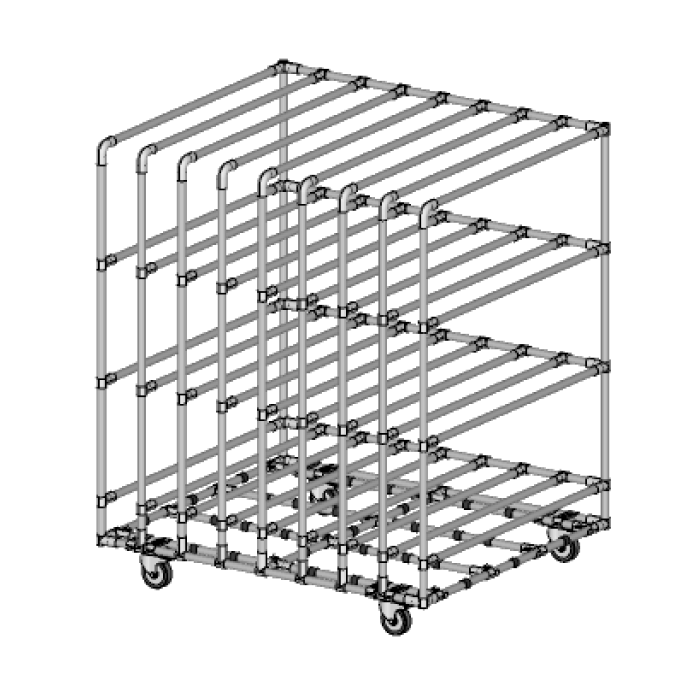
KITTING CART
Download this plan
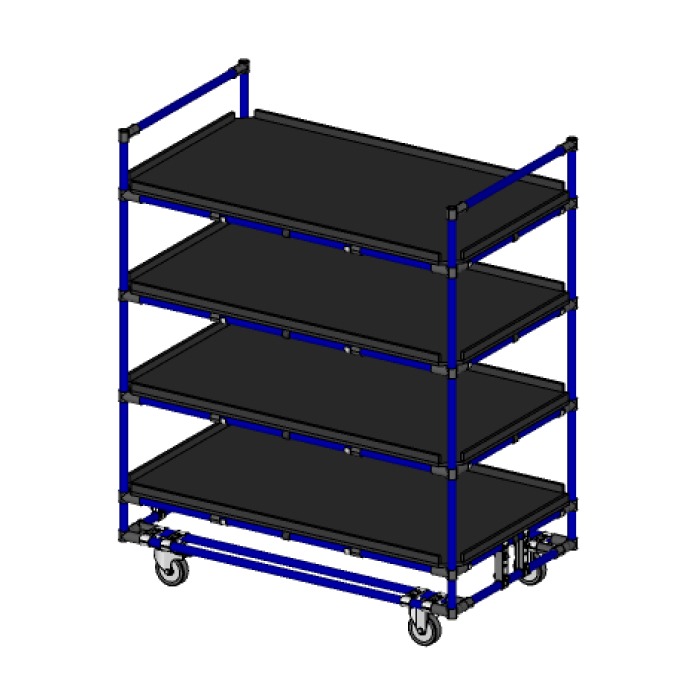
LONG CART
Download this plan
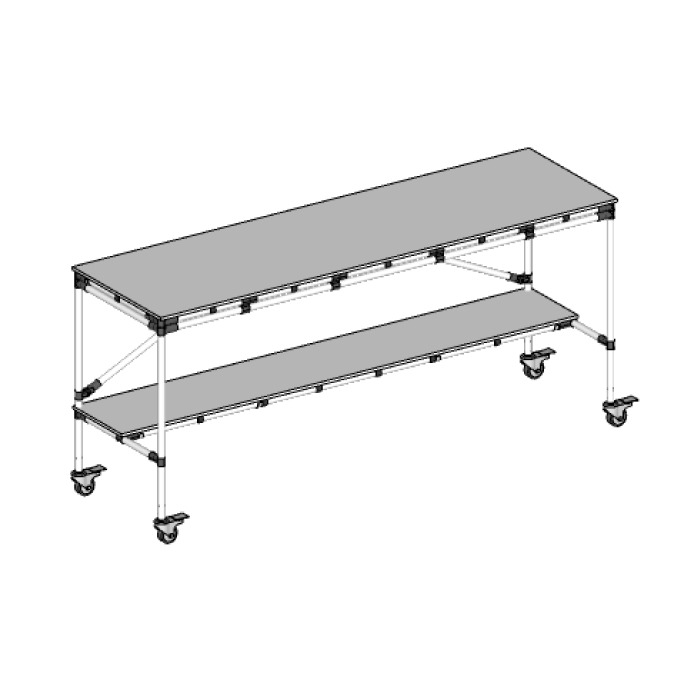
MOBILE TABLE
Download this plan

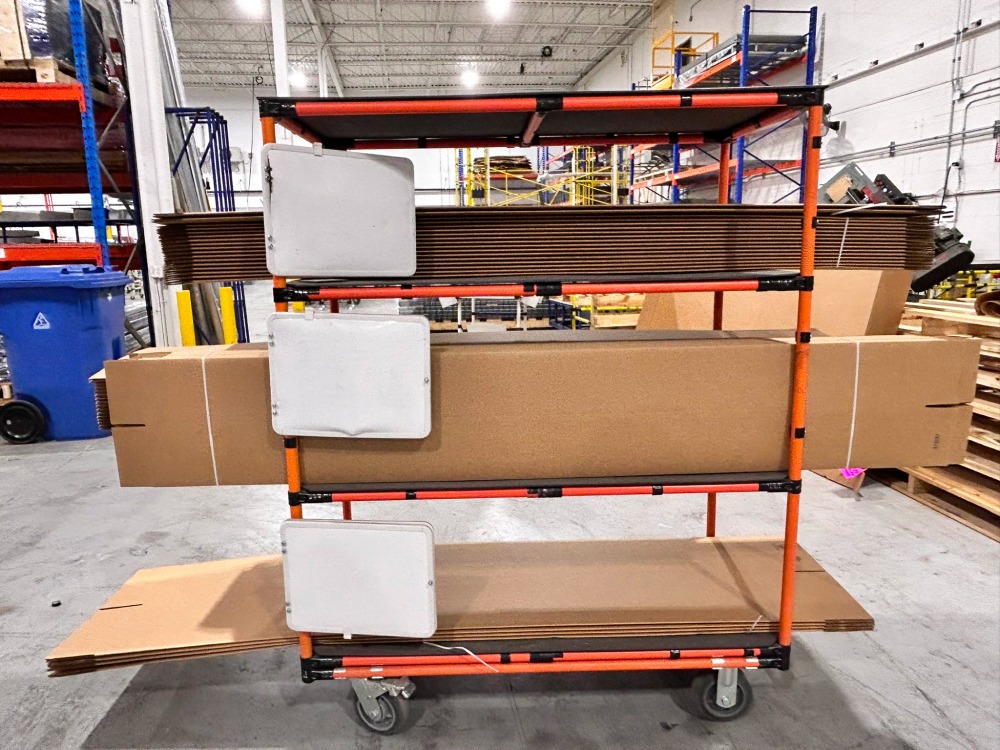
Inspirations from the warehousing industry
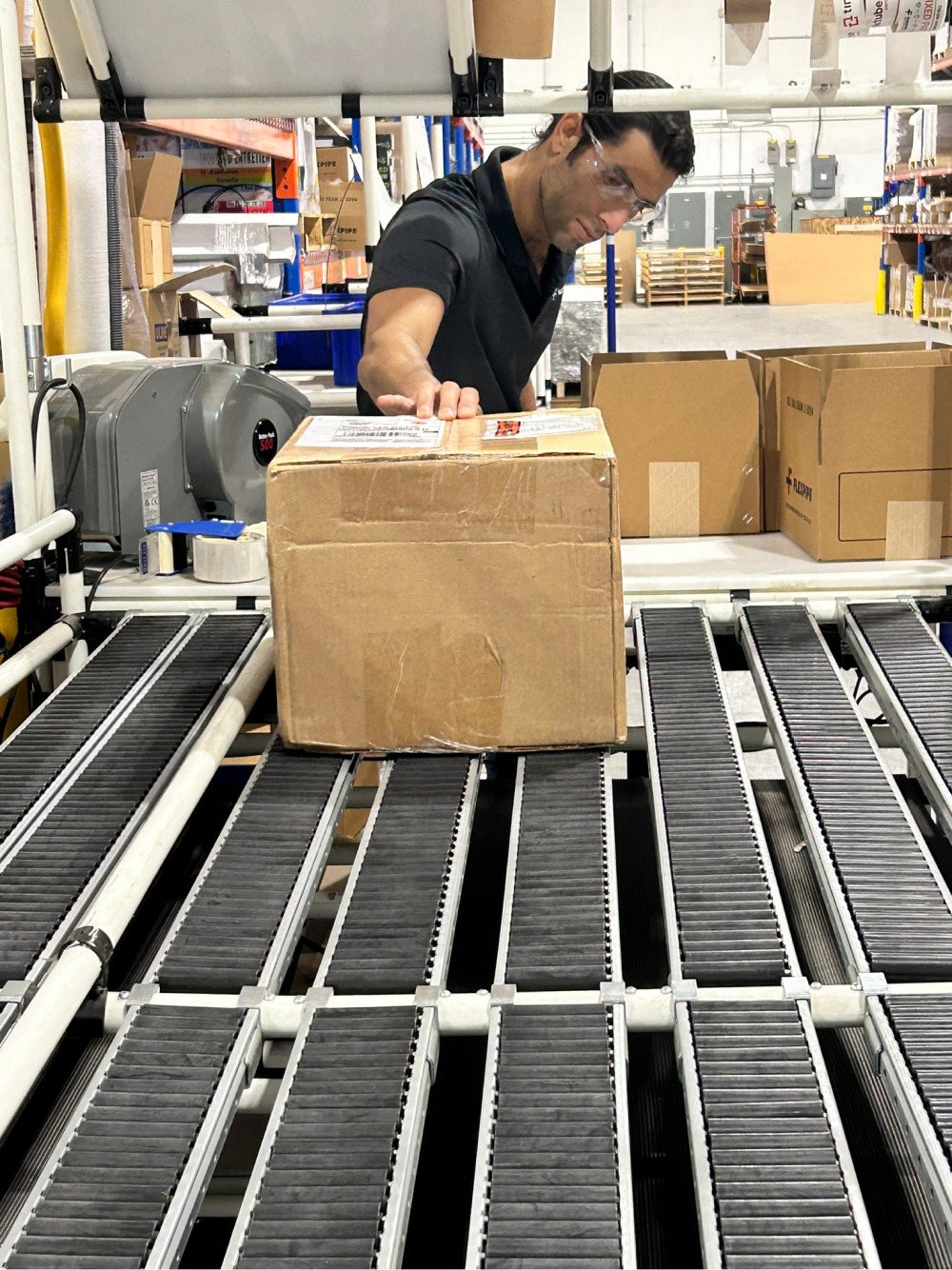
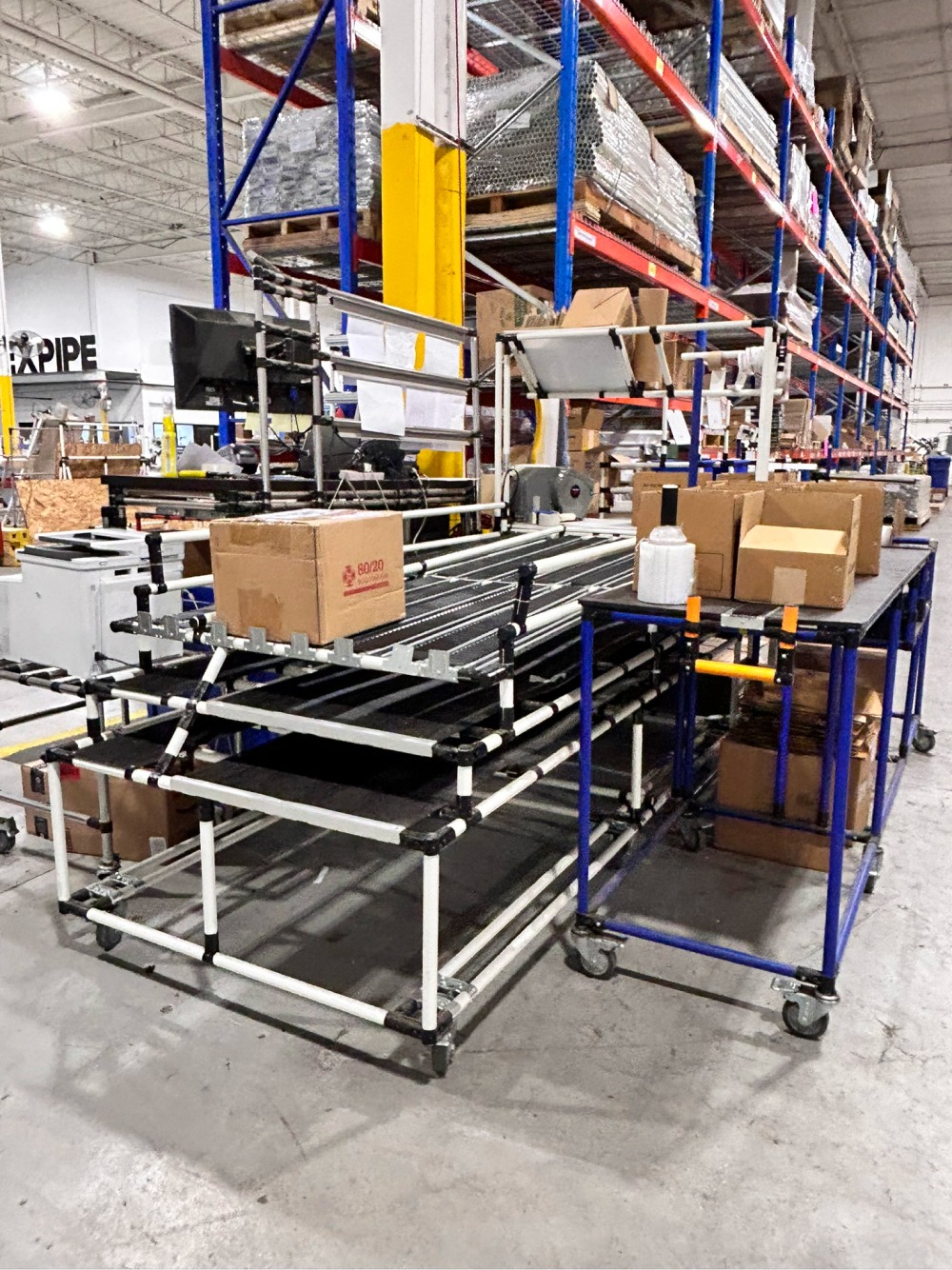

Key Takeaways
- Lean warehouse management uses multiple lean warehousing strategies and continuous improvement processes to streamline warehouse operations, reduce material handling times and lower inventory carrying costs.
- Understanding your inventory carrying costs in terms of the costs of financing, inventory obsolescence, damage, pilferage, storage, energy, warehouse employee overtime and expedited freight is one way to justify the implementation of lean warehousing.
- Value stream mapping, Just-in-Time (JIT) inventory management, Kaizen continuous improvements and 5S (Sort, Set in Order, Shine, Standardize and Sustain) are the most common lean warehousing principles you can use to optimize your warehouse.
- The benefits of using lean warehousing strategies to improve warehouse operation includes reduced waste, increased efficiency, cost savings, improved safety and improved employee morale.
- Your material handling processes and structures play a critical role in adopting lean warehousing strategies. Steel welded carts, platform trucks, trolleys, flow racks and workstations are not lean and will not optimize your warehouse. These structures cannot be changed and do not adhere to a continuous improvement mindset.
- Implementing lean warehousing requires patience and the understanding that this is a never-ending continuous improvement process. Focus on incremental improvements and these improvements will lead to considerable savings and a better run warehouse.
- The Flexpipe steel tube and joint system is the ideal material handling solution for optimizing your warehouse. Modular, scalable and easily assembled, changed and modified, steel tube and joints are the exact same system that emerged from Kaizen and TPS philosophies, making them the perfect solution to improving the performance of your warehouse.
Endless Material Handling Customization with Flexpipe
Flexpipe Inc. is an innovator, designer, and steel tube and joint material provider for companies needing low-cost, customized, modular, and scalable material handling solutions. Flexpipe is the ultimate lean solutions provider, serving multiple industrial and commercial industries worldwide.
Located in Montreal, Canada, Flexpipe combines its steel tube and joint materials with lean concepts and best business practices to ensure all customers have the necessary tools to implement lean and Kaizen concepts.
To improve your knowledge of lean concepts and approaches, please refer to our Learning section with its eBooks, web training, and lean maker academy.
You can start with Flexpipe’s steel tube and joint material handling system by filling out this sample request. If you have any questions about how to take advantage of our modular and scalable system, contact us now.
Still wondering which material handling system is right for you?
Discover why the tube and joint system stands out as the best solution for efficient, flexible, and cost-effective material handling.
FAQ: Lean Warehousing & Continuous Improvement
How does lean warehousing improve supply-chain performance?
Lean warehousing enhances the entire supply chain by cutting lead times, improving inventory accuracy, and reducing order-processing errors. By aligning warehouse flow with customer demand through pull-based systems like JIT, U.S. facilities achieve faster fulfillment, lower logistics costs, and greater customer satisfaction.
How does lean warehousing differ from traditional warehouse management?
Traditional warehouses rely on fixed storage and high inventory buffers. Lean warehouses focus on flexibility, employee engagement, and waste reduction. They use pull-based tools—such as Kanban, 5S, and continuous improvement—to create adaptable workflows that minimize excess stock and maximize space utilization.
What tools and technologies support lean warehousing today?
Modern lean warehouses combine proven methodologies like 5S, Kaizen, Value Stream Mapping, and Standard Work with digital systems such as Warehouse Management Systems (WMS), Automated Storage and Retrieval Systems (ASRS), and robotics. Together, these technologies streamline material handling, reduce human error, and sustain continuous improvement.
How does 5S improve warehouse safety and employee morale?
The 5S system—Sort, Set in Order, Shine, Standardize, Sustain—creates organized, clutter-free work areas. Clear labeling and standardized layouts reduce accidents and search time. In U.S. warehouses, 5S programs often lower injury rates and foster ownership, pride, and morale among warehouse associates.
What are the first steps to implementing lean warehousing?
Start by mapping high-volume product flows using Value Stream Mapping, identifying cost drivers, and setting measurable goals. Next, introduce JIT inventory for fast-moving items, train teams on 5S and Kaizen, and establish a feedback loop for ongoing improvement.
How does Value Stream Mapping help identify warehouse waste?
Value Stream Mapping (VSM) visually traces every movement of materials—from receiving to shipping—to reveal delays, redundancies, and over-processing. U.S. warehouses use VSM to prioritize high-impact improvements and increase productivity.