

Modular material handling systems will help you with implementing lean manufacturing and continuous improvement workflows. Your team’s creativity will help reduce the 8 wastes and can result in a 10% increase in productivity per year. Lean manufacturing has been a proven system for more than 50 years now. Here are the 8 reasons why you should consider using a material handling system.
The Flexpipe Modular System is a modular material handling solution built from steel pipes, joints, and accessories that can be reused and reconfigured to create racks, workstations, and flow systems. This modular pipe system enables manufacturers to design, assemble, and adapt layouts quickly while supporting lean and continuous-improvement principles.
A modular system in lean manufacturing is a flexible material handling framework built from standardized pipes, joints, and accessories that can be assembled into workstations, flow racks, and carts. Unlike welded or fixed structures, modular systems support continuous improvement by allowing fast reconfiguration, ergonomic design, and reusability.
This adaptability helps manufacturers reduce waste, optimize layouts, and implement Kaizen and 5S practices directly on the shop floor.
The Flexpipe Modular System exemplifies this approach. It uses 28 mm steel pipes and industrial connectors to build durable yet reconfigurable equipment for assembly, logistics, and production environments. Each component can be reused to create new structures, providing a sustainable and cost-efficient alternative to traditional fabrication.
This tubes and joints system is recognize internationally as one of the best for lean manufacturing.
In modern manufacturing, adopting a modular material handling system improves responsiveness to product changes, enhances employee safety, and lowers total cost of ownership. For companies pursuing operational excellence, modularity is the foundation of a lean, agile, and future-ready facility.
| Feature | Modular System | Welded Structure |
|---|---|---|
| Adaptability | Fully reconfigurable; no cutting or welding required | Permanent; difficult and costly to modify |
| Initial Cost | Moderate investment | Often lower upfront |
| Lifecycle Cost | 30–50% savings over time due to reuse | Higher maintenance and replacement costs |
| Implementation Time | Fast assembly; no special tools | Slow fabrication; welding and painting required |
| Safety & Lean Compliance | Supports 5S and Kaizen principles | Requires modification to adapt to lean layouts |
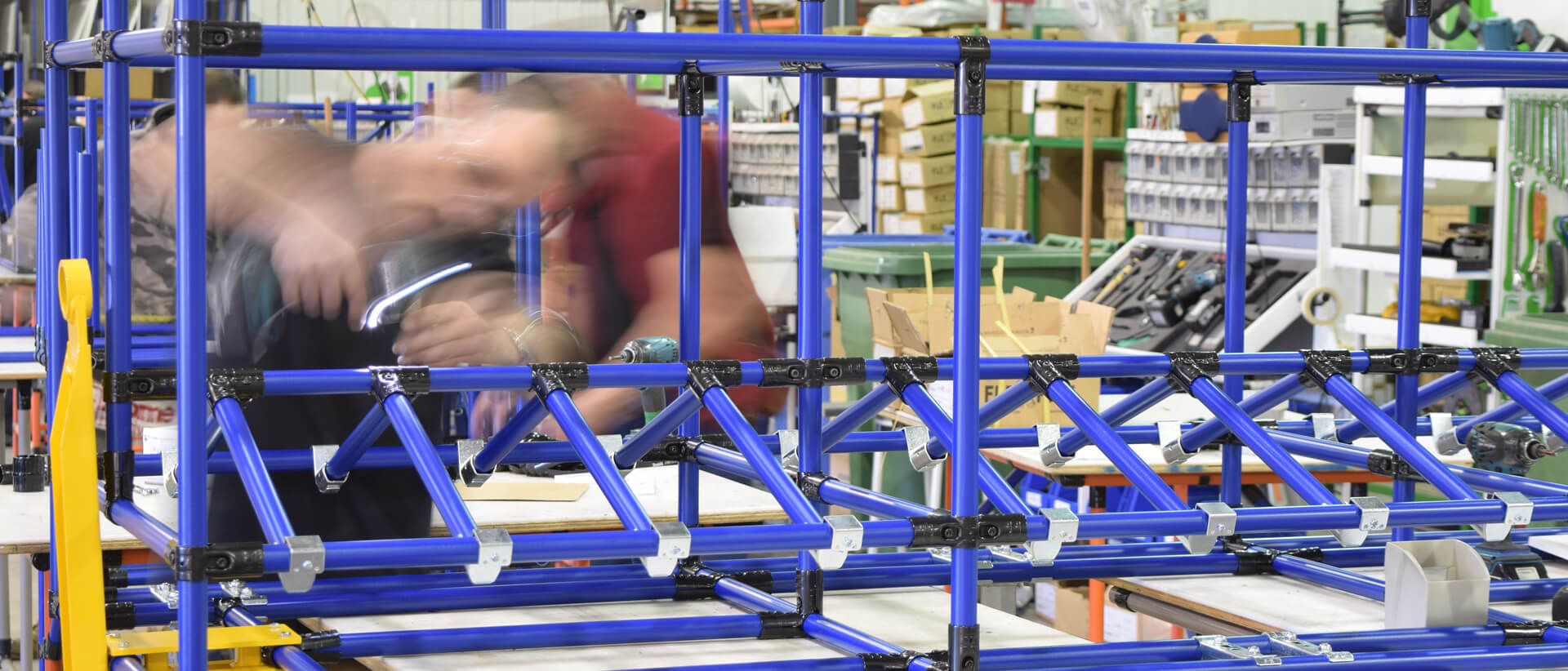
Each Flexpipe structure is assembled using steel pipes and metal joints that lock together with bolts—no welding required. Components can be cut to length, connected with standard fittings, and reused for new designs, making modular rack construction fast, precise, and sustainable.
The Flexpipe Modular System is built on eight key factors that define how modular material handling drives lean manufacturing success.
Each factor reflects a principle of flexibility, efficiency, and continuous improvement—helping your team design, adapt, and scale processes faster while reducing waste and downtime.
From modularity and customization to simplicity and versatility, these eight factors explain why Flexpipe’s approach to modular material handling systems has become a standard for agile and sustainable industrial environments.

The modular systems allow you to disassemble and reuse the pipes and joints over and over. This reduces the cost of equipment when processes or products change. It also allows the structure to be evolved. For example, a lean manufacturing workstation can be adapted and improved easily and quickly according to employees suggestions. This results in a greater employee satisfaction.
In practice, this means less downtime, faster adaptation to demand changes, and an agile culture of improvement. The modular factor is what turns a static facility into a dynamic manufacturing ecosystem.

Due to millions of different products in the market, it is important to have many different structure types and designs to accommodate every company’s needs. Modular systems are ideal for creating custom and ergonomic structures according to your exact needs. You no longer need to use a product that does not fit the job well or takes up too much floor space.
Using Flexpipe’s wide selection of connectors (joints), casters, work surfaces, and accessories, engineers and operators can create solutions tailored to their workflow. This customization also supports incremental innovation,start small, learn fast, and scale as your process improves.
Modular handling systems are a perfect tool to help leaders implement lean manufacturing in your business. Because they are adaptive and easy to use, modular tubes and joints help to continuously reduce the 8 wastes associated with lean manufacturing. This tool can help to implement kitting, 5S, points-of–use, one-piece flows, visual management structures, and much more.
Visual management boards, FIFO lanes, and ergonomic stations can be integrated directly into modular designs. This creates a living, evolving workspace that empowers operators to identify inefficiencies and implement improvements instantly.

Before 2010, Flexpipe was a made-to-order welding factory that made steel racks, carts, and tugger carts. We know first-hand that modular systems can help save 30% to 50% on the equipment budget. This allows a company to do more with the same budget while keeping a small inventory of pipes and joints for prototypes and quick fixes.
Switching to modular material handling isn’t just an operational improvement—it’s a financial strategy. While initial component costs may be slightly higher than welded structures, the long-term return is substantial. Flexpipe users report up to 50% savings over the lifecycle of their equipment thanks to reusability and reduced rework costs.
Because every component can be disassembled and reused, there’s minimal scrap and virtually no need for new fabrication. Projects that once took weeks and thousands of dollars in welding labor can now be completed in hours by your in-house team.

According to a Flexpipe survey in March 2016, 74% of Flexpipe users said that the modular systems have helped to improve the factory image. The product helps to standardize working structures with a professional and tailored look that will increase client and supplier confidence when touring a plant.
Well-organized workspaces don’t just look good—they improve morale and efficiency. Modular material handling systems provide clean, consistent, and professional structures that reflect modern lean environments. Matching color-coded pipes, joints, and accessories make it easy to identify zones, processes, or product families.
Beyond looks, visual uniformity also enhances safety and communication. When every cart or rack follows the same design logic, operators spend less time searching and more time producing.
Because the Flexpipe modular material handling system is a simple system requiring very minimal tool sets, all employees can create and build one without having to familiarize themselves with new tools. They can participate in designing structures by pitching innovative ideas during a Kaizen, They can also build their stations at the Moonshine Shop. In any case, they should be continuously asked how to improve the structures they are working with.
Building with a modular material handling system is straightforward. No welding, painting, or specialized training required. Using a simple hex key, anyone on your team can assemble or modify structures on the shop floor. This decentralizes improvement—operators can act immediately rather than waiting for maintenance or fabrication departments.
Simplicity translates directly to agility. By removing barriers to change, modular systems turn continuous improvement from a management slogan into a daily habit.
Even if Flexpipe is made from steel tubing, it is 20% to 30% lighter than a standard steel structure. This is ideal for loading and ergonomic constraints for pushcarts or flow racks. Also, well-designed structures will minimize space on your production floor and maximize piping to reduce hideouts and weight. A linear system means better visibility and more sustainable 5S programming.
Modular material handling components are built from lightweight yet durable steel or aluminum pipes. The design makes structures easy to move and reconfigure without sacrificing strength. Casters, rails, and leveling feet enable mobile stations that flow naturally with production demands.
This “light and linear” philosophy minimizes physical strain and supports ergonomic design. Whether you’re rebalancing a line or introducing a new product, your equipment can move with you—without heavy lifting or downtime.
From production floors to conference rooms to maintenance departments to packaging lines, modular systems can be introduced in various situations and departments. It is one simple hardware solution, which avoids multiple purchase requests. Using a modular system reduces the need to look around for specialized products and suppliers, saving time for both the person making the request and buyer. Different colors and finishes give different looks to any structure.
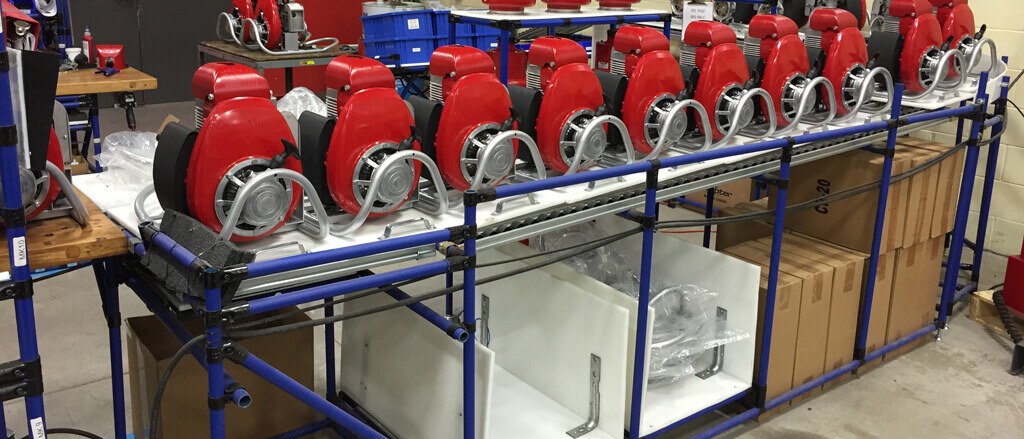
Versatility is where modular material handling truly stands apart. The same set of components can be used to create racks, flow shelves, assembly cells, packaging tables, or AGV-compatible carts. As your operations scale, existing structures can be dismantled and rebuilt for new purposes instead of discarded.
Flexpipe modular system is compatible with most 28 mm modular formats like Creform on the market, giving you total freedom to expand or integrate with existing setups. This ensures long-term investment protection and sustained innovation.
We have compared services, parts, technical specs, and prices from our most popular competitor.
Consult the complete Creform alternative comparative study
This lean approach allows teams to iterate quickly and apply Kaizen principles in real time.
Modular material handling is a flexible approach to designing and adapting factory equipment—such as workstations, carts, and flow racks—
using standardized pipes, joints, and accessories. These components can be assembled, modified, or reused easily to support lean manufacturing
and continuous improvement initiatives.
Modular systems eliminate the need for cutting and welding. Teams can build or modify structures using hand tools, saving time and costs
while maintaining flexibility. This adaptability allows manufacturers to respond faster to production changes and implement continuous
improvements without external labor.
Modular material handling aligns perfectly with lean principles by enabling fast, low-cost layout adjustments that reduce waste and improve
flow. Systems can be configured for 5S organization, ergonomic design, and just-in-time production, creating more efficient, employee-driven
work environments.
Yes. Flexpipe’s 28 mm modular material handling components are compatible with most other industry-standard modular systems. This cross-compatibility
allows companies to expand or upgrade existing setups without replacing all of their current equipment.
Companies that adopt modular material handling systems often realize 30–50% total equipment savings across their facilities.
Reusable parts, quicker assembly, and minimal fabrication needs reduce both capital expenses and downtime, providing measurable long-term value.
Yes. Flexpipe’s modular structures are engineered from high-grade steel pipes and joints designed for industrial use. When properly configured
with bracing and load-bearing connectors, they can safely handle substantial weight while maintaining stability and ergonomic design.