A waterspider (Japanese: mizusumashi) is a dedicated support role in lean manufacturing responsible for keeping operators supplied with materials, tools, and information so they can focus exclusively on value‑added work. By handling non‑value‑added transport and replenishment tasks, the waterspider helps maintain continuous flow, reduce motion waste, and minimize downtime across the production line.
https://youtu.be/BOtGy607bv0
Like during surgery the assisting person is like a Water Spider, they allow the surgeon to perform the added value task with no distraction.
The key to adding value tasks without distractions
The rationale behind the water spider in the factory is similar where it allows the rest of the personnel to devote their full attention to added value tasks.
The Water Spider position is often confused with a simple material handler but in a lean manufacturing layout, a Water Spider must be intimate with the process or work cell they support, not just a pick-up-and-drop-off handler.
What Tasks Does a Waterspider Perform?
A waterspider performs standardized “milk run” cycles that keep production areas stable and predictable. These tasks are designed to support takt‑time flow and prevent operator interruptions.
Core Responsibilities
Deliver raw materials, components, and subassemblies
Collect empty bins and return them to staging areas
Remove waste and recyclables from workstations
Refill consumables (fasteners, packaging, labels)
Move Kanban cards and support visual signal systems
Prepare upcoming changeovers by staging materials
Communicate shortages or quality issues to leads
Water Spider is the go-to person in a well organized area
A water Spider must be intimate with the process or work cell they support
Why This Matters
Every minute an operator spends searching for materials or leaving their station is lost value. The waterspider role protects that value by shielding operators from avoidable disruptions.
Water Spider needs to make sure that the production flow is uninterrupted, and workers are only devote added value tasks.
When a particular worker doesn’t have to take care of auxiliary tasks, they can concentrate on their own productivity. They can become more efficient at adding value.
They should visit the workstations and operators in the same order and at similar intervals. The speed and frequency of their rounds should be dictated by the needs of the process.
How Does a Waterspider Improve Productivity in U.S. Factories?
U.S. plants leverage the waterspider role to improve material flow, reduce downtime, and increase labor efficiency—especially in high‑mix, low‑volume environments. Teams adopting this role typically experience fewer bottlenecks, shorter changeovers, and cleaner workflows.
U.S.‑Specific Advantages
Addresses labor shortages by maximizing operator productivity
Improves consistency in union and non‑union environments
Integrates smoothly with modern MES/ERP systems
Reduces forklift dependency through structured delivery routes
Enhances safety and compliance with OSHA‑aligned routines
What Skills Should a Waterspider Have?
A successful waterspider is not an entry‑level material handler—they require process awareness and strong organization.
Key Competencies
Deep knowledge of workstation flow and takt time
Ability to recognize production abnormalities
Strong attention to detail and route discipline
Physical ability to travel set routes repetitively
Clear communication with team leaders and supervisors
Pro Tip: In many U.S. facilities, top waterspiders eventually transition into team lead or supervisor roles thanks to their broad visibility across the line.
How Do You Implement a Waterspider Role in Your Facility?
Implementing the waterspider begins with mapping your current material‑handling flow and identifying where operators are losing time. The goal is to create a repeatable, timed route that supports the entire production area.
HowTo: Step‑by‑Step Implementation
Map Current Flow: Document material paths, distances traveled, and operator interruptions.
Identify Pain Points: Look for repeated delays, shortages, cluttered workstations, and bottlenecks.
Define the Route: Create a timed milk‑run loop aligned with takt time and shift schedules.
Train the Waterspider: Teach standard work, escalation triggers, and communication expectations.
Pilot the Role: Test the loop for one week and track downtime reductions.
Adjust and Standardize: Optimize the route, update standard work, and finalize responsibilities.
Scale Facility‑Wide: Apply the model to additional lines or departments.
Waterspider vs. Material Handler: What’s the Difference?
A waterspider follows a highly standardized route that directly supports takt‑time flow, while a generic material handler responds to needs as they arise.
FunctionWaterspiderMaterial HandlerRouteFixed milk‑runReactive or variableTimingSynchronized to taktAs neededPurposeMaintain flowMove materialsImpactReduces waste and downtimePrevents shortagesSkillHigher process knowledgeBasic logistics
Common Mistakes When Deploying a Waterspider in Lean
Avoid these pitfalls to maintain the intended benefits:
Using the role as a “utility worker” instead of honoring the standardized route
Overloading the waterspider with extra tasks (quality checks, rework, meetings)
Failing to measure performance with KPIs such as stops, shortages, or route completion time
Assigning inexperienced staff without process knowledge
Ignoring ergonomic or safety considerations along the route
The analogy with the insect
Water Spider is mizusumashi in Japanese and is often used even in English meaning “make water cleaner” or “purify water”.
Water spiders are representing by Water beetle, notable for their divided eyes.
Water spiders are representing by Water beetle, notable for their divided eyes and that dives into freshwater but does not stay into water. The water spider dives into the process to get close to the cell, even goes into the cell to do occasional relief work for operators. Specifically, the whirligig beetle is known for their habit of swimming rapidly in circles… and for their gregarious behaviour…and are also notable for their divided eyes which are believed to enable them to see both above and below water”.
And If employees don’t like the name why not using Point of use Provider.
How to boost productivity
While some floor managers might feel the urge to put a not-so-skilled worker in this position, this is not a good idea:
In order for a water spider to really boost productivity, they need to have a great working understanding of the whole process and need to be able to read the whole workspace.
Here are some important requirements for the job
They should be helpful at every workstation they service, and this requires knowledge of all processes and great work experience.
They should be first to notice when problems arise, and this requires good working relationships with management, to raise the issue.
They should help with the unexpected and know about the challenges faced in the day-to-day work at stations and this require to communicate well, gets along with everyone to help
They should move, lift, transport and do a lot of walking required for the water spider to be in good shape to walk, lift, and move material.
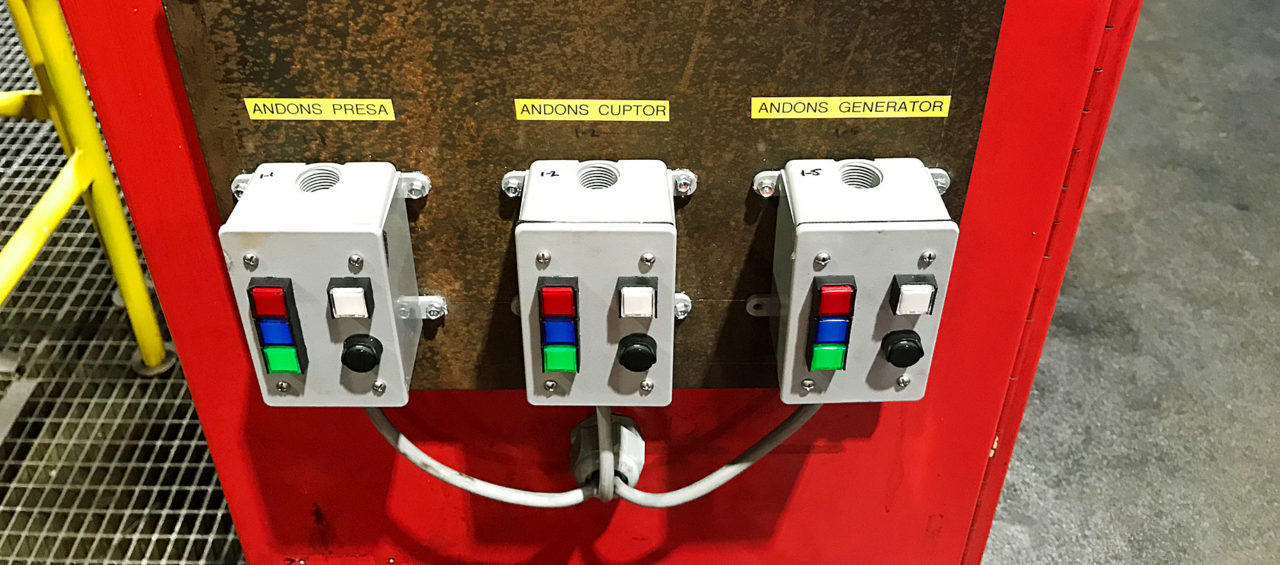
Learn more on how to maximize productivity with the Andon system. A great way to quickly pinpoint issues at manually operated workstations, improve response time, and reduce downtime is through an Andon system.
The Japanese Influence
Taiichi Ohno, the founder of the Lean Approach
Some Senseis say that Water Spider role is a “rite of passage” to becoming a supervisor.
This is why it makes a lot of sense, to treat the position as a way to groom a future team leader, supervisor or manager, instead of a “go-fer” or “catch-all” job.
How Do You Measure Waterspider Success? (KPIs)
Tracking performance ensures the role stays aligned with lean goals.
Route completion rate (% on time)
Number of operator interruptions prevented
Frequency of material shortages
Average station uptime
Travel distance per cycle (ft or meters)
Changeover preparation accuracy
Elements of success
Both the water spider and the other workers' Everyone should have a clear idea of what the water spider is there to do and not to do. : Managers might view water spiders as auxiliary, and therefore secondary in priority.
This might lead to assigning them fill-in tasks, which might end up hurting the productivity of the whole facility. Don’t treat the water strider as a floater, or as an excess person.
Depending on the size of the work area and the material demands, a water spider may not perform that role full time but their rounds should still be made at regular intervals, though, to keep operators from running out of parts.
A clear process flow and defined work sequence (clear flowing water) is required to design the workload of the Water Spider position.
To begin, the role should be tested out on a small scale to get a feel for how to use this position. The key is structure. They must make the rounds in sync with the pace of production.
You might find that Water Spider might do too many empty rounds at first and feel that there is the inefficiency to work on. However, you should try to optimize the system first not the water spider time. It can be deemed acceptable as long as the water spider manages to help boost the efficiency of the whole operation.
Read on to learn how a modular pipe handling system helped Hologic increase its productivity by 25%.
Extra recommendations!
Spaghetti diagram
For every workstation on the assembly line create a spaghetti diagram of the stock replenishment path
Work on small and regular milk runs
Clock the water spider with a pedometer to log the typical distance travel and ask how this could be improved
Supermarket should be not too far from the assembly line. There may be more than one supermarket for longer lines.
An exhausted water spider is a good sign that something is wrong. And at this point, he might now be able to see clearly.
You should be able to see how having a well-functioning water spider can boost overall efficiency and potentially calculate an ROI to present to management. Furthermore, isolating the auxiliary tasks mostly transportation and movement waste in a single place will help to examine them and possibly reduce or eliminate them.____________________________________________________________________________
WHAT CAN FLEXPIPE DO TO OPTIMIZE YOUR PLANT EFFICIENCY?
Flexpipe Modular industrial pipe racking system can help you with implementing continuous improvement principles. Your team’s creativity can result in a 10% increase in productivity per year. It has been a proven system for more than 50 years now.
See how the modular system improve operational efficiency while saving time in manufacturing processes at Waterax.
Frequently Asked Questions (FAQ)
How do you determine the ideal length and timing of a waterspider route?The ideal waterspider route is calculated by mapping the production line’s takt time, workstation replenishment needs, and total walking distance. A standard approach is to design a loop that can be completed within one takt cycle or a multiple of it (e.g., every 5–10 minutes). You measure material consumption at each station, then set a route length that ensures operators never run out of parts while keeping the waterspider’s path consistent and repeatable.How does a waterspider support Just-In-Time (JIT) and continuous flow?A waterspider enables JIT by delivering materials only when needed and in the exact quantities required, preventing overproduction and excess inventory. Their timed milk-run cycles synchronize material flow with takt time, making shortages or interruptions less likely. This predictable rhythm supports continuous flow by keeping workstations stable, supplied, and free of unnecessary motion or searching for materials.What tools or visual management systems help waterspiders stay organized?Waterspiders rely heavily on visual tools that make status and needs obvious at a glance. Common systems include Kanban cards, color-coded bins, shadow boards, floor markings, replenishment boards, and standardized carts with labeled locations. These tools reduce decision-making time and help the waterspider spot abnormalities—such as missing parts or blocked flow—before they impact production.How do you adapt the waterspider role for high-mix, low-volume production environments?In high-mix, low-volume (HMLV) settings, waterspider routes must be flexible and built around frequent changeovers, smaller batch sizes, and variable material needs. Instead of one fixed loop, many U.S. plants create dynamic routes updated per schedule or work order. Standardized carts, well-defined kit sizes, digital Kanban, and close coordination with scheduling teams help ensure the waterspider can support rapid product shifts without delays.What ergonomic and safety considerations should be included when setting up a waterspider route?A safe waterspider route minimizes bending, twisting, and unnecessary lifting. You should design routes with clear walk paths, adequate lighting, and minimal forklift interaction. Carts should be at ergonomic height, easy to push, and fitted with brakes and low-friction casters. OSHA-aligned training for manual material handling, emergency procedures, and hazard recognition is essential to protect the waterspider during constant travel.What training or skills development should a waterspider receive before starting the role?Effective waterspiders receive training in takt time awareness, material flow concepts, Kanban systems, problem identification, and basic lean principles. They also benefit from hands-on coaching in route discipline, communication skills, escalation procedures, and workstation flow. Many companies also include safety training, ergonomic best practices, and cross-training with operators to develop a deeper understanding of the entire value stream.